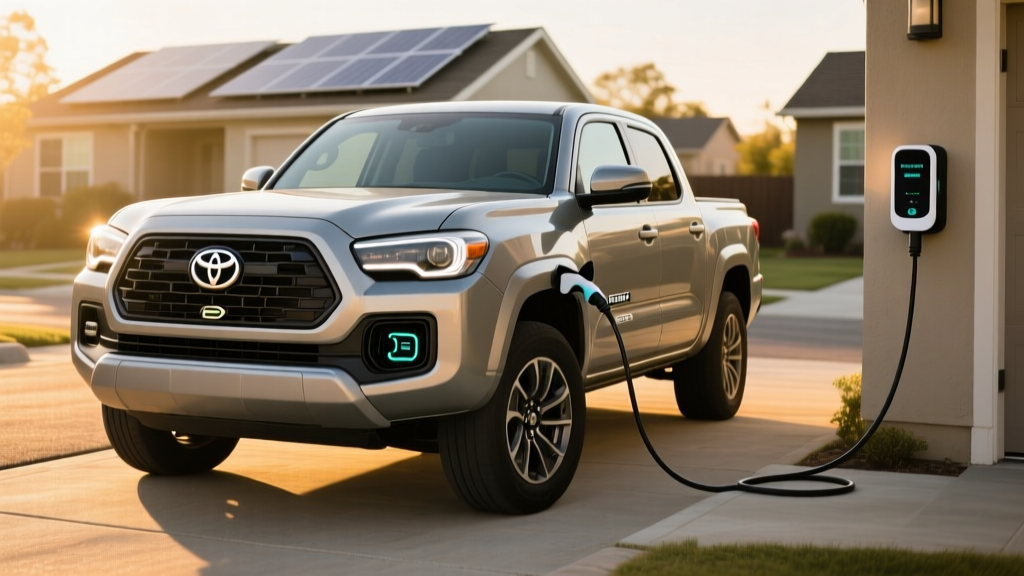
The Toyota Tacoma hybrid entered the midsize truck market with a bold promise: deliver the utility and off-road capability Tacoma owners expect, while shaving fuel consumption through electrification. But what does the Toyota Tacoma hybrid MPG actually look like in practice, and how does it compare to the gas-only Tacoma, full-size hybrid trucks, and electrified alternatives? This guide breaks down every efficiency figure, powertrain detail, and ownership factor you need before deciding.
Toyota Tacoma Hybrid MPG: The EPA Numbers
The Tacoma hybrid uses Toyota's i-FORCE MAX powertrain — a conventional hybrid (HEV) system that requires no plug-in charging. It pairs a 2.4-liter turbocharged four-cylinder engine with an electric motor integrated into the transmission. According to EPA data on fueleconomy.gov, the fuel economy varies by trim and drivetrain:
| Configuration | City MPG | Highway MPG | Combined MPG |
|---|---|---|---|
| 4x2 (Limited) | 24 | 27 | 25 |
| 4x4 (most trims) | 23 | 27 | 24 |
| 4x4 TRD Off-Road / Trailhunter | 22 | 25 | 23 |
For comparison, the non-hybrid i-FORCE 2.4L turbo gas Tacoma 4x4 achieves roughly 20 city / 24 highway / 21 combined MPG. The hybrid system delivers a 2–3 MPG improvement across the board — roughly a 10–14% gain in fuel economy, depending on configuration.
i-FORCE MAX Powertrain: Specs and How the Hybrid System Works
The i-FORCE MAX is Toyota's performance-oriented hybrid system, designed for torque rather than maximum efficiency. Here's what's under the hood:
| Engine | 2.4L turbocharged inline-4 |
| Engine Output | 278 hp / 317 lb-ft torque |
| Electric Motor | 48 hp / 184 lb-ft (integrated in 8-speed auto) |
| Combined System Output | 326 hp / 465 lb-ft torque |
| Transmission | 8-speed automatic |
| Hybrid Battery | 1.87 kWh (NiMH), self-charging HEV |
| Max Towing Capacity | 6,000 lbs (varies by trim) |
| 0–60 MPH | ~6.5 seconds (4x4 crew cab) |
The 465 lb-ft of combined torque is the headline figure. That electric motor fills in the turbo lag gap, delivering immediate low-end thrust that makes the Tacoma hybrid feel substantially more responsive than the gas-only model, especially from a stop or when merging onto highways. This is not a Prius-style efficiency-first hybrid — it's a torque-first system that happens to save fuel as a secondary benefit.
HEV vs. PHEV vs. EV: Which Powertrain Fits Your Truck Needs?
A common question from truck shoppers: is the Tacoma hybrid a plug-in? The answer is no. The i-FORCE MAX is a conventional hybrid (HEV) — it charges its small battery through regenerative braking and engine power. You never plug it in. Here's how the three electrified truck categories compare:
| Factor | HEV (Tacoma Hybrid) | PHEV (e.g., Ford F-150 PowerBoost w/ future PHEV) | BEV (e.g., Rivian R1T, F-150 Lightning) |
|---|---|---|---|
| Plug-in Required? | No | Yes (optional for benefit) | Yes (mandatory) |
| Electric-Only Range | N/A (motor assists only) | 20–40 mi (typical PHEV) | 230–400 mi |
| Fuel/Energy Cost | Gas only, ~10–14% savings | Gas + electric, varies by charging habits | Electric only, ~$0.04–0.15/mi |
| Charging Infrastructure Needed | None | Level 2 recommended | Level 2 home + DC fast access |
| Towing Impact | Minor MPG drop | EV range eliminated when towing | Range cut by 40–50% |
| Federal Tax Credit (§30D) | Not eligible | Up to $7,500 if eligible | Up to $7,500 if eligible |
- Choose the Tacoma HEV if: You want a midsize truck with improved fuel economy and more torque, have no home charging option, tow regularly, and want zero lifestyle changes from a gas truck.
- Choose a PHEV truck if: You have home charging, a short commute (under 30 miles), and want some electric-only driving with gas backup for long trips and towing. (Note: no midsize PHEV truck currently exists in the US market.)
- Choose a full EV truck if: You have reliable home Level 2 charging, rarely tow heavy loads over long distances, want the lowest per-mile energy cost, and qualify for the federal tax credit.
Pricing, Trims, and Tax Credit Eligibility
The i-FORCE MAX hybrid powertrain is available across several Tacoma trims for the 2025–2026 model years. Pricing starts significantly above the base gas-only model:
| Trim | Starting MSRP (approx.) | Hybrid Standard? |
|---|---|---|
| TRD Off-Road | $40,920 | Optional (hybrid adds ~$2,200) |
| Limited | $48,320 | Standard |
| TRD Pro | $63,930 | Standard |
| Trailhunter | $62,400 | Standard |
Federal tax credit status: The Tacoma hybrid does not qualify for the IRS §30D Clean Vehicle Credit. That credit applies only to plug-in electric vehicles (BEVs and PHEVs) meeting battery sourcing, MSRP caps, and buyer income requirements. Since the Tacoma i-FORCE MAX is a conventional HEV with no plug-in capability, it is ineligible for the $7,500 federal credit.
Some states may offer modest rebates or reduced registration fees for hybrid vehicles, but these vary by jurisdiction and are typically far smaller than the federal EV credit. Check your state's energy or environmental agency for current programs.
Battery Warranty, Lifespan, and Replacement Costs
Hybrid battery longevity is consistently the top concern for first-time hybrid buyers. Toyota addresses this with robust warranty coverage and a proven track record:
- Coverage: 10 years / 150,000 miles (whichever comes first) on the hybrid battery and hybrid system components
- Applies to: All 2020+ model year Toyota hybrids, including the Tacoma i-FORCE MAX
- Transferable: Yes, warranty transfers to subsequent owners
- Capacity threshold: Warranty covers defects and significant capacity loss that impairs hybrid system function
Real-world lifespan data: Toyota's hybrid batteries have an excellent longevity record. The Prius, Camry Hybrid, and RAV4 Hybrid have demonstrated battery packs lasting 150,000–200,000+ miles with minimal degradation. The Tacoma's 1.87 kWh NiMH pack is small and lightly stressed compared to full EV batteries, which works in its favor for longevity.
Replacement cost if out of warranty: Based on comparable Toyota hybrid systems, a Tacoma hybrid battery replacement would likely cost between $2,500 and $4,000 (parts and labor) at a dealership. Independent hybrid specialists may offer refurbished packs for $1,500–$2,500. However, given Toyota's 10-year/150,000-mile warranty and historical reliability data, most owners will never face this expense.
According to IIHS safety ratings, the Tacoma earns strong marks across crash-test categories, adding to the overall ownership confidence picture.
Who Should Buy the Tacoma Hybrid (and Who Shouldn't)
- Want more torque and better throttle response than the gas Tacoma
- Drive a mix of city and highway and want 2–3 MPG improvement
- Tow or haul regularly and value low-end electric torque assist
- Don't have access to home or workplace EV charging
- Want Toyota's reputation for hybrid reliability and resale value
- Prefer a midsize truck footprint over full-size alternatives
- Want dramatic fuel savings (a full EV or PHEV saves far more)
- Need a full-size truck for heavy towing (6,000 lb max here)
- Want to qualify for the $7,500 federal tax credit
- Have a short commute and home charging (a PHEV or EV cuts costs more)
- Are on a tight budget — the hybrid premium adds $2,000+ over gas trims
- Prioritize maximum payload (hybrid components add weight)
5-Year Ownership Cost Snapshot
Here's how the Tacoma hybrid stacks up against the gas-only Tacoma and a full EV truck over five years and 75,000 miles of driving:
| Cost Factor | Tacoma Hybrid 4x4 (24 MPG) | Tacoma Gas 4x4 (21 MPG) | F-150 Lightning (BEV) |
|---|---|---|---|
| Fuel/Energy Cost | ~$10,940 (gas at $3.50/gal) | ~$12,500 (gas at $3.50/gal) | ~$3,750 (at $0.15/kWh) |
| Maintenance (est.) | ~$2,800 | ~$3,200 | ~$1,500 |
| Fuel Savings vs. Gas Tacoma | +$1,560 saved | Baseline | +$8,750 saved |
| Federal Tax Credit | $0 | $0 | Up to $7,500* |
*BEV tax credit subject to IRS §30D eligibility rules including MSRP caps, buyer income limits, and battery critical-mineral sourcing requirements. Verify eligibility with a tax professional.
The Tacoma hybrid saves roughly $1,560 in fuel over five years compared to the gas model — enough to partially offset the ~$2,200 hybrid powertrain premium. The real financial win is the added torque and performance, with fuel savings as a bonus rather than the primary justification.
Frequently Asked Questions
How many MPG does the Toyota Tacoma hybrid get?
The EPA rates the Tacoma i-FORCE MAX hybrid at 23 city / 27 highway / 24 combined MPG in 4x4 configuration. The 4x2 Limited trim achieves 24/27/25 MPG. Real-world driving in mixed suburban conditions often yields 25–28 MPG, while sustained highway driving at 75+ MPH may return 22–24 MPG.
Is the Toyota Tacoma hybrid a plug-in (PHEV)?
No. The Tacoma hybrid is a conventional hybrid (HEV). It uses regenerative braking and the gasoline engine to charge its 1.87 kWh battery. There is no plug, no electric-only driving mode, and no need for any charging infrastructure. You fuel it exactly like a gas truck.
Does the Tacoma hybrid qualify for a federal tax credit?
No. The IRS §30D Clean Vehicle Credit applies only to plug-in vehicles (BEVs and PHEVs) with sufficient battery capacity. Since the Tacoma hybrid is an HEV with a 1.87 kWh battery and no plug-in capability, it does not qualify for the federal credit or the point-of-sale transfer option.
How long will the Tacoma hybrid battery last?
Toyota warranties the hybrid battery for 10 years or 150,000 miles. Based on Toyota's track record with the Prius, RAV4 Hybrid, and other hybrid models, these batteries routinely last 150,000–200,000+ miles. The Tacoma's small NiMH pack is lightly stressed, which favors longevity. Replacement cost if needed out of warranty is estimated at $2,500–$4,000.
Is the Tacoma hybrid worth the extra cost over the gas model?
The hybrid premium is roughly $2,200 on trims where it's optional. You gain 465 lb-ft of combined torque (vs. 317 lb-ft gas-only), 2–3 MPG improvement, and better low-speed responsiveness. If you value the torque and performance upgrade, the premium pays for itself in driving experience. If your only goal is maximum fuel savings, the modest MPG gain means a long payback period — a full EV truck would save far more on energy costs.
Can the Tacoma hybrid drive on electric power alone?
Not in any meaningful way. The i-FORCE MAX system can move the truck at very low speeds for brief distances using electric power alone (such as creeping in a parking lot), but it is not designed for electric-only commuting. The electric motor's primary role is torque supplementation and regenerative braking, not zero-emission driving.
How does Tacoma hybrid MPG compare to the Ford Maverick hybrid?
The Ford Maverick hybrid (a unibody compact truck) achieves an EPA-rated 42 city / 33 highway / 37 combined MPG with FWD. That's dramatically more efficient than the Tacoma hybrid, but the Maverick is a smaller, lighter vehicle with less towing capacity (2,000 lbs) and no serious off-road capability. They serve different buyer needs entirely.
Sources: EPA fuel economy data via fueleconomy.gov, Toyota Motor Corporation official specifications, IRS §30D Clean Vehicle Credit guidelines. Pricing reflects approximate MSRP at time of publication and may vary by dealer and model year. Verify all figures with your local Toyota dealer before purchasing.