The 2026 Toyota SUV Hybrid Lineup at a Glance
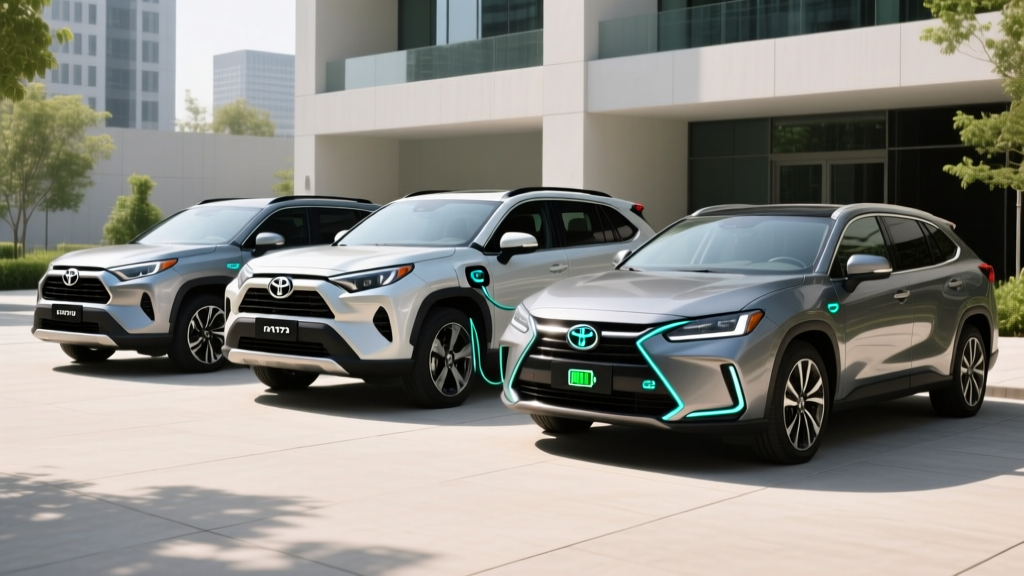
Toyota sells more hybrids than any other automaker, and its SUV range is the core of that dominance. For 2026, buyers choosing Toyota SUV hybrids have four primary models to evaluate: the compact RAV4 Hybrid, the plug-in RAV4 Prime, the three-row Highlander Hybrid, and the midsize Venza (now in its final generation). Each uses a different powertrain strategy, and the gap between a conventional hybrid (HEV) and a plug-in hybrid (PHEV) matters far more than most showroom brochures let on.
This guide breaks down every current Toyota SUV hybrid with the exact EPA MPG figures, electric-only range, battery specs, pricing, and real-world ownership data you need to decide which one — if any — fits your driving pattern. We'll also clarify which models qualify for federal tax credits under current IRS §30D rules and which don't.
HEV vs. PHEV: The Core Difference
Conventional Hybrid (HEV): Uses a small battery (typically 1–2 kWh) charged entirely by the gasoline engine and regenerative braking. You never plug it in. The electric motor assists the engine to reduce fuel consumption. Think of it as a gas car that's dramatically more efficient.
Plug-in Hybrid (PHEV): Carries a much larger battery (13–18+ kWh) that you can charge from a wall outlet or public charger. It drives on electricity alone for 30–45 miles before the gas engine kicks in. It works as an EV for daily commutes and a hybrid for longer trips. You get the best of both — if you actually plug it in regularly.
2026 Toyota RAV4 Hybrid: The Volume Leader
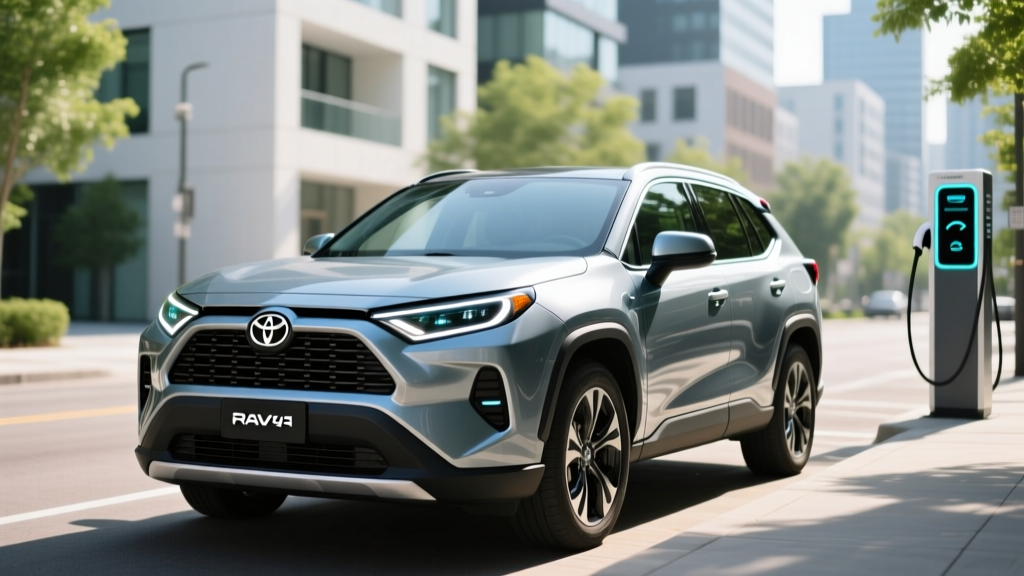
The RAV4 Hybrid remains Toyota's best-selling electrified vehicle and one of the most popular SUVs in America, period. It pairs a 2.5-liter four-cylinder engine with front and rear electric motors for standard all-wheel drive (Toyota calls this eAWD).
| Spec | 2026 RAV4 Hybrid |
|---|---|
| Powertrain | 2.5L I4 + 3 electric motors (eAWD) |
| Combined Horsepower | 219 hp |
| Hybrid Battery | ~1.6 kWh lithium-ion (not plug-in) |
| EPA MPG (City / Hwy / Combined) | 41 / 38 / 40 MPG |
| Fuel Tank | 14.5 gal |
| Total Range | ~580 miles |
| 0–60 mph | 7.4 seconds |
| Starting MSRP (LE AWD) | ~$33,500 |
| Federal Tax Credit | Not eligible (§30D requires plug-in) |
Real-world MPG note: The RAV4 Hybrid is one of those rare vehicles that often exceeds its EPA rating in city driving. In stop-and-go traffic, regenerative braking recovers energy constantly, and owners regularly report 42–44 MPG in urban use. Highway driving at 75+ mph drops efficiency closer to 35–37 MPG. If your commute is mostly city, expect to beat the sticker. If it's mostly interstate, expect to fall slightly short.
Source: EPA Fuel Economy — Toyota RAV4 Hybrid AWD
2026 Toyota RAV4 Prime: The PHEV Powerhouse
The RAV4 Prime is the plug-in variant — and it's a fundamentally different vehicle from the standard RAV4 Hybrid. It carries an 18.1 kWh battery pack, a more powerful electric motor, and the same 2.5L engine, producing a combined 302 hp. That makes it the quickest RAV4 Toyota sells, and it can operate as a pure EV for most daily commutes.
| Spec | 2026 RAV4 Prime |
|---|---|
| Powertrain | 2.5L I4 + electric motors (eAWD) |
| Combined Horsepower | 302 hp |
| Battery Capacity | 18.1 kWh lithium-ion |
| EPA Electric-Only Range | 42 miles |
| EPA Combined Range (EV + Gas) | ~600 miles |
| MPGe (EV Mode) | 94 MPGe combined |
| MPG (Hybrid Mode, After Battery Depleted) | 38 MPG combined |
| Level 2 Charging Time (240V, 6.6 kW) | ~2.5 hours (0–100%) |
| DC Fast Charging | Not available |
| 0–60 mph | 5.7 seconds |
| Starting MSRP (SE) | ~$44,500 |
| Federal Tax Credit (§30D) | Eligible — up to $7,500 (see rules below) |
Real-World Electric Range: What to Actually Expect
The EPA rates the RAV4 Prime at 42 miles of electric-only driving. In practice, expect 35–40 miles in mixed driving at moderate temperatures. In winter (below 35°F), cabin heating draws heavily from the battery, and range can drop to 25–30 miles. In summer with light acceleration and speeds under 50 mph, some owners squeeze out 45+ miles. Your commute distance and climate determine whether 42 miles covers your daily needs.
Critical charging note: The RAV4 Prime does not support DC fast charging. Level 2 at 240V is your fastest option, and at 6.6 kW onboard charging, a full charge takes roughly 2.5 hours. This is fine for overnight home charging but means you cannot quickly top up on a road trip. Plan accordingly — if you can't charge at home or work, much of the Prime's advantage disappears.
Source: EPA Fuel Economy — Toyota RAV4 Prime
2026 Toyota Highlander Hybrid: Three-Row Efficiency
For families needing a third row, the Highlander Hybrid is the default Toyota choice. It uses a 2.5L four-cylinder hybrid system (down from the prior V6) producing 243 combined horsepower with standard AWD. The tradeoff is clear: you get excellent fuel economy for a three-row SUV, but acceleration is modest.
| Driving Condition | EPA Estimate | Real-World Expectation |
|---|---|---|
| City | 36 MPG | 36–38 MPG |
| Highway | 35 MPG | 31–34 MPG |
| Combined | 35 MPG | 33–36 MPG |
The Highlander Hybrid starts around $42,000 for the LE trim and climbs to the low $50Ks for a Platinum. It is a conventional HEV — no plug, no electric-only mode, no federal tax credit eligibility. But compared to a gas-only three-row SUV getting 20–22 MPG combined, the 35 MPG combined rating represents roughly $800–$1,100 in annual fuel savings for a typical driver covering 15,000 miles per year.
The hybrid battery is a ~1.9 kWh unit that you never interact with directly. Toyota's hybrid system manages it automatically, using the electric motor for low-speed assist, regenerative braking, and brief EV-mode coasting.
Source: EPA Fuel Economy — Toyota Highlander Hybrid AWD
2026 Toyota Venza: The Midsize Hybrid Crossover
The Venza is a hybrid-only model — Toyota doesn't sell a gas version. It sits between the RAV4 and Highlander in size and uses a similar 2.5L hybrid powertrain with 219 hp and standard AWD. Think of it as a slightly more refined, coupe-styled alternative to the RAV4 Hybrid with a quieter cabin and smoother ride, at the cost of some cargo space.
- EPA MPG: 40 city / 37 highway / 39 combined
- Starting MSRP: ~$36,000
- Powertrain: 2.5L I4 hybrid, 219 hp, eAWD
- Hybrid Battery: ~1.6 kWh lithium-ion
- Tax Credit: Not eligible (conventional HEV)
Real-world fuel economy tracks closely with EPA estimates, and as with the RAV4 Hybrid, city drivers often report exceeding the 40 MPG city rating. The Venza's lower, more aerodynamic profile helps it maintain efficiency at highway speeds slightly better than the boxier RAV4.
Hybrid Battery Warranty, Lifespan, and Replacement Costs
Toyota Hybrid Battery Warranty — All 2026 Models
Coverage: 10 years or 150,000 miles (whichever comes first), for all hybrid battery components.
What's covered: Defects and capacity loss that causes the battery to fall below a defined performance threshold. Toyota's hybrid system is designed so that even with moderate degradation, the vehicle remains fully operational — the gas engine simply compensates.
Replacement cost if out of warranty: $2,000–$4,000 for HEV models (RAV4 Hybrid, Highlander, Venza) using a new OEM battery pack. The RAV4 Prime's larger 18.1 kWh PHEV battery would cost significantly more — estimated $6,000–$9,000 for a full pack replacement, though individual module replacement may be possible at lower cost.
This is where Toyota's long track record matters. The company has been building hybrid batteries since the 1997 Prius, and real-world data shows that Toyota hybrid batteries frequently last 150,000–200,000+ miles with minimal degradation. The HEV batteries are small and operate within a narrow state-of-charge window (roughly 40–80%), which dramatically reduces wear. The RAV4 Prime's larger PHEV battery sees deeper cycling, but Toyota's thermal management system and conservative buffer strategy protect long-term health.
For most buyers, the hybrid battery should outlast the vehicle's useful life or at least the duration of ownership. It is not the looming $20,000 expense that some online forums suggest.
Federal Tax Credits: Which Toyota SUV Hybrids Qualify?
This is where the HEV vs. PHEV distinction has direct financial consequences. Under current IRS §30D rules, only plug-in electric vehicles qualify for the federal clean vehicle credit. Conventional hybrids do not.
- RAV4 Hybrid (HEV): No federal tax credit. Not a plug-in vehicle.
- RAV4 Prime (PHEV): Potentially eligible for up to $7,500, subject to:
- Buyer income caps: $150K single / $300K joint modified AGI
- Vehicle MSRP cap: $80,000 for SUVs (RAV4 Prime clears this easily)
- Battery component and critical mineral sourcing requirements — these tighten annually and may reduce the credit to $3,750 or $0 depending on current-year supply chain compliance
- Point-of-sale transfer available at participating dealers (effective 2024 onward)
- Highlander Hybrid (HEV): No federal tax credit.
- Venza (HEV): No federal tax credit.
Important caveat: The critical minerals and battery component sourcing requirements under §30D have become increasingly strict. As of 2026, a growing number of PHEVs and EVs have seen their credit reduced or eliminated because battery materials do not meet the US/free-trade-agency sourcing thresholds. Always verify the RAV4 Prime's current credit status on the fueleconomy.gov tax credit page before purchasing, and confirm with your tax professional. Rules can change mid-year.
Hybrid vs. PHEV vs. Full EV: Which Toyota SUV Fits You?
Decision Framework: Pick the Right Powertrain
Choose a Toyota HEV (RAV4 Hybrid, Highlander, Venza) if:
- You cannot charge at home (no garage, no outlet access, apartment living)
- You want maximum simplicity — no charging cables, no apps, no range planning
- Your budget is under $40,000 and you want proven reliability
- You drive a mix of city and highway and want 35–41 MPG without behavior changes
Choose the RAV4 Prime (PHEV) if:
- You can install a Level 2 charger at home (240V outlet or hardwired station)
- Your daily commute is under 40 miles round-trip (you'll rarely use gas on weekdays)
- You want EV-like daily driving but need gas flexibility for road trips
- You can potentially capture the $3,750–$7,500 federal tax credit
- You value the 302 hp performance upgrade
Choose a full EV (e.g., Toyota bZ4X or a competitor) if:
- You have reliable home charging and your daily driving is under 250 miles
- You want zero tailpipe emissions and minimal maintenance (no oil changes, no gas engine)
- You're ready to plan around DC fast charging on road trips
- You want the full $7,500 federal credit (more EVs qualify than PHEVs under current sourcing rules)
The honest truth: for most American households without home charging access, a conventional Toyota HEV is the most pragmatic electrified vehicle. You get 35–41 MPG, no behavior change, and Toyota's best-in-class hybrid reliability. The RAV4 Prime is outstanding for the right buyer — but if you never plug it in, you're just carrying 500+ pounds of dead battery weight and getting worse fuel economy than the standard RAV4 Hybrid.
Pros and Cons: Toyota SUV Hybrids Summarized
Pros
- Class-leading fuel economy across all trims (35–41 MPG combined)
- Toyota's hybrid system is the most proven in the industry (25+ years of refinement)
- 10-year / 150,000-mile hybrid battery warranty
- Standard AWD on all models with no fuel-economy penalty vs. FWD
- RAV4 Prime offers 42 miles EV range + 302 hp + gas backup
- No range anxiety — fill up at any gas station in 3 minutes
- Strong resale value; Toyota hybrids depreciate slower than most EVs
Cons
- HEV models do not qualify for federal tax credits
- RAV4 Prime's $44,500+ starting price is a significant premium over the standard hybrid
- No DC fast charging on the RAV4 Prime
- Highlander Hybrid acceleration is sluggish (0–60 in ~8.0 seconds) for a vehicle this size
- RAV4 Prime availability remains limited — dealer markups are common
- None of these models offer true zero-emission driving (except the Prime on short trips)
- Toyota's infotainment system lags behind competitors in responsiveness
Frequently Asked Questions
How many MPG do Toyota SUV hybrids get?
The 2026 RAV4 Hybrid gets 41 city / 38 highway / 40 combined. The Highlander Hybrid achieves 36/35/35. The Venza returns 40/37/39. The RAV4 Prime, when its battery is depleted, operates as a hybrid at 38 MPG combined. In real-world city driving, Toyota HEVs often exceed their EPA city ratings by 1–3 MPG thanks to aggressive regenerative braking.
How far can the RAV4 Prime go on electric only?
The EPA rates it at 42 miles of electric-only range. Real-world results vary from 25–30 miles in cold weather to 45+ miles in mild conditions with conservative driving. For a typical 30-mile round-trip commute in moderate weather, most Prime owners complete weekday driving without using a drop of gasoline.
Do Toyota hybrid batteries need to be replaced, and what does it cost?
Toyota hybrid batteries are designed to last the life of the vehicle. Data from millions of Toyota hybrids on the road shows most original batteries exceed 150,000 miles with minimal degradation. If replacement is needed out of warranty, expect $2,000–$4,000 for HEV models and $6,000–$9,000 for the RAV4 Prime's larger PHEV pack. The 10-year/150,000-mile warranty covers defects and significant capacity loss.
Does any Toyota SUV hybrid qualify for a tax credit?
Only the RAV4 Prime (PHEV) is potentially eligible for the federal §30D clean vehicle credit, which can be up to $7,500. Eligibility depends on your income, the vehicle's MSRP, and current battery sourcing compliance — which changes yearly. The RAV4 Hybrid, Highlander Hybrid, and Venza are conventional HEVs and do not qualify for any federal EV credit. Check IRS.gov and fueleconomy.gov for the latest status.
Should I get the RAV4 Hybrid or the RAV4 Prime?
If you can charge at home and your daily driving is under 40 miles, the Prime is the better vehicle — you'll drive electric most days, get 302 hp, and potentially claim a tax credit that narrows the price gap. If you can't charge at home, the standard RAV4 Hybrid is the smarter buy: it's $11,000+ cheaper, lighter, and gets comparable MPG once the Prime's battery is depleted. The worst outcome is buying a Prime and never plugging it in.
Is a Toyota hybrid reliable compared to a full EV?
Toyota's hybrid system is arguably the most reliable powertrain technology on the market today, with over 25 years of continuous refinement and millions of units in service. Full EVs have fewer moving parts in theory, but Toyota's hybrid complexity has proven extremely durable. The main reliability advantage of a full EV is the elimination of the internal combustion engine entirely — but Toyota's hybrid engines are low-stress and long-lived. For buyers prioritizing minimum risk, a Toyota HEV is the safest bet in electrified vehicles.