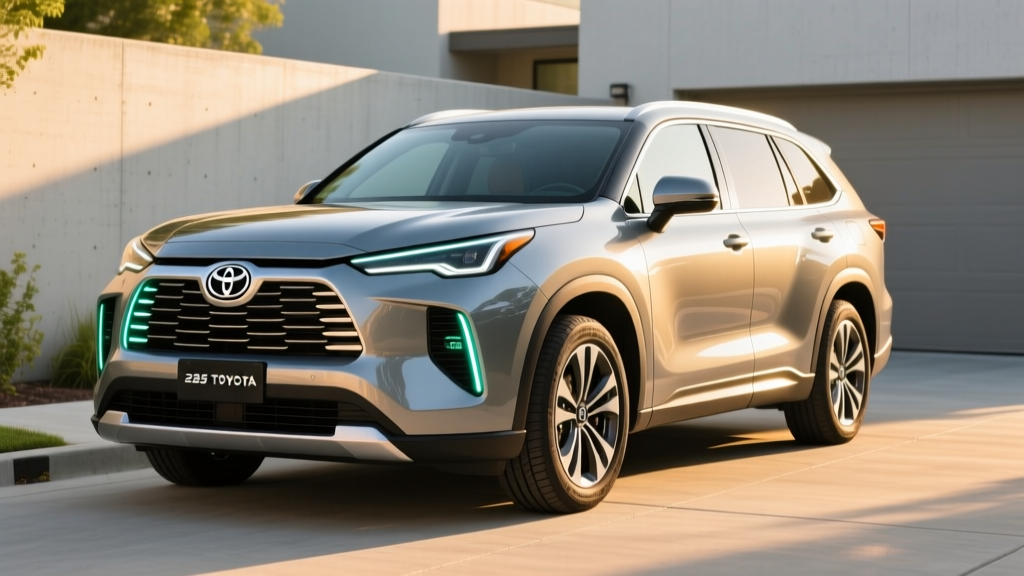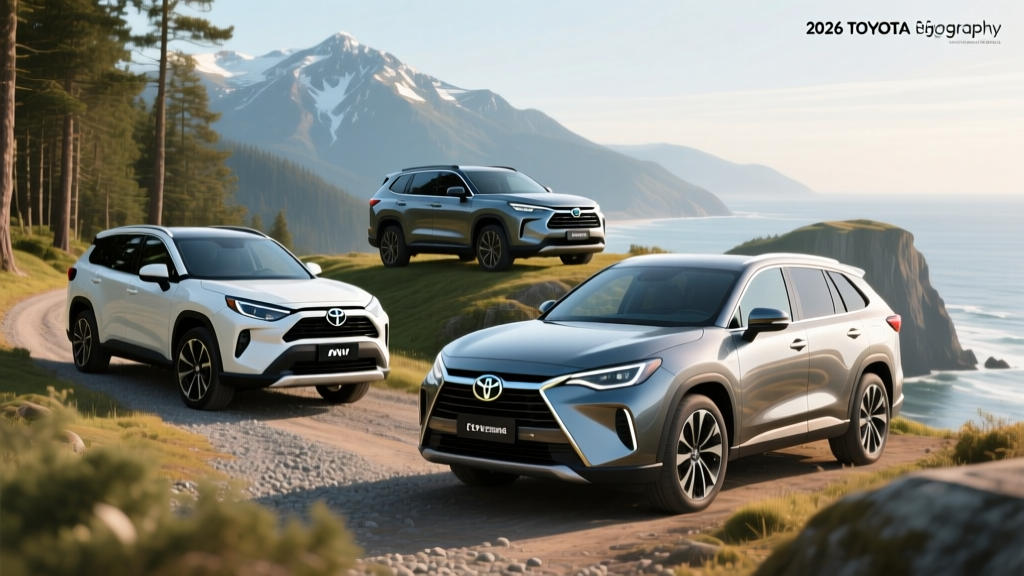
If you're searching for a Toyota SUV hybrid, you have more options than ever in the 2026 model year — and they span two fundamentally different technologies. Toyota offers conventional hybrids (HEVs) that never need plugging in, plus a plug-in hybrid (PHEV) that delivers genuine electric-only commuting range. Choosing the right one depends on your daily mileage, charging access, and budget.
This guide breaks down every electrified Toyota SUV currently on sale: the RAV4 Hybrid, the RAV4 Prime (PHEV), the Highlander Hybrid, and the Crown Signia Hybrid. We'll cover EPA fuel economy, real-world efficiency, powertrain specs, pricing, tax credit eligibility, and long-term battery reliability — with the exact numbers you need to decide.
HEV vs. PHEV: What's the Difference?
Before comparing models, it's critical to understand the two hybrid architectures Toyota uses. Confusing them is the single most common mistake hybrid shoppers make.
| Feature | Conventional Hybrid (HEV) | Plug-In Hybrid (PHEV) |
|---|---|---|
| Needs to plug in? | No — charges via engine & regenerative braking | Yes — plug in for electric-only range |
| Electric-only driving | Very short distances at low speed | 20–45+ miles at highway speeds |
| Battery size | ~1.0–1.6 kWh | ~13–18 kWh |
| Federal tax credit | None | Up to $7,500 (with eligibility caveats) |
| Best for | Drivers without home charging access | Commuters who can charge at home |
The conventional hybrid (RAV4 Hybrid, Highlander Hybrid, Crown Signia) captures energy from braking and the gasoline engine to charge a small battery. You simply fill it with gas and drive — no plug, no charger, no behavior change. The plug-in hybrid (RAV4 Prime) adds a much larger battery and a more powerful electric motor, enabling real electric-only commuting before the gas engine kicks in as a backup.
2026 Toyota SUV Hybrid MPG & Range Comparison
Here's how the full lineup stacks up on the EPA cycle. Note that Toyota hybrids often exceed their EPA city rating in real-world stop-and-go driving, because regenerative braking recovers more energy in traffic. Highway MPG tends to run slightly below the sticker in sustained 75+ mph driving.
| Model | Type | City MPG | Hwy MPG | Combined MPG | EV-Only Range | Total Range |
|---|---|---|---|---|---|---|
| RAV4 Hybrid (AWD) | HEV | 41 | 38 | 40 | N/A | ~580 mi |
| RAV4 Prime (AWD) | PHEV | 40 (gas) / 94 MPGe (EV) | 36 (gas) | 39 (gas) / 94 MPGe | 42 mi | ~600 mi |
| Highlander Hybrid (AWD) | HEV | 36 | 35 | 36 | N/A | ~630 mi |
| Crown Signia Hybrid (AWD) | HEV | 37 | 34 | 36 | N/A | ~590 mi |
Real-world note: In mixed suburban driving with moderate regenerative braking, RAV4 Hybrid owners commonly report 42–44 MPG in warm weather city conditions. On sustained highway trips above 70 mph, expect 34–37 MPG. Cold weather (below freezing) reduces efficiency by roughly 5–10% due to cabin heating demands and reduced battery efficiency. Source: fueleconomy.gov.
RAV4 Prime: The Plug-In Hybrid Deep Dive
The RAV4 Prime deserves its own section because it operates as two vehicles in one: a battery-electric commuter car and a gasoline-hybrid road tripper. For 2026, it remains the most powerful RAV4 Toyota sells.
| Specification | 2026 RAV4 Prime |
|---|---|
| Powertrain | 2.5L 4-cyl + 2 electric motors (AWD) |
| Combined horsepower | 302 hp |
| 0–60 mph | 5.7 seconds |
| Battery capacity | 18.1 kWh (lithium-ion) |
| EPA electric-only range | 42 miles |
| EPA MPGe (EV mode) | 94 MPGe |
| Level 1 charging (120V) | ~12 hours (0–100%) |
| Level 2 charging (240V, 3.3 kW) | ~4.5 hours (0–100%) |
| Level 2 charging (240V, 6.6 kW option) | ~2.5 hours (0–100%) |
| DC fast charging | Not available |
| Base MSRP | $44,595 (SE trim) |
Real-world electric range: The EPA rates the RAV4 Prime at 42 miles of electric-only driving. In practice, expect 35–40 miles in mixed driving with HVAC use, and up to 45 miles on flat terrain in mild weather at moderate speeds. Highway driving at 75+ mph can reduce electric range to roughly 30 miles.
Charging reality: The RAV4 Prime does not support DC fast charging. Its onboard charger tops out at 6.6 kW on Level 2 (with the available upgrade). For most owners, overnight charging on a standard Level 2 home charger easily replenishes the battery before the next commute. A standard 120V outlet will work but requires roughly 12 hours for a full charge — feasible only if your daily electric driving is under 20 miles.
Powertrain Details Across the Lineup
All four Toyota SUV hybrids use variants of Toyota's Hybrid Synergy Drive, pairing a gasoline engine with electric motor-generators through a planetary gearset (eCVT). Here's the breakdown:
- RAV4 Hybrid: 2.5L inline-4 + dual electric motors, 219 hp combined, electronic AWD with a rear-mounted motor. The rear motor provides torque to the rear wheels without a mechanical driveshaft.
- RAV4 Prime: Same 2.5L engine but paired with more powerful front and rear motors and the larger 18.1 kWh battery, yielding 302 hp. The extra power makes it the quickest RAV4 variant.
- Highlander Hybrid: 2.5L inline-4 + electric motors, 243 hp combined, available electronic AWD. The hybrid system adds minimal weight penalty versus the gas Highlander while delivering 15+ MPG improvement.
- Crown Signia: 2.5L inline-4 + electric motors, 240 hp combined, standard AWD. Positioned as a premium wagon-style crossover with hybrid standard across all trims.
Pricing, Trims & Tax Credit Eligibility
Here's what each model costs at the base trim level for the 2026 model year, before destination charges:
| Model | Base Trim | MSRP | Federal Tax Credit |
|---|---|---|---|
| RAV4 Hybrid | LE | $33,850 | None (HEV) |
| RAV4 Prime | SE | $44,595 | Up to $7,500* |
| Highlander Hybrid | LE | $42,070 | None (HEV) |
| Crown Signia | XLE | $43,590 | None (HEV) |
*RAV4 Prime tax credit details: The RAV4 Prime may qualify for up to $7,500 under the IRS §30D Clean Vehicle Credit, but eligibility is not guaranteed and depends on several factors that change periodically:
- MSRP cap: SUVs must be at or below $80,000 MSRP (RAV4 Prime qualifies)
- Buyer income cap: AGI must not exceed $150,000 (single) / $300,000 (joint) / $225,000 (head of household)
- Battery sourcing: Critical minerals and battery components must meet phased-in domestic-content thresholds — these requirements tighten annually and may reduce or eliminate the credit for specific build dates
- Point-of-sale transfer: As of 2024+, eligible buyers can transfer the credit to the dealer for an immediate price reduction rather than waiting for tax filing
- Verification: Always confirm current eligibility on the fueleconomy.gov tax credit page and consult a tax professional before relying on the credit
Conventional hybrids (HEVs) do not qualify for the §30D federal tax credit. Some states offer separate incentives for hybrids — check your state's energy office or DMV for current programs.
Reliability & Battery Longevity
Toyota's hybrid system has over 25 years of production history dating back to the 1997 Prius. The hybrid battery is one of the most common concerns among first-time hybrid buyers, but the data is reassuring.
Toyota Hybrid Battery Warranty: All 2026 Toyota hybrids carry a 10-year / 150,000-mile hybrid battery warranty (whichever comes first). This covers the traction battery against defects and excessive capacity loss. In states that follow California Air Resources Board (CARB) standards, the warranty extends to 10 years / 150,000 miles with additional emissions-related coverage.
Real-world battery lifespan: Data from fleet operators and long-term owners shows Toyota hybrid batteries routinely lasting 150,000–200,000+ miles before significant degradation. The hybrid system's battery management software keeps the state of charge in a narrow, battery-friendly window (roughly 40%–80%), which dramatically extends cell life compared to full EVs that routinely cycle from 10%–100%.
Battery replacement cost: If a hybrid battery does fail outside of warranty, a replacement typically costs between $2,000 and $4,000 installed for a RAV4 Hybrid, depending on whether you choose a new OEM unit, a refurbished module, or an aftermarket option. The RAV4 Prime's larger PHEV battery will cost more — estimated at $5,000–$8,000 — though failures remain rare in Toyota's system.
Toyota's reliability reputation is backed by consistent top rankings from Consumer Reports and J.D. Power dependability studies, with the RAV4 Hybrid frequently cited as one of the most trouble-free compact SUVs in its class.
Hybrid vs. PHEV vs. Full EV: Which Toyota SUV Is Right for You?
Choose the RAV4 Hybrid (HEV) if:
- You don't have access to home or workplace charging
- You want maximum simplicity — fill up with gas, no plug needed
- Your budget is under $38,000
- You drive 25,000+ miles/year and want consistent efficiency without range planning
Choose the RAV4 Prime (PHEV) if:
- You have Level 2 charging at home or work
- Your daily commute is under 40 miles round-trip
- You want to drive on electricity most days but take gas-powered road trips without range anxiety
- You qualify for the federal tax credit (effective price drops to ~$37,000–$40,000)
- You value the 302 hp performance boost
Choose the Highlander Hybrid if:
- You need three rows and seating for 7–8 passengers
- You want hybrid efficiency without sacrificing cargo or passenger volume
- You don't need plug-in electric range
Consider a full EV (like the Toyota bZ4X or a competitor) if:
- You have reliable home charging and your daily driving is under 250 miles
- You want zero tailpipe emissions and minimal maintenance (no oil changes, no gas engine)
- You want access to the full $7,500 federal tax credit across more model options
Pros & Cons: Toyota SUV Hybrid Lineup
Pros
- Class-leading fuel economy (40 MPG combined in the RAV4 Hybrid)
- Proven hybrid reliability with 10-year/150,000-mile battery warranty
- No charging infrastructure required (HEV models)
- RAV4 Prime offers 42 miles of EV range + 302 hp
- Strong resale value — Toyota hybrids hold value better than most competitors
- Standard AWD across most hybrid trims improves all-weather capability
Cons
- RAV4 Prime commands a ~$10,700 premium over the RAV4 Hybrid base
- No DC fast charging on the RAV4 Prime
- Highlander Hybrid's 36 MPG is good for a 3-row SUV but trails the smaller RAV4
- Only the RAV4 Prime qualifies for the federal tax credit — HEVs get no federal incentive
- RAV4 Prime availability can be limited at dealers; expect wait times or markups
- Hybrid powertrain adds ~150–200 lbs vs. gas-only equivalents, marginally affecting handling
Frequently Asked Questions
How many MPG does the Toyota RAV4 Hybrid get in real-world driving?
The EPA rates the RAV4 Hybrid AWD at 41 city / 38 highway / 40 combined MPG. In real-world city and suburban driving with moderate regenerative braking, many owners report 42–44 MPG. Sustained highway driving above 70 mph typically yields 34–37 MPG. Cold weather reduces these figures by roughly 5–10%.
How far can the RAV4 Prime drive on electric only?
The EPA rates the RAV4 Prime at 42 miles of electric-only range. Real-world results vary: expect 35–40 miles in mixed driving with climate control active, up to 45 miles in mild conditions at moderate speeds, and roughly 30 miles at sustained highway speeds above 75 mph. Once the battery is depleted, it operates as a conventional hybrid at roughly 39 MPG combined.
Does the Toyota RAV4 Hybrid need to be plugged in?
No. The RAV4 Hybrid (HEV) charges its battery entirely through regenerative braking and the gasoline engine. You never plug it in. Only the RAV4 Prime (PHEV) benefits from being plugged into a Level 1 or Level 2 charger to replenish its larger battery for electric-only driving.
Is a Toyota hybrid SUV reliable? What about battery replacement costs?
Toyota's hybrid system has been in production since 1997 and is among the most reliable powertrains in the automotive industry. The hybrid battery is warrantied for 10 years or 150,000 miles. Real-world data shows batteries routinely lasting 150,000–200,000+ miles. If replacement is needed out of warranty, expect $2,000–$4,000 for an HEV battery and $5,000–$8,000 for the RAV4 Prime's larger PHEV battery.
Does the Toyota RAV4 Prime qualify for the $7,500 federal tax credit?
The RAV4 Prime may qualify for up to $7,500 under the IRS §30D Clean Vehicle Credit, but eligibility depends on your income (AGI caps apply), the vehicle's battery sourcing compliance, and current IRS rules that tighten annually. The MSRP is under the $80,000 SUV cap. Always verify current eligibility at fueleconomy.gov and consult a tax professional. Conventional RAV4 Hybrid (HEV) models do not qualify for this credit.
Can the RAV4 Prime DC fast charge?
No. The RAV4 Prime does not have DC fast charging capability. It charges via Level 1 (120V, ~12 hours for a full charge) or Level 2 (240V, approximately 4.5 hours at 3.3 kW or 2.5 hours with the available 6.6 kW onboard charger). For a PHEV with a 42-mile electric range, overnight Level 2 charging is sufficient for daily use.
Toyota SUV hybrid vs. full EV — which should I choose?
Choose a Toyota HEV if you lack charging access or want zero behavioral change. Choose the RAV4 Prime PHEV if you can charge at home and want electric commuting with gas-powered road trip flexibility. Choose a full EV (like the bZ4X or a competitor) if you have reliable charging, drive under 250 miles daily, and want zero tailpipe emissions with lower maintenance costs. The PHEV is the best bridge option for households transitioning from gas to electric.
Sources: EPA fuel economy data from fueleconomy.gov, manufacturer specifications from Toyota.com, and federal tax credit rules from IRS.gov. All specifications reflect 2026 model year data available at time of publication. Verify current pricing and credit eligibility before purchasing.