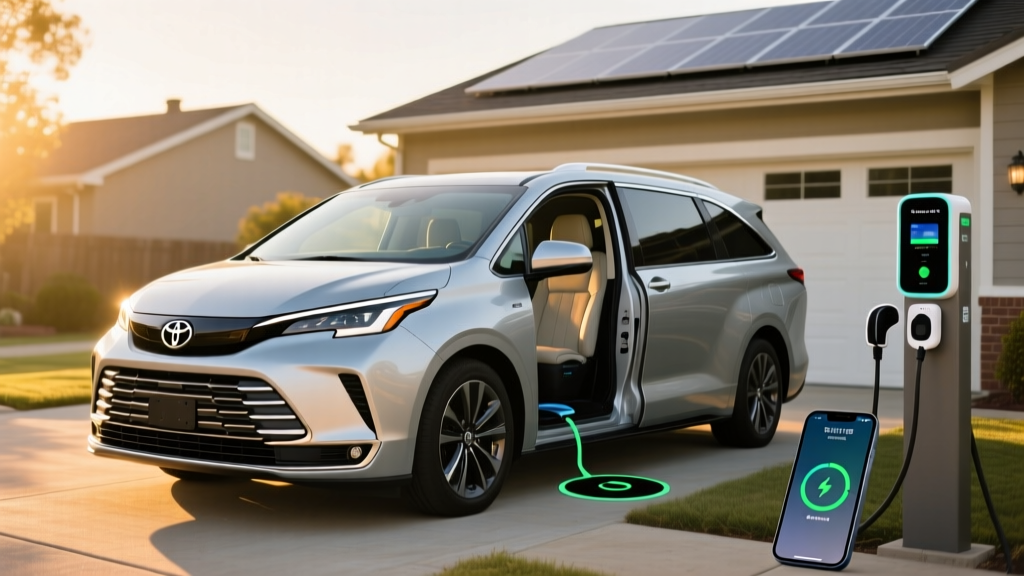
Toyota made a bold move when it eliminated the V6 option from the Sienna minivan lineup, committing entirely to a four-cylinder hybrid powertrain. For the 2026 model year, the Toyota Sienna remains one of the few hybrid-only minivans on the market — and it continues to reward that decision with class-leading fuel economy, standard all-wheel drive availability, and a proven hybrid system derived from decades of Toyota Hybrid Synergy Drive engineering.
If you're researching the hybrid Sienna as a family hauler, this guide covers everything you need: exact EPA MPG figures, real-world fuel economy expectations, the powertrain under the hood, battery longevity and warranty coverage, pricing across trims, and whether a conventional hybrid (HEV) minivan makes more sense for your family than a plug-in hybrid or full electric vehicle.
Hybrid Sienna Fuel Economy: EPA Ratings and Real-World MPG
The headline number for any hybrid buyer is fuel efficiency, and the 2026 Sienna delivers. Every Sienna trim uses Toyota's fourth-generation hybrid system paired with a 2.5-liter inline-four engine. Front-wheel drive (FWD) models achieve the highest ratings, while the available electronic all-wheel drive (AWD) — which uses a separate rear-mounted electric motor rather than a mechanical driveshaft — imposes a modest efficiency penalty.
| Drivetrain | City MPG | Highway MPG | Combined MPG |
|---|---|---|---|
| FWD | 36 | 36 | 36 |
| AWD (Electronic) | 35 | 36 | 35 |
Source: EPA Fuel Economy
In mixed suburban and city driving, many Sienna owners report matching or slightly exceeding the 36 MPG combined EPA estimate — a common trait of Toyota's hybrid system, which thrives in stop-and-go conditions where regenerative braking recaptures energy. On sustained highway trips at 75+ mph, expect 32–34 MPG. In cold-weather driving (below 30°F), the engine runs more frequently to maintain cabin heat, dropping observed economy to roughly 30–33 MPG combined until the powertrain warms up.
For context, the Sienna's closest competitor, the Chrysler Pacifica Hybrid (a plug-in hybrid), achieves 30 MPG combined once its electric range is depleted. The non-hybrid Honda Odyssey rates at 22 MPG combined. The Sienna's advantage is substantial — roughly 40–60% better fuel economy than a conventional gas minivan.
Powertrain: How the Sienna Hybrid System Works
The 2026 Sienna uses Toyota's series-parallel hybrid architecture, which can operate the vehicle on the gasoline engine alone, the electric motors alone, or a combination of both depending on speed, load, and battery state of charge.
| Specification | Detail |
|---|---|
| Engine | 2.5L inline-4 (Atkinson cycle) |
| Engine Output | 189 hp / 176 lb-ft torque |
| Front Electric Motor | 134 hp (integrated into transaxle) |
| Rear Electric Motor (AWD only) | 54 hp (independent rear axle) |
| Net Combined Horsepower | 245 hp |
| Transmission | eCVT (planetary gearset) |
| Hybrid Battery | ~1.6 kWh NiMH (sealed, self-charging) |
| 0–60 mph | ~7.2 seconds (est.) |
| Towing Capacity | 3,500 lbs (when properly equipped) |
A critical point for shoppers: the Sienna is a conventional hybrid (HEV), not a plug-in hybrid. It has no charging port and no meaningful electric-only range at highway speeds. The small nickel-metal hydride (NiMH) battery charges itself through regenerative braking and engine-generated power. You never plug it in — you simply drive it like any other vehicle and refuel at a gas station.
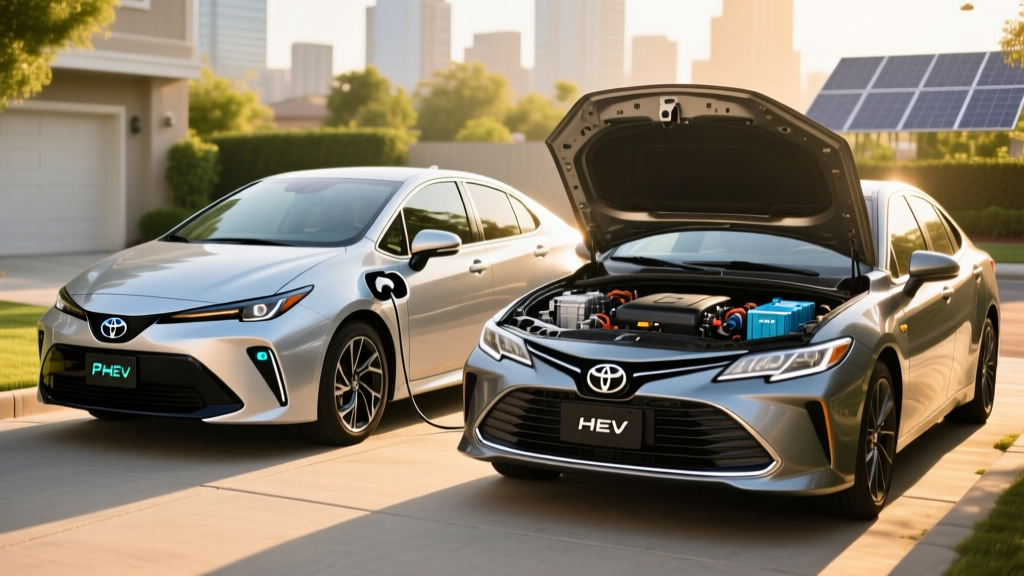
Conventional Hybrid (HEV) — Sienna: No plug. Small battery (~1.6 kWh) charged by regenerative braking and the engine. Electric motor assists the gas engine and enables brief low-speed EV driving. Fuel economy gains come from engine optimization and energy recapture, not from grid electricity.
Plug-in Hybrid (PHEV) — e.g., Chrysler Pacifica Hybrid: Has a plug. Larger battery (~16 kWh usable) that can be charged from a wall outlet or public charger. Offers 20–40 miles of electric-only driving before the gas engine engages. Once the battery is depleted, it operates as a conventional hybrid. Requires access to charging infrastructure to realize full efficiency benefits.
2026 Sienna Pricing by Trim and Tax Credit Eligibility
The 2026 Toyota Sienna is offered in seven trims, all with the same hybrid powertrain. Pricing starts in the low $39,000s and climbs to the mid-$50,000s for the top Woodland Edition with AWD.
| Trim | MSRP (FWD) | MSRP (AWD) |
|---|---|---|
| LE | ~$39,085 | ~$39,885 |
| XLE | ~$42,085 | ~$42,885 |
| XSE | ~$44,585 | ~$45,385 |
| SE (Sport) | — | ~$47,385 |
| Limited | ~$48,585 | ~$49,385 |
| Platinum | ~$52,085 | ~$52,885 |
| Woodland Edition | — | ~$50,385 |
Prices include destination charge. Verify current pricing on Toyota's official site.
Does the Hybrid Sienna Qualify for a Federal Tax Credit?
No. Under current IRS §30D rules, the federal clean vehicle credit applies only to battery electric vehicles (BEVs) and plug-in hybrids (PHEVs) that meet battery capacity, critical-mineral sourcing, MSRP, and buyer income requirements. Because the Sienna is a conventional hybrid (HEV) with no plug-in capability and a battery well below the 7 kWh minimum threshold, it does not qualify for the federal EV tax credit.
Some states offer separate incentives for conventional hybrids, but these are increasingly rare as state programs shift toward zero-emission vehicles. Check your state's energy or DMV website for current hybrid-specific rebates.
Battery Longevity, Warranty, and Replacement Cost
Hybrid battery anxiety is one of the most common concerns among first-time hybrid buyers. Here's what the data shows for the Sienna's system:
- Hybrid Battery Coverage: 10 years / 150,000 miles (whichever comes first)
- Hybrid System Components: 8 years / 100,000 miles
- Powertrain Warranty: 5 years / 60,000 miles
- Capacity Threshold: Toyota warrants the hybrid battery against failure and abnormal degradation; unlike EV batteries, there is no published State of Health percentage threshold — the system either functions within spec or it doesn't
The Sienna's NiMH hybrid battery is far smaller and less stressed than an EV traction battery. It operates in a narrow state-of-charge window (roughly 40–80%) managed by the vehicle's computer, which significantly extends cycle life. Toyota's hybrid batteries have an excellent long-term track record: Prius taxis routinely exceed 300,000 miles on original hybrid batteries, and widespread Sienna data since the 2021 model-year redesign shows very low failure rates.
If the hybrid battery does eventually need replacement outside warranty, expect a cost between $2,000 and $4,000 for a new OEM unit, or $1,000–$2,000 for a refurbished module from a reputable supplier. This is a fraction of an EV battery replacement, which can exceed $10,000–$20,000.
Is the Hybrid Sienna Reliable?
Yes. The Sienna's hybrid powertrain carries a strong reliability reputation. Toyota's hybrid system is one of the most proven in the industry, with over 25 years of continuous refinement since the original Prius. The eCVT transmission has no traditional belts, bands, or clutch packs to wear out — it uses a planetary gearset that is mechanically simple and durable. IIHS has historically rated the Sienna as a Top Safety Pick when equipped with specific headlights, and Toyota Safety Sense 3.0 comes standard across all trims.
Sienna Hybrid vs. PHEV vs. EV: Which Minivan Fits Your Family?
The minivan segment offers three electrification paths. Here's how they compare in practical terms:
| Factor | Toyota Sienna (HEV) | Chrysler Pacifica Hybrid (PHEV) | EV Minivan (e.g., upcoming options) |
|---|---|---|---|
| Plug-in Required? | No | Yes (for max benefit) | Yes |
| Combined MPG / MPGe | 35–36 MPG | 30 MPG (gas) / 82 MPGe (electric) | ~2.0–2.5 kWh/mi |
| Electric-Only Range | None (low-speed only) | ~32 miles | 250–300+ miles |
| Total Range | ~620 miles | ~460 miles (gas + electric) | 250–300 miles |
| Fuel/Charging Cost | ~$0.11/mile | ~$0.05/mile (electric) to $0.14/mile (gas) | ~$0.04–$0.08/mile |
| Starting MSRP | ~$39,085 | ~$49,000 | TBD (limited options) |
| Federal Tax Credit | None | Up to $7,500 (if eligible) | Up to $7,500 (if eligible) |
| Home Charging Needed? | No | Recommended | Essential |
- You don't have access to home or workplace charging
- You want maximum range for long road trips without charging stops
- You prefer the lowest starting price in the segment
- Your daily driving is mixed city/highway and you want consistent 35+ MPG
- You want AWD availability (not offered on Pacifica Hybrid)
- You can charge at home nightly (Level 2, 240V)
- Most daily trips are under 30 miles (school runs, errands)
- You qualify for the $7,500 federal credit, narrowing the price gap
- You want some zero-emission driving without full EV commitment
- Home Level 2 charging is available and your daily range needs are under 250 miles
- You want the lowest per-mile fuel cost and near-zero maintenance
- Currently, EV minivan options are very limited in the US market — watch for announcements from Kia, Hyundai, and others
Ownership Costs: What the Sienna Hybrid Saves You
Let's run a practical five-year cost comparison. Assume 15,000 miles per year, $3.40/gallon regular unleaded, and the Sienna's 36 MPG combined rating:
- Annual fuel cost (Sienna HEV): ~$1,417
- Annual fuel cost (Honda Odyssey, 22 MPG combined): ~$2,318
- Annual fuel cost (Pacifica Hybrid, 50% electric / 50% gas mix): ~$1,000–$1,400 (varies heavily with charging habits)
Over five years, the Sienna saves roughly $4,500 in fuel compared to a gas-only minivan. That doesn't include the Sienna's lower maintenance burden — no traditional automatic transmission fluid changes, reduced brake wear from regenerative braking (many owners report 80,000+ miles on original brake pads), and Toyota's reputation for low cost of ownership.
Insurance premiums for the Sienna are generally in line with the minivan segment average. Hybrid-specific insurance surcharges are uncommon for Toyota hybrids, unlike some higher-repair-cost EVs.
Pros and Cons of the 2026 Hybrid Sienna
- Class-leading 36 MPG combined — best in any minivan
- No plug-in charging required; works with any gas station
- Available electronic AWD with independent rear motor
- Proven hybrid system with 10-year/150,000-mile battery warranty
- Standard Toyota Safety Sense 3.0 across all trims
- Strong resale value — Toyota minivans hold value well
- Sliding doors, 8-passenger seating, practical interior
- No federal tax credit eligibility (HEV, not PHEV/BEV)
- Engine noise under hard acceleration (CVT drone on highway merges)
- 245 hp is adequate but not quick for a loaded family hauler
- Infotainment system lags behind competitors in responsiveness
- No electric-only highway driving capability
- Third-row seat doesn't fold flat into the floor (unlike Honda Odyssey)
Frequently Asked Questions
How many MPG does the hybrid Sienna get?
The 2026 Toyota Sienna FWD achieves an EPA-rated 36 MPG city, 36 MPG highway, and 36 MPG combined. The AWD model rates at 35 city / 36 highway / 35 combined. In real-world suburban driving, many owners match or slightly exceed the EPA estimate. Highway-only driving at higher speeds typically yields 32–34 MPG.
Does the Sienna hybrid need to be plugged in?
No. The Sienna is a conventional hybrid (HEV), not a plug-in hybrid. It has no charging port. The hybrid battery charges itself through regenerative braking and the gasoline engine. You refuel it at any gas station with regular unleaded fuel.
How far can the Sienna go on electric power alone?
The Sienna can operate on electric-only power at very low speeds (typically under 25 mph) for roughly one mile or less — useful for creeping through a parking lot or a quiet neighborhood. It does not have meaningful electric-only highway range. If electric-only commuting is a priority, you need a plug-in hybrid like the Chrysler Pacifica Hybrid (~32 miles EV range) or a full battery electric vehicle.
How long will the Sienna hybrid battery last, and what does replacement cost?
Toyota's hybrid batteries are engineered for longevity and are covered by a 10-year / 150,000-mile warranty. Real-world data from Toyota's hybrid lineup shows many batteries lasting 200,000+ miles without issue. If replacement is needed outside warranty, expect $2,000–$4,000 for a new OEM battery, or $1,000–$2,000 for a refurbished unit.
Does the 2026 Sienna qualify for any tax credit?
The Sienna does not qualify for the federal §30D clean vehicle tax credit because it is a conventional hybrid (HEV), not a plug-in hybrid or battery electric vehicle. Some states may offer minor hybrid incentives — check your state's energy office or DMV for current programs. The IRS clean vehicle credit page outlines which vehicle types are eligible.
Is the Sienna hybrid good for road trips?
Yes — the Sienna's ~17.5-gallon fuel tank and 36 MPG combined rating give it approximately 620+ miles of total range, which is among the best in the minivan segment. There are no charging stops to plan, no range anxiety on long stretches, and AWD is available for mountain or inclement-weather routes.
Hybrid vs. PHEV vs. EV minivan — which should I buy?
If you lack home charging access or regularly drive 300+ miles between stops, the Sienna HEV is the strongest choice. If you can charge at home and most daily trips are under 30 miles, a PHEV like the Pacifica Hybrid offers zero-emission commuting with gas-engine backup. Full EV minivans remain scarce in the US market as of 2026, but are expected to grow in availability over the next few model years.