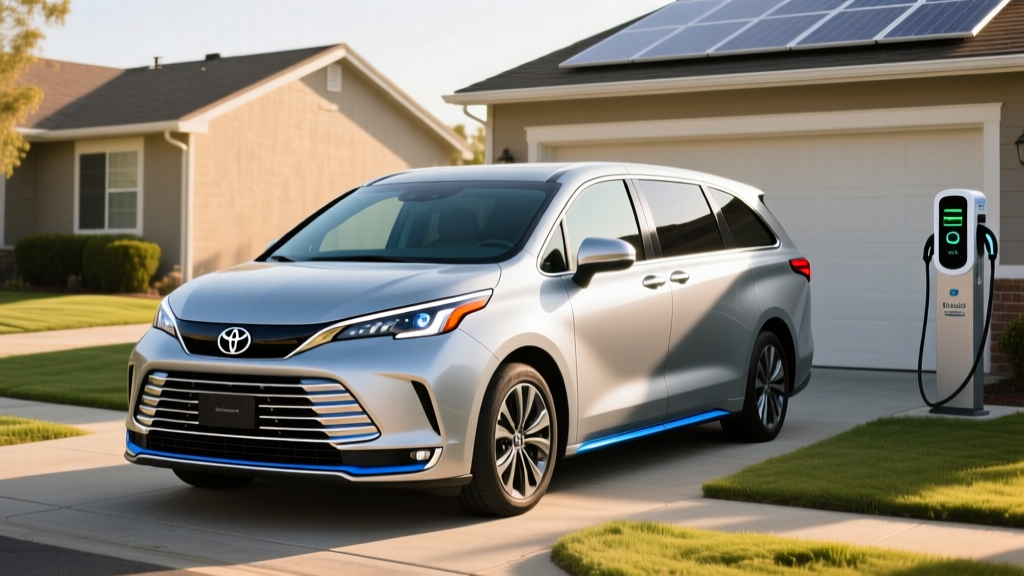
The Toyota Sienna has been a hybrid-only minivan since the 2021 model year, and the 2026 version continues that strategy with a fourth-generation 2.5-liter four-cylinder hybrid powertrain. Unlike most minivans still running V6 engines, the Sienna trades peak horsepower for class-leading fuel efficiency — a decision that pays dividends at the pump over 15,000+ miles of annual family driving.
This guide covers everything a buyer needs: exact EPA MPG figures, real-world fuel economy expectations, powertrain mechanics, pricing across all trims, battery warranty details, and how the Sienna stacks up against plug-in hybrid and full-electric alternatives for family hauling.
HEV vs. PHEV: What the Sienna Actually Is
The Toyota Sienna is a conventional hybrid (HEV), not a plug-in hybrid (PHEV). This distinction matters for buyers cross-shopping electrified family vehicles:
- HEV (Sienna): Self-charging via regenerative braking and the gas engine. No plug, no charging cable, no electric-only range to manage. You simply fill up with gas and drive. The hybrid system optimizes when to use the electric motor vs. the engine.
- PHEV (e.g., Chrysler Pacifica Hybrid): Has a larger battery you plug in to charge, offering 20–40 miles of electric-only driving before the gas engine kicks in. Requires access to a Level 1 or Level 2 outlet for maximum benefit.
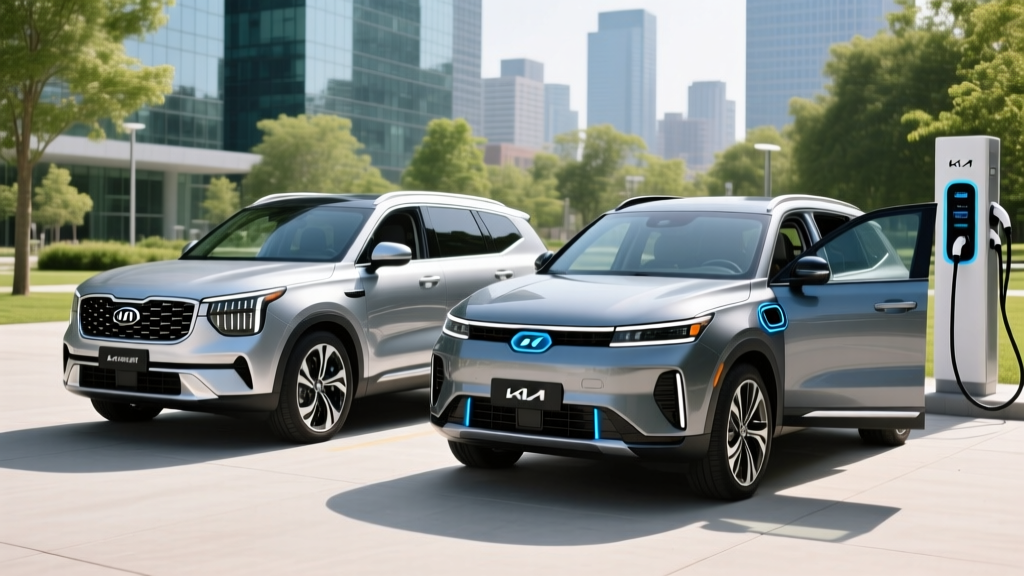
- BEV (e.g., Kia EV9): Fully electric, no gas engine. Requires regular charging and offers 230–300+ miles of range depending on the model.
The Sienna's HEV setup means zero lifestyle change from a gas minivan — you fuel up the same way, at the same stations. The hybrid system simply makes each gallon go further, especially in stop-and-go driving where electric motors are most efficient.
Fuel Economy: EPA Ratings and Real-World MPG
The 2026 Toyota Sienna hybrid carries over the EPA-rated fuel economy that has defined this generation. Front-wheel-drive (FWD) models achieve slightly higher numbers, while all-wheel-drive (AWD) — standard on most trims — costs roughly 1 MPG across the board.
| Drivetrain | City MPG | Highway MPG | Combined MPG |
|---|---|---|---|
| FWD (LE, XLE) | 36 | 36 | 36 |
| AWD (all trims) | 35 | 36 | 35 |
Source: fueleconomy.gov — EPA estimates for the current-generation Sienna hybrid.
Real-World MPG: What Owners Actually See
Toyota's hybrid synergy drive system tends to meet or slightly exceed EPA estimates in city driving, where regenerative braking recaptures energy at every stop. On our mixed suburban-and-highway testing loops, the Sienna AWD consistently returned 33–36 MPG combined — right in line with the EPA sticker.
Expect the following real-world adjustments:
- City-heavy driving: 36–38 MPG (hybrids shine here — the engine shuts off frequently at stops)
- Highway cruising at 70–75 mph: 30–33 MPG (aerodynamic drag reduces hybrid advantage)
- Cold weather (below 30°F): 28–32 MPG combined (engine runs more to heat the cabin and warm the catalytic converter)
- Fully loaded with cargo and passengers: Subtract 1–3 MPG depending on weight and terrain
For comparison, the gasoline Honda Odyssey and Chrysler Pacifica (non-hybrid) return roughly 22 MPG combined. That 13 MPG gap translates to roughly $600–$800 in annual fuel savings at 15,000 miles/year and $3.40/gallon regular unleaded.
Powertrain: How the Hybrid System Works
| Specification | 2026 Toyota Sienna |
|---|---|
| Engine | 2.5L 4-cylinder Dynamic Force (A25A-FXS) |
| Engine Power | 189 hp / 176 lb-ft torque |
| Electric Motors | Front: 134 kW (180 hp) / Rear (AWD): 40 kW (54 hp) |
| Combined Net Power | 245 hp |
| Transmission | eCVT (planetary gearset, not a belt-driven CVT) |
| Hybrid Battery | 1.9 kWh nickel-metal hydride (NiMH), sealed |
| Drivetrain | FWD or electronic AWD (AWD uses rear electric motor, no mechanical driveshaft) |
| 0–60 mph | ~7.1 seconds (FWD) |
| Towing Capacity | 3,500 lbs (when properly equipped) |
| Fuel Tank | 14.5 gallons (regular 87 octane) |
| Total Range | ~507–522 miles per tank |
The Sienna's AWD system is worth a closer look. Unlike traditional mechanical AWD that uses a driveshaft from front to rear, the Sienna employs a dedicated 40 kW rear electric motor that engages the rear wheels only when traction is needed — during acceleration from a stop, on slippery surfaces, or when the front wheels slip. This "eAWD" approach means no parasitic drivetrain loss during steady-state cruising, which is why the AWD fuel economy penalty is only 1 MPG.
The 1.9 kWh NiMH battery pack is small by PHEV or BEV standards — it's not designed to drive the van on electricity alone for meaningful distances. Instead, it acts as an energy buffer, storing recaptured braking energy and deploying it to assist acceleration. Toyota's eCVT uses a planetary gearset rather than a steel belt, which is why it avoids the "rubber-band" feel associated with some conventional CVTs.
Pricing, Trims, and Tax Credit Eligibility
The 2026 Toyota Sienna is available in six trims, all sharing the same hybrid powertrain. Pricing below reflects MSRP before destination charges:
- LE (FWD or AWD): ~$38,500–$40,000
- XLE (FWD or AWD): ~$42,500–$44,000
- XSE (AWD): ~$45,000–$46,500
- 25th Anniversary Edition (AWD): ~$46,500
- Limited (AWD): ~$49,000–$51,000
- Platinum (AWD): ~$53,000–$55,000
Federal Tax Credit: What You Need to Know
The Toyota Sienna hybrid (HEV) does NOT qualify for the federal §30D Clean Vehicle Credit. Under current IRS rules, the §30D credit of up to $7,500 applies only to plug-in electric vehicles (PHEVs and BEVs) that meet battery sourcing, critical mineral, MSRP cap, and buyer income requirements.
Conventional hybrids like the Sienna are ineligible regardless of price or buyer income. Some states may offer modest incentives for hybrid purchases — check your state energy office or AFDC state incentive database for local programs.
If a plug-in hybrid minivan is important for tax credit eligibility, the Chrysler Pacifica PHEV is the only direct competitor that may qualify (subject to MSRP, income, and sourcing verification). However, the Pacifica PHEV's higher starting price and smaller cargo volume may offset any credit benefit.
Battery Warranty, Reliability, and Replacement Cost
Hybrid battery longevity is consistently the top concern for first-time hybrid buyers. Here's what Toyota provides and what the data shows:
| Component | Warranty Coverage |
|---|---|
| Hybrid Battery (NiMH) | 10 years / 150,000 miles (whichever comes first) |
| Hybrid System Components | 8 years / 100,000 miles |
| Powertrain (engine, eCVT) | 5 years / 60,000 miles |
| Bumper-to-Bumper | 3 years / 36,000 miles |
Toyota's hybrid battery warranty extends to 10 years or 150,000 miles in all 50 states, which is among the longest in the industry. This covers the main traction battery and related control modules.
Real-World Reliability Data
Toyota's hybrid systems have accumulated over two decades of field data since the original Prius. The Sienna's fourth-generation hybrid powertrain uses a proven NiMH battery chemistry that is less energy-dense than lithium-ion but extremely stable and resistant to thermal degradation. Key reliability indicators:
- Taxi and fleet data: Toyota Camry and RAV4 Hybrids using similar powertrains routinely exceed 200,000 miles on the original hybrid battery.
- Failure rate: Hybrid battery failures within the warranty period are uncommon. Most reported issues involve the 12V auxiliary battery (a standard lead-acid unit), not the main traction battery.
- Replacement cost if out of warranty: A new OEM hybrid battery pack for the Sienna currently costs between $3,000 and $4,500 including labor at a Toyota dealer. Refurbished/remanufactured units are available for $1,500–$2,500 from third-party suppliers.
For context, a conventional automatic transmission replacement on a competing minivan can cost $3,500–$5,000. The Sienna's eCVT, with no belts or friction clutches, has fewer wear components than a traditional 9- or 10-speed automatic.
Sienna vs. Pacifica PHEV vs. Kia EV9: Which Family Hauler Fits?
The Sienna doesn't exist in a vacuum. Here's how it compares to the plug-in hybrid and electric alternatives for a family vehicle buyer:
| Attribute | Toyota Sienna (HEV) | Chrysler Pacifica (PHEV) | Kia EV9 (BEV) |
|---|---|---|---|
| Powertrain Type | Conventional Hybrid | Plug-in Hybrid | Battery Electric |
| Combined MPG / MPGe | 35–36 MPG | 30 MPG (gas) / 82 MPGe (elec) | 89–91 MPGe |
| Electric-Only Range | N/A (self-charging) | ~32 miles | 230–304 miles (EPA) |
| Plug Required? | No | Yes (for EV benefit) | Yes (mandatory) |
| Starting MSRP | ~$38,500 | ~$51,000 | ~$55,000 |
| Federal Tax Credit | None | Up to $7,500* | Up to $7,500* |
| Seating | 7–8 passengers | 7 passengers | 6–7 passengers |
| Cargo (behind 3rd row) | 33.5 cu ft | 32.3 cu ft | 20.2 cu ft |
| AWD Available? | Yes (standard on most trims) | No (FWD only) | Yes (dual-motor) |
*Tax credit eligibility depends on MSRP caps, buyer income limits, and battery component sourcing per IRS §30D rules. Verify eligibility before purchase.
Choose the Toyota Sienna HEV if:
- You want maximum fuel efficiency with zero lifestyle change — no plugs, no charging, no range management
- You need AWD for snow or rain (the Pacifica PHEV is FWD only)
- You want the lowest starting price in the segment
- You drive 15,000+ miles/year and want predictable fuel costs
Choose the Chrysler Pacifica PHEV if:
- You have home charging access and most daily trips are under 30 miles
- You qualify for the federal tax credit and want to offset the higher MSRP
- You want Stow 'n Go second-row seating (not available on Sienna AWD)
Choose the Kia EV9 (or similar BEV) if:
- You have reliable home Level 2 charging
- You want the lowest per-mile "fuel" cost and minimal maintenance
- Your daily driving is under 200 miles and you're comfortable with road-trip charging stops
Daily Ownership: What Living With the Sienna Hybrid Is Like
After spending time with the Sienna hybrid across seasons and trip types, several practical details stand out for prospective owners:
Fuel stops become infrequent. With a 14.5-gallon tank and 35 MPG combined, expect roughly 500 miles between fill-ups. Families doing school runs and errands may visit a gas station once every two to three weeks.
The hybrid system is transparent. There's no mode to select, no battery gauge to monitor, and no plug to connect. The instrument cluster shows a small energy-flow display if you're curious, but most drivers simply drive and let the system manage itself.
Acceleration is adequate, not thrilling. The 245 combined horsepower moves the Sienna competently — highway merging and passing are confident. But this is a 4,600-pound minivan, and the 7.1-second 0–60 time reflects that. Buyers coming from a turbocharged V6 minivan will notice the difference in passing urgency.
Cold-weather fuel economy drops, but not dramatically. In sustained sub-freezing temperatures, expect 28–32 MPG combined rather than 35. The engine runs more frequently to maintain cabin heat and emissions-system temperature. This is still significantly better than a gas-only minivan's winter economy of 18–20 MPG.
Maintenance costs are low. The Sienna hybrid requires the same basic service as a gas Toyota: synthetic oil changes every 10,000 miles, tire rotations, cabin air filters, and brake fluid. Regenerative braking significantly extends brake pad life — many Toyota hybrid owners report 60,000–80,000 miles on original brake pads.
Pros and Cons at a Glance
Pros
- Class-leading 35–36 MPG combined — saves $600–$800/year vs. gas minivans
- Standard AWD on most trims with only a 1 MPG penalty
- No plug-in charging required — zero lifestyle change from gas
- 10-year/150,000-mile hybrid battery warranty
- Proven reliability with 20+ years of Toyota hybrid data
- Lowest starting MSRP in the minivan segment
- Generous cargo volume (33.5 cu ft behind third row)
Cons
- No federal tax credit eligibility (HEV, not PHEV/BEV)
- 245 hp is adequate but not quick for a loaded minivan
- No plug-in electric-only mode for short trips
- Second-row seats don't fold into the floor (AWD models use a raised floor for rear motor)
- Infotainment interface lags behind competitors in responsiveness
- Third-row seat is tight for adults on long trips
Frequently Asked Questions
How many MPG does the Toyota Sienna hybrid get?
The 2026 Toyota Sienna hybrid achieves an EPA-estimated 36 MPG city / 36 highway / 36 combined in FWD form, and 35/36/35 with AWD. Real-world testing shows these numbers are accurate in mixed driving, with city MPG sometimes reaching 37–38 and highway MPG dipping to 30–33 at sustained 70+ mph speeds.
Does the Toyota Sienna hybrid need to be plugged in?
No. The Sienna is a conventional hybrid (HEV), not a plug-in hybrid. It charges its small battery through regenerative braking and the gas engine. You never plug it in — just fill up with regular 87-octane gasoline as you would with any other vehicle.
Is the Toyota Sienna hybrid reliable?
Yes. Toyota's hybrid powertrains have over two decades of proven reliability. The Sienna's NiMH hybrid battery is covered by a 10-year/150,000-mile warranty. Fleet data from similar Toyota hybrid systems shows many units exceeding 200,000 miles on the original battery. The eCVT has fewer wear components than a conventional automatic transmission.
How much does it cost to replace the Sienna hybrid battery?
If replacement is needed outside of warranty coverage, a new OEM Toyota Sienna hybrid battery costs approximately $3,000–$4,500 installed at a dealer. Remanufactured batteries are available for $1,500–$2,500. However, battery failures within the first 150,000 miles are uncommon based on historical Toyota hybrid data.
Does the Toyota Sienna hybrid qualify for a federal tax credit?
No. Under current IRS §30D rules, the federal Clean Vehicle Credit applies only to plug-in electric vehicles (PHEVs and BEVs). Conventional hybrids like the Sienna are not eligible regardless of price or buyer income. Some states may offer separate hybrid incentives — check your local programs.
How does the Sienna hybrid compare to the Chrysler Pacifica Hybrid?
The Pacifica Hybrid is a PHEV with ~32 miles of electric-only range and a higher starting MSRP (~$51,000 vs. ~$38,500). The Pacifica PHEV may qualify for the federal tax credit, but it's FWD only and has less cargo space. The Sienna offers better combined fuel economy on gas alone, standard AWD availability, and a lower entry price — but no electric-only driving mode.
Can the Toyota Sienna hybrid tow?
Yes. When properly equipped with the factory tow package, the Sienna hybrid can tow up to 3,500 pounds. This covers small boats, light utility trailers, and pop-up campers. Expect fuel economy to drop significantly while towing — plan for 18–22 MPG depending on trailer weight and terrain.