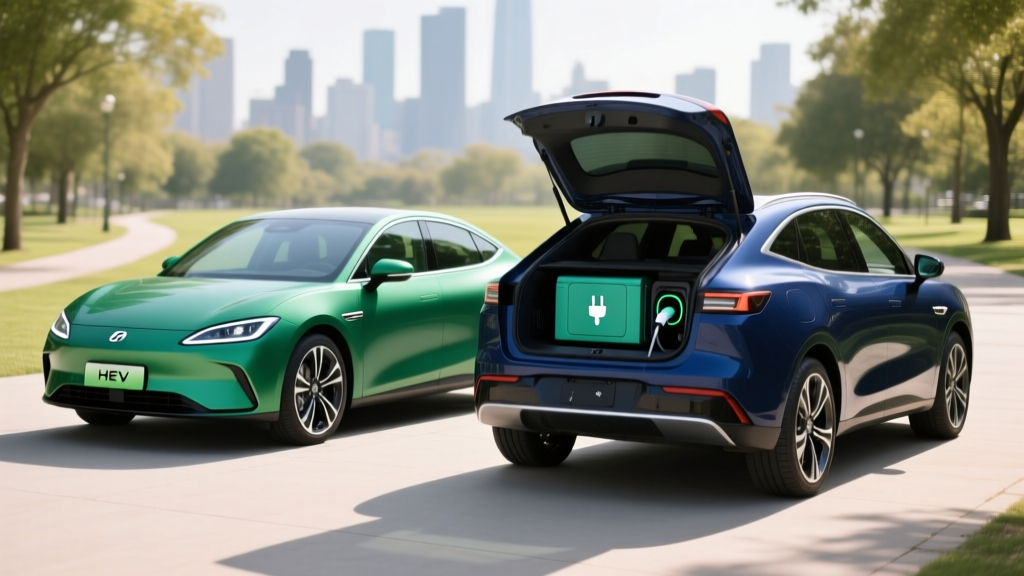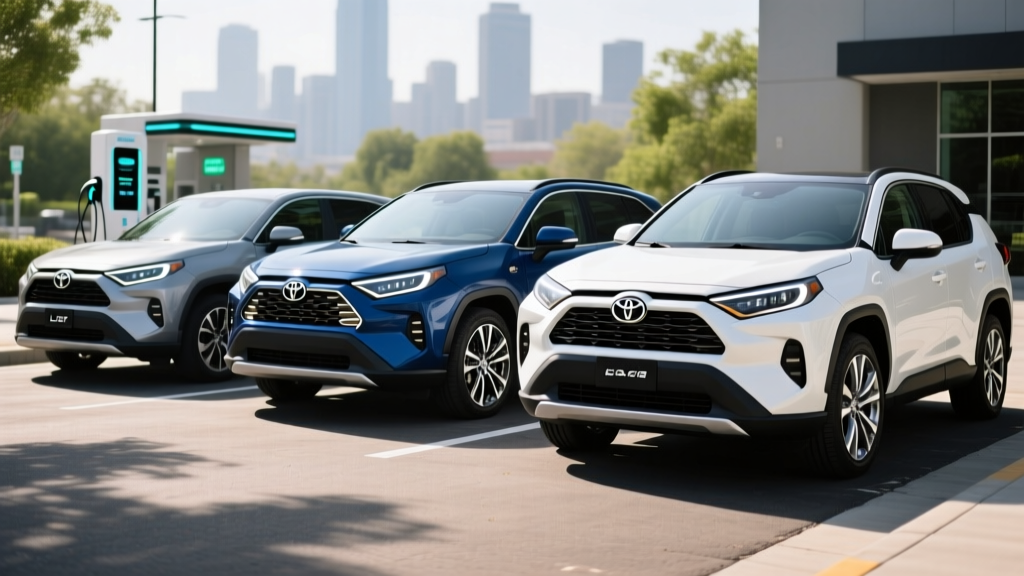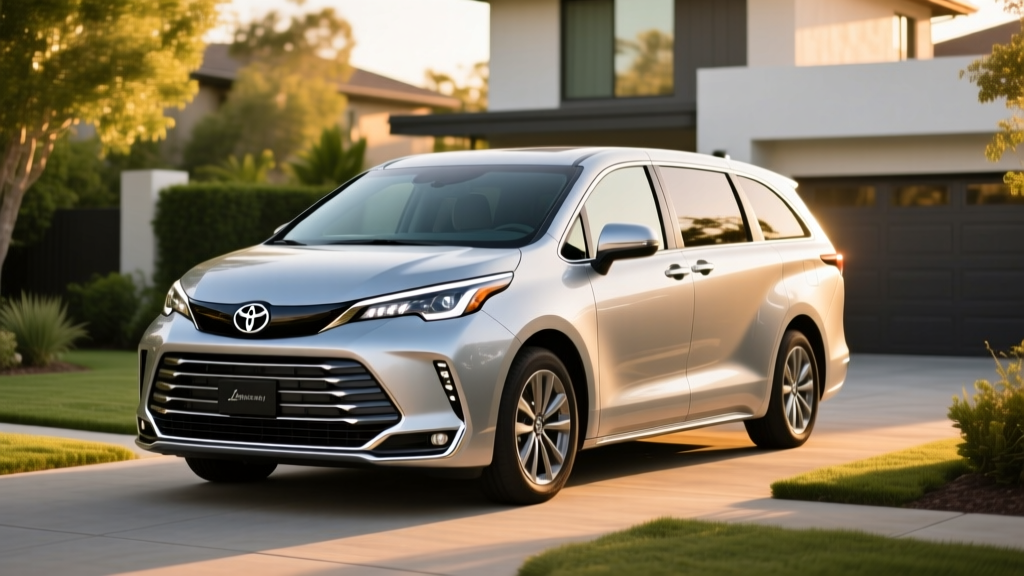
The minivan segment has fully embraced electrification, and the 2026 Toyota Sienna Hybrid remains the benchmark for families who want three rows, all-wheel-drive availability, and fuel economy that embarrasses most compact sedans. Toyota made the Sienna hybrid-only starting with the 2021 redesign, and the 2026 model continues that strategy with a proven fourth-generation hybrid powertrain, updated infotainment, and a starting MSRP that undercuts many gasoline-only rivals when you factor in fuel savings.
This guide covers everything a buyer needs: exact EPA fuel economy, real-world MPG observations, powertrain specifications, trim-level pricing, battery warranty details, and whether the Sienna Hybrid is the right choice versus a plug-in hybrid or full electric alternative.
HEV vs PHEV: Where the Sienna Fits
Before diving into specs, it's critical to understand what the Sienna is—and what it isn't. The Toyota Sienna is a conventional hybrid (HEV), not a plug-in hybrid (PHEV). This distinction drives every ownership decision.
Conventional Hybrid (HEV) — Toyota Sienna
- No plug, no charging cable required
- Battery recharges via regenerative braking and the gasoline engine
- Small battery (~1.9 kWh usable) — cannot drive on electric power alone for meaningful distances
- Fuel economy optimized across all driving conditions
- No federal EV tax credit eligibility
Plug-In Hybrid (PHEV) — e.g., Chrysler Pacifica PHEV
- Requires plug-in charging to access electric-only range
- Larger battery (~16 kWh) enabling 30+ miles of electric-only driving
- Gasoline engine activates after battery depletes or under heavy load
- May qualify for partial federal or state incentives
- Higher purchase price and added weight
If you want plug-in capability in a minivan, the Chrysler Pacifica Hybrid is currently the only PHEV option in the segment. Toyota does not offer a Sienna PHEV variant for 2026. The Sienna HEV's advantage is simplicity: you never need to think about charging. You just drive.
Fuel Economy: EPA Ratings and Real-World MPG
The 2026 Toyota Sienna Hybrid carries over the same powertrain architecture that has delivered class-leading efficiency since its introduction. Here are the official EPA figures from fueleconomy.gov:
| Configuration | City MPG | Highway MPG | Combined MPG |
|---|---|---|---|
| FWD (LE, XLE, Limited) | 36 | 36 | 36 |
| AWD (all trims available) | 35 | 35 | 35 |
These numbers are remarkable for a 4,600-pound, seven- or eight-passenger vehicle. For context, a Honda Odyssey (gas-only) returns 22 MPG combined, and even the Chrysler Pacifica hybrid in charge-sustaining (non-plugged-in) mode achieves roughly 30 MPG combined.
Real-World MPG Observations
Toyota's hybrid system excels in city driving, where regenerative braking and low-speed electric assist do the heavy lifting. In mixed suburban and city driving, many Sienna owners report 37-40 MPG, exceeding the EPA estimate. Highway driving at 75+ mph tends to pull the average down to 30-33 MPG, as the gasoline engine carries more load and aerodynamic drag increases.
Cold weather (below 30°F) reduces efficiency by roughly 5-8% due to cabin heating demands and reduced battery efficiency. Expect 31-33 MPG combined in winter conditions for FWD models. This is a modest penalty compared to the 20-30% range loss EVs experience in cold weather.
Hybrid Battery Warranty
Toyota covers the Sienna's hybrid battery for 10 years or 150,000 miles (whichever comes first) in all 50 states, up from the previous 8-year/100,000-mile coverage that applied before 2020. This warranty covers battery capacity loss and failure. The 12V auxiliary battery carries a separate 3-year/36,000-mile warranty.
Powertrain and Performance Specifications
The 2026 Sienna uses Toyota's fourth-generation hybrid synergy drive, pairing a 2.5-liter inline-four Atkinson-cycle engine with electric motors. AWD models add a rear-mounted electric motor that activates on demand for traction.
| Specification | Value |
|---|---|
| Engine | 2.5L 4-cylinder Atkinson-cycle |
| Engine Power | 189 hp / 163 lb-ft torque |
| Front Electric Motor | 134 hp / 199 lb-ft |
| Rear Electric Motor (AWD only) | 54 hp / 89 lb-ft |
| Combined Net Horsepower | 245 hp |
| Hybrid Battery | ~1.9 kWh, nickel-metal hydride (NiMH) |
| Transmission | eCVT (planetary gearset) |
| 0-60 mph (FWD) | ~7.1 seconds |
| 0-60 mph (AWD) | ~7.0 seconds |
| Towing Capacity | 3,500 lbs (properly equipped) |
| Cargo Volume (behind 3rd row) | 33.5 cu ft |
| Max Cargo Volume | 101.0 cu ft |
The eCVT is not a traditional belt-and-pulley CVT—it's a planetary gearset that seamlessly blends engine and motor power. The result is smooth, linear acceleration with no gear-hunting or rubber-band effect. The 245 combined horsepower is adequate for merging and passing but won't make the Sienna feel quick. The AWD system's rear motor engages automatically in low-traction conditions and does not require driver input.
2026 Trim Levels and Pricing
The 2026 Toyota Sienna is available in six trims, all using the same hybrid powertrain. Pricing below reflects base MSRP including destination charge:
| Trim | FWD MSRP | AWD MSRP | Key Features |
|---|---|---|---|
| LE | $38,085 | $38,860 | 8-passenger, Toyota Safety Sense 3.0, 8" touchscreen |
| XLE | $41,985 | $42,760 | 7-passenger, SofTex seats, power liftgate, wireless charging |
| XSE | $43,485 | $44,260 | Sport-tuned suspension, 20" wheels, 7-passenger |
| Woodland Edition | — | $46,435 | AWD standard, roof rails, all-terrain tires, tow package |
| Limited | $48,485 | $49,260 | Leather, 12.3" touchscreen, JBL audio, HUD |
| Platinum | $52,785 | $53,560 | Panoramic roof, rear entertainment, ventilated 2nd row |
The XLE at ~$42,000-$43,000 represents the value sweet spot for most families, offering captain's chairs, upgraded interior materials, and convenience features without jumping into luxury pricing. The Woodland Edition targets outdoor-oriented buyers who need standard AWD and rugged styling cues.
Tax Credits and Incentives
Because the Toyota Sienna is a conventional hybrid (HEV) rather than a plug-in hybrid or battery electric vehicle, it does not qualify for the federal §30D Clean Vehicle Credit. That credit, which provides up to $7,500 for qualifying new EVs and PHEVs, requires a minimum battery capacity of 7 kWh and plug-in capability—neither of which the Sienna possesses.
However, hybrid buyers should check for:
- State-level incentives: A handful of states offer rebates or HOV lane access for hybrids, though most incentive programs prioritize PHEVs and BEVs. Check your state's energy office or DMV for current programs.
- Dealer incentives: Toyota periodically offers cash-back or low-APR financing on the Sienna, particularly on lower trims. Check Toyota's national offers page and local dealer promotions.
- Insurance discounts: Some insurers offer hybrid vehicle discounts of 5-10% due to the safety profile of hybrid owners. Ask your provider.
For buyers specifically seeking tax credit eligibility in a family hauler, a PHEV like the Chrysler Pacifica Hybrid or a full EV like the Kia EV9 would be the alternatives to evaluate.
Hybrid Battery Longevity and Replacement Cost
Toyota's hybrid battery reliability is among the best-documented in the automotive industry. The Prius, which shares similar NiMH battery technology, has demonstrated battery lifespans routinely exceeding 200,000 miles with minimal degradation. The Sienna uses the same proven architecture.
Key facts on Sienna hybrid battery longevity:
- Chemistry: Nickel-metal hydride (NiMH) — mature, thermally stable, less prone to degradation than early lithium-ion packs
- Warranty: 10 years / 150,000 miles nationwide
- Expected lifespan: 150,000–250,000+ miles based on Prius/Highlander Hybrid fleet data
- Replacement cost (out of warranty): Approximately $3,000–$4,500 for a new OEM battery pack, plus ~$500–$800 in labor. Refurbished packs are available for $1,500–$2,500.
The battery's relatively small capacity (~1.9 kWh) means it undergoes shallow charge/discharge cycles, which dramatically extends lifespan compared to a full EV battery that cycles through 80-90% of its capacity regularly. Toyota's battery management system also maintains a buffer, never allowing the pack to fully charge or fully discharge, which further protects longevity.
For the vast majority of Sienna owners who trade in before 150,000 miles, battery replacement will never be an out-of-pocket concern.
Sienna Hybrid vs. PHEV vs. Full EV: Which Fits Your Family?
Choosing between a conventional hybrid, a plug-in hybrid, and a full electric vehicle depends on your daily driving pattern, charging access, and budget. Here's a practical decision framework:
Choose the Toyota Sienna Hybrid (HEV) if:
- You don't have reliable access to home or workplace charging
- You want maximum simplicity — no plugs, no charging apps, no range planning
- Your daily driving is a mix of city and highway with frequent long road trips
- You want proven reliability with a 10-year battery warranty
- Budget is a priority — the Sienna starts ~$10,000 below most EV minivans
Choose a PHEV minivan (e.g., Chrysler Pacifica Hybrid) if:
- You can install a Level 2 home charger and want 32 miles of electric-only commuting
- Most daily trips are under 30 miles but you still need gas for road trips
- You want partial tax credit eligibility (verify current IRS §30D sourcing rules at irs.gov)
- You're willing to pay a $5,000–$8,000 premium over the Sienna
Choose a full EV minivan/SUV (e.g., Kia EV9) if:
- You have reliable home Level 2 charging
- You want to eliminate gasoline entirely and minimize operating cost
- Your daily driving is under 250 miles and road trips are infrequent or along well-served charging corridors
- You want maximum federal tax credit eligibility ($7,500 for qualifying EVs)
- You're comfortable with a $55,000+ starting price
The Sienna Hybrid's 36 MPG combined translates to roughly $1,400–$1,600 in annual fuel costs (at 15,000 miles/year and $3.50/gallon). A comparable gas-only minivan at 22 MPG combined would cost $2,380+ annually. That's $800–$1,000 in yearly fuel savings, which adds up to $4,000–$5,000 over five years of ownership.
Safety and Driver Assistance
The 2026 Sienna comes standard with Toyota Safety Sense 3.0, which includes:
- Pre-Collision System with Pedestrian Detection
- Full-Speed Range Dynamic Radar Cruise Control
- Lane Departure Alert with Steering Assist
- Lane Tracing Assist
- Automatic High Beams
- Road Sign Assist
- Proactive Driving Assist (gentle braking/deceleration support)
These are SAE Level 2 driver-assistance features, meaning the driver must remain fully engaged, hands on the wheel, and eyes on the road at all times. The Sienna does not offer hands-free driving systems like GM's Super Cruise or Ford's BlueCruise. For families, the standard safety suite is comprehensive and well-regarded. The Sienna earned an IIHS Top Safety Pick+ rating in prior model years; check iihs.org for updated 2026 crash test results when published.
Pros and Cons
Pros
- Class-leading 36 MPG combined — real-world city driving often exceeds EPA
- Hybrid-only lineup means no less-efficient gas variant to accidentally choose
- AWD available across all trims for ~$775 premium
- 10-year/150,000-mile hybrid battery warranty
- Standard Toyota Safety Sense 3.0 on every trim
- Strong resale value and proven Toyota reliability
- 3,500-lb towing capacity covers most family trailers and boats
Cons
- No plug-in hybrid option — cannot drive on electric-only power
- 245 hp is adequate but not quick for a loaded van on highway merges
- No spare tire — uses a tire inflator kit (run-flat not standard)
- Infotainment system functional but trails competitors in responsiveness
- Platinum trim pushes past $53,000, entering luxury SUV territory
- No federal tax credit eligibility
Frequently Asked Questions
How many MPG does the 2026 Toyota Sienna Hybrid get?
The FWD Sienna Hybrid is EPA-rated at 36 MPG city, 36 highway, and 36 combined. AWD models drop to 35/35/35. Real-world city and suburban driving often yields 37-40 MPG, while sustained highway driving at higher speeds may return 30-33 MPG.
Does the Toyota Sienna need to be plugged in?
No. The Sienna is a conventional hybrid (HEV). Its small battery recharges through regenerative braking and the gasoline engine. There is no plug, no charging cable, and no electric-only driving range to manage.
Is there a plug-in hybrid Toyota Sienna?
Toyota does not offer a Sienna PHEV for 2026. The only plug-in hybrid minivan currently available is the Chrysler Pacifica Hybrid, which offers 32 miles of electric-only range with a ~16 kWh battery.
How long will the Sienna hybrid battery last?
Toyota's NiMH hybrid batteries routinely last 150,000–250,000+ miles based on fleet data from the Prius and Highlander Hybrid. The battery is covered by a 10-year/150,000-mile warranty. Out-of-warranty replacement costs approximately $3,000–$4,500 for a new OEM pack.
Does the 2026 Sienna qualify for any tax credit?
No. The federal §30D Clean Vehicle Credit requires plug-in capability and a minimum 7 kWh battery. The Sienna's ~1.9 kWh NiMH pack and HEV configuration make it ineligible. Check your state's energy office for any local hybrid incentives.
How does the Sienna compare to the Honda Odyssey on fuel economy?
The gas-only Honda Odyssey achieves 22 MPG combined (19 city / 28 highway). The Sienna Hybrid's 36 MPG combined represents a 64% improvement. Over 15,000 miles per year at $3.50/gallon, the Sienna saves approximately $850–$1,000 annually in fuel costs.
Can the Sienna Hybrid tow?
Yes. All 2026 Sienna trims are rated to tow up to 3,500 pounds when properly equipped with the available tow package. This covers most small boat trailers, utility trailers, and bike/cargo carriers.
Is the AWD system always on?
No. The Sienna's electronic AWD system is on-demand. The rear electric motor engages automatically when the system detects front-wheel slip or low-traction conditions. Under normal dry-road driving, the Sienna operates as a front-wheel-drive vehicle, which helps maintain its 35 MPG combined rating.