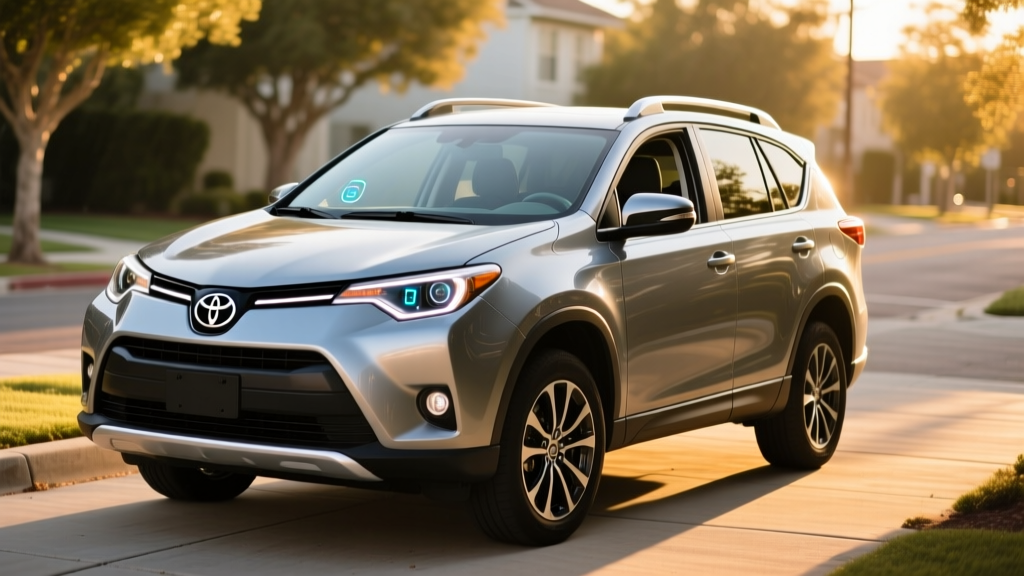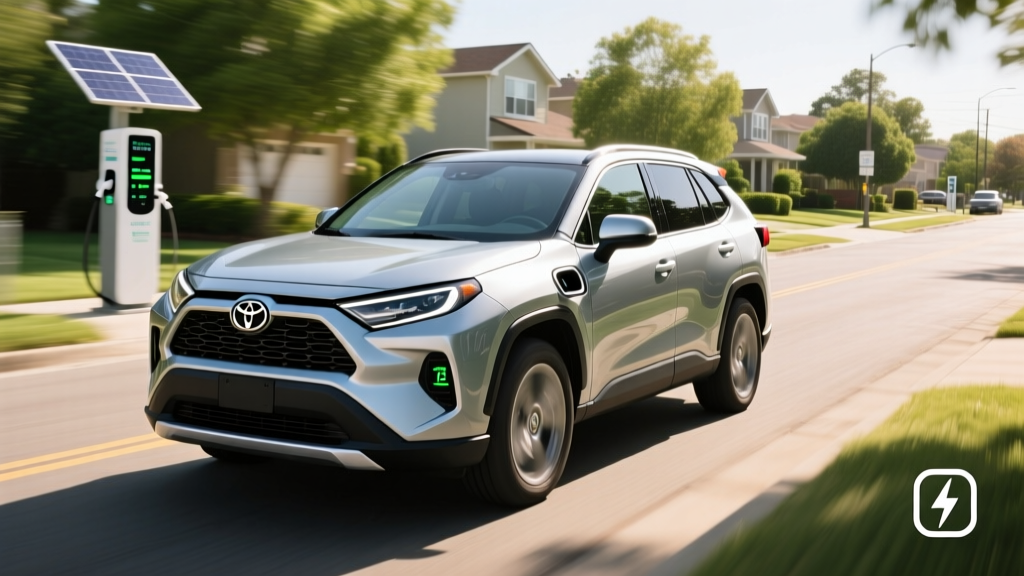
The Toyota RAV4 Hybrid remains one of the best-selling electrified vehicles in America for a reason: it delivers SUV practicality without the charging anxiety of a full battery-electric vehicle. But buyers researching Toyota RAV4 Hybrid miles per gallon often encounter a confusing mix of HEV (conventional hybrid) and PHEV (plug-in hybrid, branded RAV4 Prime) data. This guide separates the two powertrains with exact EPA figures, real-world observations, and ownership economics so you can choose the right RAV4 for your driving pattern.
HEV vs PHEV: Which RAV4 Hybrid Are We Talking About?
Toyota sells two electrified RAV4 variants, and confusing them is the most common buyer mistake:
| Feature | RAV4 Hybrid (HEV) | RAV4 Prime (PHEV) |
|---|---|---|
| Plug-in charging required? | No — charges via engine & regen | Yes — 18.1 kWh battery, plug to charge |
| EPA combined MPG / MPGe | 39 MPG combined | 94 MPGe (EV mode) / 38 MPG (hybrid mode) |
| Electric-only range | N/A (motor assists engine only) | 42 miles EPA |
| Combined horsepower | 219 hp | 302 hp |
| Battery capacity | 1.6 kWh (NiMH, self-charging) | 18.1 kWh (Li-ion, plug-in) |
| DC fast charging | N/A | No — AC Level 1/2 only |
| Base MSRP (2025/2026) | ~$33,575 | ~$44,415 |
| Federal tax credit | Not eligible | Up to $7,500 (subject to §30D rules) |
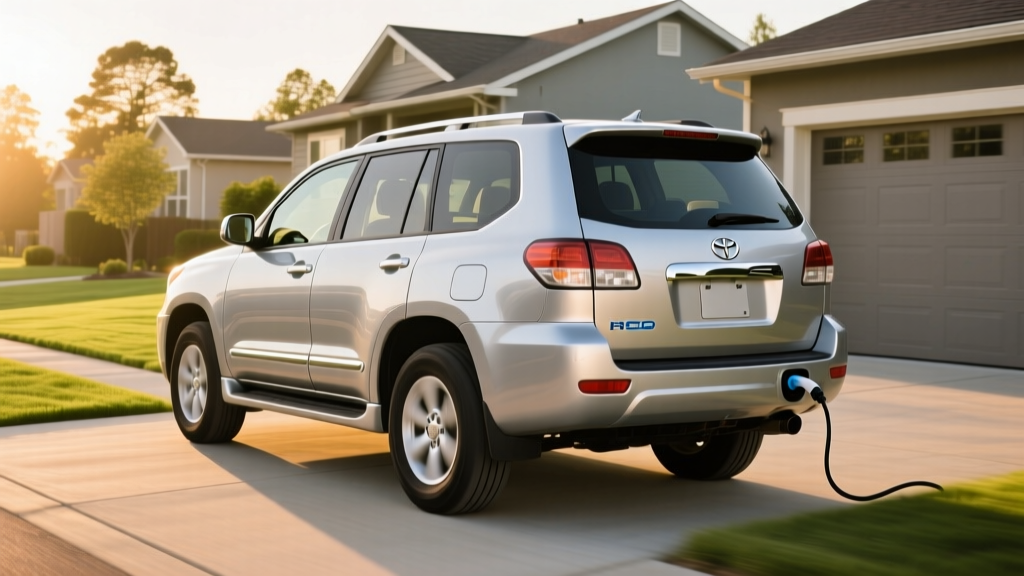
The conventional RAV4 Hybrid is a self-charging system: the gasoline engine and regenerative braking keep a small battery topped up. You never plug it in. The RAV4 Prime, by contrast, has a much larger battery you charge from a wall outlet or public charger, giving you 42 miles of pure electric driving before the gasoline engine kicks in as a hybrid.
Toyota RAV4 Hybrid MPG: EPA Numbers and Real-World Results
Here is the official EPA fuel-economy breakdown for the conventional RAV4 Hybrid (HEV), per fueleconomy.gov:
| Driving Cycle | EPA MPG |
|---|---|
| City | 41 MPG |
| Highway | 38 MPG |
| Combined | 39 MPG |
Real-world MPG reality check: Toyota's hybrid system excels in stop-and-go city driving, where the electric motor handles low-speed propulsion and regenerative braking recaptures energy. Many owners report 42–45 MPG in city commuting, exceeding the EPA city estimate. Highway-only driving at 75+ mph typically drops to 34–36 MPG, because aerodynamic drag dominates and the engine runs more frequently. In cold weather (below 30°F), expect a 5–10% MPG reduction as the engine runs longer to generate cabin heat.
RAV4 Prime (PHEV) Fuel Economy
When the RAV4 Prime's battery is fully charged, the EPA rates it at 94 MPGe in electric mode — that's the miles-per-gallon-equivalent measure that lets you compare electricity consumption to gasoline. Once the 42-mile electric range depletes, the Prime operates as a conventional hybrid and returns 38 MPG combined (36 city / 38 highway per EPA). Total range with a full tank and full battery exceeds 600 miles.
Powertrain Specs: What Powers Each RAV4 Variant
| Specification | RAV4 Hybrid (HEV) | RAV4 Prime (PHEV) |
|---|---|---|
| Engine | 2.5L 4-cyl Atkinson cycle | 2.5L 4-cyl Atkinson cycle |
| Front electric motor | 118 hp / 149 lb-ft | 180 hp / 199 lb-ft |
| Rear electric motor (AWD) | 54 hp / 89 lb-ft | 40 hp / 89 lb-ft |
| Net combined horsepower | 219 hp | 302 hp |
| 0–60 mph | 7.4 seconds | 5.7 seconds |
| Drivetrain | AWD (electronic on-demand rear) | AWD (electronic on-demand rear) |
| Transmission | eCVT | eCVT |
| Towing capacity | 1,750 lbs | 1,750 lbs |
The Prime's 302 hp makes it the quickest RAV4 Toyota sells — quicker than the gas-only turbo variant. That performance comes from larger, more powerful electric motors paired with the same proven 2.5-liter Atkinson-cycle four-cylinder engine.
RAV4 Prime Charging: Battery Size, Charge Times, and Limitations
If you choose the RAV4 Prime PHEV, here is what you need to know about charging:
| Charging Level | Power | 0–100% Time | Notes |
|---|---|---|---|
| Level 1 (120V household outlet) | ~1.4 kW | ~12 hours | Emergency/trickle only |
| Level 2 (240V, 16A) | ~3.3 kW | ~5.5 hours | Standard home charging |
| Level 2 (240V, 32A) | ~6.6 kW | ~2.5 hours | Available with upgraded onboard charger |
| DC Fast Charging | N/A | N/A | Not supported — no CCS or CHAdeMO port |
The RAV4 Prime's 18.1 kWh lithium-ion battery is modest by full-EV standards, which is why it does not support DC fast charging. For a PHEV, this is normal: most daily charging happens overnight at home on Level 2, and the 42-mile electric range covers the average American commute (roughly 35 miles round-trip per DOT data).
Pricing, Tax Credits, and Ownership Economics
2026 MSRP by Trim (estimated)
- RAV4 Hybrid LE (HEV): ~$33,575
- RAV4 Hybrid XLE: ~$35,075
- RAV4 Hybrid Woodland Edition: ~$36,575
- RAV4 Prime SE (PHEV): ~$44,415
- RAV4 Prime XSE: ~$48,000
Federal Tax Credit Eligibility
RAV4 Hybrid (HEV): Does NOT qualify for the §30D federal clean vehicle credit. Conventional hybrids are not plug-in vehicles and are ineligible.
RAV4 Prime (PHEV): May qualify for up to $7,500 under IRS §30D, but eligibility depends on several factors that change periodically:
- Buyer AGI must not exceed $150,000 (single) / $300,000 (joint)
- Vehicle MSRP must not exceed $80,000 (SUV cap — RAV4 Prime clears this easily)
- Battery critical-mineral and component sourcing must meet current-year thresholds
- Credit can be transferred to the dealer at point of sale as a price reduction
Check the latest eligibility list at IRS.gov before purchasing, as sourcing requirements have disqualified several previously eligible models.
5-Year Cost Snapshot: HEV vs PHEV vs Gas RAV4
Assuming 15,000 miles/year, $3.50/gallon gas, and $0.14/kWh electricity:
| Cost Factor | Gas RAV4 (28 MPG) | RAV4 Hybrid (39 MPG) | RAV4 Prime (PHEV) |
|---|---|---|---|
| Fuel/energy (5 yrs) | ~$9,375 | ~$6,730 | ~$4,200* |
| Estimated maintenance (5 yrs) | ~$3,500 | ~$3,200 | ~$3,000 |
| Purchase premium vs gas base | $0 | +$1,800 | +$12,600 |
| Federal tax credit | $0 | $0 | Up to –$7,500 |
| Net 5-year advantage vs gas | Baseline | Save ~$3,945 | Save ~$5,175** |
*Assumes 70% of miles driven on electric. **After $7,500 credit; without credit, the Prime breaks roughly even with the gas model on fuel alone but offers far more power.
Battery Warranty, Reliability, and Replacement Costs
Toyota Hybrid Battery Warranty
- HEV (RAV4 Hybrid): 10 years / 150,000 miles (whichever comes first) — Toyota extended this from 8/100,000 starting with 2020 models
- PHEV (RAV4 Prime): 10 years / 150,000 miles on the traction battery; additional 8-year/100,000-mile coverage on PHEV-specific components
Toyota's hybrid synergy drive system is among the most proven in the industry. The RAV4 Hybrid uses a nickel-metal hydride (NiMH) pack that is less energy-dense than lithium-ion but extremely durable — many Toyota hybrid packs from the 2000s Prius era are still in service at 200,000+ miles.
Battery Replacement Cost (Out of Warranty)
If you do need a hybrid battery replacement beyond the warranty window:
- RAV4 Hybrid (HEV) NiMH pack: $2,000–$3,500 (parts + labor at a Toyota dealer; refurbished packs available for ~$1,200–$1,800)
- RAV4 Prime (PHEV) Li-ion pack: $5,000–$8,000 (larger, more complex lithium-ion pack; pricing based on current Toyota PHEV service estimates)
For context, independent data from repair aggregators and owner forums suggest hybrid battery failure before 150,000 miles is uncommon in the RAV4 line. The 10-year/150,000-mile warranty covers the vast majority of ownership periods.
Who Should Choose the RAV4 Hybrid vs a Full EV or Gas Car?
Choose the RAV4 Hybrid (HEV) if:
- You want better fuel economy without changing your habits — no plugging in, no range planning
- You drive mostly city and suburban miles where hybrid efficiency peaks (40+ MPG achievable)
- You lack reliable home or workplace charging access
- Your budget tops out around $35,000–$40,000
Choose the RAV4 Prime (PHEV) if:
- You have a garage or driveway where you can install a Level 2 charger
- Your daily commute is under 42 miles round-trip (you could run on electricity most days)
- You want EV-like daily driving with the freedom to road-trip without charging stops
- You qualify for the §30D tax credit, effectively reducing the price premium to ~$5,000 over the HEV
- You value the 302 hp performance upgrade
Choose a full battery-electric vehicle (BEV) instead if:
- You want zero tailpipe emissions and can charge at home
- Your daily driving is predictable and under 250 miles
- You want to eliminate oil changes and engine maintenance entirely
- Models like the Hyundai Ioniq 5, Tesla Model Y, or Ford Mustang Mach-E fit your budget and space needs
Stick with the gas-only RAV4 if:
- You drive very low annual miles (under 5,000/year) where the hybrid premium won't pay back
- Upfront cost is your primary constraint and you don't qualify for tax credits on the Prime
RAV4 Hybrid (HEV) Pros
- 41 MPG city — among the best in the compact SUV class
- No plug-in required; works with existing habits
- Standard AWD on all trims
- Proven reliability and 10-year battery warranty
- Strong resale value
RAV4 Hybrid (HEV) Cons
- No federal tax credit
- 219 hp is adequate but not sporty
- Highway MPG lower than city (38 vs 41)
- eCVT drone under hard acceleration
- Infotainment lags behind some competitors
RAV4 Prime (PHEV) Pros
- 42 miles electric-only covers most commutes
- 302 hp — quickest RAV4 available
- Potentially $7,500 federal tax credit
- 600+ miles total range
- Standard AWD
RAV4 Prime (PHEV) Cons
- $44,000+ starting price
- No DC fast charging
- Long wait times at some dealers (high demand)
- Cargo space slightly reduced vs HEV (battery packaging)
- Requires home charging to maximize value
Frequently Asked Questions
How many MPG does the Toyota RAV4 Hybrid actually get?
The EPA rates the RAV4 Hybrid at 41 city / 38 highway / 39 combined MPG. In real-world city driving, many owners consistently achieve 42–45 MPG thanks to the hybrid system's efficiency at low speeds. Highway-only driving at higher speeds typically yields 34–36 MPG.
How far can the RAV4 Prime go on electric only?
The EPA rates the RAV4 Prime at 42 miles of electric-only range on a full charge. Real-world results vary: gentle city driving in mild weather can stretch this to 45+ miles, while cold weather or aggressive highway driving may reduce it to 32–36 miles.
Do I need to plug in the RAV4 Hybrid?
No. The conventional RAV4 Hybrid (HEV) charges its small battery through the gasoline engine and regenerative braking. You fuel it like any other gas car. Only the RAV4 Prime (PHEV) requires plugging in to access its electric-only range.
Is the RAV4 Hybrid battery reliable and what does replacement cost?
Toyota's hybrid battery systems have an excellent long-term reliability record. The battery is covered by a 10-year / 150,000-mile warranty. Out-of-warranty replacement for the HEV NiMH pack runs $2,000–$3,500 at a dealer, with refurbished options available for less. Failures before 150,000 miles are uncommon.
Does the RAV4 Hybrid qualify for a federal tax credit?
The conventional RAV4 Hybrid (HEV) does not qualify for the §30D federal clean vehicle credit — it is not a plug-in vehicle. The RAV4 Prime (PHEV) may qualify for up to $7,500, depending on your income, the vehicle's battery sourcing compliance, and current-year IRS rules. Always verify at IRS.gov before purchasing.
Hybrid vs PHEV vs EV — which RAV4 is right for me?
If you can't charge at home, the HEV is the safest choice — no behavior change needed. If you have home charging and a sub-42-mile commute, the Prime PHEV lets you drive electric most days while keeping a gas engine for road trips. If you're ready to go fully electric and can charge at home, consider a BEV like the Tesla Model Y or Hyundai Ioniq 5 for lower running costs and zero tailpipe emissions — but you'll give up the gas-engine safety net for long trips.
What is the difference between MPG and MPGe on the RAV4 Prime?
MPG measures gasoline consumption. MPGe (miles-per-gallon-equivalent) measures how far the vehicle travels on the amount of electricity that contains the same energy as one gallon of gasoline (33.7 kWh). The RAV4 Prime achieves 94 MPGe in electric mode and 38 MPG in hybrid mode after the battery depletes.
Sources: EPA fuel economy data via fueleconomy.gov, Toyota Motor Corporation specifications, IRS §30D clean vehicle credit guidelines at irs.gov. Pricing reflects estimated 2025–2026 model-year MSRP; confirm with your local dealer. Tax credit eligibility is subject to change — consult a tax professional for your specific situation.