Quick Verdict: The RAV4 Hybrid's MPG Story
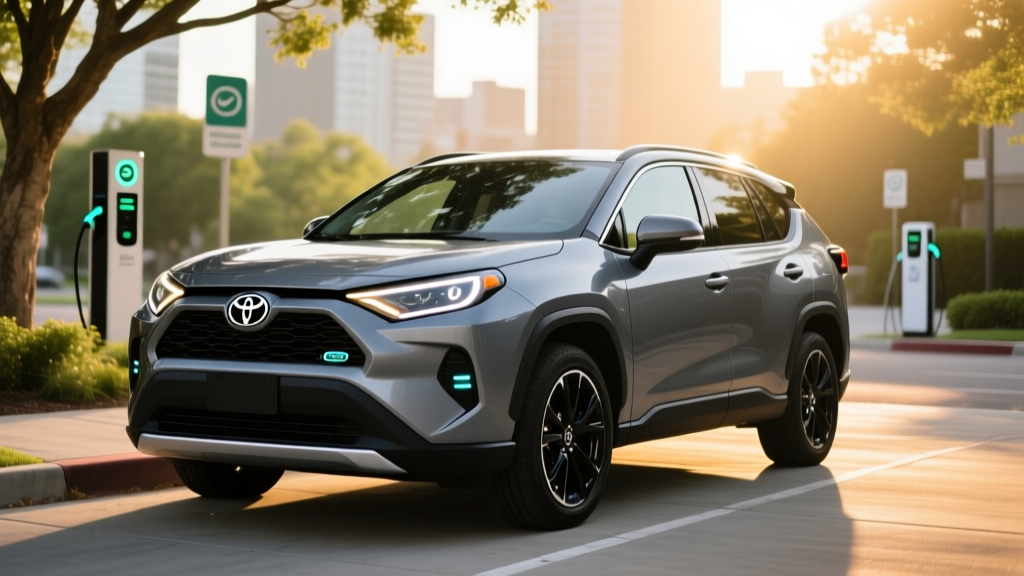
The Toyota RAV4 Hybrid remains one of the most fuel-efficient compact SUVs you can buy without plugging in. For the 2025 model year (carried into 2026), the EPA rates it at 41 MPG city, 38 MPG highway, and 39 MPG combined with all-wheel drive — figures that translate directly to real-world driving for most owners. That's roughly 550 miles of total range from a single 14.5-gallon tank, making it a compelling choice for drivers who want hybrid efficiency without changing their fueling habits.
But the RAV4 lineup also includes the RAV4 Prime, a plug-in hybrid (PHEV) variant with 42 miles of electric-only range and a combined 94 MPGe when running on electricity. Choosing between the conventional hybrid (HEV) and the Prime PHEV depends on your daily mileage, charging access, and budget. This guide breaks down every number you need to decide.
HEV vs PHEV: Understanding the Two RAV4 Hybrids
Before diving into specs, it's critical to distinguish between the two electrified RAV4 models Toyota offers, because they operate fundamentally differently:
| Feature | RAV4 Hybrid (HEV) | RAV4 Prime (PHEV) |
|---|---|---|
| Plug-in required? | No — refuels only at gas stations | Yes — plug in to access electric-only range |
| Battery size | 1.6 kWh (NiMH, small buffer) | 18.1 kWh (lithium-ion) |
| Electric-only range | None (motor assists engine only) | 42 miles (EPA) |
| EPA combined MPG / MPGe | 39 MPG combined | 94 MPGe (electric) / 38 MPG (gas-only) |
| Combined horsepower | 219 hp | 302 hp |
| DC fast charging | N/A | No — AC Level 2 only |
| Starting MSRP (2025 MY) | ~$33,550 | ~$44,515 |
| Federal tax credit (§30D) | Not eligible | Up to $7,500 (eligibility varies) |
The conventional RAV4 Hybrid is a self-charging hybrid. Its small battery recovers energy through regenerative braking and the gasoline engine, so you never plug it in. The electric motor assists the engine during acceleration and enables brief low-speed electric-only movement, but the gasoline engine is always the primary energy source.
The RAV4 Prime is a plug-in hybrid with a much larger battery. You charge it from a wall outlet or Level 2 charger to unlock 42 miles of pure electric driving. Once that electric range is depleted, it operates exactly like a conventional hybrid — the gas engine takes over and you continue driving on gasoline, getting 38 MPG combined.
EPA MPG Breakdown: Every RAV4 Hybrid Trim
The RAV4 Hybrid comes exclusively with Toyota's electronic on-demand all-wheel drive (AWD), which uses a separate rear electric motor rather than a mechanical driveshaft. This means AWD doesn't penalize fuel economy the way it does in conventional vehicles. Here are the official EPA figures from fueleconomy.gov:
| Model | City MPG | Highway MPG | Combined MPG | Total Range (est.) |
|---|---|---|---|---|
| RAV4 Hybrid (all trims, AWD) | 41 | 38 | 39 | ~565 miles |
| RAV4 Prime (PHEV, AWD) — gas only | 40 | 36 | 38 | ~550 miles (gas) + 42 mi electric |
| RAV4 Prime (PHEV) — electric mode | 94 MPGe combined | 42 miles electric-only | ||
| RAV4 (gas-only, AWD, baseline) | 27 | 34 | 30 | ~435 miles |
Key takeaway: The RAV4 Hybrid delivers a 30% fuel economy improvement over the gas-only RAV4 AWD. The city MPG (41) is actually higher than the highway MPG (38) — a hallmark of hybrid powertrains, because regenerative braking recovers the most energy in stop-and-go driving where a conventional car wastes the most fuel.
Real-World MPG: What Owners Actually Report
EPA estimates are standardized lab tests, but Toyota hybrids have a well-documented tendency to meet or slightly exceed their EPA ratings in real-world city driving. Here's what the data shows:
EPA Sticker: 41 city / 38 highway / 39 combined MPG
Real-world expectations:
- City / suburban driving: 40–44 MPG — hybrids shine here; regenerative braking maximizes efficiency
- Highway cruising (70–80 mph): 34–38 MPG — aerodynamic drag reduces the hybrid advantage at sustained high speeds
- Cold weather (below 30°F): 33–37 MPG — the engine runs more often to heat the cabin and warm the catalytic converter
- Mountainous / hilly terrain: 33–38 MPG — climbing consumes more fuel, but regen recovers energy on descents
- Overall owner average (Fuelly data): ~38–41 MPG combined
Unlike EVs, which can lose 20–30% of range in cold weather, the RAV4 Hybrid's MPG drops are modest — typically 5–15% in freezing conditions. The gasoline engine's waste heat warms the cabin without requiring additional energy the way an EV's resistive heater does.
Powertrain and Performance Specs
Both the RAV4 Hybrid and RAV4 Prime pair a 2.5-liter four-cylinder Atkinson-cycle engine with electric motors, but the output difference is significant:
| Specification | RAV4 Hybrid (HEV) | RAV4 Prime (PHEV) |
|---|---|---|
| Engine | 2.5L 4-cyl Atkinson-cycle | 2.5L 4-cyl Atkinson-cycle |
| Engine output | 176 hp / 163 lb-ft | 177 hp / 165 lb-ft |
| Front electric motor | 88 kW (118 hp) | 134 kW (180 hp) |
| Rear electric motor (AWD) | 40 kW (54 hp) | 40 kW (54 hp) |
| Net combined horsepower | 219 hp | 302 hp |
| 0–60 mph | 7.4 seconds | 5.7 seconds |
| Transmission | eCVT (planetary gearset) | eCVT (planetary gearset) |
| Drivetrain | Electronic AWD (eAWD) | Electronic AWD (eAWD) |
| Towing capacity | 1,750 lbs | 2,500 lbs |
| Fuel tank | 14.5 gallons | 14.5 gallons |
The RAV4 Hybrid's 219 hp and 7.4-second 0–60 time make it genuinely quick for a fuel-sipping SUV — quicker than most turbocharged gas competitors in this segment. The RAV4 Prime's 302 hp and 5.7-second sprint put it in sport-SUV territory, making it the fastest RAV4 Toyota sells.
RAV4 Prime PHEV: Electric-Only Range and Charging
If you're considering the RAV4 Prime over the standard Hybrid, the electric-only capability is the deciding factor. Here's the complete charging and electric-driving picture:
| Metric | RAV4 Prime (PHEV) |
|---|---|
| Usable battery capacity | 18.1 kWh (lithium-ion) |
| EPA electric-only range | 42 miles |
| Real-world electric range | 36–44 miles (depends on temperature and driving style) |
| Level 1 charging (120V, 12A) | ~12 hours (0–100%) |
| Level 2 charging (240V, 32A) | ~2.5 hours (0–100%) |
| Level 2 charging (240V, 16A) | ~4.5 hours (0–100%) |
| DC fast charging | Not available — no DC inlet |
| Charge port | J1772 (Level 1/2 AC only) |
| Total combined range (electric + gas) | ~600 miles |
Critical limitation: The RAV4 Prime does not support DC fast charging. You cannot use public DC fast chargers (Electrify America, EVgo, Tesla Superchargers). Charging is limited to Level 1 (standard household outlet) and Level 2 (240V home or public AC charger). For most PHEV owners, this isn't a dealbreaker — you charge overnight at home and drive electric during the day — but it means you can't quickly top up on a road trip.
The 42-mile electric range covers the daily commute for a large majority of American drivers (the average US one-way commute is roughly 16 miles, per Census data). If your round-trip commute is under 40 miles and you charge nightly, you could go weeks without visiting a gas station.
Pricing, Tax Credits, and Total Cost
RAV4 Hybrid (HEV) Pricing
The 2025 Toyota RAV4 Hybrid (prices carry into 2026 model year) starts at approximately $33,550 for the LE trim and ranges up to ~$40,000 for the fully loaded Limited or Woodland Edition. Key trims:
- LE: ~$33,550
- XLE: ~$35,550
- SE: ~$37,050
- XSE: ~$38,050
- Limited: ~$40,000
Tax credit status: The conventional RAV4 Hybrid does not qualify for the federal §30D new clean vehicle tax credit. That credit applies only to plug-in electric vehicles (BEVs and PHEVs). Some states may offer minor hybrid incentives, but these vary by jurisdiction — check your state's energy office for current programs.
RAV4 Prime (PHEV) Pricing and Tax Credit
The RAV4 Prime starts at approximately $44,515 (SE trim) and reaches ~$48,500 for the XSE Premium. The roughly $11,000 premium over the Hybrid LE buys you 302 hp, 42 miles of electric range, and potential tax credit eligibility.
Federal §30D tax credit for the RAV4 Prime — eligibility requirements (2025/2026 rules):
- Vehicle must have ≥4 kWh battery and be plug-in capable ✓ (RAV4 Prime has 18.1 kWh)
- Vehicle MSRP must not exceed $80,000 for SUVs ✓
- Buyer modified AGI must not exceed $150,000 (single) / $300,000 (joint) — verify with your tax professional
- Battery critical minerals and component sourcing thresholds must be met — check IRS.gov for current-year sourcing requirements, as these tighten annually
- Credit can be transferred to the dealer at point of sale for an instant price reduction
Important: The RAV4 Prime's actual credit amount ($3,750 or $7,500) depends on whether it meets the critical minerals and battery component sourcing thresholds for the current tax year. Toyota's sourcing has been affected by these rules — confirm eligibility at purchase time with your dealer and reference IRS §30D guidance. This is not tax advice; consult a tax professional.
Battery Warranty, Reliability, and Replacement Cost
Hybrid battery longevity is consistently the top concern for first-time hybrid buyers. Here's what Toyota's track record and warranty actually cover:
Toyota Hybrid Battery Warranty:
- Coverage: 10 years / 150,000 miles (whichever comes first) for the hybrid battery and hybrid system components
- What's covered: Defects in materials/workmanship, capacity loss beyond normal degradation that affects vehicle operation
- Applies to: Both RAV4 Hybrid (HEV) and RAV4 Prime (PHEV) traction batteries
Real-world reliability data: Toyota's hybrid system is among the most proven in the automotive industry, with over 25 years of continuous production since the original 1997 Prius. The eCVT planetary gearset has no traditional transmission clutches or bands to wear out. Independent reliability surveys (Consumer Reports, J.D. Power) consistently rank Toyota hybrids at or near the top of their segments.
Battery replacement cost (out of warranty):
- RAV4 Hybrid (HEV): The 1.6 kWh NiMH battery pack replacement runs approximately $3,000–$5,000 including labor at a dealership. Independent hybrid shops may offer refurbished packs for $2,000–$3,500.
- RAV4 Prime (PHEV): The larger 18.1 kWh lithium-ion pack replacement is significantly more expensive — estimated at $8,000–$12,000+ at current pricing. This is a meaningful long-term cost to factor in if you plan to own the vehicle well past the 10-year/150,000-mile warranty.
Degradation reality: The conventional Hybrid's small NiMH battery is cycled shallowly (it never fully charges or fully depletes), which is extremely gentle on cell longevity. Many Toyota hybrids from the early 2000s are still running on original batteries at 200,000+ miles. The Prime's larger lithium-ion pack will experience more measurable degradation over time, but the 42-mile range might drop to 35–38 miles after 8–10 years — still highly usable.
RAV4 Hybrid vs Prime vs Full EV: Which Fits Your Life?
Choose the RAV4 Hybrid (HEV) if:
- You don't have access to home or workplace charging (apartment, street parking, no garage)
- You want maximum fuel efficiency with zero behavior change — just fill up at gas stations
- Your budget is under $40,000 and you don't want the Prime's ~$11K premium
- You drive more than 50 miles daily and don't want to think about charging logistics
- You want a proven, low-risk powertrain with minimal long-term maintenance concerns
Choose the RAV4 Prime (PHEV) if:
- You have reliable home Level 2 charging (garage or driveway with 240V access)
- Your daily commute is under 40 miles round-trip (you'll drive mostly electric)
- You want the performance boost (302 hp, 5.7s 0–60) alongside efficiency
- You qualify for the federal tax credit, which can close the price gap with the Hybrid significantly
- You want to reduce gasoline consumption dramatically while keeping road-trip flexibility
Choose a full EV (BEV) like the Toyota bZ4X, Hyundai Ioniq 5, or Tesla Model Y if:
- You have home charging and want zero tailpipe emissions and zero oil changes
- Your daily driving is under 250 miles and you're comfortable with DC fast-charging on road trips
- You want the lowest per-mile fuel cost (electricity is typically $0.04–$0.06/mile vs $0.12–$0.16/mile for the hybrid on gas)
- You want to fully eliminate gasoline from your transportation budget
Pros and Cons at a Glance
RAV4 Hybrid (HEV) Pros
- 39 MPG combined — 30% better than gas RAV4, no plug-in needed
- Strong real-world city MPG (often exceeds 41 EPA rating)
- Standard AWD without fuel economy penalty
- 219 hp — responsive acceleration for daily driving
- 10-year/150K-mile hybrid battery warranty
- Proven Toyota hybrid reliability track record
- Modest cold-weather MPG loss vs. EV range loss
RAV4 Hybrid (HEV) Cons
- No federal tax credit eligibility
- Highway MPG drops at sustained 80+ mph speeds
- eCVT engine drone under hard acceleration (common Toyota hybrid trait)
- ~$3,500 premium over gas-only RAV4 LE (pays back in ~3–4 years at average mileage)
- Not eligible for HOV lane access in most states (unlike PHEVs/BEVs)
Frequently Asked Questions
How many MPG does the Toyota RAV4 Hybrid get?
The EPA rates the RAV4 Hybrid at 41 MPG city, 38 MPG highway, and 39 MPG combined with standard all-wheel drive. In real-world driving, owners commonly report 38–44 MPG depending on conditions. City driving often exceeds the EPA estimate thanks to regenerative braking, while sustained highway speeds above 75 mph may return 34–37 MPG.
How far can the RAV4 Prime go on electric only?
The RAV4 Prime PHEV delivers 42 miles of EPA-rated electric-only range. In real-world conditions, expect 36–44 miles depending on temperature, terrain, and driving style. Once the battery is depleted, the Prime switches to hybrid mode and delivers 38 MPG combined on gasoline — so you're never stranded.
Does the RAV4 Hybrid qualify for a tax credit?
The conventional RAV4 Hybrid (HEV) does not qualify for the federal §30D clean vehicle tax credit because it is not a plug-in vehicle. The RAV4 Prime (PHEV) may qualify for up to $7,500, but eligibility depends on your income, the vehicle's battery sourcing compliance, and current-year IRS rules. Check IRS.gov and consult a tax professional before purchasing.
Is the RAV4 Hybrid reliable? What does battery replacement cost?
Toyota's hybrid system has an exceptional reliability record spanning 25+ years of production. The hybrid battery is covered by a 10-year/150,000-mile warranty. Out-of-warranty replacement for the HEV battery costs approximately $3,000–$5,000. Many Toyota hybrids reach 200,000+ miles on the original battery thanks to shallow cycling of the NiMH pack.
Do I need to plug in the RAV4 Hybrid?
No. The conventional RAV4 Hybrid (HEV) never needs to be plugged in. Its small battery charges automatically through regenerative braking and the gasoline engine. You refuel it at a gas station like any other car. Only the RAV4 Prime (PHEV) benefits from plugging in — and it still drives perfectly fine on gasoline alone if you forget to charge.
How does the RAV4 Hybrid compare to the gas-only RAV4?
The hybrid delivers 39 MPG combined versus the gas-only AWD RAV4's 30 MPG — a 30% improvement. It also produces more power (219 hp vs. 203 hp) and accelerates faster (7.4s vs. ~8.7s 0–60). The hybrid carries a ~$3,500 price premium that typically pays back in fuel savings within 3–4 years for an average driver covering 12,000–15,000 miles annually.
Does the RAV4 Prime support DC fast charging?
No. The RAV4 Prime only supports AC charging via a J1772 connector — Level 1 (120V) or Level 2 (240V). A full charge on a 32-amp Level 2 charger takes approximately 2.5 hours. There is no DC fast-charging inlet. This is typical for PHEVs, which have smaller batteries and are designed for overnight home charging rather than public fast charging.