The Prius PHEV at a Glance: What Changed for 2026
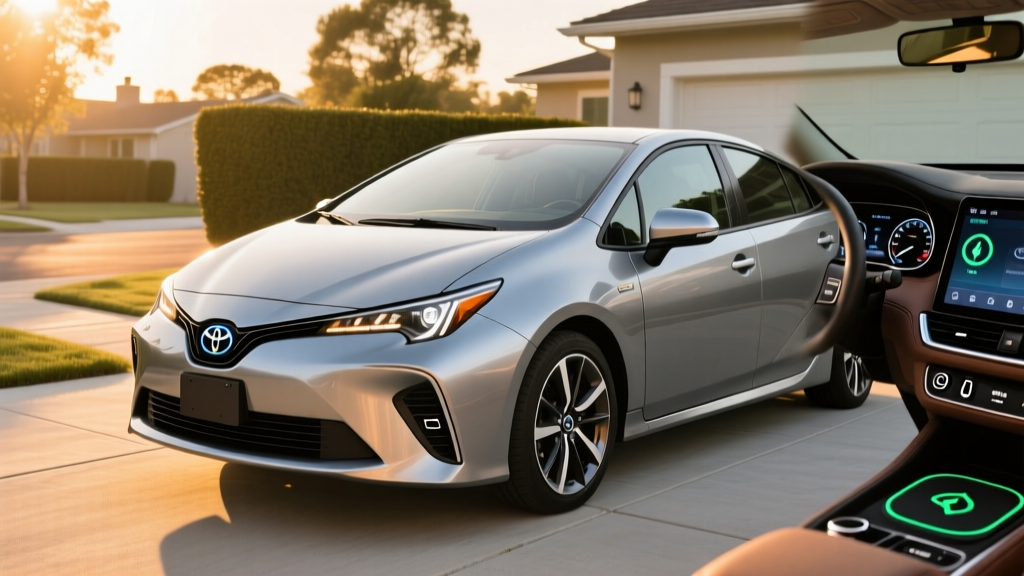
Toyota renamed the Prius Prime to simply Prius PHEV for the 2025 model year, and the 2026 edition carries forward the same formula that made it one of the most compelling plug-in hybrids on the market: a 2.0-liter four-cylinder paired with a high-output electric motor, a 13.6 kWh lithium-ion battery, and up to 44 miles of electric-only driving. Combined with a 52 MPG gas-electric hybrid mode, the Prius PHEV covers over 440 miles of total range before needing either a plug or a pump.
For buyers cross-shopping between a conventional hybrid, a plug-in hybrid, and a full battery-electric vehicle, the 2026 Prius PHEV occupies a precise middle ground — daily electric commuting without range anxiety on longer trips.
HEV vs PHEV: Understanding the Prius Lineup
Toyota sells two distinct Prius models, and confusing them is one of the most common buyer mistakes. Here's the critical difference:
| Attribute | Prius HEV (Conventional Hybrid) | Prius PHEV (Plug-In Hybrid) |
|---|---|---|
| Plugs in? | No — charges via regenerative braking and engine | Yes — plug in to charge the 13.6 kWh battery |
| Electric-only range | ~1 mile at very low speeds | 44 miles (EPA estimate) |
| Battery capacity | ~0.9 kWh (small buffer) | 13.6 kWh lithium-ion |
| Combined MPG (gas mode) | 57 MPG | 52 MPG |
| Combined horsepower | 194 hp | 220 hp |
| 0-60 mph | 7.0 seconds | 6.6 seconds |
| Federal tax credit (§30D) | Not eligible | Eligible — up to $7,500 (see rules below) |
| Starting MSRP | $28,350 | $33,475 |
The takeaway: The conventional Prius HEV is simpler and cheaper, ideal if you cannot charge at home. The Prius PHEV rewards home-charging access with electric-only commutes and a meaningful performance bump. If you have a standard 120V outlet near where you park, the PHEV charges overnight and pays for its price premium through electricity savings.
Electric-Only Range, MPG, and Real-World Efficiency
Electric-Only Range: 44 Miles EPA
The 2026 Prius PHEV achieves an EPA-estimated 44 miles of electric-only range in EV Mode (SE trim with 17-inch wheels). The XSE trim, fitted with 19-inch alloy wheels, drops to 40 miles due to higher rolling resistance and weight. These figures assume moderate temperatures and mixed city/highway driving.
Gas-Electric Hybrid MPG
Once the battery depletes, the Prius PHEV operates as a conventional hybrid. According to fueleconomy.gov, the 2026 Prius PHEV SE achieves:
| Trim | City MPG | Highway MPG | Combined MPG | MPGe (EV Mode) |
|---|---|---|---|---|
| SE (17" wheels) | 50 | 47 | 52 | 127 MPGe |
| XSE (19" wheels) | 48 | 45 | 50 | 121 MPGe |
| XSE Premium (19" wheels) | 48 | 45 | 50 | 121 MPGe |
Real-World MPG: How Owners Actually Fare
Toyota's hybrid system excels in stop-and-go traffic, where regenerative braking recovers energy that gas-only cars waste as heat. Many owners report exceeding EPA city estimates — 55-60 MPG in urban driving is common in mild weather. Highway MPG tends to track closer to or slightly below the EPA figure because the Atkinson-cycle 2.0L engine operates less efficiently at sustained high loads.
For a commuter who charges nightly and drives under 40 miles round-trip, gasoline consumption may drop to near zero for months at a time. The engine will still start periodically for maintenance cycles and in extreme cold, but fuel use becomes negligible.
Total Combined Range
With a full charge and a full 11.4-gallon fuel tank, the 2026 Prius PHEV SE delivers approximately 44 miles electric + ~490 miles on gasoline = 530+ miles total range. This eliminates range anxiety entirely — you can drive from Los Angeles to San Francisco without stopping, then plug in at your destination.
Powertrain, Charging, and Battery Specs
Powertrain Breakdown
The 2026 Prius PHEV uses Toyota's fifth-generation hybrid system:
- Engine: 2.0-liter Dynamic Force 4-cylinder, 150 hp / 139 lb-ft torque
- Electric Motor (front): High-output permanent magnet motor contributing to 220 hp combined system output
- Combined System Horsepower: 220 hp
- Transmission: Electronically controlled CVT (eCVT) — a planetary gearset, not a belt-driven CVT
- 0-60 mph: 6.6 seconds
- Drivetrain: Front-wheel drive (AWD not available on PHEV)
The 220 hp output makes the Prius PHEV genuinely quick for an efficiency-focused car. The 6.6-second 0-60 time beats many compact sport sedans and makes highway merging effortless.
Charging Specifications
| Charging Level | Power | Connector | 0-100% Time | Miles Added per Hour |
|---|---|---|---|---|
| Level 1 (120V household outlet) | ~1.4 kW | J1772 | ~11 hours | ~4 miles/hr |
| Level 2 (240V home/public charger) | ~3.3 kW (onboard charger limit) | J1772 | ~4 hours | ~11 miles/hr |
| DC Fast Charging | Not supported | N/A | N/A | N/A |
Critical detail: The Prius PHEV's onboard charger is limited to 3.3 kW. Even if you plug into a 7.2 kW or 11.5 kW Level 2 station, the car will only accept 3.3 kW. This means a full charge takes roughly 4 hours regardless of the Level 2 equipment you use. For most owners charging overnight, this is perfectly adequate — but it means you cannot top up quickly at a public charger during a midday errand.
The lack of DC fast charging is a deliberate trade-off. The 13.6 kWh battery is small enough that Level 2 covers overnight needs, and adding DC fast-charge hardware would increase cost, weight, and packaging complexity. If you need fast public charging, a full BEV is the better choice.
Battery Chemistry and Specifications
The 13.6 kWh lithium-ion pack uses NMC (nickel manganese cobalt) chemistry, chosen for its energy density in a compact package. The usable capacity is approximately 11.3 kWh — Toyota maintains a buffer at the top and bottom of the pack to prevent deep cycling and extend longevity.
Pricing, Tax Credits, and Ownership Economics
2026 Prius PHEV MSRP by Trim
| Trim | MSRP (incl. destination) | Electric Range | Key Features |
|---|---|---|---|
| SE | $33,475 | 44 miles | 17" alloy wheels, Toyota Safety Sense 3.0, 8" touchscreen, heated front seats |
| XSE | $37,225 | 40 miles | 19" alloy wheels, SofTex seats, wireless charging, power liftgate |
| XSE Premium | $40,695 | 40 miles | All XSE features + panoramic fixed glass roof, 12.3" touchscreen, JBL audio, heated/ventilated front seats |
Federal Tax Credit Eligibility (§30D)
The 2026 Toyota Prius PHEV is eligible for the IRS §30D New Clean Vehicle Credit, but the actual amount depends on multiple factors that change yearly:
- MSRP cap: Vehicle must be under $55,000 (sedan). All Prius PHEV trims qualify. ✓
- Buyer income cap: Modified AGI must not exceed $150,000 (single) / $300,000 (joint). Check your tax situation.
- Battery sourcing: A percentage of critical minerals and battery components must be sourced from the US or FTA partners. Toyota has progressively increased North American sourcing, but the exact credit amount ($3,750 or $7,500) depends on the current-year sourcing thresholds.
- Point-of-sale transfer: You can transfer the credit to the dealer at purchase to reduce your out-of-pocket cost, rather than waiting to claim it on your tax return.
- Assembly: Final assembly must occur in North America. The Prius PHEV is assembled in Japan, which may disqualify it from the new-vehicle credit under current rules.
Important: Verify current eligibility at fueleconomy.gov before purchasing, as IRS sourcing requirements tighten annually. Consult a tax professional for your specific situation.
Because the Prius PHEV is assembled in Toyota City, Japan, it faces a significant hurdle under §30D's North American final-assembly requirement. As of early 2026, this likely means the new-vehicle federal credit is unavailable for the Prius PHEV. However, some state-level incentives (such as those in California, Colorado, and New York) may still apply to plug-in hybrids regardless of assembly location. Check your state's energy office for current programs.
5-Year Cost of Ownership Estimate
Assuming 15,000 miles/year, 60% electric-only driving (9,000 mi EV / 6,000 mi hybrid), electricity at $0.14/kWh, and gasoline at $3.50/gallon:
| Vehicle | Annual Fuel/Energy Cost | 5-Year Total |
|---|---|---|
| Prius PHEV (60% EV driving) | ~$580 | ~$2,900 |
| Prius HEV (52 MPG combined) | ~$1,010 | ~$5,050 |
| Compact gas sedan (30 MPG) | ~$1,750 | ~$8,750 |
| Full EV (3.5 mi/kWh) | ~$600 | ~$3,000 |
The Prius PHEV's energy cost rivals a full BEV when most driving is within electric range, while retaining the gas backup for longer trips. The savings versus a gas-only car can exceed $5,000 over five years.
Reliability, Battery Warranty, and Replacement Costs
Toyota's hybrid lineage is one of the most proven in the industry — the original Prius launched in 1997, and the plug-in variant has been on sale since 2012. The fifth-generation hybrid system in the 2026 Prius PHEV benefits from decades of iterative refinement.
- Hybrid battery warranty: 10 years / 150,000 miles (whichever comes first) — covers capacity loss below a defined threshold and manufacturing defects
- Hybrid system components: 8 years / 100,000 miles (inverter, transaxle, control modules)
- Basic vehicle warranty: 3 years / 36,000 miles
- Powertrain warranty: 5 years / 60,000 miles
Battery Degradation: What to Expect
Based on long-term data from earlier Prius Prime (PHEV) models and Toyota's NMC pack engineering, expect approximately 8-12% capacity loss over 10 years under normal use. Toyota's battery management system maintains a conservative charge buffer — you never use the full 13.6 kWh, which significantly reduces stress on the cells.
Real-world reports from 2017-2022 Prius Prime owners (the previous generation with a smaller 8.8 kWh battery) show most vehicles retaining 85-90% of original electric range after 80,000-100,000 miles. The current-generation larger battery should show similar or better longevity due to lower depth-of-discharge per cycle.
Battery Replacement Cost
If the hybrid battery fails outside of warranty, replacement costs for the Prius PHEV's 13.6 kWh pack currently range from $5,500 to $8,000 including parts and labor at a Toyota dealer. Independent hybrid specialists may offer refurbished packs for $3,500-$5,000. Given the 10-year/150,000-mile warranty and Toyota's track record, out-of-pocket replacement is rare within the typical ownership period.
Who Should Buy the Prius PHEV — And Who Shouldn't
✓ Prius PHEV Is Ideal For:
- Commuters with round trips under 44 miles who can charge at home
- Apartment/condo dwellers with Level 1 (120V) access — 11-hour charge works overnight
- Drivers who take 2-3 road trips per year and don't want to plan around charging stations
- Buyers transitioning from gas to electric who want a safety net
- Those prioritizing proven reliability and low depreciation
- Cold-climate drivers who need cabin heat without devastating range loss
✗ Consider a Full EV or HEV Instead If:
- You drive 80+ miles daily and want to avoid gasoline entirely
- You have access to DC fast charging and want 20-minute road-trip top-ups
- You want the lowest possible maintenance (no oil changes, no engine) — choose a BEV
- You cannot charge at home or work — the PHEV's benefits require plugging in regularly
- You want AWD — the Prius PHEV is FWD only (consider the RAV4 PHEV or a BEV)
- Your budget is under $28,000 — the standard Prius HEV starts lower with excellent MPG
Prius PHEV vs Full EV vs Gas: Decision Framework
| Your Situation | Best Choice | Why |
|---|---|---|
| Daily commute under 40 mi, home charging, 2+ road trips/year | Prius PHEV | Electric commuting + gas backup, no route planning |
| Daily commute under 40 mi, home charging, rare long trips | Full EV (e.g., Tesla Model 3, Chevy Equinox EV) | Lower maintenance, DC fast charging, no gas engine upkeep |
| No home/work charging access | Prius HEV | No plug needed; 57 MPG without behavior change |
| 100+ miles daily, mostly highway | Full EV with 300+ mi range or diesel | PHEV electric range insufficient; gas mode MPG drops at high speed |
| Extreme cold climate (-20°F winters) | Prius PHEV or HEV | Engine provides heat; BEV range drops 30-40% in extreme cold |
| Lowest possible total cost of ownership | Full EV with tax credit | Electricity + no engine maintenance + potential $7,500 credit |
Frequently Asked Questions
How many MPG does the 2026 Toyota Prius PHEV get?
The 2026 Prius PHEV SE achieves an EPA-estimated 50 city / 47 highway / 52 combined MPG in hybrid mode (after the battery is depleted). In electric mode, it achieves 127 MPGe. Real-world city driving often exceeds the EPA city estimate — many owners report 55-60 MPG in stop-and-go traffic.
How far can the Prius PHEV go on electric only?
The SE trim delivers 44 miles of EPA-estimated electric-only range; the XSE and XSE Premium trims deliver 40 miles. In real-world conditions, expect 38-42 miles in warm weather and 30-35 miles in freezing temperatures. Highway driving at 70+ mph reduces electric range to approximately 32-36 miles.
Does the 2026 Prius PHEV qualify for a federal tax credit?
Under current IRS §30D rules, the Prius PHEV faces a significant obstacle: it is assembled in Japan, and the credit requires North American final assembly. As of 2026, this likely means the federal new-vehicle credit is not available. However, state-level PHEV incentives may still apply. Verify at fueleconomy.gov before purchasing.
Is the Prius PHEV reliable? What about battery replacement?
Toyota's hybrid system has over 25 years of proven reliability. The hybrid battery is warranted for 10 years/150,000 miles. Based on previous-generation data, expect 8-12% battery degradation over a decade. Out-of-warranty replacement costs $5,500-$8,000 at a dealer, but premature failure is rare.
Can I charge the Prius PHEV on a regular 120V outlet?
Yes. Level 1 charging at 120V takes approximately 11 hours for a full charge — sufficient for overnight charging if your daily driving is under 44 miles. A dedicated 240V Level 2 circuit reduces this to about 4 hours, but the car's 3.3 kW onboard charger means even a 40A Level 2 station won't charge faster than 3.3 kW.
Does the Prius PHEV support DC fast charging?
No. The 2026 Prius PHEV does not have a DC fast-charge port. Maximum charge rate is 3.3 kW on Level 2 AC. This is a deliberate design choice — the 13.6 kWh battery is small enough that overnight Level 1 or Level 2 charging covers daily needs. If DC fast charging is essential, consider a full BEV.
Should I buy the Prius PHEV or a full electric vehicle?
Choose the Prius PHEV if you need electric-only commuting but also take regular road trips where charging infrastructure is sparse or unreliable. Choose a full EV if you charge at home, rarely drive over 250 miles in a day, and want zero engine maintenance. The PHEV is the pragmatic bridge; the BEV is the long-term destination for most drivers.