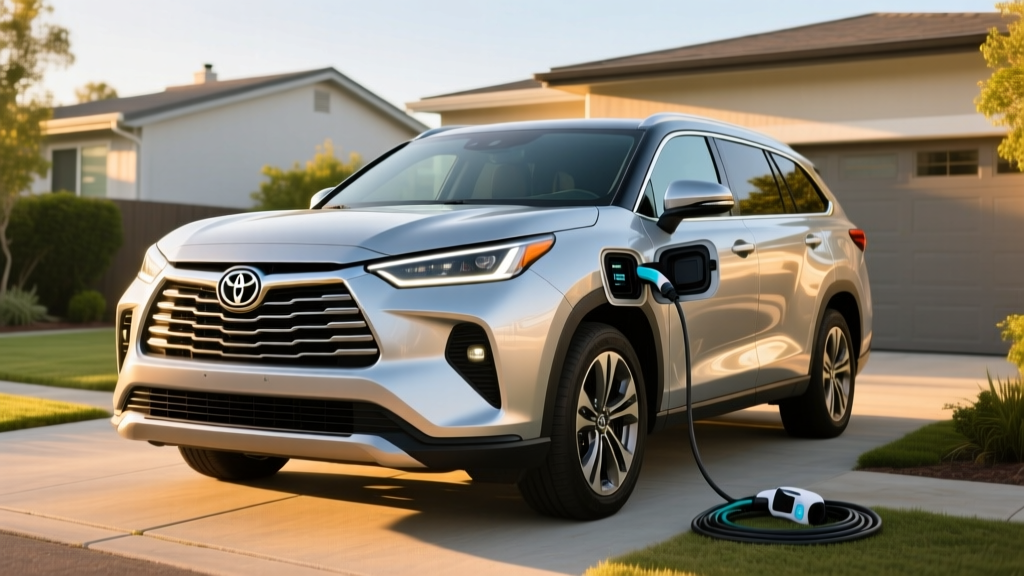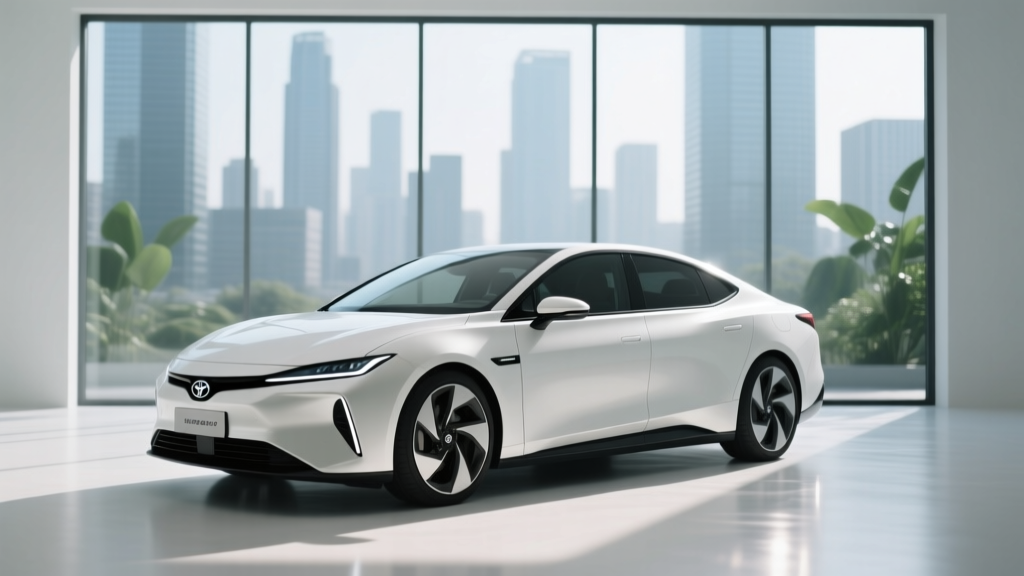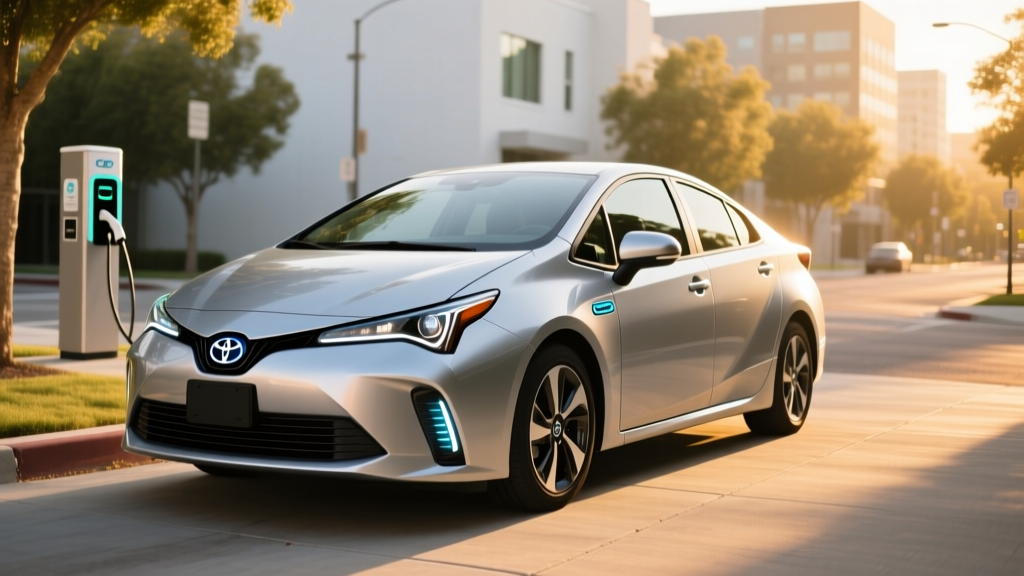
The Toyota Prius didn't just popularize the hybrid—it defined a category that millions of drivers now rely on for low running costs and dead-simple ownership. The current-generation Prius, redesigned for the 2023 model year and refined through 2026, shed its dowdy reputation with sharper styling and a genuine power upgrade while keeping the fuel-economy numbers that made it famous. If you're researching Prius hybrid MPG, you want the real numbers—not just the EPA sticker, but what you'll actually see on your commute, your highway road trip, and your wallet over five years.
This guide covers the 2026 Toyota Prius (conventional hybrid, or HEV) and the Prius Prime (plug-in hybrid, or PHEV), with exact fuel economy data, powertrain specs, pricing, tax credit eligibility, and battery longevity information. We'll also help you decide whether the standard hybrid, the plug-in Prime, or a full battery-electric vehicle (BEV) is the right call for your driving pattern.
2026 Toyota Prius Hybrid MPG: The EPA Numbers
The 2026 Toyota Prius hybrid lineup carries over the powertrain introduced with this generation: a 2.0-liter four-cylinder engine paired with Toyota's fifth-generation hybrid system. The result is EPA ratings that remain best-in-class for a non-plug-in compact hatchback.
| Trim / Drivetrain | City MPG | Highway MPG | Combined MPG |
|---|---|---|---|
| LE (FWD) | 57 | 56 | 57 |
| XLE / Limited (FWD) | 52 | 52 | 52 |
| LE (AWD-e) | 53 | 54 | 54 |
| XLE / Limited (AWD-e) | 49 | 50 | 49 |
Source: fueleconomy.gov
The LE trim's 57 MPG combined figure is the headline, and it's achieved with the lighter FWD configuration and smaller 16-inch wheels. Stepping up to XLE or Limited adds weight and larger 18-inch wheels, dropping the combined rating to 52 MPG. The electronic all-wheel-drive system (AWD-e), which uses a small rear-mounted electric motor for traction rather than a mechanical driveshaft, costs you roughly 3-5 MPG depending on trim.
Toyota hybrids consistently deliver real-world fuel economy that meets or exceeds EPA estimates in city driving, where regenerative braking recaptures the most energy. Owner-reported data on Fuelly and similar platforms shows the Prius LE averaging 55-62 MPG in mixed city-heavy commuting. Highway-only driving at 75+ MPH typically yields 48-53 MPG due to increased aerodynamic drag — hybrids lose their city advantage at sustained high speeds. In cold weather (below 30°F), expect a 5-10% reduction as the engine runs more frequently to heat the cabin and maintain battery temperature.
Prius HEV vs. Prius Prime PHEV: What's the Difference?
Toyota sells two distinct Prius models. Conflating them is the most common mistake buyers make, so let's be precise:
Prius (HEV — Conventional Hybrid)
- Does NOT plug in. The battery charges via regenerative braking and the engine.
- Small battery (~1.3 kWh usable) — assists the engine, never drives the car alone for meaningful distances.
- No electric-only range to speak of.
- No federal tax credit (not a plug-in vehicle).
- Lower MSRP, simpler ownership.
Prius Prime (PHEV — Plug-In Hybrid)
- Plugs in to charge a larger battery pack.
- 13.6 kWh battery (usable) enables 44 miles of electric-only driving (SE trim, EPA).
- After battery depletes, operates as a conventional hybrid at ~52 MPG combined.
- May qualify for federal or state incentives (details below).
- Higher MSRP; requires charging access to maximize value.
| Specification | Prius HEV (LE FWD) | Prius Prime PHEV (SE) |
|---|---|---|
| Combined MPG (hybrid mode) | 57 | 52 (after battery depletion) |
| MPGe (electric + gas combined) | N/A | 127 MPGe |
| Electric-Only Range | None | 44 miles (EPA) |
| Total Range (full tank + full battery) | ~630 miles | ~480 miles |
| Battery Capacity (usable) | ~1.3 kWh (NiMH) | 13.6 kWh (lithium-ion) |
| Combined Horsepower | 194 hp (FWD) | 220 hp |
| 0-60 MPH | ~7.2 sec | ~6.6 sec |
| Level 2 Charge Time (0-100%) | N/A — no plug | ~4 hours (at 3.3 kW onboard charger) |
| DC Fast Charging | N/A | Not supported |
| Base MSRP (2026) | ~$29,445 | ~$34,045 |
Key takeaway: the Prime PHEV is the faster, more powerful variant, and its 44-mile electric range covers the average American's daily round-trip commute (roughly 35 miles, per FHWA data). But if you can't charge at home or at work, the Prime's larger battery becomes dead weight, and you'd be better served by the lighter, cheaper, higher-MPG standard Prius HEV.
Powertrain Deep Dive: What Makes This Hybrid Tick
The 2026 Prius uses Toyota's fifth-generation hybrid synergy drive. Here's the hardware:
Prius HEV: A 2.0-liter Atkinson-cycle four-cylinder engine producing 150 hp on its own, paired with a front-mounted electric motor-generator. Combined system output is 194 hp for FWD trims and 196 hp for AWD-e (which adds a 40 kW rear motor). The AWD-e system engages automatically below 43 MPH for low-traction starts and doesn't affect the driving feel at highway speeds.
Prius Prime PHEV: The same 2.0-liter engine, but tuned and paired with a more powerful electric motor and the 13.6 kWh lithium-ion pack for a combined 220 hp. This makes the Prime genuinely quick — 6.6 seconds to 60 MPH is sports-sedan territory from a decade ago, in a car that returns 127 MPGe when charged regularly.
Neither powertrain uses a traditional multi-speed automatic transmission. Both employ Toyota's eCVT (planetary gearset), which provides seamless ratio changes without the shift-shock or rubber-band feel associated with belt-driven CVTs. Reliability of this gearset is exceptional — it has fewer wear components than a conventional automatic.
Prius Prime PHEV: Electric Range, Charging, and Daily Use
If you're considering the Prime, the electric-only range and charging logistics determine whether it makes financial sense.
- SE trim: 44 miles (19-inch wheels not available; lighter curb weight)
- XSE / XSE Premium: 40 miles (larger wheels, additional equipment weight)
Real-world expectation: In moderate temperatures (50-80°F) with mixed city/suburban driving, expect to see 40-46 miles on the SE. Highway-only electric driving at 70 MPH reduces this to roughly 32-36 miles. Cold weather (below freezing) can cut electric range by 20-30% due to cabin heating demands and reduced battery efficiency.
Charging the Prime: The Prius Prime uses a standard J1772 connector for Level 1 (120V household outlet) and Level 2 (240V home or public charger). The onboard charger is rated at 3.3 kW, meaning:
- Level 1 (120V / 12A): ~11-12 hours for a full charge — practical only for overnight if you start with a near-empty battery.
- Level 2 (240V / 16A): ~4 hours for a full charge — the realistic daily charging solution.
- DC Fast Charging: Not available. The Prime does not have a CCS or CHAdeMO port. This is typical for PHEVs with smaller battery packs — the cost and weight of DC fast-charge hardware isn't justified for a 13.6 kWh battery.
If you install a Level 2 home charger (typically $500-$1,500 installed, depending on your electrical panel), you can plug in each evening and wake up to a full 44-mile electric range every morning. At the national average electricity rate of ~$0.16/kWh, a full Prime charge costs roughly $2.18 — compared to about $5.50-$6.00 to drive the same 44 miles on gasoline at $3.30/gallon and 52 MPG.
Pricing, Trims, and Tax Credit Eligibility
| Model / Trim | MSRP (approx.) |
|---|---|
| Prius LE (FWD) | $29,445 |
| Prius XLE (FWD) | $32,395 |
| Prius Limited (FWD) | $35,895 |
| Prius LE (AWD-e) | $30,845 |
| Prius Prime SE | $34,045 |
| Prius Prime XSE | $37,295 |
| Prius Prime XSE Premium | $40,595 |
Prices include destination charge. Actual dealer pricing may vary.
Federal Tax Credit — Prius Prime (PHEV) Only
The standard Prius HEV does not qualify for the federal §30D Clean Vehicle Credit because it is not a plug-in vehicle. This is a common point of confusion — "hybrid" alone does not trigger the credit.
The Prius Prime PHEV may qualify for up to $3,750 under current IRS §30D rules, but eligibility depends on several factors that change periodically:
- Battery sourcing requirements: A percentage of critical minerals and battery components must be sourced from the U.S. or free-trade-agreement countries. The Prius Prime's partial compliance has historically limited the credit to $3,750 (rather than the full $7,500).
- MSRP cap: The vehicle must be under $55,000 for sedans/hatchbacks — all Prius Prime trims qualify.
- Buyer income cap: Adjusted gross income must not exceed $150,000 (single), $225,000 (head of household), or $300,000 (joint).
- Point-of-sale transfer: As of 2024+, you can transfer the credit to the dealer for an immediate price reduction at purchase, rather than waiting to claim it on your tax return.
Always verify current eligibility at IRS.gov before purchasing — battery sourcing compliance lists update frequently. Some states (notably California, Colorado, and Massachusetts) offer additional PHEV rebates of $1,000-$2,500 that stack with the federal credit.
Battery Reliability, Warranty, and Replacement Cost
- Hybrid battery: 10 years / 150,000 miles (whichever comes first), transferable to subsequent owners.
- Hybrid system components (inverter, motor-generators, eCVT): 8 years / 100,000 miles.
- Bumper-to-bumper: 3 years / 36,000 miles.
- Powertrain (engine): 5 years / 60,000 miles.
Toyota's hybrid battery longevity is one of the strongest arguments for the Prius. The conventional Prius HEV uses a nickel-metal hydride (NiMH) pack that has proven extraordinarily durable — it's common to see Prius taxis and fleet vehicles surpass 300,000 miles on the original battery. The Prius Prime's lithium-ion pack has a shorter track record (this generation launched in 2023) but benefits from conservative charge management: Toyota buffers the top and bottom of the pack to prevent deep cycling, which is the primary driver of lithium-ion degradation.
If the battery does need replacement out of warranty:
- Prius HEV (NiMH): $2,500-$3,500 for a new OEM battery, or $1,500-$2,200 for a refurbished unit from a certified rebuilder.
- Prius Prime (lithium-ion): $5,000-$7,500 estimated for OEM replacement (limited real-world data, as most are still under warranty).
For context, a Prius owner driving 15,000 miles per year would reach the 150,000-mile warranty threshold at year 10 — by which point the vehicle's residual value is typically $5,000-$8,000 regardless. The battery warranty effectively covers the car's entire economically useful life for most owners.
Toyota's reliability ratings need little introduction. The Prius consistently earns top marks from Consumer Reports and J.D. Power for long-term dependability. The IIHS has rated the current-generation Prius a Top Safety Pick+ in prior model years, and the 2026 model carries over the same structure and safety systems (Toyota Safety Sense 3.0, including pre-collision braking, lane departure alert, and full-speed adaptive cruise control).
Prius HEV vs. Prime PHEV vs. Full EV: Which Is Right for You?
This is the decision framework that actually matters — not which powertrain is "best" in the abstract, but which fits your specific driving life.
Choose the Prius HEV (standard hybrid) if:
- You cannot charge at home (apartment, street parking, no garage).
- Your budget is under $33,000 and you want the lowest total cost of ownership.
- You drive 200+ miles per week and want maximum MPG without any behavior change.
- You want zero plug-in hassle — just fill up with gas and drive.
- You live in a cold climate where EV range loss is a concern (hybrids are largely unaffected).
Choose the Prius Prime (PHEV) if:
- You can charge at home (Level 2 preferred) and your daily round-trip commute is under 40 miles.
- You want to drive on electricity most days but need gas-engine flexibility for weekend road trips.
- You want the performance bump (220 hp, 6.6s 0-60) over the standard hybrid.
- You can capture the $3,750 federal credit plus any state rebates, narrowing the price gap with the HEV.
- You're not ready to commit to a full EV but want to reduce gasoline consumption by 70-80%.
Choose a full EV (e.g., Tesla Model 3, Hyundai Ioniq 6) if:
- You can charge at home and your typical trips are under 250 miles (or you're willing to plan DC fast-charge stops).
- You want to eliminate gasoline entirely and qualify for the full $7,500 federal EV credit on eligible models.
- Your household has a second vehicle for long road trips, reducing range-anxiety concerns.
- You prioritize the lowest per-mile energy cost (electricity at $0.16/kWh ≈ $0.04/mile vs. gas at $3.30/gal and 52 MPG ≈ $0.06/mile).
Pros and Cons: The Honest Assessment
✓ Pros
- Best-in-class MPG for a non-plug-in vehicle (57 combined, LE)
- Strong reliability history; 10-year/150k-mile hybrid battery warranty
- Genuinely quick for a hybrid (7.2s HEV, 6.6s Prime 0-60)
- Low insurance costs relative to EVs
- No charging infrastructure required (HEV)
- AWD-e available for snow-belt buyers
- Competitive cargo space (23.8 cu ft behind rear seats)
✗ Cons
- Rear seat headroom is tight for passengers over 6'0" (sloping roofline)
- No DC fast charging on the Prime (limits road-trip electric driving)
- Base LE trim is sparse — no wireless CarPlay, basic audio
- AWD-e reduces MPG by 3-5 combined
- Prime's $4,600 price premium over HEV takes years to recoup on fuel savings alone
- No federal tax credit for the conventional hybrid
- Toyota's infotainment, while improved, lags behind Hyundai/Kia interfaces
Frequently Asked Questions
How many MPG does the 2026 Toyota Prius hybrid get?
The 2026 Prius LE (FWD) is EPA-rated at 57 city / 56 highway / 57 combined MPG. The XLE and Limited trims drop to 52 combined due to larger wheels and additional weight. AWD-e trims range from 49-54 combined. Real-world city driving often exceeds EPA estimates by 2-5 MPG; sustained highway driving above 70 MPH typically returns 2-5 MPG below the sticker.
How far can the Prius Prime go on electric only?
The 2026 Prius Prime SE is EPA-rated at 44 miles of electric-only range. The heavier XSE and XSE Premium trims are rated at 40 miles. Real-world results vary: expect 40-46 miles in moderate city/suburban driving, and 32-36 miles at highway speeds. Cold weather reduces electric range by 20-30%.
Does the Toyota Prius qualify for a federal tax credit?
The conventional Prius HEV does not qualify — it is not a plug-in vehicle. The Prius Prime PHEV may qualify for up to $3,750 under IRS §30D rules, subject to battery sourcing compliance, buyer income caps ($150k single / $300k joint), and the $55,000 MSRP cap for hatchbacks. Verify current eligibility at fueleconomy.gov before purchasing, as sourcing requirements update periodically.
Is the Prius hybrid battery reliable, and what does replacement cost?
Toyota's hybrid batteries have an exceptional reliability record, with many original NiMH packs lasting 200,000+ miles. The hybrid battery is warranted for 10 years / 150,000 miles. Out-of-warranty replacement runs $2,500-$3,500 for the HEV (NiMH) and an estimated $5,000-$7,500 for the Prime (lithium-ion). Refurbished HEV batteries are available for $1,500-$2,200.
Do I need to plug in the standard Toyota Prius?
No. The conventional Prius HEV charges its small battery entirely through regenerative braking and the gasoline engine. There is no plug, no charging cable, and no electric-only driving range. Only the Prius Prime PHEV requires (and benefits from) plug-in charging.
How does the Prius compare to a full EV on running costs?
At $3.30/gallon and 57 MPG, the Prius HEV costs roughly $0.058 per mile in fuel. A comparable EV at $0.16/kWh and 4 miles/kWh costs about $0.04 per mile — a savings of roughly $1.80 per 100 miles, or about $270 per year at 15,000 miles. The EV's larger savings come from reduced maintenance (no oil changes, less brake wear from regen). However, the Prius HEV has a lower purchase price, no charging infrastructure requirement, and no range anxiety on long trips — making it the lower-stress choice for many buyers.