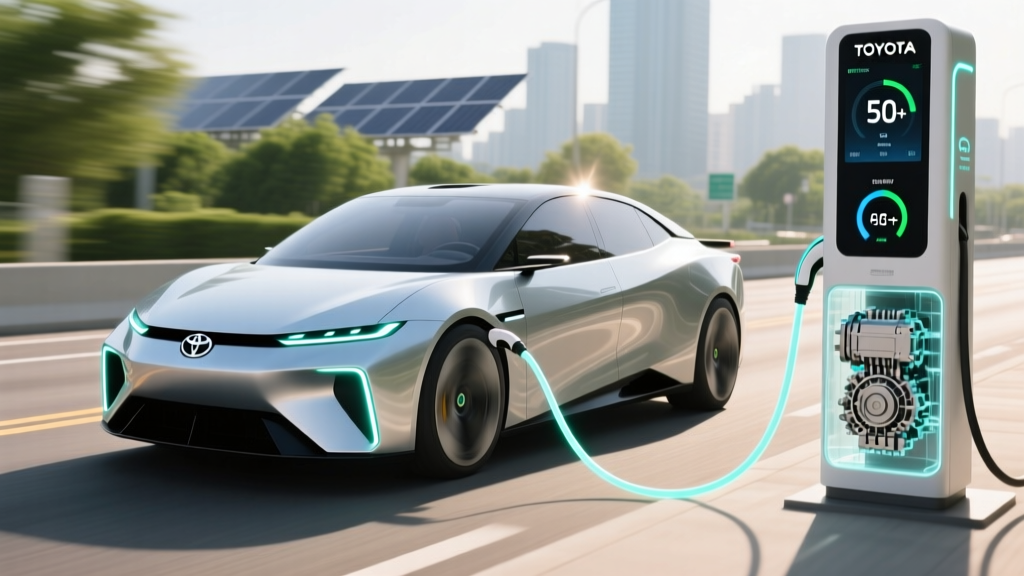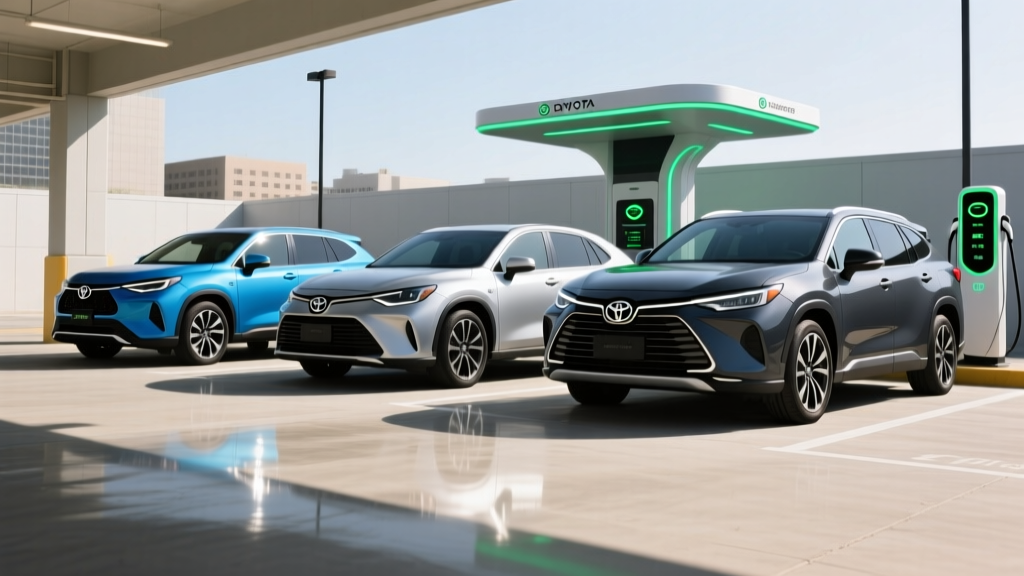
If you've been asking does Toyota make a plug-in hybrid, the answer is a definitive yes — and in 2026, Toyota offers two of the most compelling PHEVs on the market: the RAV4 Prime and the Prius Prime. Both let you drive on pure electricity for daily commutes while keeping a gas engine for longer road trips, eliminating the range anxiety that still deters some buyers from full battery-electric vehicles.
But Toyota also sells several conventional hybrids (HEVs) that don't plug in at all — and confusing the two is one of the most common mistakes shoppers make. This guide separates Toyota's plug-in hybrids from its standard hybrids, gives you exact EPA numbers, battery specs, real-world efficiency data, and tax-credit eligibility so you can decide which powertrain actually fits your driving life.
Toyota's 2026 Plug-In Hybrids: RAV4 Prime and Prius Prime at a Glance
Toyota currently sells two plug-in hybrid models in the United States. Here's how they stack up on the numbers that matter most:
| Spec | 2026 Toyota RAV4 Prime | 2026 Toyota Prius Prime |
|---|---|---|
| EPA Electric-Only Range | 42 miles | 44 miles (SE trim) / 40 miles (XSE) |
| Total Combined Range | ~600 miles | ~440–460 miles |
| Battery Capacity (usable) | 18.1 kWh (lithium-ion) | 13.6 kWh (lithium-ion) |
| Combined Horsepower | 302 hp | 220 hp |
| Engine | 2.5L 4-cyl + 2 electric motors (AWD) | 2.0L 4-cyl + 1 electric motor (FWD) |
| 0–60 mph | 5.7 seconds | 6.6 seconds |
| EPA Combined MPG (gas mode) | 38 MPG | 52 MPG (SE) / 48 MPG (XSE) |
| MPGe (electric + gas combined) | 94 MPGe | 127 MPGe (SE) |
| Level 2 Charge Time (0–100%) | ~2.5 hours (6.6 kW onboard charger) | ~4 hours (3.5 kW onboard charger) |
| DC Fast Charging | No | No |
| Starting MSRP | ~$44,500 | ~$34,000 |
| Drivetrain | Electronic AWD (standard) | FWD only |
Neither Toyota PHEV supports DC fast charging. That's typical for plug-in hybrids — the battery is small enough that Level 2 charging at home or at a public station refills it fully in just a few hours, making DCFC hardware unnecessary and cost-prohibitive for the pack size.
HEV vs PHEV: What's the Actual Difference?
This is where Toyota shoppers get tripped up. Toyota sells many hybrids — the standard RAV4 Hybrid, Camry Hybrid, Highlander Hybrid, Sienna, and others — but those are conventional hybrids (HEVs). They do not plug in. They recharge their small battery through regenerative braking and the gas engine, and they can only travel a mile or two on electricity at very low speeds.
Conventional Hybrid (HEV) — e.g., RAV4 Hybrid
- Never plugs in; gas station only
- Battery: ~1.6 kWh (small, self-charging)
- Electric-only driving: minimal (low-speed creep only)
- Real advantage: 30–40% better fuel economy than a gas-only equivalent
- No home charging needed — works for apartment dwellers
Plug-In Hybrid (PHEV) — e.g., RAV4 Prime, Prius Prime
- Plugs into a standard 120V outlet or 240V Level 2 charger
- Battery: 13–18 kWh (large enough for 40+ miles electric-only)
- Electric-only driving: full highway speeds, 40–44 miles EPA range
- Real advantage: daily commutes on electricity; gas engine for road trips
- Requires home or workplace charging access to maximize value
The practical upshot: if you can charge at home and your daily round-trip commute is under 40 miles, a Toyota PHEV essentially operates as an EV Monday through Friday, burning zero gas. On weekends or road trips, it's a regular hybrid with excellent MPG. If you can't charge at home, a conventional HEV is likely a better fit — you'll still save fuel without changing any habits.
Real-World MPG and Electric Range: What to Actually Expect
EPA estimates are a starting point, not a guarantee. Here's how Toyota's PHEVs perform in real-world conditions based on owner data and independent testing:
| Metric | RAV4 Prime | Prius Prime SE |
|---|---|---|
| EPA Electric Range | 42 miles | 44 miles |
| Real-World Electric Range (mild weather, mixed driving) | 38–45 miles | 40–48 miles |
| Real-World Electric Range (highway 75 mph, cold weather) | 28–34 miles | 30–36 miles |
| EPA Combined MPG (hybrid mode) | 38 MPG | 52 MPG |
| Real-World MPG (city-heavy, hybrid mode) | 36–40 MPG | 50–56 MPG |
| Real-World MPG (highway 75 mph) | 32–36 MPG | 44–48 MPG |
Key observations:
- Cold weather cuts electric range by 20–30%. Lithium-ion batteries lose efficiency below 40°F, and cabin heating draws significant power. Expect roughly 30 miles from the RAV4 Prime in January in Chicago, not 42.
- Highway driving at 75+ mph reduces both electric range and gas MPG. Aerodynamic drag scales with the square of speed. The Prius Prime, with its lower, sleeker profile, holds up better than the boxier RAV4 Prime at highway speed.
- Hybrids often exceed EPA city MPG. Regenerative braking recaptures energy in stop-and-go traffic, so city driving is where hybrids shine. Many Prius Prime owners report 54–56 MPG in urban commuting once the electric range is depleted.
According to data from fueleconomy.gov, the 2026 Prius Prime SE achieves 127 MPGe when operating in combined electric-gas mode, making it one of the most energy-efficient vehicles Toyota has ever sold.
Pricing, Trims, and Federal Tax Credit Eligibility
Pricing for Toyota's PHEVs reflects their dual-powertrain complexity, but federal incentives can meaningfully reduce the effective cost — if you qualify.
2026 Toyota RAV4 Prime
- SE trim: ~$44,500 MSRP
- XSE trim: ~$48,000 MSRP
- XSE Premium: ~$51,500 MSRP
2026 Toyota Prius Prime
- SE trim: ~$34,000 MSRP
- XSE trim: ~$37,000 MSRP
- XSE Premium: ~$40,000 MSRP
Does a Toyota PHEV qualify for the federal tax credit?
Under the IRS §30D Clean Vehicle Credit, the RAV4 Prime and Prius Prime may qualify for up to $3,750 — but eligibility depends on several factors that change regularly and vary by buyer. Here's the current framework:
- MSRP cap: SUVs/vans/pickups must be under $80,000; sedans under $55,000. Both Toyota PHEVs clear this.
- Buyer income cap: Modified AGI must not exceed $150,000 (single), $225,000 (head of household), or $300,000 (joint).
- Battery sourcing: A percentage of critical minerals and battery components must be sourced from the US or free-trade-agreement countries. Toyota's supply chain has faced scrutiny here — the credit amount ($3,750 vs. $7,500) depends on whether the vehicle meets both the minerals and components thresholds.
- Point-of-sale transfer: As of 2024+, eligible buyers can transfer the credit to the dealer at purchase, reducing the upfront price rather than waiting for a tax refund.
The credit situation for Toyota PHEVs has been fluid. As of early 2026, both the RAV4 Prime and Prius Prime are generally listed as eligible for at least $3,750, though the full $7,500 has been harder to secure due to battery-component sourcing rules. Always verify current eligibility on the IRS Clean Vehicle Credit page before purchasing, and consult a tax professional for your specific situation.
Some states also offer additional rebates for PHEVs. California's CVRP program, for example, has historically offered rebates for plug-in vehicles, though funding and eligibility vary. Check your state's energy or environmental agency for current programs.
Charging a Toyota PHEV at Home: What You Need
One of the biggest advantages of a Toyota PHEV over a full EV is that home charging is simple and inexpensive. The batteries are small, so you don't need a high-power wall charger or a panel upgrade.
| Charging Level | Power | RAV4 Prime (0–100%) | Prius Prime (0–100%) |
|---|---|---|---|
| Level 1 (standard 120V outlet) | ~1.4 kW | ~12–13 hours | ~9–10 hours |
| Level 2 (240V, 32A circuit) | Up to 6.6 kW (RAV4) / 3.5 kW (Prius) | ~2.5 hours | ~4 hours |
Practical advice: A standard 120V outlet in your garage will fully recharge either PHEV overnight — that's 8–12 hours, which is plenty for a 40-mile battery. If you want faster turnaround (say, recharging between a morning commute and an afternoon errand), a Level 2 home station like a ChargePoint Home Flex or Emporia Level 2 charger ($350–$700 for the unit) on a 240V circuit will refill the RAV4 Prime in about 2.5 hours.
Installation cost for a Level 2 charger typically runs $500–$2,000 depending on whether your electrical panel needs an upgrade. Most homes with a 200A panel and a garage near the panel can add a 240V circuit for $500–$800 in electrician labor plus the charger cost. Always get a quote from a licensed electrician before committing.
The cost to "fuel" a Toyota PHEV on electricity is remarkably low. At the US average residential rate of ~$0.17/kWh (per EIA data), fully charging the Prius Prime's 13.6 kWh battery costs roughly $2.31 — for 44 miles of driving. That's equivalent to about $0.05/mile on electricity vs. roughly $0.12–$0.15/mile on gasoline at $3.50/gallon and 50 MPG.
Battery Longevity, Warranty, and Replacement Cost
Hybrid battery anxiety is the number-one concern for first-time hybrid buyers. Here's what the data actually shows:
Toyota PHEV Battery Warranty
- Hybrid Battery Warranty: 10 years / 150,000 miles (whichever comes first) in all 50 states, effective for 2020+ model years.
- Capacity retention threshold: Toyota warrants the battery against defects and abnormal loss of capacity. If the battery falls below a functional threshold during the warranty period, Toyota replaces it at no cost.
- Hybrid system components (inverter, motor, control module) are also covered under the 10-year/150,000-mile warranty.
Real-world longevity data: Toyota's hybrid battery packs have an excellent track record. The original Prius, launched in the US in 2001, showed that nickel-metal hydride batteries routinely lasted 150,000–200,000+ miles with gradual capacity loss. The newer lithium-ion packs in the RAV4 Prime and Prius Prime benefit from improved chemistry and more sophisticated thermal management.
Degradation in a PHEV is somewhat more pronounced than in a full EV because the battery cycles more frequently relative to its size — you're using a larger percentage of the pack daily. However, Toyota engineers in substantial buffers (the 18.1 kWh RAV4 Prime pack has a usable window that protects the cells from deep discharge and overcharge), which significantly extends cycle life.
Out-of-warranty replacement cost: If a Toyota PHEV battery fails after the warranty expires, replacement runs approximately $3,000–$5,000 including parts and labor at a Toyota dealer. Independent hybrid battery shops sometimes offer refurbished packs for $1,500–$3,000. For context, this is significantly less than a full EV battery replacement, which can exceed $10,000–$20,000.
Toyota's hybrid reliability is consistently rated among the best in the industry. IIHS and long-term owner surveys from Consumer Reports regularly place the RAV4 and Prius nameplates at or near the top for powertrain dependability.
Who Should Buy a Toyota PHEV vs. a Full EV or Gas Car?
Choose a Toyota PHEV (RAV4 Prime or Prius Prime) if:
- Your daily commute is under 40 miles round-trip and you can charge at home
- You take regular road trips (300+ miles) and don't want to plan around charging stations
- You live in an area with limited public DC fast-charging infrastructure
- You want EV-like daily driving without committing to a full BEV
- You need AWD (RAV4 Prime) for snow or rough weather
Choose a full EV (like a Tesla Model Y or Hyundai Ioniq 5) if:
- Your daily driving is under 250 miles and you can charge at home
- You want zero tailpipe emissions and lower maintenance (no oil changes, no gas engine)
- You have access to reliable DC fast charging for road trips
- You want to maximize fuel-cost savings (electricity is cheaper per mile than even PHEV hybrid mode)
Choose a conventional Toyota HEV (RAV4 Hybrid, Camry Hybrid) if:
- You can't charge at home (apartment, street parking, no garage outlet)
- You want the simplicity of gas-station-only refueling with better MPG
- Your budget is tighter — HEVs start $5,000–$10,000 less than their PHEV counterparts
- You don't need electric-only driving and just want excellent fuel economy
Toyota PHEV Pros
- 40+ miles of daily electric driving eliminates gas use for most commutes
- No range anxiety — gas engine covers unlimited road-trip range
- Level 1 (120V) overnight charging is sufficient for most owners
- Excellent Toyota reliability and 10-year/150k-mile battery warranty
- RAV4 Prime's 302 hp makes it the quickest RAV4 ever sold
- Lower upfront cost than a comparable long-range EV
Toyota PHEV Cons
- No DC fast charging — not ideal for frequent multi-leg daily driving
- Electric range drops to ~28–34 miles in cold weather or at highway speed
- Premium pricing vs. conventional HEV ($8,000–$10,000 more for RAV4 Prime vs. RAV4 Hybrid)
- Tax credit eligibility is partial ($3,750 typical) and subject to change
- Cargo space slightly reduced vs. HEV due to larger battery pack
- Prius Prime is FWD only — no AWD option
Frequently Asked Questions
How many MPG does a Toyota plug-in hybrid get?
Once the electric range is depleted, the 2026 RAV4 Prime delivers an EPA-estimated 38 MPG combined (expect 36–40 in real-world city driving, 32–36 on the highway). The Prius Prime SE achieves 52 MPG combined in hybrid mode, with many owners reporting 50–56 MPG in city commuting. These figures are in addition to the 40–44 miles of zero-gas electric driving you get from a full charge.
How far can a Toyota PHEV go on electric only?
The RAV4 Prime is EPA-rated for 42 miles of electric-only range; the Prius Prime SE is rated for 44 miles. In real-world mild-weather mixed driving, many owners match or slightly exceed these numbers. In cold weather (below 40°F) or sustained highway driving above 70 mph, expect 28–36 miles of electric range depending on the model and conditions.
Do I need to plug in a Toyota hybrid?
Only the Prime models (RAV4 Prime and Prius Prime) are plug-in hybrids that benefit from being plugged in. Standard Toyota hybrids like the RAV4 Hybrid, Camry Hybrid, and Highlander Hybrid are conventional HEVs — they never plug in and recharge their small battery through regenerative braking and the engine. If you buy a Toyota without "Prime" in the name, it does not plug in.
Is a Toyota plug-in hybrid reliable? What does battery replacement cost?
Toyota's hybrid systems are among the most proven and reliable in the automotive industry, with over 25 years of real-world data. The PHEV battery is covered by a 10-year/150,000-mile warranty in all 50 states. Out-of-warranty replacement costs approximately $3,000–$5,000 at a dealer, substantially less than a full EV battery replacement. Many Toyota hybrid batteries last well beyond 200,000 miles with gradual but manageable capacity loss.
Does a Toyota PHEV qualify for a federal tax credit?
Under the IRS §30D Clean Vehicle Credit, both the RAV4 Prime and Prius Prime may qualify for up to $3,750 as of early 2026, depending on battery-component and critical-mineral sourcing requirements. Full $7,500 eligibility depends on meeting both sourcing thresholds, which has been inconsistent for Toyota PHEVs. Buyer income caps ($150K single / $300K joint) and MSRP caps also apply. Always verify current eligibility at irs.gov before purchasing and consider consulting a tax professional.
Can I charge a Toyota PHEV on a regular household outlet?
Yes. Both the RAV4 Prime and Prius Prime come with a Level 1 charging cable that plugs into a standard 120V household outlet. A full charge takes approximately 9–13 hours depending on the model — which is sufficient for overnight charging if your daily driving is within the 40-mile electric range. For faster charging, a 240V Level 2 station reduces charge time to 2.5–4 hours.
Is a PHEV better than a full EV?
Neither is universally better — it depends on your situation. A PHEV is ideal if you want electric daily commuting without the range anxiety or charging-infrastructure dependence of a full EV. A full EV offers lower per-mile energy costs, less maintenance, and zero tailpipe emissions but requires reliable home charging and comfort with public charging for longer trips. For many one-car households in areas with sparse charging infrastructure, a PHEV is the pragmatic bridge.