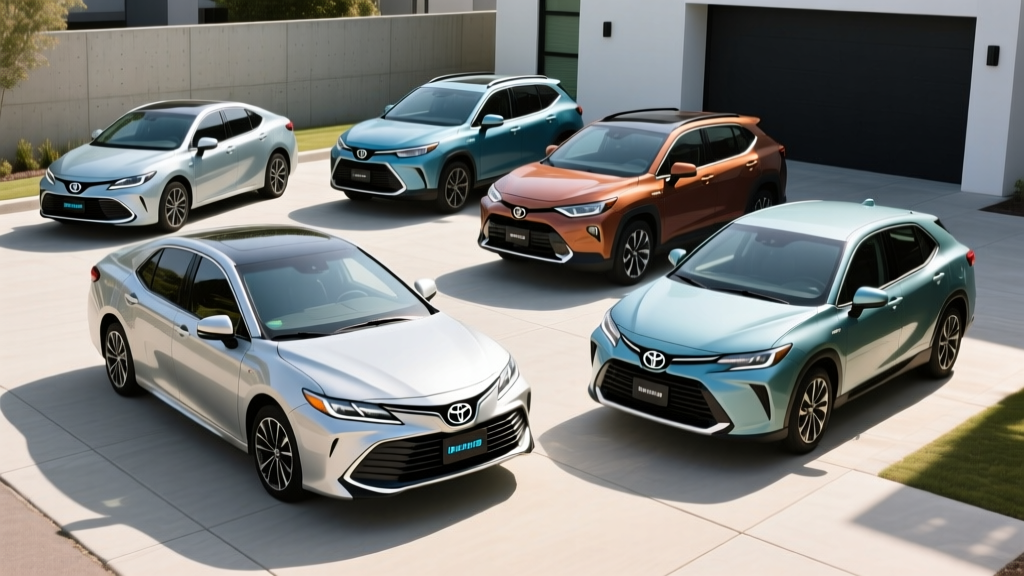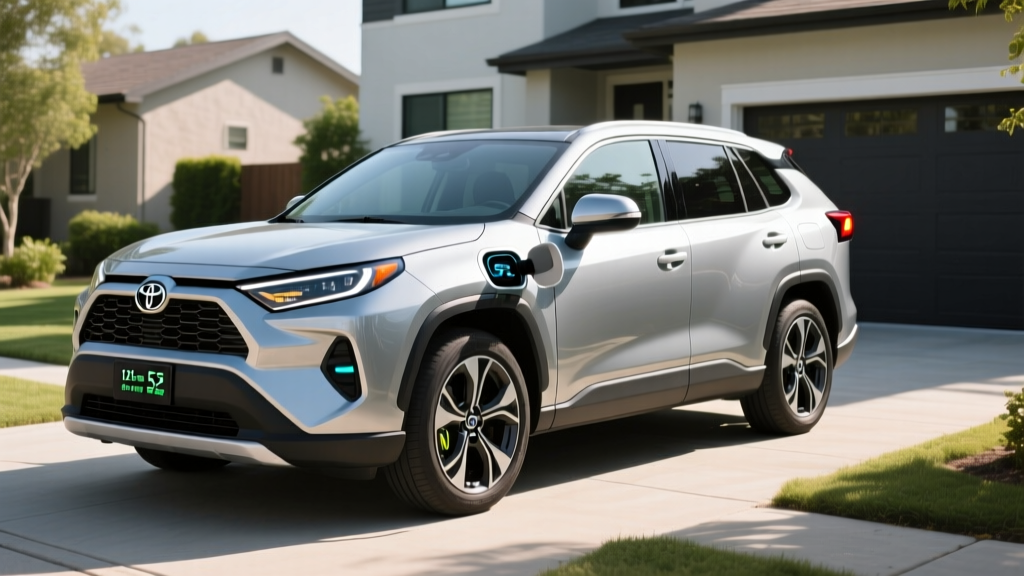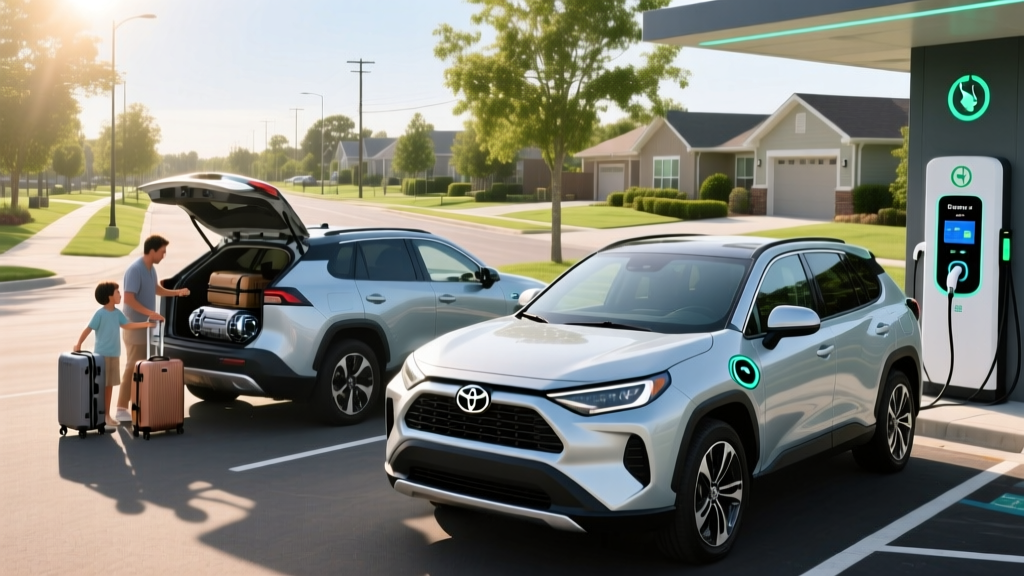
If you want to drive on electricity for daily commuting but keep a gas engine for road trips, Toyota's plug-in hybrid lineup narrows the field to two strong contenders: the RAV4 Prime and the Prius Prime. Both deliver over 40 miles of electric-only range, competitive pricing, and Toyota's long-standing hybrid reliability. But they serve very different buyers, and the gap between a conventional Toyota hybrid (HEV) and these plug-in hybrids (PHEV) matters more than most shoppers realize.
This guide breaks down the 2026 Toyota PHEV vehicles with exact EPA data, real-world expectations, battery specs, charging requirements, and tax-credit eligibility — so you can decide whether a PHEV, a standard hybrid, or a full EV fits your life.
HEV vs PHEV: What Toyota Buyers Need to Know
Toyota sells two distinct hybrid types. Confusing them is the most common mistake buyers make at the dealership.
| Feature | Conventional Hybrid (HEV) | Plug-in Hybrid (PHEV) |
|---|---|---|
| Examples | RAV4 Hybrid, Prius, Camry Hybrid | RAV4 Prime, Prius Prime |
| Plug in to charge? | No — charges via engine & regen | Yes — plug in for EV range |
| Electric-only range | ~1 mile or less at low speed | 42–44 miles (EPA) |
| Battery size | ~1–2 kWh | 13.6–18.1 kWh |
| Federal tax credit | Not eligible (§30D requires plug-in) | Up to $7,500 if sourcing & income rules met |
| Driving without plugging in | Normal — always works this way | Works, but you lose EV range benefit |
The bottom line: an HEV like the standard RAV4 Hybrid gets excellent MPG without any lifestyle change. A PHEV like the RAV4 Prime gives you a 40+ mile electric commute buffer, but only if you actually plug it in. If you can't charge at home or work, a PHEV's extra cost and weight work against you.
2026 Toyota RAV4 Prime: Specs, Range, and Real-World MPG
The RAV4 Prime remains Toyota's most powerful RAV4 and one of the quickest SUVs in its class, thanks to a combined 302 horsepower from its 2.5-liter four-cylinder engine and dual electric motors. It pairs that performance with genuine electric commuting capability.
| Spec | 2026 RAV4 Prime |
|---|---|
| Powertrain | 2.5L I4 + front & rear electric motors (AWD) |
| Combined Horsepower | 302 hp |
| 0–60 mph | 5.7 seconds |
| Battery (usable) | ~14.9 kWh (18.1 kWh gross), lithium-ion |
| EV Range (EPA) | 42 miles |
| Total Range (EV + gas) | ~600 miles |
| MPG (hybrid mode, EPA combined) | 38 MPG (40 city / 36 highway) |
| MPGe (EV + gas combined) | 94 MPGe |
| Level 1 Charging (120V) | ~12 hours (0–100%) |
| Level 2 Charging (240V, 3.3 kW) | ~4.5 hours (0–100%) |
| Level 2 Charging (240V, 6.6 kW option) | ~2.5 hours (0–100%) |
| DC Fast Charging | Not available |
| Base MSRP (SE trim) | $44,615 |
| XSE trim MSRP | $48,025 |
The RAV4 Prime does not support DC fast charging — a notable limitation. Toyota keeps the charge port simple with a J1772 connector for Level 1 and Level 2 AC charging. For most PHEV owners who charge overnight at home, the 3.3 kW onboard charger is adequate, but the optional 6.6 kW charger (standard on XSE) cuts charge time nearly in half and is worth seeking.
2026 Toyota Prius Prime: The Efficiency Leader
Redesigned for the 2023 model year and carrying forward with minor updates, the Prius Prime is the efficiency champion of Toyota's PHEV lineup. It trades the RAV4 Prime's cargo space and AWD for a lower price, better electric range, and sharper styling.
| Spec | 2026 Prius Prime |
|---|---|
| Powertrain | 2.0L I4 + electric motor (FWD) |
| Combined Horsepower | 220 hp |
| 0–60 mph | 6.6 seconds |
| Battery (usable) | ~10.9 kWh (13.6 kWh gross), lithium-ion |
| EV Range (EPA) | 44 miles (SE trim) / 40 miles (XSE, XSE Premium) |
| Total Range (EV + gas) | ~480–510 miles |
| MPG (hybrid mode, EPA combined) | 48 MPG (SE) / 45 MPG (XSE) |
| MPGe (EV + gas combined) | 114 MPGe (SE) |
| Level 1 Charging (120V) | ~11 hours (0–100%) |
| Level 2 Charging (240V, 3.3 kW) | ~4 hours (0–100%) |
| DC Fast Charging | Not available |
| Base MSRP (SE trim) | $33,445 |
| XSE trim MSRP | $36,795 |
| XSE Premium MSRP | $40,195 |
Like the RAV4 Prime, the Prius Prime uses a J1772 connector and does not offer DC fast charging. A full charge on a standard 120V household outlet takes about 11 hours — feasible for overnight top-ups if your daily drive is under 40 miles. A 240V Level 2 home charger cuts that to roughly 4 hours.
Federal Tax Credit Eligibility for Toyota PHEVs
Under the IRS §30D Clean Vehicle Credit, plug-in hybrids with sufficient battery capacity can qualify for up to $7,500 — but eligibility hinges on three moving targets: buyer income, vehicle MSRP, and battery component/critical mineral sourcing.
- MSRP cap: SUVs (RAV4 Prime) must be under $80,000; sedans (Prius Prime) under $55,000. Both Toyota PHEVs clear these caps comfortably.
- Buyer income limits: Modified AGI cannot exceed $300,000 (married filing jointly), $225,000 (head of household), or $150,000 (single).
- Battery sourcing: The credit splits into two halves — $3,750 for battery components manufactured in North America and $3,750 for critical minerals sourced from the U.S. or free-trade-agreement countries. These thresholds tighten annually.
- Point-of-sale transfer: As of 2024, buyers can transfer the credit to the dealer at purchase, reducing the sale price directly rather than waiting for a tax refund.
- Assembled in North America: Both the RAV4 Prime and Prius Prime are assembled in Japan, which currently disqualifies them from the new-vehicle §30D credit. However, they may qualify under the used clean vehicle credit (§25E) if purchased from a dealer as a qualifying pre-owned vehicle under $25,000 — worth up to $4,000 or 30% of the sale price.
This is a critical detail many buyers miss: Toyota's PHEVs are built in Japan, which means they do not meet the North American final-assembly requirement for the new-vehicle credit. Always verify assembly location using the VIN lookup tool at fueleconomy.gov and consult a tax professional before relying on credit eligibility.
Battery Warranty, Reliability, and Replacement Costs
Hybrid battery longevity is consistently the top concern for PHEV shoppers. Toyota addresses this with one of the industry's strongest warranty packages.
In practice, Toyota's hybrid batteries have demonstrated exceptional longevity. Data from fleet operators and owner surveys shows most Toyota hybrid packs retain 85–90%+ of original capacity after 100,000 miles. The PHEV batteries are larger and cycle more frequently than HEV batteries, but Toyota's conservative buffer management (the car never uses 100% of the pack's gross capacity) mitigates degradation.
Replacement cost if out of warranty: A RAV4 Prime hybrid battery replacement runs approximately $4,000–$6,500 including labor at a Toyota dealer. The Prius Prime battery is slightly less, typically $3,500–$5,500. Third-party rebuild shops offer refurbished packs for $2,000–$3,500. For context, most Toyota hybrid batteries outlast the vehicle's ownership cycle.
Side-by-Side: RAV4 Prime vs Prius Prime
| Attribute | 2026 RAV4 Prime | 2026 Prius Prime |
|---|---|---|
| Body style | Compact SUV, AWD | Liftback sedan, FWD |
| EV range (EPA) | 42 miles | 44 miles (SE) / 40 mi (XSE) |
| Combined HP | 302 hp | 220 hp |
| 0–60 mph | 5.7 sec | 6.6 sec |
| Hybrid MPG (combined) | 38 MPG | 48 MPG (SE) |
| Battery (gross) | 18.1 kWh | 13.6 kWh |
| Cargo (behind rear seats) | 33.5 cu ft | 20.3 cu ft |
| Level 2 charge time (3.3 kW) | ~4.5 hrs | ~4 hrs |
| Towing capacity | 1,500 lbs | Not rated |
| Starting MSRP | $44,615 | $33,445 |
| New-vehicle §30D credit | Not eligible (Japan assembly) | Not eligible (Japan assembly) |
Who Should Buy a Toyota PHEV — and Who Should Look Elsewhere
Choose a Toyota PHEV if:
- Your daily commute is under 40 miles round-trip and you can charge at home overnight
- You take road trips where charging infrastructure is sparse or unreliable
- You want electric commuting without the range-commitment of a full BEV
- You value Toyota's reliability track record and 10-year hybrid battery warranty
- You need AWD (RAV4 Prime) or maximum MPG (Prius Prime) in a plug-in package
Choose a full EV (BEV) instead if:
- You have reliable home charging and your daily drive is under 250 miles
- You want zero tailpipe emissions and lower maintenance (no oil changes, fewer moving parts)
- You want DC fast charging for road trips at 150–250 kW speeds
- You qualify for the full $7,500 federal credit on a North American–built EV (Tesla, Ford, GM, etc.)
Choose a conventional Toyota HEV instead if:
- You cannot charge at home or at work — a PHEV without plugging in is just a heavier hybrid
- Your budget is tighter and you want hybrid efficiency at a lower price (RAV4 Hybrid starts ~$33,000)
- You drive primarily long highway miles where the PHEV's EV range provides minimal benefit
Frequently Asked Questions
How many MPG does a Toyota PHEV get?
After the electric range is depleted, the 2026 RAV4 Prime returns an EPA-estimated 38 MPG combined (40 city / 36 highway). The 2026 Prius Prime SE delivers 48 MPG combined (52 city / 45 highway). In real-world city driving, both models tend to match or slightly exceed their EPA estimates thanks to Toyota's regenerative braking system. Highway-only driving at high speeds will drop these figures by 3–5 MPG.
How far can Toyota PHEVs go on electric only?
The RAV4 Prime is EPA-rated at 42 miles of electric-only range. The Prius Prime SE achieves 44 miles, while the XSE and XSE Premium trims (with wider wheels and additional weight) are rated at 40 miles. In cold weather (below freezing), expect a 10–20% reduction, bringing real-world EV range to roughly 33–40 miles depending on conditions and driving style.
Can Toyota PHEVs use DC fast chargers?
No. Neither the RAV4 Prime nor the Prius Prime supports DC fast charging. Both use a J1772 connector for AC charging only — Level 1 (120V) at roughly 1.4 kW or Level 2 (240V) at 3.3 kW (or 6.6 kW on the RAV4 Prime XSE). This is typical for PHEVs with smaller batteries; DC fast charging infrastructure is designed primarily for BEVs with 60+ kWh packs.
Is the Toyota PHEV battery reliable, and what does replacement cost?
Toyota's hybrid batteries have an industry-leading reliability record spanning two decades of Prius production. The PHEV battery is covered by a 10-year/150,000-mile warranty. Real-world data shows most packs retain 85%+ capacity well past 100,000 miles. Out-of-warranty replacement costs range from approximately $3,500–$6,500 depending on the model, though most owners never need a replacement during their ownership period.
Do Toyota PHEVs qualify for a federal tax credit?
As of 2026, neither the RAV4 Prime nor the Prius Prime qualifies for the new-vehicle §30D Clean Vehicle Credit because both are assembled in Japan, which does not meet the North American final-assembly requirement. However, buyers purchasing a qualifying used Toyota PHEV (model year at least two years old, sold under $25,000 by a licensed dealer) may be eligible for the §25E used clean vehicle credit of up to $4,000. State-level incentives vary — check your state's energy office or AFDC state incentive database for local rebates.
What happens if I never plug in my Toyota PHEV?
The car operates normally as a conventional hybrid, using the gasoline engine and regenerative braking to manage the battery. However, you're carrying 300–400 lbs of extra battery weight you're not utilizing, which slightly reduces fuel economy compared to a dedicated HEV. If you have no plan to plug in, a standard RAV4 Hybrid or Prius is a more cost-effective choice.
How long does it take to charge a Toyota PHEV at home?
On a standard 120V household outlet (Level 1), the Prius Prime takes about 11 hours and the RAV4 Prime about 12 hours for a full charge. With a 240V Level 2 home charger at 3.3 kW, both charge in roughly 4–4.5 hours. The RAV4 Prime XSE with the optional 6.6 kW onboard charger can fully replenish in about 2.5 hours on a compatible Level 2 circuit.
Toyota PHEV Advantages
- 40+ miles of real-world EV commuting range
- No range anxiety — gas engine covers road trips
- 302 hp (RAV4 Prime) or 220 hp (Prius Prime) — quickest in their segments
- 10-year/150,000-mile hybrid battery warranty
- Proven Toyota hybrid reliability over 25+ years
- Charges on any standard 120V outlet overnight
Toyota PHEV Limitations
- No DC fast charging capability
- Assembled in Japan — ineligible for new-vehicle §30D federal credit
- RAV4 Prime starts over $44,000 — significant premium over RAV4 Hybrid
- EV range drops 10–20% in cold weather
- Prius Prime has limited cargo space (20.3 cu ft)
- PHEV benefit disappears if you don't plug in regularly
The 2026 Toyota PHEV lineup isn't the flashiest in the electrified market, but it's among the most practical. If your routine involves a sub-40-mile commute with home charging access, either model will run that commute on electricity while keeping a gas tank for everything else — without the charging-network dependency of a full EV. Just be realistic about the tax-credit situation and the no-DC-charging limitation before you sign.