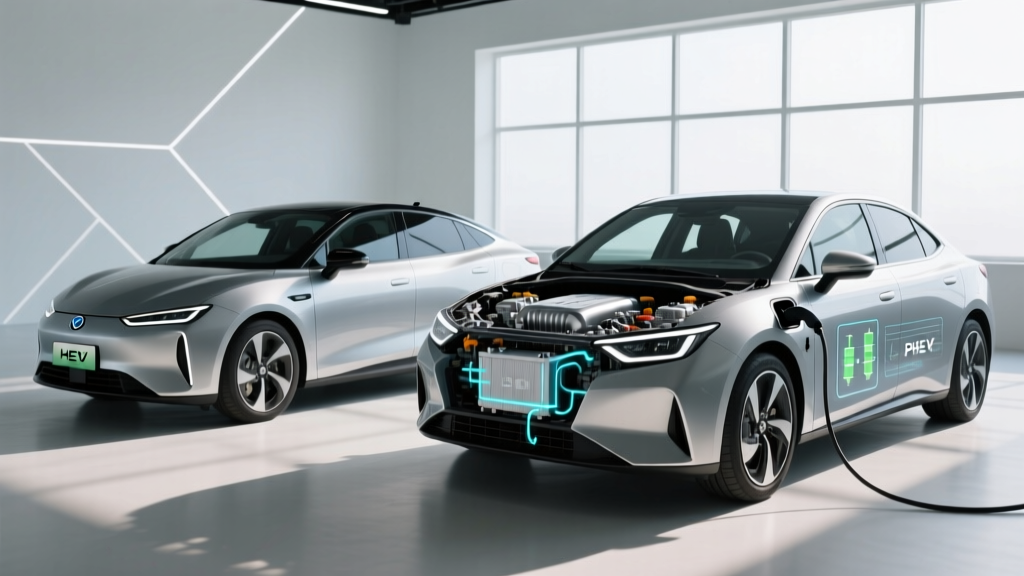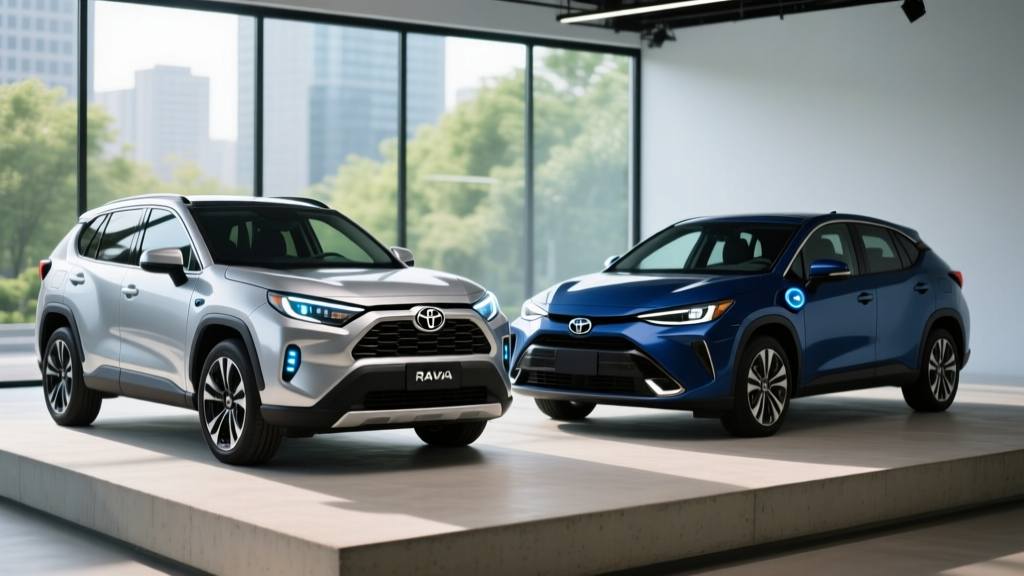
Toyota offers two plug-in hybrid electric vehicles (PHEVs) for 2026: the RAV4 Prime compact SUV and the Prius Prime liftback. Both pair a gasoline engine with a larger traction battery and electric motor that deliver genuine electric-only driving before seamlessly transitioning to hybrid mode. If you've been searching for a phev toyota that bridges the gap between a conventional hybrid and a full battery-electric vehicle, these two models represent the core of Toyota's plug-in strategy.
This guide breaks down the exact EPA figures, real-world efficiency expectations, charging requirements, pricing, federal tax credit eligibility, and long-term reliability data you need to decide which Toyota PHEV fits your driving pattern — or whether a conventional HEV or full BEV makes more sense.
HEV vs. PHEV: What Toyota Actually Sells
Before diving into specs, it's critical to distinguish Toyota's two electrified powertrain categories, because the ownership experience differs substantially.
| Feature | Conventional Hybrid (HEV) | Plug-In Hybrid (PHEV) |
|---|---|---|
| Examples | Prius, Camry Hybrid, RAV4 Hybrid | Prius Prime, RAV4 Prime |
| Plugs in? | No — self-charging via regen + engine | Yes — Level 1/Level 2 AC charging |
| Electric-only range | ~0.5–1 mile at low speed | 40–44 miles (EPA) |
| Battery size | 0.9–1.6 kWh | 13.6–18.1 kWh |
| Federal tax credit | Not eligible under §30D | Up to $7,500 (subject to sourcing, income, MSRP caps) |
| Best for | Drivers without home charging access | Drivers with home charging and short commutes |
The key takeaway: a conventional Toyota HEV never needs to be plugged in. It captures energy through regenerative braking and the engine to charge its small battery. A Toyota PHEV has a substantially larger battery that you charge from a wall outlet or charging station, giving you 40+ miles of pure electric driving before the engine ever starts.
2026 Toyota Prius Prime: Specs, Range & MPG
The redesigned Prius Prime pairs a 2.0-liter four-cylinder engine with dual electric motors and an 13.6 kWh lithium-ion battery pack. The result is a combined 220 horsepower — a dramatic leap from the previous generation's tepid acceleration — and class-leading electric-only efficiency.
| Specification | 2026 Prius Prime SE | 2026 Prius Prime XSE / XSE Premium |
|---|---|---|
| EPA electric-only range | 44 miles | 40 miles |
| Total combined range (electric + gas) | ~460 miles | ~440 miles |
| EPA MPGe (electric mode) | 127 MPGe | 114 MPGe |
| EPA MPG (hybrid mode, combined) | 52 MPG | 48 MPG |
| EPA MPG city / highway (hybrid) | 53 / 51 | 50 / 47 |
| Battery capacity | 13.6 kWh (lithium-ion) | |
| Combined horsepower | 220 hp | |
| 0–60 mph | ~6.6 seconds | |
| Level 2 charge time (240V, 3.3 kW) | ~4 hours (0–100%) | |
| Level 1 charge time (120V, 1.4 kW) | ~11 hours (0–100%) | |
| DC fast charging | Not available | |
| Drivetrain | FWD only | |
| Base MSRP | ~$34,595 | ~$38,000–$42,000 |
2026 Toyota RAV4 Prime: Specs, Range & MPG
The RAV4 Prime is Toyota's most powerful RAV4 variant, pairing a 2.5-liter four-cylinder engine with front and rear electric motors for standard all-wheel drive and a combined 302 horsepower. Its 18.1 kWh battery delivers a substantial electric-only range that covers most daily commutes without burning a drop of gasoline.
| Specification | 2026 RAV4 Prime SE | 2026 RAV4 Prime XSE |
|---|---|---|
| EPA electric-only range | 42 miles | 42 miles |
| Total combined range (electric + gas) | ~600 miles | ~600 miles |
| EPA MPGe (electric mode) | 94 MPGe | 94 MPGe |
| EPA MPG (hybrid mode, combined) | 38 MPG | 38 MPG |
| EPA MPG city / highway (hybrid) | 40 / 36 | 40 / 36 |
| Battery capacity | 18.1 kWh (lithium-ion) | |
| Combined horsepower | 302 hp | |
| 0–60 mph | ~5.7 seconds | |
| Level 2 charge time (240V, 6.6 kW) | ~2.5 hours (0–100%) | |
| Level 1 charge time (120V, 1.4 kW) | ~12 hours (0–100%) | |
| DC fast charging | Not available | |
| Drivetrain | AWD (electronic on-demand) | |
| Base MSRP | ~$44,995 | ~$48,500–$52,000 |
One practical advantage of the RAV4 Prime over the Prius Prime: its 6.6 kW onboard charger fills the larger battery in roughly 2.5 hours on a Level 2 home charger, compared to 4 hours for the Prius Prime's 3.3 kW charger. Neither vehicle supports DC fast charging — a deliberate Toyota engineering choice to reduce cost and weight, since PHEV batteries are small enough to refill overnight on AC power.
Fuel Economy Deep Dive: Real MPG in Daily Driving
Plug-in hybrids have two distinct efficiency profiles depending on whether you're driving on battery or gasoline. Here's how both Toyota PHEVs perform across common scenarios:
| Scenario | Prius Prime SE | RAV4 Prime |
|---|---|---|
| Daily commute under 40 miles (charged nightly) | ~0 gallons used; 127 MPGe | ~0 gallons used; 94 MPGe |
| City driving (hybrid mode, battery depleted) | 53 MPG (EPA); 55–58 observed | 40 MPG (EPA); 41–43 observed |
| Highway driving (hybrid mode, battery depleted) | 51 MPG (EPA); 47–50 observed | 36 MPG (EPA); 34–37 observed |
| Cold weather (below 32°F, hybrid mode) | ~44–48 MPG observed | ~32–35 MPG observed |
| Annual fuel cost (15k mi, 60% electric)* | ~$450–$650 | ~$700–$950 |
*Annual fuel cost estimates assume $3.50/gallon gasoline and $0.14/kWh electricity. Actual costs vary by region and driving mix. Source: fueleconomy.gov methodology.
The PHEV value proposition hinges on one variable: how often you charge. A Prius Prime owner who charges nightly and commutes 30 miles round-trip may use 5–8 gallons of gasoline per month. That same vehicle driven 200 miles daily without charging becomes a 52 MPG hybrid — still excellent, but the electric-range advantage disappears.
Charging a Toyota PHEV: What You Need at Home
Neither Toyota PHEV requires specialized charging infrastructure, but your setup affects convenience significantly.
Level 1 (120V standard outlet): Both vehicles include a 120V charging cable. The Prius Prime refills in ~11 hours; the RAV4 Prime in ~12 hours. This works if you park in a garage with a standard outlet near your parking spot and can charge overnight. No electrician required.
Level 2 (240V dedicated circuit): A Level 2 home charger (16A or 32A) cuts charge times to 4 hours (Prius Prime) or 2.5 hours (RAV4 Prime). Installation typically costs $500–$1,500 for the charger and electrician labor if your electrical panel has capacity. A panel upgrade (200A service) adds $1,500–$3,000 if needed. This is the recommended setup for PHEV owners who want midday top-ups or who share the charger with a full EV.
Public charging: Both vehicles use the J1772 connector standard on all non-Tesla EVs. You can use public Level 2 stations at workplaces, shopping centers, and parking garages. However, neither supports DC fast charging, so highway road trips rely entirely on the gasoline engine — which is the whole point of a PHEV.
Federal Tax Credit & Incentive Eligibility
Under IRS §30D, both the Prius Prime and RAV4 Prime may qualify for a federal tax credit of up to $7,500, but eligibility depends on several factors that change periodically. As of the 2026 tax year:
- MSRP cap: Vans/SUVs/pickups must be under $80,000; sedans/other vehicles under $55,000. The RAV4 Prime (~$45K base) and Prius Prime (~$34.5K base) both clear these thresholds.
- Buyer income cap: Modified AGI must not exceed $150,000 (single), $225,000 (head of household), or $300,000 (married filing jointly).
- Battery component & critical mineral sourcing: The credit splits into two halves ($3,750 each) based on battery component manufacturing and critical mineral sourcing requirements. These thresholds tighten annually. Check the latest IRS clean vehicle credit page for current-year compliance status of specific Toyota models.
- Point-of-sale transfer: Since 2024, you can transfer the credit to the dealer at purchase, reducing your out-of-pocket cost immediately rather than waiting for a tax refund.
- Assembly requirement: Final assembly must occur in North America. Both the Prius Prime and RAV4 Prime are assembled in Japan, which has historically been a complicating factor for credit eligibility — verify current-year status before purchasing.
Battery Warranty, Reliability & Replacement Cost
Hybrid and PHEV battery longevity is the single most common concern among buyers considering their first electrified vehicle. Toyota has the longest track record in the industry, with over 25 years of hybrid production since the original 1997 Prius.
• Hybrid battery: 10 years / 150,000 miles (whichever comes first) in all 50 states
• Hybrid system components: 8 years / 100,000 miles
• Capacity retention threshold: Warranty covers battery failure or significant capacity loss below functional levels — Toyota does not publish a specific percentage threshold like BEV manufacturers (e.g., 70% SoH).
• Transferability: Fully transferable to subsequent owners at no cost.
Real-world degradation data: Toyota PHEV batteries are engineered for shallow cycling — the vehicle's software maintains a buffer, never allowing the battery to fully deplete or charge to true 100%. This dramatically extends cycle life. Data from long-term Prius Prime fleets and owner reports indicate typical capacity loss of 8–12% over the first 100,000 miles, translating to a loss of roughly 4–5 miles of electric range over a decade. This is far less dramatic than early-generation EV degradation fears suggest.
Battery replacement cost: If a Toyota PHEV battery does require replacement outside of warranty, expect $4,000–$7,000 for the Prius Prime pack and $6,000–$9,000 for the larger RAV4 Prime pack (parts + labor at a dealership). Independent hybrid specialists may offer refurbished packs for 30–50% less. However, given the 10-year/150,000-mile warranty and Toyota's track record, out-of-pocket replacement is uncommon within the vehicle's typical ownership life.
Overall reliability: Toyota consistently ranks at or near the top of Consumer Reports reliability surveys and performs well in J.D. Power dependability studies. The PHEV powertrain adds complexity (electric motors, power electronics, larger battery) compared to a conventional gas car, but removes other failure-prone components: no traditional starter motor, no alternator, and regenerative braking significantly extends brake pad life (often 80,000+ miles before replacement).
Who Should Buy a Toyota PHEV vs. a Full EV or Gas Car?
Choose a Toyota PHEV if:
- Your daily commute is under 40 miles round-trip and you can charge at home nightly
- You take road trips of 200+ miles several times per year and don't want to plan around DC fast-charging stops
- You live in an area with limited public charging infrastructure
- You want EV-like daily driving with zero range anxiety on long trips
- You need AWD (RAV4 Prime) for snow or rough roads
Choose a conventional Toyota HEV if:
- You cannot install a home charger (apartment, street parking, no garage outlet)
- Your budget is tighter and you want to avoid the PHEV price premium (~$4,000–$7,000 over HEV equivalents)
- You drive mostly long highway miles where the electric-only range offers minimal benefit
Choose a full BEV (battery electric vehicle) if:
- You have reliable home Level 2 charging and your daily driving is under 250 miles
- You want zero tailpipe emissions and minimal maintenance (no oil changes, no engine)
- You're eligible for the full $7,500 federal credit on a qualifying BEV (which has broader model eligibility than PHEVs under current sourcing rules)
- You want to eliminate gasoline expenses entirely
Toyota PHEV Pros
- 40+ miles electric covers most daily commutes
- No range anxiety — gas engine for long trips
- Excellent hybrid MPG when battery is depleted
- Proven 10-year/150K-mile battery warranty
- Lower maintenance than gas-only vehicles
- Strong resale value (Toyota brand + PHEV demand)
Toyota PHEV Cons
- No DC fast charging (road trips are gas-only)
- Premium over equivalent HEV trims ($4K–$7K)
- Japan assembly may complicate §30D credit eligibility
- Cargo space reduced vs. HEV (battery packaging)
- RAV4 Prime availability historically limited; dealer markups possible
- Level 2 charger installation adds $500–$1,500 upfront
Frequently Asked Questions
How many MPG does a Toyota PHEV get?
It depends on the model and whether you're driving on electricity or gasoline. The Prius Prime achieves 127 MPGe in electric mode and 52 MPG combined in hybrid mode (53 city / 51 highway for the SE trim). The RAV4 Prime achieves 94 MPGe in electric mode and 38 MPG combined in hybrid mode (40 city / 36 highway). In real-world city driving with regenerative braking, both models often exceed their EPA city estimates.
How far can a Toyota PHEV go on electric only?
The 2026 Prius Prime SE delivers an EPA-rated 44 miles of electric-only range (40 miles for XSE trims with larger wheels). The 2026 RAV4 Prime delivers 42 miles of electric-only range across all trims. Real-world range varies: expect 35–44 miles in mild weather on mixed routes, and 25–33 miles in freezing temperatures or sustained highway driving.
Do Toyota PHEVs qualify for a federal tax credit?
Both the Prius Prime and RAV4 Prime may qualify for up to $7,500 under IRS §30D, but eligibility depends on battery sourcing requirements, buyer income limits, and MSRP caps that change annually. A key complication: both vehicles are assembled in Japan, and the North American final assembly requirement has historically affected eligibility. Always verify current-year status on the IRS clean vehicle credit page and consult a tax professional before relying on the credit in your purchase decision.
Is the Toyota PHEV battery reliable, and what does replacement cost?
Toyota's hybrid battery warranty covers 10 years or 150,000 miles. Real-world data shows typical PHEV battery degradation of 8–12% over 100,000 miles, equating to roughly 4–5 miles of lost electric range over a decade. Out-of-warranty replacement costs range from $4,000–$7,000 (Prius Prime) to $6,000–$9,000 (RAV4 Prime), though actual replacements within the vehicle's lifespan are rare given Toyota's track record.
Can I charge a Toyota PHEV at a DC fast charger?
No. Neither the Prius Prime nor RAV4 Prime supports DC fast charging. They charge via AC power only: Level 1 (120V household outlet) or Level 2 (240V home or public charger). This is a deliberate design choice — PHEV batteries are small enough (13.6–18.1 kWh) that overnight AC charging is sufficient, and omitting DC fast-charge hardware reduces vehicle cost and weight.
What's the difference between the RAV4 Prime and the regular RAV4 Hybrid?
The RAV4 Prime is a plug-in hybrid with an 18.1 kWh battery, 42 miles of electric-only range, 302 combined horsepower, and AWD. The conventional RAV4 Hybrid has a ~1.6 kWh battery, no plug-in capability, no meaningful electric-only range, 219 combined horsepower, and achieves 39–41 MPG combined. The Prime costs approximately $10,000–$12,000 more but offers dramatically different daily driving if you charge at home.
Is a Toyota PHEV better than a full electric vehicle?
Neither is universally better — it depends on your driving pattern and charging access. A Toyota PHEV is superior if you need long-trip flexibility without charging stops, live in an area with sparse charging infrastructure, or can't install a Level 2 home charger but have access to a standard 120V outlet. A full BEV is superior if you want zero gasoline use, lower per-mile fuel costs, less maintenance, and have reliable home charging. For many households, a PHEV as the primary commuter and a gas or hybrid vehicle for long trips is an effective combination.