What Is the i-FORCE MAX Hybrid?
The i-FORCE MAX is Toyota's performance-oriented hybrid powertrain, pairing a twin-turbocharged 3.4-liter V6 with an electric motor integrated into the transmission housing. Unlike the efficiency-first hybrid systems found in a Prius or RAV4 Hybrid, the i-FORCE MAX was engineered to deliver diesel-rivaling torque while improving fuel economy over conventional gas V8 trucks. It's currently available in the Toyota Tundra (full-size pickup) and Toyota Sequoia (full-size SUV), with the Sequoia exclusively using this powertrain across all trims.
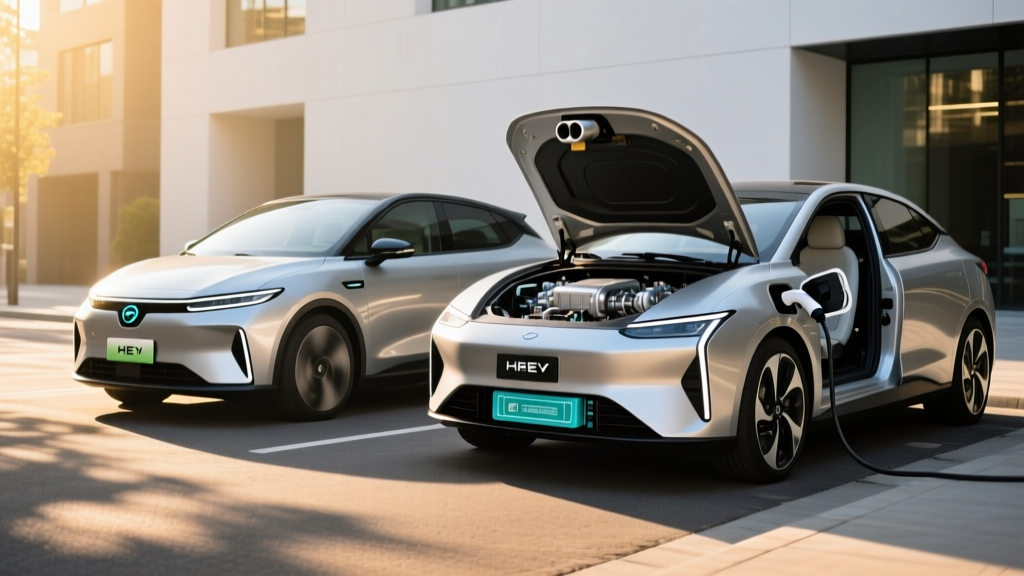
This is a conventional hybrid (HEV), not a plug-in hybrid (PHEV). You never plug it in — the 1.87 kWh nickel-metal hydride (NiMH) battery recharges through regenerative braking and engine-driven generation. The electric motor assists the gas engine during acceleration and low-speed driving but cannot propel the vehicle on electric power alone for any meaningful distance.
HEV vs PHEV: Where the i-FORCE MAX Fits
Conventional Hybrid (HEV) — i-FORCE MAX: No plug required. Small battery (~1.87 kWh) charged by regen and engine. Electric motor assists the gas engine. Better fuel economy than a gas-only equivalent, but no electric-only driving range.
Plug-in Hybrid (PHEV): Larger battery (typically 15-25 kWh), plug-in charging capability, 25-40 miles of electric-only range before the gas engine kicks in. Examples: Toyota RAV4 Prime, Jeep Wrangler 4xe. The i-FORCE MAX is not a PHEV.
Fuel Economy: EPA MPG and Real-World Numbers
Fuel economy varies by vehicle (Tundra vs Sequoia), drivetrain (2WD vs 4WD), and trim. Here's the EPA breakdown from fueleconomy.gov:
| Vehicle / Drivetrain | City MPG | Highway MPG | Combined MPG |
|---|---|---|---|
| Tundra i-FORCE MAX 2WD | 20 | 24 | 22 |
| Tundra i-FORCE MAX 4WD | 19 | 22 | 20 |
| Sequoia i-FORCE MAX 2WD | 21 | 24 | 22 |
| Sequoia i-FORCE MAX 4WD | 19 | 22 | 20 |
Real-World MPG: What to Actually Expect
Hybrid powertrains typically overperform their EPA city estimates because regenerative braking captures energy in stop-and-go driving. In practice, Tundra i-FORCE MAX owners report 21-23 MPG combined in mixed city/highway driving for 4WD models — roughly matching or slightly exceeding the EPA sticker when not towing.
However, the physics of a 5,800+ lb truck work against you on the highway. At sustained 75-80 mph speeds, expect 18-20 MPG in a 4WD Tundra. When towing, fuel economy drops sharply: a 7,000-lb trailer will pull real-world economy down to 10-13 MPG depending on terrain and wind. The hybrid system's torque advantage makes towing feel effortless, but it doesn't eliminate the fuel cost of moving heavy loads.
Compared to the base i-FORCE (non-hybrid twin-turbo V6), the i-FORCE MAX gains roughly 2-3 MPG combined — a meaningful improvement over a year of commuting, but not Prius-levels of savings. The bigger advantage is the 583 lb-ft of torque available from 2,000 RPM.
Powertrain Specs: Horsepower, Torque, and Towing
| Engine | 3.4L twin-turbo V6 (V35A-FTS) |
| Electric Motor | 36 kW (48 hp), integrated in 10-speed automatic |
| Combined Horsepower | 437 hp @ 5,200 RPM |
| Combined Torque | 583 lb-ft @ 2,000 RPM |
| Transmission | 10-speed automatic |
| Battery | 1.87 kWh NiMH (sealed, under rear seat) |
| 0-60 mph (Tundra 4WD) | ~5.7 seconds |
| Max Towing (Tundra) | Up to 10,000 lbs (trim-dependent) |
| Max Towing (Sequoia) | Up to 9,520 lbs |
| Payload (Tundra) | Up to 1,680 lbs |
The electric motor fills the torque gap at low RPM while the twin turbos spool up, eliminating the lag you'd feel in a non-hybrid turbocharged truck. The result is linear, immediate acceleration that makes merging and passing with a trailer genuinely confidence-inspiring. Toyota's hybrid system also enables a stop/start function that's notably smoother than conventional systems — the electric motor restarts the V6 almost imperceptibly at traffic lights.
Pricing, Trims, and Tax Credit Eligibility
The i-FORCE MAX is not available as a base powertrain — it's positioned as the upgrade option on Tundra and the standard/only powertrain on Sequoia.
2026 Toyota Tundra i-FORCE MAX: Available starting on the TRD Off-Road trim (~$56,000) and standard on Limited (~$58,000), Platinum (~$67,000), 1794 Edition (~$67,000), TRD Pro (~$72,000), and Capstone (~$78,000). The hybrid upgrade over the base i-FORCE V6 on eligible trims is typically a $3,725 premium.
2026 Toyota Sequoia: All trims use i-FORCE MAX exclusively. Base SR5 starts around $63,000; Limited ~$70,000; Platinum ~$76,000; Capstone ~$80,000.
Federal Tax Credit: Does the i-FORCE MAX Qualify?
No. Under current IRS §30D rules, the federal clean vehicle credit applies only to plug-in electric vehicles (BEVs and PHEVs) with a minimum battery capacity of 7 kWh and plug-in charging capability. The i-FORCE MAX is a conventional hybrid with a 1.87 kWh battery and no plug — it does not qualify for the $7,500 federal tax credit. Always verify current eligibility at irs.gov, as rules are subject to legislative change.
Some states offer their own hybrid incentives or HOV lane access for HEVs. Check your state's energy or DMV website for local programs.
Battery Warranty, Reliability, and Replacement Cost
i-FORCE MAX Hybrid Battery Warranty
Coverage: 10 years / 150,000 miles (whichever comes first) for hybrid battery and hybrid system components — in all 50 states.
Previous coverage: For 2019 and earlier model-year Toyota hybrids, the warranty was 8 years / 100,000 miles. Toyota extended this to 10/150k starting with 2020 model-year vehicles.
What's covered: The hybrid battery pack, inverter, converter, and related control modules under normal use.
Reliability Track Record
Toyota's hybrid system architecture has over 25 years of real-world deployment (since the 1997 Prius in Japan). The i-FORCE MAX uses a newer, more powerful variant of this system, but the fundamental motor-generator and power-control technology is well-proven. The NiMH battery chemistry, while lower in energy density than lithium-ion, is known for thermal stability and long cycle life.
Owner forums and reliability surveys consistently show Toyota hybrid batteries lasting 150,000-250,000+ miles before significant degradation. Because the i-FORCE MAX battery is small (1.87 kWh) and the system never deeply cycles it — the battery management system keeps state of charge between roughly 40-80% — stress on the cells is minimal.
Battery Replacement Cost
If the hybrid battery does fail outside warranty, replacement costs for Toyota's full-size hybrid systems currently range from $3,000 to $5,000 (parts and labor) at a dealership. Third-party refurbished battery options can reduce this to $2,000-$3,500. Given the 10-year/150,000-mile warranty and the NiMH chemistry's longevity, out-of-pocket battery replacement is uncommon within the typical ownership period of a truck.
The broader powertrain — the twin-turbo V6, 10-speed automatic, and electric motor — carries Toyota's standard 5-year/60,000-mile powertrain warranty. The turbochargers add a complexity layer that conventional V8s don't have, but Toyota's turbo engineering in this engine family has proven robust in early-model-year Tundras (2022+).
Who Should Buy the i-FORCE MAX (And Who Shouldn't)
Pros
- 583 lb-ft torque from 2,000 RPM — exceptional towing feel
- 2-3 MPG improvement over non-hybrid V6, meaningful over 15k miles/year
- No plug-in charging needed — zero lifestyle change vs gas truck
- 10-year/150,000-mile hybrid battery warranty
- Smaller, lighter hybrid system penalty vs old V8 trucks
- Strong resale value (Toyota trucks historically retain 55-65% at 5 years)
Cons
- $3,725 hybrid premium — payback takes ~3-5 years at current fuel prices
- No federal tax credit (HEV, not PHEV/BEV)
- Real-world highway MPG still in the high teens (4WD)
- Towing fuel economy drops to 10-13 MPG with heavy trailers
- i-FORCE MAX not available on base Tundra trims (SR, SR5)
- Turbo V6 + hybrid adds complexity vs naturally aspirated V8 of prior gen
Decision Framework: Hybrid vs PHEV vs Full EV
Choose the i-FORCE MAX (HEV) if: You need full-size truck capability (10,000-lb towing, 6.5-ft bed, 4WD), you don't have reliable home charging access, you take regular road trips or tow frequently, and you want better fuel economy without changing your fueling habits.
Choose a PHEV truck (e.g., upcoming options) if: You want 25-40 miles of electric-only commuting with home charging, you still need gas-engine range for weekend towing, and you want to qualify for partial federal or state plug-in incentives.
Choose a full EV truck (e.g., Ford F-150 Lightning, Rivian R1T, Chevy Silverado EV) if: You have home Level 2 charging, your daily driving is under 250 miles, you rarely tow over 5,000 lbs long-distance, and you want to eliminate fuel costs and qualify for the up-to-$7,500 federal tax credit (subject to income, MSRP, and battery-sourcing rules).
Frequently Asked Questions
How many MPG does the i-FORCE MAX hybrid get?
The EPA rates the Tundra i-FORCE MAX at 20 city / 24 highway / 22 combined (2WD) and 19/22/20 (4WD). Real-world mixed driving typically matches or slightly exceeds these numbers in city-heavy commutes thanks to regenerative braking, but highway-only driving at 75+ mph may return 18-20 MPG in 4WD models.
Can the i-FORCE MAX drive on electric power only?
No. The i-FORCE MAX is a conventional hybrid (HEV), not a plug-in hybrid. The electric motor assists the gas engine but cannot independently propel the vehicle at meaningful speeds or distances. There is no EV-only mode and no plug-in charging port.
Is the i-FORCE MAX reliable?
Toyota's hybrid technology has a 25+ year track record. The i-FORCE MAX uses proven NiMH battery chemistry and a well-tested motor-generator system. The twin-turbo V6 is newer technology but has shown strong durability since the 2022 Tundra launch. The hybrid battery is covered for 10 years / 150,000 miles.
How much does it cost to replace the i-FORCE MAX hybrid battery?
Dealership replacement runs $3,000-$5,000 including labor. Refurbished options may cost $2,000-$3,500. However, Toyota NiMH hybrid batteries routinely last 150,000-250,000+ miles, and the 10-year/150,000-mile warranty covers most ownership periods.
Does the i-FORCE MAX qualify for any tax credit?
No federal tax credit applies — the IRS §30D clean vehicle credit requires plug-in capability and a minimum 7 kWh battery. The i-FORCE MAX has a 1.87 kWh battery and no charging port. Some states may offer hybrid-specific incentives or HOV lane stickers; check your local programs.
How does the i-FORCE MAX compare to a diesel truck for towing?
The i-FORCE MAX's 583 lb-ft of torque rivals many diesel offerings (Ford's 3.0L Power Stroke diesel produces 470 lb-ft). You get comparable towing feel with better fuel economy than a gas V8 and without diesel's DEF fluid, higher fuel cost, or cold-weather gelling concerns. The trade-off is that diesels still generally outperform on sustained heavy-load highway fuel economy.
Do I need to change how I drive or fuel the i-FORCE MAX?
No. You fuel it at any regular gas station (premium recommended but not required). There's no plug, no charging routine, and no range limitations beyond a standard gas tank. The hybrid system operates transparently — the only noticeable difference is the quieter engine stop/start at traffic lights and stronger low-RPM acceleration.