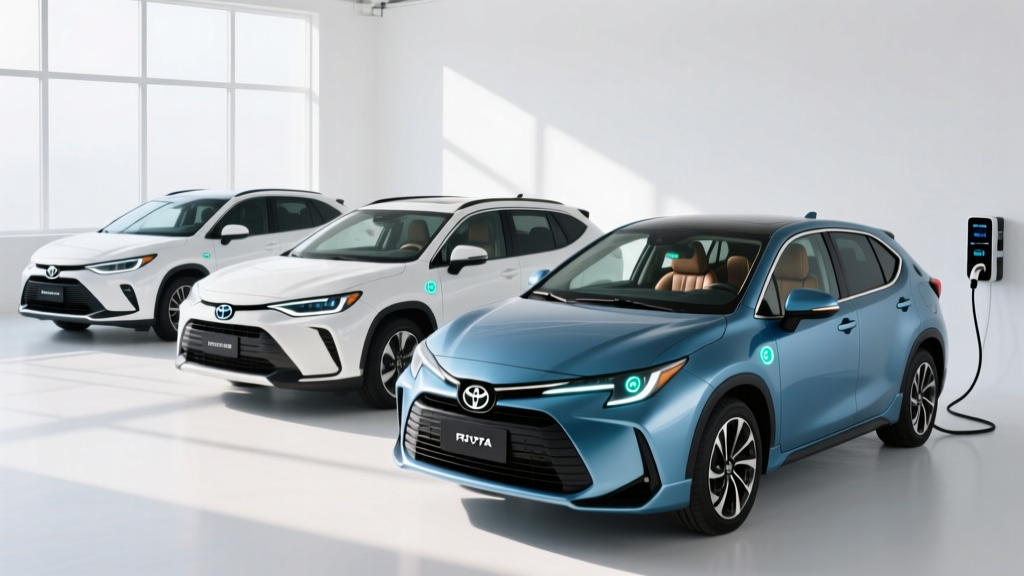
Toyota sells more hybrids than any other automaker in the United States, and the 2026 lineup is its broadest yet. From the $24,000 Corolla Hybrid to the plug-in RAV4 Prime with 42 miles of electric-only range, the portfolio covers nearly every body style and budget. This guide breaks down every current Toyota hybrid (HEV) and plug-in hybrid (PHEV) with exact EPA numbers, real-world expectations, pricing, and federal tax-credit eligibility so you can match the right model to your driving pattern.
HEV vs PHEV: How Toyota's Two Hybrid Systems Differ
Conventional Hybrid (HEV): A small battery (typically 1.0–1.6 kWh) is recharged by the gasoline engine and regenerative braking. You never plug it in. The electric motor assists the engine and can propel the car at low speeds, but the vehicle always carries gasoline as its primary energy source. Think of it as a gas car that uses electricity to wring out extra MPG.
Plug-in Hybrid (PHEV): A much larger battery (13.6–18.1 kWh in Toyota's lineup) can be charged from a wall outlet or public charger, giving you 37–42 miles of pure electric driving before the gas engine takes over. After the battery depletes, it operates exactly like a conventional hybrid. PHEVs reward owners who can charge at home or work but don't punish those who can't.
Toyota's 2026 U.S. lineup includes nine conventional hybrids and two plug-in hybrids. The Prius Prime and RAV4 Prime are the PHEVs; everything else is a self-charging HEV.
2026 Toyota Hybrid MPG & Efficiency Table
| Model (Trim Basis) | Type | EPA City | EPA Hwy | EPA Combined | EV-Only Range | Base MSRP |
|---|---|---|---|---|---|---|
| Prius LE | HEV | 57 | 56 | 57 | — | $29,445 |
| Prius XLE / Limited | HEV | 52 | 52 | 52 | — | $32,445 |
| Prius Prime SE | PHEV | 53 (hybrid) | 51 | 52 / 127 MPGe | 44 mi | $34,445 |
| Corolla Hybrid LE | HEV | 53 | 46 | 50 | — | $24,095 |
| Corolla Cross Hybrid | HEV | 46 | 43 | 45 | — | $30,290 |
| Camry LE Hybrid | HEV | 51 | 49 | 50 | — | $29,990 |
| Crown | HEV | 42 | 41 | 41 | — | $42,345 |
| RAV4 Hybrid | HEV | 41 | 38 | 40 | — | $33,095 |
| RAV4 Prime | PHEV | 40 (hybrid) | 36 | 38 / 94 MPGe | 42 mi | $45,090 |
| Highlander Hybrid | HEV | 36 | 35 | 36 | — | $42,090 |
| Grand Highlander Hybrid | HEV | 37 | 34 | 36 | — | $45,860 |
| Sienna | HEV | 36 | 36 | 36 | — | $39,585 |
| Venza | HEV | 40 | 37 | 39 | — | $37,265 |
Sources: EPA fueleconomy.gov, Toyota USA 2026 spec sheets. MSRP excludes destination; destination adds ~$1,095–$1,450 depending on model.
Real-World MPG: Where Toyota Hybrids Beat the Sticker
Hybrid powertrains behave differently than conventional gas engines in real-world driving. Because they lean heavily on regenerative braking and electric assist at low speeds, city MPG often exceeds the EPA estimate, especially in stop-and-go traffic. Highway driving is the opposite: at sustained 70–80 mph speeds, the engine runs continuously and aerodynamic drag dominates, often dropping fuel economy 3–6 MPG below the EPA highway figure.
Real-World MPG Expectations (Toyota HEVs):
- City / suburban driving: Expect to meet or exceed EPA city numbers. Prius owners routinely report 58–62 MPG in urban commuting.
- Highway (70–80 mph): Subtract 3–5 MPG from the EPA highway number. A RAV4 Hybrid rated at 38 highway typically returns 33–36 at 75 mph.
- Cold weather (below 30°F): Engine runs more often for cabin heat; expect a 5–10% MPG drop across all hybrids.
- PHEV electric-only mode: The Prius Prime's 44-mile EPA range may shrink to 35–38 miles at highway speeds or in winter; the RAV4 Prime's 42 miles may drop to 34–38 under the same conditions.
The practical takeaway: if most of your driving is city and suburban, a Toyota hybrid will likely deliver better than advertised MPG. If you're primarily a highway commuter, use the EPA highway number minus ~4 MPG as your planning baseline.
Powertrain Specs: Horsepower, Battery & Drivetrain
| Model | Engine | Combined HP | Drivetrain | 0–60 mph | Battery |
|---|---|---|---|---|---|
| Prius / Prius Prime | 2.0L I-4 | 194 (HEV) / 220 (PHEV) | FWD or AWD (HEV); FWD (PHEV) | 7.0s (HEV) / 6.6s (PHEV) | 1.0 kWh (HEV) / 13.6 kWh (PHEV) |
| Corolla Hybrid | 1.8L I-4 | 138 | AWD | 8.1s | 1.0 kWh NiMH |
| Camry Hybrid | 2.5L I-4 | 225 (FWD) / 232 (AWD) | FWD or AWD | 6.9s (AWD) | 1.1 kWh Li-ion |
| RAV4 Hybrid | 2.5L I-4 | 219 | AWD | 7.4s | 1.6 kWh NiMH |
| RAV4 Prime | 2.5L I-4 | 302 | AWD | 5.7s | 18.1 kWh Li-ion |
| Highlander / Grand Highlander Hybrid | 2.5L I-4 | 243 / 362 (Hybrid MAX) | FWD or AWD | 7.7s (std) / 5.9s (MAX) | 1.6 kWh NiMH / 1.4 kWh Li-ion |
| Sienna | 2.5L I-4 | 245 | FWD or AWD | 7.1s | 1.6 kWh NiMH |
The RAV4 Prime stands out as the performance flagship. With 302 combined horsepower, it's the quickest RAV4 Toyota sells and one of the quickest compact SUVs in its class. The Camry Hybrid's fifth-generation powertrain delivers 225–232 HP, a meaningful jump from the 208 HP in the previous generation.
PHEV Charging: What Prius Prime and RAV4 Prime Owners Need to Know
Toyota's two plug-in hybrids both use lithium-ion battery packs, but their charging capabilities differ significantly.
| Spec | Prius Prime | RAV4 Prime |
|---|---|---|
| Usable battery capacity | ~10.8 kWh | ~14.9 kWh |
| Level 1 (120V household outlet) | ~5.5 hours (full charge) | ~10 hours (full charge) |
| Level 2 (240V home charger, 3.3 kW) | ~4 hours | ~4.5 hours |
| DC fast charging | Not available | Not available |
| Charge connector | J1772 | J1772 |
Critical detail: Neither Toyota PHEV supports DC fast charging. The onboard charger maxes out at 3.3 kW (Level 2 AC), which is fine for overnight home charging but means you cannot quickly top up on a road trip. This is a deliberate engineering choice—adding DC fast-charge hardware adds weight and cost, and most PHEV buyers charge at home. If you need rapid public charging, a full BEV is the better fit.
A standard 120V outlet will fully recharge the Prius Prime overnight. The RAV4 Prime's larger battery makes Level 1 impractical for daily full charges—budget $400–$800 for a 240V Level 2 home outlet installation if you choose the RAV4 Prime (consult a licensed electrician for your specific panel requirements).
Federal Tax Credits & Incentives for Toyota Hybrids and PHEVs
This is where HEVs and PHEVs diverge sharply.
Federal §30D Clean Vehicle Credit for PHEVs (2026 rules):
- Maximum credit: Up to $7,500 (split: $3,750 for critical minerals + $3,750 for battery component sourcing)
- MSRP cap: SUVs/wagons/vans ≤ $80,000; sedans ≤ $55,000
- Buyer income cap: AGI ≤ $150,000 (single), $225,000 (head of household), $300,000 (joint)
- Battery sourcing: Must meet escalating domestic-content and critical-minerals thresholds per IRS §30D guidelines
- Point-of-sale transfer: Eligible buyers can apply the credit as an immediate price reduction at the dealer
Which Toyotas qualify? For 2026, the Prius Prime (sedan MSRP ~$34,445) falls under the $55,000 sedan cap and is a strong candidate for the credit, provided its battery components and critical minerals meet the 2026 sourcing thresholds. The RAV4 Prime (~$45,090) falls under the $80,000 SUV cap. However, battery-sourcing requirements tighten each year—eligibility is not guaranteed and can change mid-year. Always verify current status on the IRS clean vehicle credit page or with a tax professional before purchasing.
Conventional HEVs (Prius, Camry Hybrid, RAV4 Hybrid, etc.): These do not qualify for the federal §30D credit because they are not plug-in vehicles. Some states and utilities offer separate rebates for HEVs (typically $500–$1,500), but these vary by jurisdiction—check your state energy office or local utility for current programs.
Battery Warranty, Reliability & Replacement Costs
Hybrid battery longevity is the single most common concern among prospective buyers. Here are the facts from two decades of Toyota hybrid production.
Toyota Hybrid Battery Warranty (2026 models):
- Hybrid battery: 10 years / 150,000 miles (whichever comes first), covering defects and capacity below 70% of original
- Hybrid system components: 8 years / 100,000 miles (inverter, transaxle, control module)
- Powertrain: 5 years / 60,000 miles
Toyota extended the hybrid battery warranty from 8yr/100k to 10yr/150k starting with 2020 models, reflecting improved cell durability.
Real-world lifespan data: Toyota's NiMH and Li-ion hybrid batteries routinely last 150,000–200,000+ miles before significant degradation. Third-generation Prius taxis have logged 300,000+ miles on original batteries. The key degradation factors are sustained high temperatures and frequent deep cycling—both of which Toyota's battery management system mitigates by keeping the pack in a narrow state-of-charge window (roughly 40–80%).
Replacement cost if out of warranty:
- Prius HEV: $2,000–$3,500 (new OEM), $1,000–$2,000 (remanufactured)
- Prius Prime PHEV: $4,500–$6,500 (new OEM)
- RAV4 Prime PHEV: $6,000–$8,500 (new OEM, larger pack)
- Camry / Highlander / Sienna: $2,500–$4,500 (new OEM)
Toyota's hybrid reliability ratings remain among the highest in the industry. IIHS has awarded Top Safety Pick or Top Safety Pick+ to most 2026 Toyota hybrids tested. The hybrid system itself has fewer wear components than a conventional gas powertrain—no alternator, no starter motor, no traditional transmission, and regenerative braking significantly extends brake pad life.
Decision Framework: Which Toyota Hybrid (or EV) Fits You?
Choose a Toyota HEV (Prius, Camry Hybrid, RAV4 Hybrid) if:
- You cannot charge at home (apartment, street parking, no garage outlet)
- You want maximum simplicity—no plugs, no charging apps, no behavior change
- You drive 30–60 miles daily and want 40+ MPG without thinking about it
- Your budget is under $40,000 and you want the lowest total cost of ownership
Choose a Toyota PHEV (Prius Prime, RAV4 Prime) if:
- You can charge at home (even a standard 120V outlet works for the Prius Prime)
- Your daily commute is under 40 miles round-trip (you may rarely use gas)
- You want EV-like daily driving but need gas-engine flexibility for road trips
- You qualify for the federal tax credit, effectively reducing the PHEV price premium
Choose a full EV (bZ4X or other BEV) if:
- You have reliable home Level 2 charging and want zero tailpipe emissions
- Your daily driving is under 200 miles and you're comfortable with public DC fast charging for road trips
- You want the lowest per-mile fuel cost (~$0.04–$0.06/mile on home electricity vs. $0.12–$0.16/mile in a hybrid)
Pros & Cons of Toyota's 2026 Hybrid Lineup
Pros
- Class-leading fuel economy across segments (57 MPG Prius, 50 MPG Camry)
- No charging infrastructure required for HEVs—works with existing gas stations
- 10-year/150,000-mile hybrid battery warranty reduces long-term risk
- Strong resale value; Toyota hybrids depreciate slower than most EVs
- AWD available on most models without major MPG penalty
- RAV4 Prime offers 302 HP and 42 mi EV range—performance plus efficiency
Cons
- No DC fast charging on PHEVs limits road-trip electric driving
- Conventional HEVs don't qualify for the $7,500 federal tax credit
- Highway MPG falls 3–6 below EPA estimates at sustained 75+ mph
- RAV4 Prime's $45,090 starting price is steep before incentives
- Prius Prime cargo space is reduced vs. standard Prius (battery packaging)
- Infotainment and driver-assist tech trails some competitors in responsiveness
Frequently Asked Questions
How many MPG does the most efficient Toyota hybrid get?
The 2026 Toyota Prius LE achieves 57 MPG EPA combined (57 city / 56 highway). In real-world city driving, many owners report 58–62 MPG thanks to regenerative braking. Highway-only driving at 75 mph typically returns 50–53 MPG.
How far can the Toyota PHEVs go on electric only?
The Prius Prime delivers 44 miles of EPA-rated electric-only range; the RAV4 Prime delivers 42 miles. In cold weather or at highway speeds, expect 35–38 miles from the Prius Prime and 34–38 from the RAV4 Prime before the gas engine engages.
Do Toyota conventional hybrids need to be plugged in?
No. HEVs like the standard Prius, Camry Hybrid, RAV4 Hybrid, and Sienna generate all their electricity internally through the gasoline engine and regenerative braking. You fuel them exactly like a regular gas car.
Are Toyota hybrid batteries expensive to replace?
Out-of-warranty replacement ranges from ~$2,000 (Prius HEV, remanufactured) to ~$8,500 (RAV4 Prime PHEV, new OEM). However, Toyota's hybrid batteries routinely last 150,000–200,000+ miles, and the 10-year/150,000-mile warranty covers most ownership periods. Battery failure before 100,000 miles is rare.
Does the RAV4 Prime or Prius Prime qualify for the $7,500 federal tax credit?
Both PHEVs are potentially eligible under IRS §30D rules, but eligibility depends on your income, the vehicle's MSRP, and battery-sourcing requirements that tighten annually. The Prius Prime (sedan cap $55,000) and RAV4 Prime (SUV cap $80,000) both fall under their respective MSRP limits. Confirm current sourcing compliance with your dealer or a tax professional before purchase. The credit can be transferred at point-of-sale as an immediate price reduction.
Toyota hybrid vs. full EV—which should I choose?
If you lack home charging or regularly drive 200+ miles between stops, a Toyota HEV is the pragmatic choice. If you can charge at home and want zero-emission daily commuting with gas-engine backup for long trips, a PHEV (Prius Prime or RAV4 Prime) splits the difference. A full EV makes sense only if you have reliable home charging and your routine stays within ~200 miles. Toyota's bZ4X is the brand's current EV option if you're ready to go fully electric.
Is a Toyota hybrid reliable compared to a gas-only car?
Toyota hybrids consistently rank at or near the top of long-term reliability studies. The hybrid system eliminates several wear components (no traditional starter, alternator, or multi-speed transmission), and regenerative braking reduces brake wear. NHTSA and IIHS crash-test ratings for Toyota hybrids are generally strong, with multiple models earning top marks.