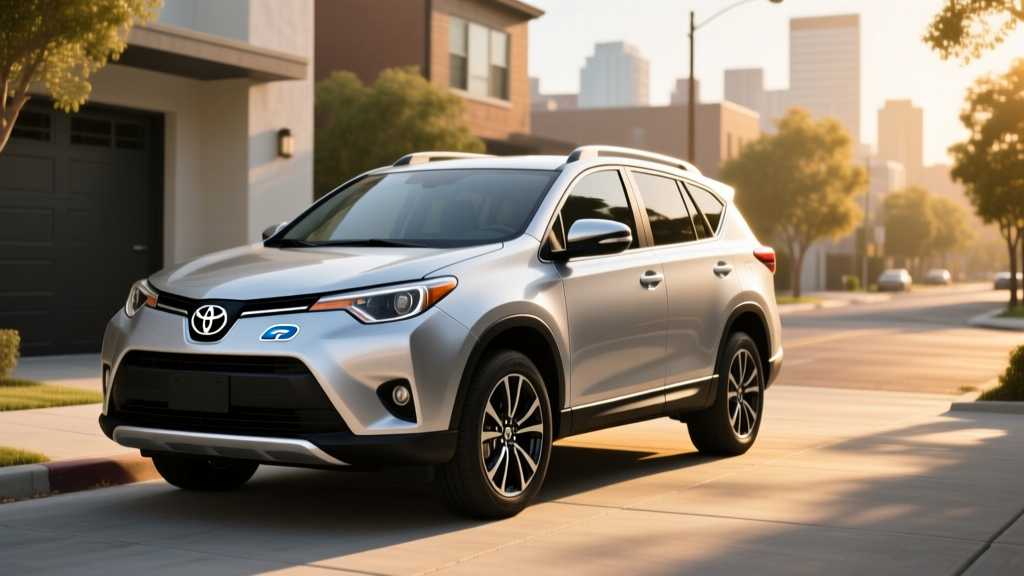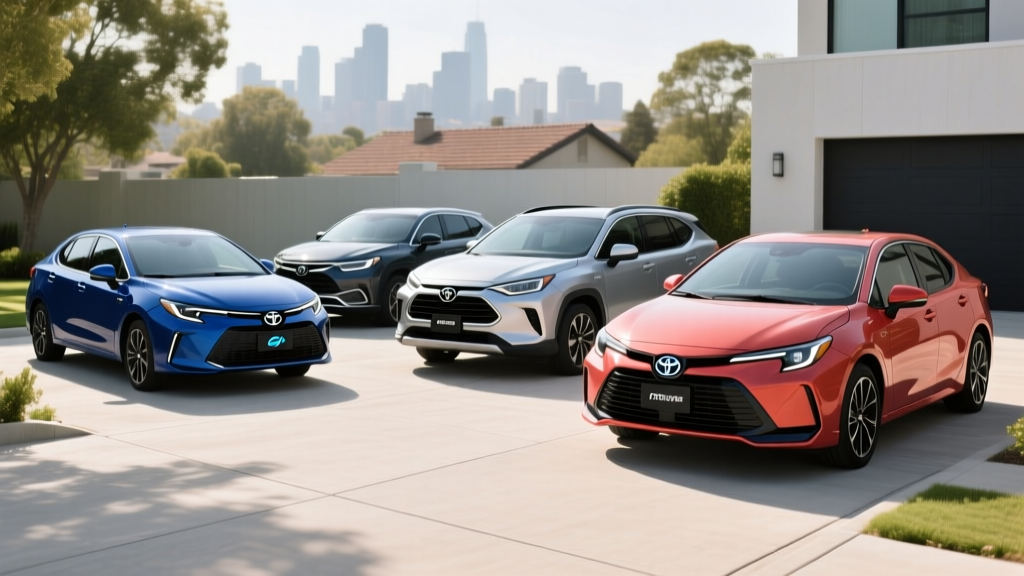
Toyota sells more hybrid vehicles than any other automaker, and the 2025 lineup is its most electrified yet. With over a dozen hybrid (HEV) and plug-in hybrid (PHEV) models spanning sedans, SUVs, minivans, and trucks, the question is no longer whether Toyota offers a hybrid — it's which one fits your driving pattern, budget, and charging access.
This guide breaks down every current Toyota hybrid and PHEV with exact EPA fuel economy figures, real-world efficiency expectations, powertrain specs, pricing, battery warranty coverage, and federal tax credit eligibility. Whether you're cross-shopping a RAV4 Hybrid against a RAV4 Prime, or deciding between a Camry Hybrid and a full battery-electric vehicle, the numbers below will clarify the decision.
HEV vs PHEV: Understanding Toyota's Two Hybrid Types
Conventional Hybrid (HEV): A gasoline engine paired with one or more electric motors and a small battery (typically 1.0–1.6 kWh). The battery recharges through regenerative braking and the engine — you never plug it in. HEVs optimize fuel economy in stop-and-go city driving, where the electric motor handles low-speed propulsion and the engine kicks in for higher loads.
Plug-in Hybrid (PHEV): A larger battery (typically 13–19 kWh) that you can charge from a wall outlet or public charger, enabling 25–44 miles of electric-only driving before the gasoline engine activates. Once the battery depletes, a PHEV operates exactly like a conventional hybrid. Toyota markets its PHEVs under the "Prime" badge.
| Feature | HEV (Hybrid) | PHEV (Prime) |
|---|---|---|
| Plugs in? | No | Yes |
| Battery size | ~1.0–1.6 kWh | ~13.6–18.1 kWh |
| Electric-only range | N/A (EV assist only) | 25–44 miles |
| Best for | No home charging access | Home charging + short commutes |
| Federal tax credit | No | Up to $7,500 (if eligible) |
| Starting price premium over gas | ~$1,500–$2,500 | ~$5,000–$8,000 |
2025 Toyota Hybrid Lineup: MPG, Pricing & Specs
Below is the complete 2025 Toyota hybrid and PHEV lineup with EPA-rated fuel economy. Toyota's fifth-generation hybrid system, now standard across most models, pairs a 2.0L or 2.5L Dynamic Force engine with higher-output electric motors for improved efficiency and responsiveness.
| Model | Type | EPA City | EPA Hwy | EPA Combined | EV Range (PHEV) | Combined HP | Base MSRP |
|---|---|---|---|---|---|---|---|
| Prius (LE) | HEV | 57 | 54 | 57 | — | 196 | $28,350 |
| Prius Prime | PHEV | 52 (hybrid) | 48 (hybrid) | 52 (hybrid) / 127 MPGe | 44 mi | 220 | $33,445 |
| Camry Hybrid (LE) | HEV | 53 | 50 | 51 | — | 225 | $29,495 |
| Corolla Hybrid (LE) | HEV | 53 | 46 | 50 | — | 138 | $24,795 |
| Crown | HEV | 42 | 41 | 41 | — | 236 | $41,445 |
| RAV4 Hybrid (LE) | HEV | 41 | 38 | 39 | — | 219 | $32,350 |
| RAV4 Prime | PHEV | 40 (hybrid) | 36 (hybrid) | 38 (hybrid) / 94 MPGe | 42 mi | 302 | $44,210 |
| Highlander Hybrid | HEV | 36 | 35 | 36 | — | 243 | $42,090 |
| Grand Highlander Hybrid | HEV | 37 | 34 | 36 | — | 245 | $45,590 |
| Sienna | HEV | 36 | 36 | 36 | — | 245 | $38,085 |
| Venza | HEV | 40 | 37 | 39 | — | 219 | $35,070 |
| Tundra i-FORCE MAX | HEV | 20 | 24 | 22 | — | 437 | $57,005 |
| Tacoma i-FORCE MAX | HEV | 23 | 24 | 23 | — | 326 | $42,900 |
Sources: fueleconomy.gov (EPA estimates), Toyota Motor Corporation press site. MSRP reflects base trim before destination charges. Actual dealer prices may vary.
Real-World MPG: What to Actually Expect
EPA hybrid ratings tend to be conservative for city driving and optimistic for sustained highway travel. Toyota's hybrid system excels in stop-and-go traffic, where regenerative braking recaptures energy and the electric motor handles low-speed movement without burning fuel. On the highway, the gasoline engine runs more continuously, narrowing the advantage over efficient conventional cars.
Real-World MPG Expectations:
- City driving: Most Toyota HEVs meet or exceed EPA city ratings by 2–5 MPG. Prius owners routinely report 58–62 MPG in urban commutes.
- Highway driving: Expect 3–7 MPG below EPA highway figures at sustained 70–80 mph speeds. A Camry Hybrid rated at 50 highway may return 43–47 MPG on an interstate road trip.
- Cold weather: Hybrid fuel economy drops 10–20% in sub-40°F temperatures. The engine runs more frequently to heat the cabin and bring the catalytic converter to operating temperature.
- Combined real-world: Plan for EPA combined minus 2–4 MPG as a realistic annual average for mixed driving.
For PHEVs, electric-only range is similarly affected by conditions. The RAV4 Prime's EPA-rated 42 miles of EV range typically delivers 38–44 miles in mild weather but can drop to 28–32 miles in freezing temperatures with cabin heat running. The Prius Prime's 44-mile rating holds up better in moderate climates due to its available heat pump.
PHEV Deep Dive: Prius Prime and RAV4 Prime
Toyota currently offers two PHEV models for 2025, and they represent opposite ends of the practicality spectrum.
| Specification | 2025 Prius Prime | 2025 RAV4 Prime |
|---|---|---|
| Battery capacity | 13.6 kWh (lithium-ion) | 18.1 kWh (lithium-ion) |
| EPA electric range | 44 miles (SE trim) | 42 miles |
| Level 1 charge (120V) | ~11 hours (full) | ~12 hours (full) |
| Level 2 charge (240V) | ~4 hours (full) | ~2.5 hours (full) |
| DC fast charging | No | No |
| Engine | 2.0L 4-cyl + 2 motors | 2.5L 4-cyl + 3 motors |
| Combined output | 220 hp | 302 hp |
| 0–60 mph | 6.6 sec | 5.7 sec |
| Hybrid-mode MPG | 52 combined | 38 combined |
| Total range (EV + gas) | ~480 miles | ~470 miles |
| AWD available | No (FWD only) | Yes (standard electronic AWD) |
| Base MSRP | $33,445 | $44,210 |
Neither Toyota PHEV supports DC fast charging — a deliberate engineering choice. Toyota has stated that PHEV batteries are sized for daily electric commuting on Level 1 or Level 2 home charging, and adding DC fast-charge hardware would increase cost, weight, and complexity for a battery that holds less than 20 kWh. For most owners who charge overnight at home, this is a non-issue. If you need rapid public charging, a full BEV is the better choice.
Battery Warranty, Reliability & Replacement Costs
Hybrid battery longevity remains the single most common concern among prospective buyers — and it's where Toyota's track record is strongest in the industry. The Prius has been in continuous production since 1997 (2000 in the US), providing over two decades of real-world degradation data.
Toyota Hybrid Battery Warranty (2025 models):
- Coverage: 10 years or 150,000 miles (whichever comes first), transferable to subsequent owners
- Threshold: Toyota warrants the hybrid battery against capacity loss below a defined performance threshold — typically around 60–70% of original capacity, though exact percentage varies by model
- What's covered: Battery module replacement, battery management system, related wiring and connectors
- Hybrid system warranty: 8 years / 100,000 miles for other hybrid components (inverter, transaxle motor, control unit)
Real-world longevity data: Independent fleet studies and owner surveys show Toyota hybrid batteries commonly last 150,000–200,000+ miles before significant degradation. Early-generation Prius batteries (2001–2009) had higher failure rates around 100,000–120,000 miles, but Toyota's switch to more robust nickel-metal hydride modules and later lithium-ion packs has dramatically improved durability. Taxi fleets running Toyota hybrids in New York and Los Angeles have documented examples exceeding 300,000 miles on original batteries.
Replacement cost if out of warranty:
- Prius hybrid battery: $2,000–$3,500 (remanufactured) or $3,500–$4,500 (new OEM)
- RAV4 Hybrid battery: $3,000–$5,000
- RAV4 Prime / Prius Prime battery: $5,000–$8,000 (larger capacity)
- Individual module replacement (common repair): $500–$1,500 at a hybrid specialist
Toyota's hybrid reliability ratings consistently lead the industry. The brand holds top positions in Consumer Reports reliability surveys year after year, with hybrid powertrains showing fewer issues than conventional automatic transmissions due to the simpler e-CVT planetary gearset design, which has no belts, clutches, or torque converters to fail.
Federal Tax Credits: Which Toyota Hybrids Qualify?
This is where the distinction between HEV and PHEV matters enormously for your wallet.
Conventional hybrids (HEVs) — Prius, Camry Hybrid, RAV4 Hybrid, Highlander Hybrid, Sienna, etc.: These do NOT qualify for the federal §30D clean vehicle tax credit. The credit is exclusively for plug-in vehicles (BEVs and PHEVs). Some states offer separate hybrid rebates, but these vary widely and change frequently — check your state energy office or the Alternative Fuels Data Center for current local incentives.
Plug-in hybrids (PHEVs) — Prius Prime and RAV4 Prime: Both models may qualify for up to $7,500 under the IRS §30D credit, but eligibility depends on several conditions that change regularly:
- MSRP cap: Vans, SUVs, and trucks must have an MSRP at or below $80,000; sedans at or below $55,000. The RAV4 Prime ($44,210 base) falls under the SUV cap. The Prius Prime ($33,445 base) falls under the sedan cap. Higher trims may approach limits.
- Buyer income cap: Adjusted gross income must not exceed $150,000 (single), $225,000 (head of household), or $300,000 (married filing jointly).
- Battery sourcing requirements: A percentage of critical minerals and battery components must be sourced from the US or free-trade-agreement countries. These thresholds tighten annually. Toyota's PHEV sourcing has been impacted by these rules — verify current eligibility on IRS.gov before purchasing.
- Point-of-sale transfer: As of 2024, eligible buyers can transfer the credit to the dealer for an immediate price reduction rather than waiting to claim it on their tax return.
- US final assembly: The Prius Prime and RAV4 Prime are assembled in Japan, which has at times affected eligibility under the final-assembly requirement. Check the DOE's qualifying vehicle list for current status.
Important: Tax credit eligibility for Toyota PHEVs has been inconsistent since the 2023 Inflation Reduction Act sourcing rules took effect. Always confirm eligibility with your dealer and a tax professional before relying on the credit in your purchase budget.
Hybrid vs PHEV vs EV: Which Toyota Is Right for You?
Toyota's 2025 lineup also includes the bZ4X all-electric SUV, giving buyers three electrification paths. Here's a practical decision framework:
Choose a Toyota HEV (Prius, Camry Hybrid, RAV4 Hybrid, etc.) if:
- You don't have access to home or workplace charging
- You want maximum fuel savings with zero behavior change
- You drive more than 15,000 miles per year and want proven, low-maintenance efficiency
- Your budget is under $35,000 (Corolla Hybrid starts at $24,795)
Choose a Toyota PHEV (Prius Prime, RAV4 Prime) if:
- You have Level 1 or Level 2 home charging and a commute under 40 miles
- You want electric daily driving but gas flexibility for road trips
- You want to reduce (not eliminate) gasoline use while charging infrastructure matures
- You may qualify for the federal tax credit, offsetting the price premium
Choose a full BEV (bZ4X or other EV) if:
- You have reliable home Level 2 charging
- Your daily driving is under 200 miles and you rarely tow
- You want to eliminate gasoline costs and oil changes entirely
- You want the maximum available federal tax credit ($7,500 for qualifying BEVs)
For most buyers without home charging, a Toyota HEV is the pragmatic sweet spot. The Prius at 57 MPG combined costs roughly $900–$1,100 per year in gasoline (at $3.40/gallon, 12,000 miles) versus $1,800–$2,200 for a comparable gas-only midsize sedan. The RAV4 Hybrid at 39 MPG combined saves about $400–$600 annually over a gas-only RAV4.
For PHEV owners who charge nightly and commute under 40 miles, gasoline consumption can drop to near zero on weekdays. A RAV4 Prime owner with a 20-mile round-trip commute might use just 5–10 gallons per month, filling the tank once every two months.
Pros and Cons: The Honest Assessment
Toyota Hybrid Advantages
- Best-in-class reliability track record with 25+ years of hybrid production
- No charging infrastructure needed for HEVs — fill up at any gas station
- Strong real-world city MPG that often beats EPA estimates
- 10-year/150,000-mile hybrid battery warranty, transferable
- High resale value — Toyota hybrids depreciate slower than many competitors
- Smooth e-CVT operation with no shift shock or belt-slip issues
- Wide model availability across segments (sedan to truck)
Toyota Hybrid Limitations
- No DC fast charging on PHEVs — Level 2 only
- Highway MPG advantage narrows vs. efficient gas cars at sustained speeds
- PHEV models (Prime) carry a $5,000–$10,000 premium over HEV equivalents
- RAV4 Prime has limited availability — dealer markups remain common
- Cold weather reduces both MPG (HEV) and EV range (PHEV) by 10–20%
- Tundra i-FORCE MAX hybrid prioritizes torque over fuel savings (22 MPG combined)
- Toyota's infotainment and ADAS lag some competitors in interface polish
Frequently Asked Questions
How many MPG does the most efficient Toyota hybrid get?
The 2025 Toyota Prius LE achieves an EPA-rated 57 MPG combined (57 city / 54 highway). In real-world city driving, many owners report 58–62 MPG. The Corolla Hybrid follows at 50 combined, and the Camry Hybrid at 51 combined. Among SUVs, the RAV4 Hybrid delivers 39 combined and the Highlander Hybrid achieves 36 combined — impressive figures for three-row vehicles.
How far can the Toyota RAV4 Prime go on electric only?
The 2025 RAV4 Prime has an EPA-rated 42 miles of electric-only range. In mild weather (50–80°F), expect 38–44 miles depending on driving style and terrain. In freezing temperatures with cabin heat, plan for 28–32 miles. Once the battery depletes, it operates as a standard hybrid at 38 MPG combined.
How far can the Prius Prime go on electric only?
The 2025 Prius Prime (SE trim) has an EPA-rated 44 miles of electric-only range — the longest of any Toyota PHEV. The XSE trim drops slightly to 40 miles due to larger wheels and additional equipment. Real-world range in moderate conditions typically matches or slightly exceeds the EPA figure.
Do Toyota hybrid batteries need to be replaced, and what does it cost?
Most Toyota hybrid batteries last the life of the vehicle. Real-world data shows typical longevity of 150,000–200,000+ miles. Toyota's warranty covers 10 years / 150,000 miles. If replacement is needed out of warranty, expect $2,000–$4,500 for a Prius battery and $3,000–$8,000 for larger hybrid/PHEV batteries, depending on whether you choose remanufactured or new OEM. Individual module repair at a hybrid specialist can cost as little as $500–$1,500.
Does any Toyota hybrid qualify for a federal tax credit?
Only Toyota's plug-in hybrids — the Prius Prime and RAV4 Prime — can potentially qualify for the federal §30D tax credit of up to $7,500. Conventional Toyota hybrids (Prius, Camry Hybrid, RAV4 Hybrid, etc.) do not qualify for the federal credit. However, PHEV credit eligibility depends on current battery sourcing rules, MSRP caps, buyer income limits, and final assembly requirements — all of which change periodically. Verify on IRS.gov before purchasing.
Can I charge a Toyota PHEV at a public DC fast charger?
No. Neither the Prius Prime nor the RAV4 Prime supports DC fast charging. They accept Level 1 (120V, ~1.4 kW) and Level 2 (240V, up to 6.6 kW) AC charging only. A full Level 2 charge takes approximately 4 hours for the Prius Prime and 2.5 hours for the RAV4 Prime. This is standard for most PHEVs — the smaller batteries don't justify the cost and weight of DC fast-charge hardware.
Is a Toyota hybrid more reliable than a conventional gas car?
By most available metrics, yes. Toyota's hybrid powertrain uses an e-CVT (planetary gearset) with no traditional transmission components — no belts, clutches, torque converters, or gear-shift mechanisms to wear out. Regenerative braking also reduces wear on friction brake pads, with many owners reporting 80,000–100,000+ miles on original brake pads. Toyota consistently ranks at or near the top of Consumer Reports and J.D. Power reliability studies, with hybrid models often outperforming their gas-only counterparts.