Toyota's Hybrid System: What Actually Happens Under the Hood
If you've ever wondered how a Toyota hybrid delivers 50+ MPG without ever plugging in — or how the RAV4 Prime manages 42 miles of electric-only driving before the gas engine fires up — the answer lies in Toyota's Hybrid Synergy Drive (now called the Toyota Hybrid System, or THS). Unlike a conventional gas car where the engine alone turns the wheels, Toyota's system pairs a gasoline engine with one or more electric motors and a small battery pack, letting the car seamlessly switch between electric drive, gas drive, or both simultaneously.
The brilliance is in the power-split device — a planetary gearset that acts as a continuously variable transmission. It routes power from the engine, the motor-generator, or both to the wheels without traditional gear shifts. During braking and deceleration, the motor-generator reverses role and becomes a generator, capturing kinetic energy to recharge the battery (regenerative braking). This is why Toyota hybrids often exceed their EPA city ratings in real-world stop-and-go driving — every stop recharges the battery.
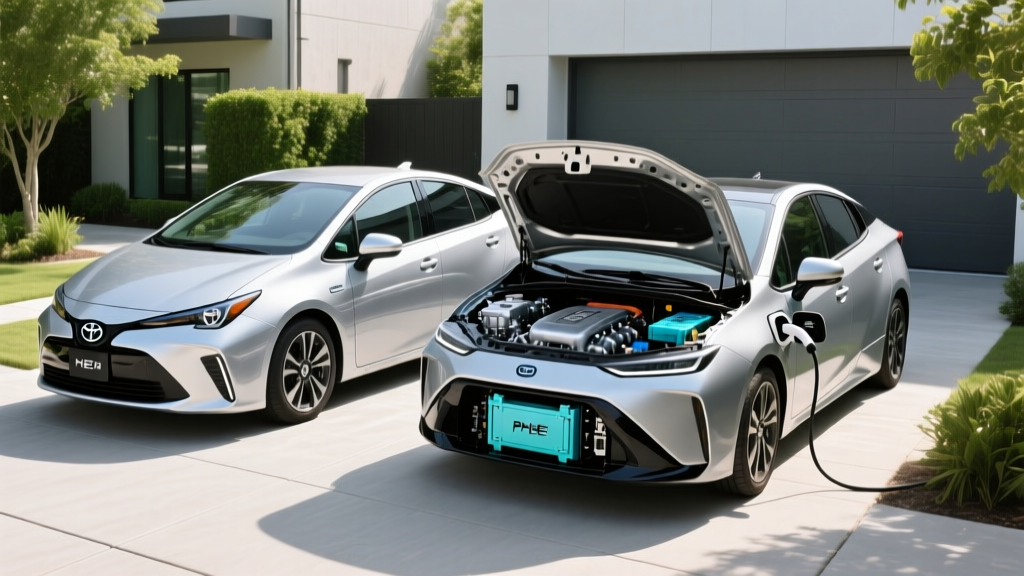
For 2026, Toyota offers two distinct hybrid flavors across its lineup: conventional hybrids (HEVs) that never need plugging in, and plug-in hybrids (PHEVs, branded as "Prime" models) that offer meaningful electric-only range. Understanding the difference is essential before you buy.
| Feature | Conventional Hybrid (HEV) | Plug-in Hybrid (PHEV / Prime) |
|---|---|---|
| Needs to be plugged in? | No — self-charging via engine + regen | Yes — plug in for electric-only miles |
| Battery size | ~1.0–1.6 kWh (small) | ~13.6–18.1 kWh (much larger) |
| Electric-only driving | Brief, low-speed only (~1 mi) | 25–42+ miles at highway speeds |
| Federal tax credit | No | Up to $7,500 (eligibility varies) |
| Best for | No home charging, simplicity | Home chargers, short commutes |
EPA MPG and Real-World Fuel Economy Across the 2026 Toyota Hybrid Lineup
Toyota's 2026 hybrid lineup spans from the Prius to the Grand Highlander, and fuel economy varies significantly by model and drivetrain. Here are the EPA-rated figures for the most popular models, alongside what you can actually expect in daily driving.
| Model | City MPG | Highway MPG | Combined MPG | Real-World Expectation |
|---|---|---|---|---|
| Prius (LE FWD) | 57 | 56 | 57 | 50–60 (city often exceeds EPA) |
| Prius (XLE/Limited AWD) | 49 | 50 | 49 | 44–52 |
| Camry Hybrid (LE FWD) | 53 | 50 | 51 | 46–55 |
| RAV4 Hybrid (AWD) | 41 | 38 | 39 | 35–42 |
| Highlander Hybrid (AWD) | 35 | 35 | 35 | 31–37 |
| Grand Highlander Hybrid | 36 | 32 | 34 | 30–36 |
| Sienna (AWD) | 35 | 36 | 35 | 31–38 |
Real-world note: Toyota hybrids shine in city driving where regenerative braking is frequent. On long highway cruises at 75–80 mph, expect MPG to drop 5–10% below the EPA highway figure. In cold weather (below 30°F), the engine runs more often to provide cabin heat, reducing city MPG by roughly 10–15% until the powertrain warms up. Source: fueleconomy.gov.
Toyota Prime PHEVs: Electric-Only Range, Battery Specs, and Charging
Toyota's plug-in hybrids — the RAV4 Prime and Prius Prime — use the same Hybrid Synergy Drive architecture but add a substantially larger lithium-ion battery pack and a more powerful electric motor. The result: genuine electric-only commuting capability before the gasoline engine engages.
| Spec | RAV4 Prime | Prius Prime |
|---|---|---|
| Battery capacity (usable) | ~14.9 kWh | ~10.9 kWh |
| EPA electric-only range | 42 miles | 44 miles (SE) |
| Total range (EV + gas) | ~600 miles | ~460 miles |
| Combined horsepower | 302 hp | 220 hp |
| 0–60 mph | 5.7 sec | 6.6 sec |
| Level 2 charge time (0–100%) | ~2.5 hrs (6.6 kW) | ~4 hrs (3.3 kW onboard) |
| DC fast charging | Not supported | Not supported |
| MPG after battery depleted | 38 combined | 48–52 combined |
| Base MSRP | ~$44,500 | ~$34,000 |
Critical charging detail: Neither Toyota Prime model supports DC fast charging. You are limited to Level 1 (120V household outlet, ~8–10 hours for a full charge) or Level 2 (240V, using a J1772 connector). If your daily commute is under 40 miles round-trip and you can install a Level 2 charger at home, a Prime model effectively operates as an EV for daily driving while retaining gas-engine flexibility for road trips.
Real-world electric range caveat: EPA electric range assumes moderate temperatures and mixed driving. In winter (below 35°F), expect electric-only range to drop 20–30% due to battery chemistry and cabin heating demands. At sustained highway speeds above 70 mph, electric range also shrinks. A RAV4 Prime rated at 42 miles may deliver 28–34 electric miles in January in Chicago.
Powertrain Deep Dive: How the Toyota Hybrid System Manages Power
At the heart of every Toyota hybrid is the fifth-generation Toyota Hybrid System (THS-5 in most 2026 models). Here's the mechanical sequence of what happens during typical driving:
- Starting from stop: The electric motor (MG2) launches the car using battery energy alone. The gas engine remains off — this is why hybrids are silent at stoplights.
- Light acceleration: The electric motor continues to provide primary propulsion. The engine may start seamlessly if more power is demanded.
- Normal cruising: The power-split device blends engine and motor output for optimal efficiency. Excess engine power is diverted to the generator (MG1) to recharge the battery.
- Hard acceleration: Both the engine and electric motor deliver maximum combined output to the wheels. The RAV4 Prime's 302 combined horsepower makes it the quickest RAV4 Toyota sells.
- Braking and deceleration: MG2 reverses function, becoming a generator. Kinetic energy that would be lost as heat in the brake pads is instead converted to electricity and stored in the battery. This is regenerative braking.
- Stopped (idle): The engine shuts off completely. No fuel is consumed. The battery powers accessories and climate control (via an electric A/C compressor).
In Toyota's AWD hybrid models (designated "E-Four" or electronic AWD), a separate rear electric motor powers the rear axle when traction is needed. There is no mechanical driveshaft connecting the front and rear — the rear motor engages only when the system detects slip or during hard acceleration from a stop. This eliminates drivetrain parasitic loss and contributes to the strong MPG figures.
Hybrid vs PHEV vs Full EV: Which Toyota Powertrain Fits Your Life?
Choosing between a Toyota HEV, a Toyota Prime PHEV, or stepping into a full battery-electric vehicle (BEV) like the bZ4X depends on your charging access, driving patterns, and budget. Here's a practical decision framework:
- You lack access to home or workplace charging
- You want maximum simplicity — no plugs, no behavior change
- Your budget is tighter (HEVs start ~$28,000–$30,000)
- You drive a mix of city and highway with no predictable short commute
- You want the lowest maintenance burden and proven long-term reliability
- You can install a Level 2 charger at home (or have workplace charging)
- Your daily round-trip commute is under 40 miles
- You want EV-like daily driving but need gas flexibility for road trips
- You may qualify for a federal tax credit (see below)
- You want the performance boost — the RAV4 Prime's 302 hp is a genuine hot-rod SUV
- You have reliable home Level 2 charging
- Your daily driving is under 250 miles and you road-trip infrequently
- You want zero tailpipe emissions and the lowest per-mile fuel cost
- You're comfortable with public DC fast charging for longer trips
- You want to eliminate oil changes and engine maintenance entirely
Tax Credit Eligibility for Toyota PHEVs in 2026
Under the current IRS §30D Clean Vehicle Credit, qualifying plug-in hybrids can receive up to $7,500 in federal tax credits. However, eligibility depends on multiple factors that change frequently:
- Battery sourcing: A percentage of critical minerals and battery components must be sourced from the US or free-trade-agreement countries. Toyota's supply chain has been adapting, but eligibility varies by model year and production batch.
- MSRP caps: SUVs (like the RAV4 Prime) must have an MSRP at or below $80,000; sedans (like the Prius Prime) must be at or below $55,000.
- Buyer income limits: Modified adjusted gross income cannot exceed $300,000 (joint), $225,000 (head of household), or $150,000 (single).
- Point-of-sale transfer: As of 2024, you can transfer the credit to the dealer at purchase, reducing your out-of-pocket cost immediately rather than waiting for tax filing.
- Conventional HEVs (non-plug-in) do NOT qualify for the §30D credit — only plug-in hybrids and full EVs are eligible.
Important: Always verify current eligibility at fueleconomy.gov before purchasing, as battery sourcing compliance can shift between model years. Consult a tax professional for your specific situation.
Toyota Hybrid Battery Reliability, Warranty, and Replacement Cost
Battery longevity is consistently the top concern for hybrid buyers. Toyota has been refining its hybrid battery systems since the 1997 Prius, and the track record is strong.
- Hybrid battery coverage: 10 years / 150,000 miles (whichever comes first)
- Hybrid system components: 8 years / 100,000 miles
- Capacity retention threshold: Warranty covers defects and abnormal degradation; Toyota does not publish a specific percentage threshold like BEV warranties (typically 70%)
- Transferability: Full hybrid battery warranty transfers to subsequent owners
Real-world longevity data: Toyota hybrid batteries routinely last 150,000–200,000+ miles before requiring replacement. Taxi fleets using Prius and Camry Hybrid models frequently report original batteries surviving past 250,000 miles. The key degradation mechanism is calendar aging combined with heat exposure — hybrids in hot climates (Arizona, Texas) may see slightly faster degradation than those in temperate zones.
Replacement cost if out of warranty:
- HEV battery (Prius, Camry Hybrid, RAV4 Hybrid): $2,000–$4,000 for a new OEM battery; $1,000–$2,000 for a refurbished unit
- PHEV battery (RAV4 Prime, Prius Prime): $5,000–$8,000 for a new OEM pack (larger capacity)
- Individual cell module replacement (some shops offer this): $500–$1,500, but not all models support it
The smaller battery in a conventional HEV means lower replacement cost compared to a PHEV or full EV. And because Toyota has built millions of hybrids, the aftermarket for refurbished batteries is robust, keeping costs competitive.
Pricing Across the 2026 Toyota Hybrid Lineup
| Model | Base MSRP | Federal Tax Credit | Effective Price (if eligible) |
|---|---|---|---|
| Prius Hybrid LE | ~$29,500 | None (HEV) | ~$29,500 |
| Prius Prime SE | ~$34,000 | Up to $7,500* | ~$26,500* |
| Camry Hybrid LE | ~$30,500 | None (HEV) | ~$30,500 |
| RAV4 Hybrid XLE | ~$35,000 | None (HEV) | ~$35,000 |
| RAV4 Prime SE | ~$44,500 | Up to $7,500* | ~$37,000* |
| Highlander Hybrid LE | ~$42,000 | None (HEV) | ~$42,000 |
| Sienna LE | ~$39,000 | None (HEV) | ~$39,000 |
*Tax credit eligibility depends on battery sourcing compliance, buyer income, and MSRP caps. Verify at fueleconomy.gov before purchase.
Pros, Cons, and the Bottom Line on Toyota Hybrids
- Class-leading fuel economy (Prius at 57 MPG combined)
- No charging required for HEVs — zero behavior change
- 10-year/150,000-mile hybrid battery warranty
- Proven long-term reliability across millions of units
- Strong regenerative braking — excels in city traffic
- RAV4 Prime offers 302 hp and 42 EV miles — best of both worlds
- Lower replacement battery cost than full EVs
- No DC fast charging on Prime PHEVs
- Prius Prime's 3.3 kW onboard charger is slow for Level 2
- Electric-only range (42–44 mi) is modest vs. competitors like the PHEV Chrysler Pacifica (32 mi but larger vehicle) or full EVs
- HEVs do not qualify for federal tax credits
- Highway MPG drops noticeably at speeds above 75 mph
- Cabin heat in cold weather forces engine on, reducing EV-mode time in PHEVs
- RAV4 Prime's $44,500+ starting price is steep for a compact SUV
Frequently Asked Questions
How many MPG does a Toyota hybrid get?
It depends on the model. The 2026 Prius LE achieves an EPA-rated 57 MPG combined (57 city / 56 highway). The Camry Hybrid LE gets 51 combined. The RAV4 Hybrid AWD gets 39 combined. In real-world city driving, many owners report exceeding EPA estimates thanks to aggressive regenerative braking. Highway driving at 75+ mph typically reduces MPG by 5–10% below the EPA highway rating.
How far can the Toyota RAV4 Prime go on electric only?
The EPA rates the RAV4 Prime at 42 miles of electric-only range. In real-world conditions, expect 35–42 miles in mild weather and 28–34 miles in freezing temperatures. The Prius Prime SE is rated at 44 miles electric-only. After the battery is depleted, both models seamlessly switch to hybrid mode — the RAV4 Prime returns 38 MPG combined and the Prius Prime returns 48–52 MPG combined as a conventional hybrid.
Do I need to plug in a Toyota hybrid?
No — if you buy a conventional Toyota Hybrid (HEV) like the standard Prius, Camry Hybrid, RAV4 Hybrid, Highlander Hybrid, or Sienna. These vehicles charge their own batteries through regenerative braking and the gasoline engine. You never plug them in. Only the "Prime" models (RAV4 Prime, Prius Prime) require plugging in to access their electric-only range. If you don't plug in a Prime, it simply operates as a very efficient conventional hybrid.
Is the Toyota hybrid battery reliable, and what does replacement cost?
Toyota hybrid batteries have an industry-leading reliability record, with many lasting 150,000–250,000+ miles. All 2026 Toyota hybrids carry a 10-year/150,000-mile hybrid battery warranty. If replacement is needed out of warranty, expect $2,000–$4,000 for a conventional HEV battery and $5,000–$8,000 for a Prime PHEV battery. Refurbished options are available for roughly half the cost of new OEM units.
Does a Toyota hybrid qualify for any tax credit?
Conventional Toyota hybrids (HEVs) do not qualify for the federal §30D Clean Vehicle Credit — only plug-in vehicles are eligible. The Toyota Prime PHEV models (RAV4 Prime, Prius Prime) may qualify for up to $7,500, depending on battery component and critical mineral sourcing, buyer income limits ($150K single / $300K joint), and MSRP caps ($55K sedans / $80K SUVs). Always verify current eligibility at fueleconomy.gov and consult a tax professional.
How does a Toyota hybrid compare to a full EV?
A Toyota HEV gives you 35–57 MPG with zero charging infrastructure needed, making it ideal for apartment dwellers or those without home charging. A Toyota Prime PHEV gives you 42–44 miles of electric commuting plus gas flexibility — a strong bridge option. A full EV (like a Tesla Model Y or Hyundai Ioniq 5) eliminates gasoline entirely, offers 250–320+ miles of range, and has the lowest per-mile fuel cost, but requires reliable home or workplace charging and comfort with DC fast charging on road trips. If you can charge at home and rarely drive more than 250 miles in a day, a full EV saves more money long-term. If charging access is uncertain, a Toyota hybrid is the safer, lower-risk choice.