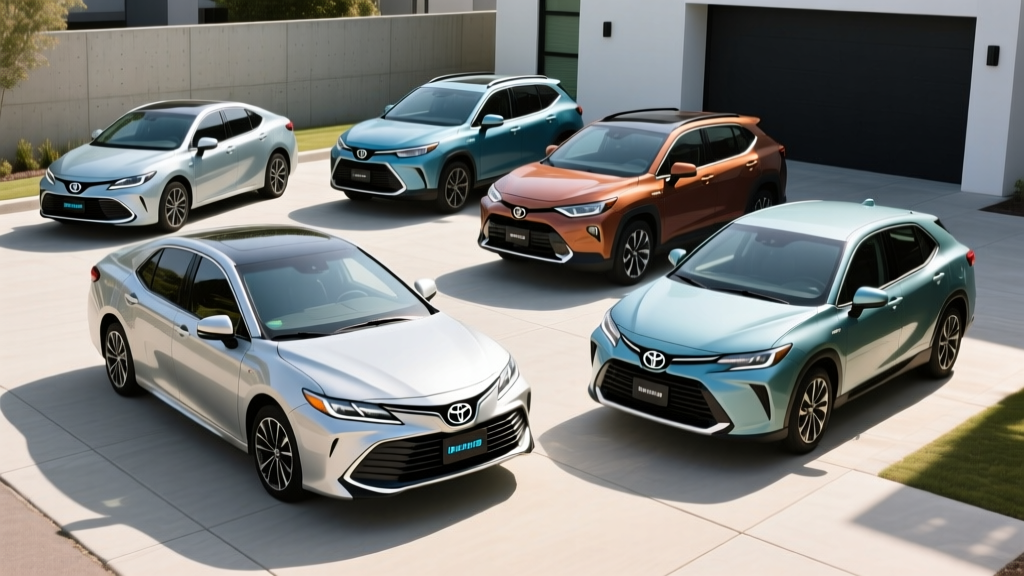
Toyota sells more hybrids than any other automaker, and for good reason: the company has spent nearly three decades refining its Hybrid Synergy Drive system. For 2026, the Toyota hybrid lineup spans subcompacts to three-row SUVs, with conventional hybrid (HEV) and plug-in hybrid (PHEV) variants across multiple nameplates. But with over a dozen hybrid trims to choose from, matching the right one to your driving pattern matters more than picking the badge.
This guide breaks down every current Toyota hybrid and PHEV by fuel economy, powertrain output, battery warranty, pricing, and tax-credit eligibility — with real-world MPG context you won't find on a window sticker.
HEV vs PHEV: Understanding Toyota's Two Hybrid Types
Before comparing models, the distinction between Toyota's hybrid categories is critical, because it determines whether you plug in, how far you can drive on electricity alone, and whether you may qualify for federal tax incentives.
Conventional Hybrid (HEV)
- How it works: A small battery (typically 1–2 kWh) and electric motor assist the gasoline engine. The battery recharges through regenerative braking and the engine — you never plug it in.
- Electric-only driving: Minimal. Brief low-speed EV mode, typically under 1 mile.
- Best for: Drivers without reliable home charging access who want maximum MPG with zero behavior change.
- Federal tax credit: Not eligible under current IRS §30D rules.
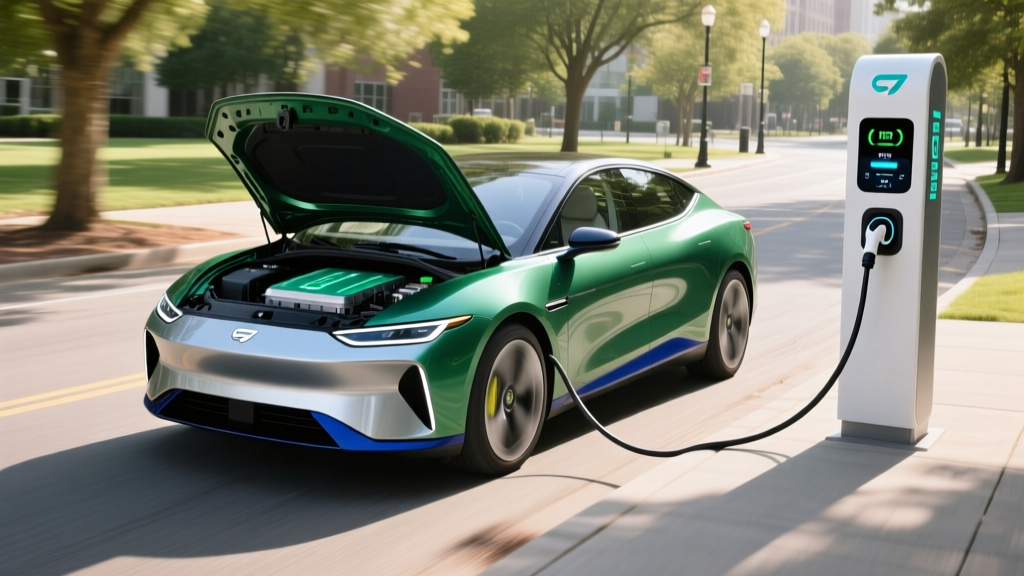
Plug-in Hybrid (PHEV / Toyota "Prime")
- How it works: A larger battery (13–18 kWh) powers an electric-only range of 35–45 miles before the gasoline engine engages. You plug in to recharge (Level 1 or Level 2).
- Electric-only driving: Full highway-capable EV mode for the rated electric range.
- Best for: Drivers with home charging and a commute under 45 miles who want EV daily driving without range anxiety on road trips.
- Federal tax credit: May qualify for up to $3,750–$7,500 under §30D, subject to battery sourcing, MSRP caps, and buyer income limits.
2026 Toyota Hybrid Lineup: MPG, Power & Pricing at a Glance
The table below covers every 2026 Toyota hybrid and PHEV currently on sale, with EPA figures sourced from fueleconomy.gov and MSRPs from Toyota's official specifications. Real-world MPG notes follow the table.
| Model | Type | Combined HP | EPA City | EPA Hwy | EPA Combined | EV Range (PHEV) | Starting MSRP |
|---|---|---|---|---|---|---|---|
| Prius (LE) | HEV | 194 hp (FWD) / 196 hp (AWD) | 57 | 56 | 57 | — | $29,450 |
| Prius Prime | PHEV | 220 hp | 127 MPGe | — | 52 (hybrid mode) | 44 mi | $34,350 |
| Camry Hybrid (LE) | HEV | 225 hp (FWD) / 232 hp (AWD) | 53 | 50 | 51 | — | $30,495 |
| RAV4 Hybrid (LE) | HEV | 219 hp | 41 | 38 | 40 | — | $33,575 |
| RAV4 Prime | PHEV | 302 hp | 94 MPGe | — | 38 (hybrid mode) | 42 mi | $44,665 |
| Highlander Hybrid | HEV | 243 hp | 36 | 35 | 36 | — | $42,670 |
| Grand Highlander Hybrid | HEV | 245 hp | 37 | 34 | 36 | — | $47,170 |
| Grand Highlander Hybrid MAX | HEV | 362 hp | 27 | 28 | 27 | — | $55,755 |
| Sienna | HEV | 245 hp | 36 | 36 | 36 | — | $39,085 |
| Crown (Hybrid) | HEV | 236 hp | 42 | 41 | 41 | — | $42,110 |
| Venza | HEV | 219 hp | 40 | 37 | 39 | — | $36,420 |
| Corolla Hybrid | HEV | 138 hp | 53 | 46 | 50 | — | $24,725 |
Real-World MPG: What Toyota Hybrids Actually Deliver
EPA stickers are useful baselines, but Toyota hybrids consistently outperform their ratings in city driving — and sometimes fall short on sustained highway runs. Here's why.
City driving favors hybrids. Regenerative braking recovers kinetic energy at every stop, and the electric motor handles low-speed acceleration where gasoline engines are least efficient. In real-world city testing, the Prius LE routinely achieves 60–63 MPG on urban routes with frequent stops. The Camry Hybrid and Corolla Hybrid similarly exceed their EPA city figures by 5–10% in stop-and-go traffic.
Highway driving reveals limits. At 70–80 mph sustained speeds, aerodynamic drag dominates and the hybrid system's regenerative advantage diminishes. Expect the RAV4 Hybrid to deliver 35–37 MPG on flat interstate cruises at 75 mph — slightly below its 38 MPG highway sticker. The Highlander Hybrid drops to roughly 31–33 MPG on long highway road trips, particularly when loaded with passengers and cargo.
Cold-weather impact. In sub-freezing temperatures, hybrid MPG typically drops 8–15%. The engine runs longer to heat the cabin and bring the catalytic converter to operating temperature. A Prius that returns 57 MPG combined in mild weather may dip to 48–52 MPG in sustained 20°F conditions. This penalty is smaller than a full EV's cold-weather range loss but still meaningful for northern-climate buyers budgeting fuel costs.
Toyota Hybrid Battery Warranty: What's Covered
Every 2026 Toyota hybrid and PHEV carries a 10-year / 150,000-mile hybrid battery warranty (whichever comes first), transferable to subsequent owners. This covers battery capacity loss below a defined threshold and defects. Toyota's hybrid batteries are nickel-metal hydride (NiMH) on most HEV models and lithium-ion on PHEVs (Prime models).
Replacement cost context: Out-of-warranty hybrid battery replacements range from approximately $2,000–$4,000 for HEV models (Prius, Camry) to $6,000–$9,000 for the RAV4 Prime's larger lithium-ion pack. In practice, Toyota hybrid batteries have demonstrated strong longevity — NHTSA complaint data shows very few hybrid battery failures within the warranty period, and taxi-fleet Priuses have exceeded 300,000 miles on original batteries.
PHEV Deep Dive: Prius Prime and RAV4 Prime Specs
Toyota's two plug-in hybrids deserve separate attention because they function as part-time EVs and have distinct charging requirements, battery sizes, and tax-credit implications.
| Specification | 2026 Prius Prime | 2026 RAV4 Prime |
|---|---|---|
| Powertrain | 2.0L 4-cyl + 2 electric motors | 2.5L 4-cyl + 2 electric motors |
| Combined Output | 220 hp | 302 hp |
| Battery Capacity | 13.6 kWh (lithium-ion) | 18.1 kWh (lithium-ion) |
| EPA Electric Range | 44 miles | 42 miles |
| Total Range (EV + Gas) | ~470 miles | ~520 miles |
| Level 1 Charging (120V) | ~11 hours (0–100%) | ~12 hours (0–100%) |
| Level 2 Charging (240V) | ~4 hours (0–100%) | ~4.5 hours (0–100%) |
| DC Fast Charging | Not available | Not available |
| 0–60 mph | 6.6 seconds | 5.7 seconds |
| Drivetrain | FWD | AWD (standard) |
| Starting MSRP | $34,350 | $44,665 |
Critical note on DC fast charging: Neither the Prius Prime nor RAV4 Prime supports DC fast charging. This is common for PHEVs — their smaller batteries make the added cost and weight of DC hardware hard to justify. All charging is via the J1772 connector at Level 1 (standard 120V outlet) or Level 2 (240V home charger). For most PHEV owners, overnight Level 2 charging fully replenishes the battery before the next commute, making DC capability unnecessary for daily use.
Real-world electric range: The Prius Prime's 44-mile EPA rating is achievable in mild weather at moderate speeds. In highway driving at 70 mph, expect 34–38 electric miles. In winter cold (below 32°F), electric range drops to approximately 30–35 miles due to cabin heating demands and reduced battery efficiency. The RAV4 Prime follows a similar pattern — its 42-mile rating shrinks to roughly 32–36 miles on cold highway commutes.
Federal Tax Credit Eligibility for Toyota PHEVs
Only Toyota's plug-in hybrids (Prime models) are potentially eligible for the federal EV tax credit under IRS §30D. Conventional Toyota hybrids (non-Prime) do not qualify for any federal purchase incentive.
- Credit amount: Up to $3,750 or $7,500 depending on battery critical-mineral and component sourcing requirements. As of 2026, most Toyota PHEVs qualify for $3,750 due to battery sourcing constraints.
- MSRP cap: Vans, SUVs, and pickup trucks capped at $80,000; sedans and other vehicles capped at $55,000. Both the Prius Prime and RAV4 Prime fall under their respective caps.
- Buyer income cap: Modified adjusted gross income must not exceed $150,000 (single), $225,000 (head of household), or $300,000 (joint filing).
- Point-of-sale transfer: Eligible buyers can transfer the credit to the dealer at purchase, reducing the out-of-pocket price immediately rather than waiting for a tax refund.
- Assembly requirement: Vehicle must undergo final assembly in North America. Both Prime models qualify.
Important caveat: Battery sourcing requirements tighten annually. A PHEV that qualifies for $3,750 in early 2026 may see eligibility change if supply-chain sourcing shifts. Always verify current eligibility on the IRS website or with your tax professional before finalizing a purchase. State-level incentives may also apply — check your state's energy office for local rebate programs.
Which Toyota Hybrid Fits Your Driving Pattern?
Choose a Toyota HEV If:
- You lack reliable home or workplace charging access
- You want maximum MPG without changing any driving habits
- Your annual mileage is moderate (10,000–15,000 miles) and fuel savings alone justify the hybrid premium over a gas model
- You want the lowest purchase price in a given model line (Corolla Hybrid starts under $25K)
- You plan to keep the vehicle 8–10+ years and value Toyota's hybrid reliability track record
Choose a Toyota PHEV (Prime) If:
- You have Level 1 or Level 2 charging at home or work
- Your daily round-trip commute is under 40–45 miles (Prius Prime) or under 38–42 miles (RAV4 Prime)
- You want EV-daily driving with gasoline flexibility for road trips
- You qualify for the §30D tax credit, which can offset the $5,000–$11,000 price premium over the HEV variant
- You value the performance boost — the RAV4 Prime's 302 hp makes it the quickest RAV4 by a wide margin
Hybrid vs PHEV vs Full EV — The Decision Framework
Toyota HEV: Best when charging access is unavailable, budget is the priority, and you want proven reliability with no plug-in hassle. You'll save 30–50% on fuel vs. a gas equivalent.
Toyota PHEV (Prime): Best when you have home charging and a sub-45-mile commute but also take regular road trips where charging infrastructure is sparse. You'll drive 70–80% of your miles on electricity if you charge daily.
Full EV (e.g., bZ4X): Best when you have reliable home charging, your daily driving is under 200 miles, you want zero tailpipe emissions, and you're ready to plan around DC fast charging on road trips. Lower per-mile energy cost than any hybrid, but higher upfront price and cold-weather range considerations.
Toyota Hybrid Ownership Costs: 5-Year Breakdown
Fuel savings are the headline, but total ownership cost includes insurance, maintenance, and depreciation. Here's a comparison across three popular Toyota powertrains using a 15,000-mile/year driving assumption and national average fuel/electricity prices.
| Cost Category (5 Years) | RAV4 Gas (203 hp, 30 MPG comb.) | RAV4 Hybrid (219 hp, 40 MPG comb.) | RAV4 Prime (302 hp, PHEV) |
|---|---|---|---|
| Purchase Price (base MSRP) | $30,250 | $33,575 | $44,665 (−$3,750 credit = $40,915) |
| Fuel / Energy | $8,750 | $6,560 | $3,800 (assumes 70% electric driving) |
| Maintenance (est.) | $3,200 | $2,800 | $2,600 |
| Insurance (est.) | $7,500 | $7,800 | $8,400 |
| 5-Year Total (before depreciation) | $49,700 | $50,735 | $55,715 |
The RAV4 Hybrid nearly breaks even with the gas model over five years despite its $3,325 price premium, thanks to roughly $2,190 in fuel savings and slightly lower maintenance. The RAV4 Prime costs more upfront even after the tax credit, but its fuel savings widen significantly if your commute stays within electric range — and you're also driving a 302-hp AWD SUV that gets 94 MPGe in electric mode.
Reliability and Long-Term Battery Health
Toyota's hybrid system is among the most proven electrified powertrains on the road. The Prius debuted in 1997 globally, giving Toyota nearly 30 years of iterative refinement. Key reliability factors:
Planetary gearset simplicity. Toyota's e-CVT uses a planetary gearset rather than a traditional belt-and-pulley CVT or multi-speed automatic. There are no friction bands, clutch packs, or torque converters to wear out. This transmission design is widely regarded as one of the most durable in the industry.
Battery management. Toyota's hybrid system never fully charges or fully depletes the battery — it operates in a narrow state-of-charge window (roughly 40–80%). This shallow-cycling approach dramatically extends battery cycle life compared to systems that use the full capacity range.
Brake wear reduction. Regenerative braking handles most deceleration, meaning physical brake pads last significantly longer than on conventional vehicles. It's common for Toyota hybrid owners to report 80,000–100,000+ miles on original brake pads.
According to IIHS data and long-term owner surveys, Toyota hybrids rank at or near the top of their segments for 5-year and 10-year reliability. The hybrid battery warranty of 10 years/150,000 miles provides substantial protection, and out-of-warranty failure rates remain low based on fleet and taxi data.
Frequently Asked Questions
How many MPG does the best Toyota hybrid get?
The 2026 Toyota Prius LE achieves an EPA-rated 57 MPG combined (57 city / 56 highway). In real-world city driving with frequent stops, owners regularly report 60–63 MPG. The Corolla Hybrid delivers 50 MPG combined at a lower starting price of $24,725, making it the value MPG leader in the lineup.
How far can the Toyota RAV4 Prime go on electric only?
The EPA rates the RAV4 Prime at 42 miles of electric-only range. In real-world conditions, expect 36–40 miles in mild weather at moderate speeds, dropping to 30–35 miles in winter cold or sustained highway driving above 65 mph. The Prius Prime offers 44 EPA-rated electric miles with similar real-world variance.
Do Toyota conventional hybrids need to be plugged in?
No. Conventional Toyota hybrids (HEVs) recharge their small batteries entirely through regenerative braking and the gasoline engine. You fuel them like any other car — there is no plug, no charging cable, and no change to your refueling routine. Only the Prime (PHEV) models require plugging in to access their electric-only range.
Is a Toyota hybrid battery expensive to replace?
Out-of-warranty replacement costs range from approximately $2,000–$4,000 for most HEV models (Prius, Camry, Corolla) to $6,000–$9,000 for the RAV4 Prime's larger lithium-ion pack. However, Toyota's 10-year/150,000-mile hybrid battery warranty covers defects and significant capacity loss, and real-world data shows hybrid battery failures within the warranty period are uncommon. Many Prius taxis have exceeded 300,000 miles on original batteries.
Does any Toyota hybrid qualify for a federal tax credit?
Only Toyota's plug-in hybrids — the Prius Prime and RAV4 Prime — are eligible for the federal §30D tax credit, currently up to $3,750 depending on battery sourcing compliance. Conventional Toyota hybrids (non-Prime) do not qualify for any federal purchase incentive. Eligibility also depends on buyer income limits ($150K single / $300K joint), MSRP caps, and North American final assembly. Verify current eligibility at IRS.gov before purchasing.
Toyota hybrid vs full EV — which should I choose?
Choose a Toyota HEV if you lack home charging and want maximum MPG with zero lifestyle change. Choose a Toyota PHEV (Prime) if you have home charging, a sub-45-mile commute, and want EV daily driving with gas-engine road-trip flexibility. Choose a full EV if you have reliable charging, want the lowest per-mile energy cost, and are comfortable planning DC fast-charging stops on longer trips. The PHEV is the most versatile middle ground for households with one vehicle and mixed driving patterns.