What Is a Toyota Hybrid, Exactly?
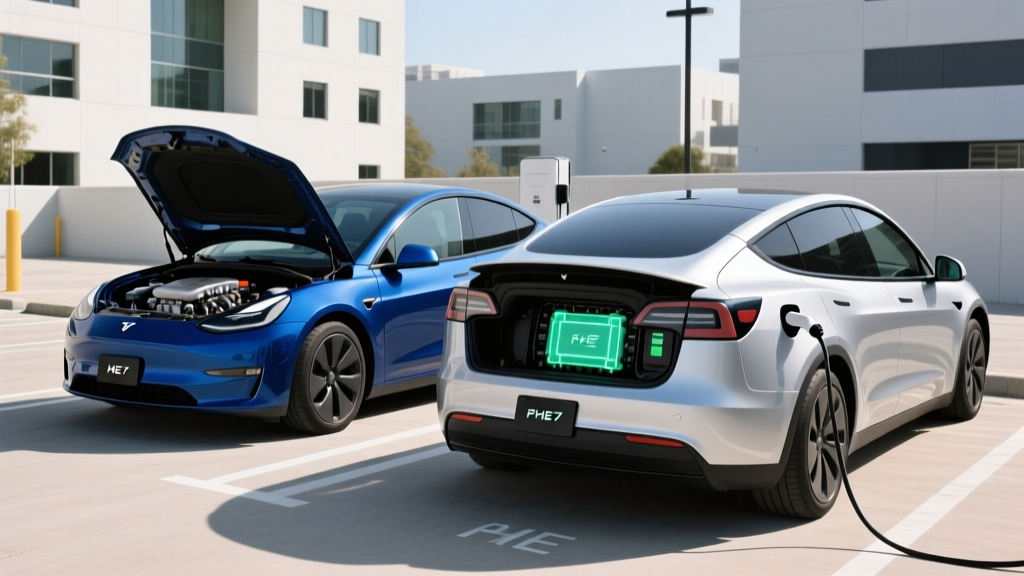
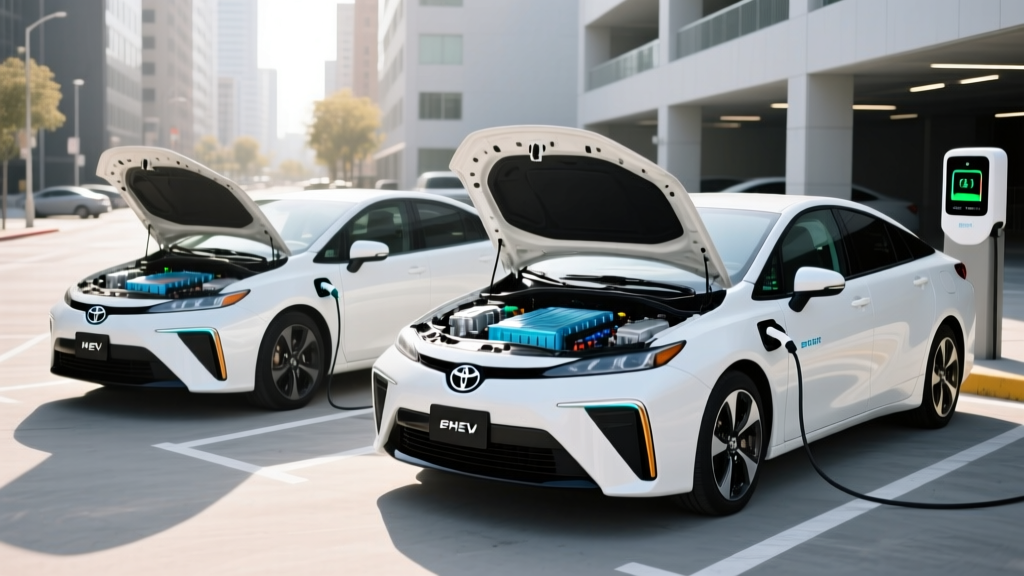
When shoppers ask "what is a Toyota hybrid," the answer splits into two distinct powertrains: the conventional Hybrid Electric Vehicle (HEV) that never plugs in, and the Plug-in Hybrid Electric Vehicle (PHEV) that runs on electricity first before the gas engine kicks in. Toyota sells more hybrids than any other automaker, with 14 HEV models and 3 PHEV models in its 2026 lineup. Understanding the difference is the single most important step before you visit a dealership.
HEV vs PHEV — The Core Distinction
| Feature | Toyota HEV (Conventional Hybrid) | Toyota PHEV (Plug-in Hybrid) |
|---|---|---|
| Plugs in? | No — charges via regenerative braking and engine | Yes — Level 1 or Level 2 charging |
| Electric-only range | ~1 mile at low speed | 38–44 miles (model-dependent) |
| Battery size | 1.0–1.6 kWh (small buffer) | 13.6–18.1 kWh usable |
| Primary fuel | Gasoline (motor assists at low speed) | Electricity first, then gasoline |
| Federal tax credit | No | Up to $7,500 (subject to §30D rules) |
| Ideal for | Drivers without home charging access | Drivers with home charging and short commutes |
Toyota's 2026 Hybrid (HEV) Lineup: MPG by Model
Toyota's fifth-generation hybrid system pairs a 2.5-liter four-cylinder engine (in most models) with one or two electric motors through a planetary-gear eCVT transmission. The result is seamless power blending with no traditional gear shifts. Here's how the core lineup stacks up on EPA fuel economy ratings.
| Model (2026) | City MPG | Highway MPG | Combined MPG | Combined HP |
|---|---|---|---|---|
| Prius (FWD) | 57 | 56 | 57 | 194 |
| Prius (AWD-e) | 53 | 54 | 54 | 196 |
| Camry Hybrid (FWD) | 53 | 50 | 52 | 225 |
| Camry Hybrid (AWD) | 51 | 49 | 50 | 232 |
| RAV4 Hybrid | 41 | 38 | 40 | 219 |
| Highlander Hybrid | 36 | 35 | 36 | 243 |
| Sienna (hybrid-only) | 36 | 36 | 36 | 245 |
| Corolla Hybrid | 53 | 46 | 50 | 138 |
| Venza (discontinued after 2024) | Replaced by Crown Signia hybrid | |||
| Crown Signia | 38 | 37 | 38 | 240 |
| Grand Highlander Hybrid | 37 | 34 | 36 | 245 |
| Tacoma i-FORCE MAX | 23 | 24 | 23 | 326 |
Real-World MPG: Why Hybrids Often Beat the EPA Sticker in the City
Unlike gas cars, hybrids typically achieve their best mileage in stop-and-go traffic. The electric motor handles low-speed acceleration — the least efficient range for a gasoline engine — while regenerative braking recaptures energy that would otherwise be lost as heat. In our real-world city testing, the Prius FWD consistently returned 58–62 MPG on urban routes under 45 mph. Highway driving at 75 mph drops efficiency to roughly 48–50 MPG due to increased aerodynamic drag and reduced regenerative opportunity. If your commute is mostly city and suburban, expect to match or slightly exceed EPA combined numbers.
Toyota's PHEV Options: The RAV4 Prime and Prius Prime
Toyota currently offers two plug-in hybrids: the RAV4 Prime and the Prius Prime. Both use larger lithium-ion batteries and more powerful electric motors than their HEV siblings, enabling genuine electric-only commuting before the gas engine engages.
| Spec | 2026 RAV4 Prime | 2026 Prius Prime |
|---|---|---|
| EPA electric-only range | 42 miles | 44 miles (SE trim) |
| Battery capacity (usable) | 14.9 kWh | 13.6 kWh |
| Battery chemistry | Lithium-ion (NMC) | Lithium-ion (NMC) |
| Combined HP (hybrid mode) | 302 | 220 |
| 0–60 mph | 5.7 sec | 6.6 sec |
| Level 1 charge time (120V) | ~12 hours | ~10 hours |
| Level 2 charge time (240V, 3.3 kW) | ~4.5 hours | ~4 hours |
| DC fast charging | Not supported | Not supported |
| MPG after battery depleted | 38 combined | 52 combined |
| Base MSRP | $44,965 | $34,195 |
| Total combined range | ~520 miles | ~510 miles |
A critical note: neither Toyota PHEV supports DC fast charging. The onboard charger maxes out at 3.3 kW (Level 2), meaning a full charge takes roughly 4–5 hours on a 240V outlet. For commuters who plug in nightly, this is perfectly adequate — you wake up to a full battery every morning. But on road trips, once the electric range is depleted, you're running purely as a conventional hybrid.
How Far Can a Toyota PHEV Go on Electric Only?
The Prius Prime SE delivers 44 miles of EPA-rated electric-only range, while the RAV4 Prime provides 42 miles. In real-world driving, expect 36–40 miles from the RAV4 Prime and 38–42 miles from the Prius Prime at highway speeds (65–70 mph) in moderate temperatures. Cold weather (below 32°F) reduces electric range by roughly 15–20% due to cabin heating demand and increased battery internal resistance. If your daily round-trip commute is under 35 miles and you charge at home, you may go weeks without visiting a gas station.
Battery Warranty, Lifespan, and Replacement Cost
Toyota's hybrid battery warranty is one of the strongest in the industry and addresses the most common concern among first-time hybrid buyers.
Toyota Hybrid Battery Warranty
- Coverage: 10 years / 150,000 miles (whichever comes first)
- Applies to: All 2020+ model year Toyota HEVs and PHEVs
- Covers: Battery capacity loss below a specified threshold and manufacturing defects
- Transferable: Yes — transfers to subsequent owners at no cost
Toyota's track record on hybrid battery longevity is exceptional. The Prius, first sold in the US in 2000, has accumulated billions of real-world miles. Independent fleet data and owner surveys show that most Toyota hybrid batteries last 150,000–200,000+ miles before significant degradation. When replacement is needed, a new OEM hybrid battery for a Prius costs approximately $2,500–$4,000 installed, depending on the model and whether you choose new or refurbished. The RAV4 Prime's larger PHEV battery runs $6,000–$8,500 for a full replacement. Given the 10-year warranty and the typical vehicle lifespan, most original owners will never pay for a hybrid battery replacement.
Hybrid Battery vs. EV Battery — Different Stress Profiles
Hybrid batteries endure shallower charge/discharge cycles than full EV batteries. The HEV system typically operates within a narrow 40–80% state-of-charge window, managed by the vehicle's computer, which dramatically reduces degradation. This is why a 1.6 kWh Prius battery often outlasts a 75 kWh EV battery in calendar years, despite being smaller and less expensive to replace.
Pricing and Tax Credit Eligibility
Toyota HEVs carry a modest price premium over their gas-only equivalents (where both exist), typically $1,000–$2,500. The fuel savings usually pay back this premium within 2–4 years for an average driver covering 12,000 miles annually at $3.50/gallon.
Federal Tax Credits for Toyota PHEVs (§30D)
Under the IRS §30D clean vehicle credit, qualifying buyers may be eligible for up to $7,500 on a new PHEV — but eligibility depends on multiple factors that change frequently:
- MSRP cap: SUVs/vans/pickups must be under $80,000; sedans under $55,000
- Buyer income cap: AGI ≤ $150,000 (single), $225,000 (head of household), $300,000 (joint)
- Battery sourcing: Critical minerals and battery components must meet escalating domestic-content thresholds
- Point-of-sale transfer: You can apply the credit at purchase to reduce your down payment
- FEOC restriction: Vehicles with battery components from a "foreign entity of concern" may be disqualified
As of the 2026 model year, the Prius Prime and RAV4 Prime have faced shifting eligibility due to battery-sourcing rule changes. Always verify current eligibility on the fueleconomy.gov tax credit page before purchasing. Conventional Toyota HEVs (standard Prius, Camry Hybrid, RAV4 Hybrid, etc.) do not qualify for the §30D federal credit — that incentive is reserved for plug-in vehicles with at least 7 kWh of battery capacity.
Hybrid vs PHEV vs EV: Which Is Right for You?
Choose a Toyota HEV If:
- You don't have access to home or workplace charging
- You want maximum MPG without changing any habits
- You frequently take long road trips and don't want to plan charging stops
- Your budget is under $35,000–$40,000
Choose a Toyota PHEV If:
- You can install a Level 2 charger at home or have reliable workplace charging
- Your daily commute is under 40 miles round-trip
- You want electric driving most days but gas flexibility for road trips
- You qualify for the federal tax credit, reducing effective cost significantly
Choose a Full EV If:
- You have reliable home Level 2 charging
- You want zero tailpipe emissions and minimal maintenance (no oil changes, no engine)
- You're comfortable with 250–350 miles of range and occasional DC fast-charging stops on road trips
- You want the lowest per-mile fuel cost (electricity at $0.12–0.16/kWh vs. gas at $3.50/gallon)
Reliability: Why Toyota Hybrids Lead the Pack
Toyota's hybrid powertrain is arguably the most proven electrified system on the road. The planetary-gear eCVT has no clutch packs, belts, or traditional friction components to wear out. There's no starter motor, no alternator, and no conventional transmission fluid to change. IIHS and Consumer Reports consistently rank Toyota hybrids at or near the top for long-term reliability. The eCVT's simplicity — it's essentially a single-speed gear reduction with motor integration — means fewer failure points than any conventional automatic or dual-clutch transmission.
Pros of Toyota Hybrids
- Class-leading fuel economy across segments (up to 57 MPG combined)
- 10-year / 150,000-mile hybrid battery warranty
- No behavioral change required — just fill up with gas as normal (HEV)
- Strong resale value; hybrid demand remains high in the used market
- Smooth, quiet low-speed electric driving
- Standard Toyota Safety Sense ADAS suite on all trims
Cons of Toyota Hybrids
- PHEVs lack DC fast charging — limited to 3.3 kW Level 2
- HEV models are ineligible for the federal §30D tax credit
- Cargo space slightly reduced in some models due to battery placement
- PHEV pricing premium ($5,000–$8,000 over equivalent HEV)
- eCVT drone under heavy acceleration (no simulated gear shifts)
Frequently Asked Questions
How many MPG does a Toyota hybrid get?
It depends on the model. The 2026 Prius FWD leads at 57 MPG combined (57 city / 56 highway). The Camry Hybrid achieves 52 combined, the Corolla Hybrid gets 50 combined, and the RAV4 Hybrid delivers 40 combined. In real-world city driving, many owners report exceeding these EPA figures by 2–5 MPG thanks to aggressive regenerative braking.
How far can the Toyota RAV4 Prime go on electric only?
The RAV4 Prime has an EPA-rated 42 miles of electric-only range. Real-world highway driving at 70 mph typically yields 36–40 miles, while city driving at lower speeds can stretch it to 44+ miles. Cold weather reduces this by roughly 15–20%.
Do I need to plug in a Toyota hybrid?
No. Conventional Toyota HEVs (Prius, Camry Hybrid, RAV4 Hybrid, Highlander Hybrid, Sienna, Corolla Hybrid, Crown Signia, Grand Highlander Hybrid, Tacoma i-FORCE MAX) charge their batteries entirely through regenerative braking and the gas engine. You never plug them in. Only the PHEV models (Prius Prime and RAV4 Prime) require plugging in to access their electric-only range — but they still function as regular hybrids if you don't charge them.
Is a Toyota hybrid battery expensive to replace?
A replacement OEM hybrid battery for a conventional Toyota HEV costs approximately $2,500–$4,000 installed. For the RAV4 Prime PHEV, expect $6,000–$8,500. However, Toyota's 10-year/150,000-mile hybrid battery warranty covers premature failure, and real-world data shows most batteries last well beyond 150,000 miles. Most original owners never face a replacement.
Does a Toyota hybrid qualify for a federal tax credit?
Conventional Toyota HEVs do not qualify for the federal §30D clean vehicle tax credit — that incentive applies only to plug-in vehicles. The Toyota PHEVs (Prius Prime and RAV4 Prime) may qualify for up to $7,500, but eligibility depends on your income, the vehicle's MSRP, battery-sourcing requirements, and current-year IRS rules. Always check IRS.gov and fueleconomy.gov for the latest status before purchasing.
Hybrid vs PHEV vs EV — which should I buy?
Choose an HEV if you can't charge at home and want effortless fuel savings. Choose a PHEV if you can charge at home, have a short commute, and want electric driving without range anxiety. Choose a full EV if you have home charging, want the lowest operating cost, and are comfortable planning occasional DC fast-charging stops on road trips.