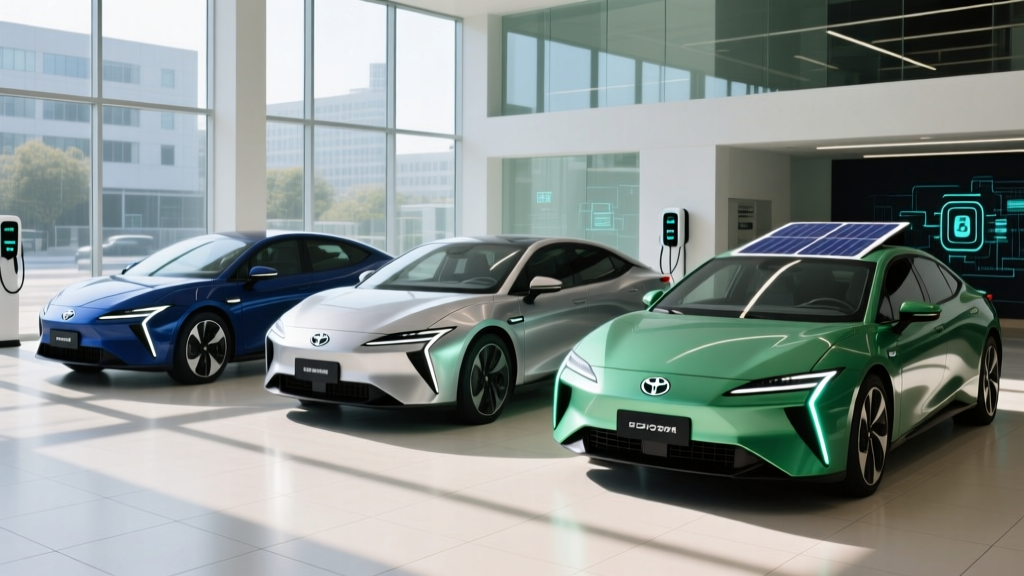
Toyota sells more hybrids than any other automaker, but "how much does a Toyota hybrid cost?" isn't a single-number answer. Between conventional hybrids (HEVs) that never plug in and plug-in hybrids (PHEVs) that offer electric-only driving, the 2026 Toyota lineup spans from the $29,000 Corolla Hybrid to the $48,000+ RAV4 Prime. This guide breaks down every current Toyota hybrid and PHEV by price, real-world fuel economy, powertrain specs, battery warranty, and federal tax credit eligibility — so you can calculate your actual cost of ownership before visiting a dealer.
HEV vs PHEV: Understanding Toyota's Two Hybrid Paths
Conventional Hybrid (HEV)
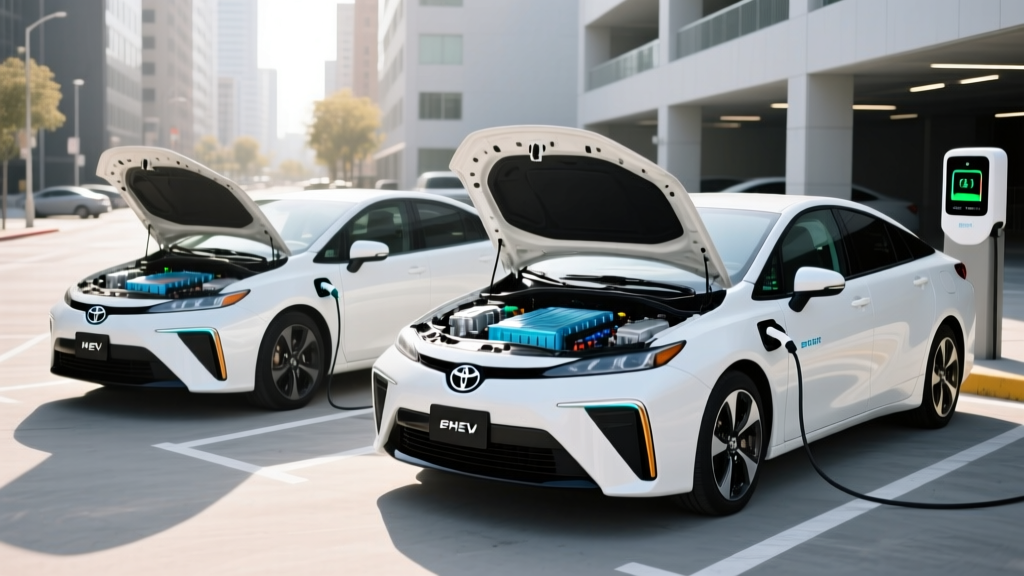
A Toyota HEV pairs a gasoline engine with one or more electric motors and a small battery (typically 1.0–2.0 kWh). The battery recharges through regenerative braking and the engine — you never plug it in. The electric motor assists during acceleration and enables brief low-speed electric-only movement, but the engine does the majority of the work. Think of it as a dramatically more efficient gas car.
Plug-In Hybrid (PHEV)
A Toyota PHEV (branded "Prime") uses a much larger battery (13.6–18.1 kWh usable) and a more powerful electric motor. You plug it in to charge — ideally overnight at home on a Level 2 charger — and get 30–42 miles of pure electric driving before the gas engine engages. Once the battery depletes, it operates exactly like a conventional hybrid. PHEVs are ideal if you have home charging and a short commute.
The distinction matters enormously for cost. HEVs have a lower purchase price and no charging infrastructure requirement, while PHEVs cost $5,000–$10,000 more upfront but can eliminate daily gasoline use for commuters with short drives.
2026 Toyota Hybrid & PHEV Lineup: Specs, MPG, and Pricing
| Model | Type | Combined HP | EPA MPG (City/Hwy/Combined) | PHEV EV Range | Battery (kWh) | Base MSRP |
|---|---|---|---|---|---|---|
| Corolla Hybrid | HEV | 138 hp | 50 / 43 / 47 | — | ~1.3 kWh | $24,225 |
| Camry Hybrid | HEV | 225 hp (AWD: 232 hp) | 51 / 44 / 48 (LE) | — | ~1.6 kWh | $29,995 |
| Prius | HEV | 194 hp (FWD) / 196 hp (AWD) | 57 / 56 / 57 (LE) | — | ~1.3 kWh | $29,445 |
| Prius Prime | PHEV | 220 hp | 52 MPG combined (hybrid mode) / 127 MPGe | 44 mi (SE) | 13.6 kWh usable | $34,395 |
| RAV4 Hybrid | HEV | 219 hp | 41 / 38 / 40 | — | ~1.6 kWh | $33,575 |
| RAV4 Prime | PHEV | 302 hp | 40 MPG combined / 94 MPGe | 42 mi | 18.1 kWh usable | $44,515 |
| Highlander Hybrid | HEV | 243 hp | 36 / 35 / 36 | — | ~1.9 kWh | $42,020 |
| Sienna | HEV | 245 hp | 36 / 36 / 36 | — | ~1.9 kWh | $39,085 |
| Venza | HEV | 219 hp | 40 / 37 / 39 | — | ~1.6 kWh | $36,420 |
| Crown | HEV | 236 hp (Hybrid MAX: 340 hp) | 41 / 38 / 40 | — | ~1.6 kWh | $42,345 |
| Grand Highlander Hybrid | HEV | 243 hp (MAX: 362 hp) | 36 / 34 / 35 | — | ~1.9 kWh | $45,860 |
Source: EPA fueleconomy.gov and Toyota Motor Corporation 2026 model-year specifications. MPG figures reflect the most efficient trim; higher trims with larger wheels may reduce MPG by 1–3 MPG combined.
Real-World MPG: What Toyota Hybrids Actually Deliver
EPA estimates are a starting point, but Toyota hybrids consistently outperform their stickers in city driving — and sometimes fall short on the highway. Here's why:
City driving favors hybrids. The electric motor handles low-speed acceleration, regenerative braking recaptures energy at every stoplight, and the engine shuts off during idle. Owners of the Camry Hybrid LE routinely report 52–55 MPG in mixed city driving, exceeding the EPA's 51 MPG city estimate. The Prius LE is similarly efficient, with real-world city figures often hitting 58–60 MPG in temperate climates.
Highway driving narrows the advantage. At sustained 70–80 MPH speeds, the engine does nearly all the work, and aerodynamic drag dominates. Expect the RAV4 Hybrid to deliver 35–37 MPG on the highway rather than its 38 MPG EPA estimate, especially with roof cargo or in headwinds. The Prius, with its teardrop shape, holds closer to sticker at highway speeds.
Cold weather penalizes all hybrids. Below 40°F, expect a 10–15% MPG reduction. The engine runs longer to reach operating temperature, cabin heating demands energy, and battery chemistry becomes less efficient. A Camry Hybrid rated at 48 MPG combined may return 40–42 MPG in January in Minnesota. This penalty is less severe than the 20–30% range loss seen in full EVs, but it's real.
PHEV Real-World Electric Range
The Prius Prime's EPA-rated 44 miles of electric-only range (SE trim) is achievable in mild weather at moderate speeds. However, highway driving at 75 MPH reduces that to roughly 32–36 miles. In freezing temperatures with cabin heat on, expect 25–30 miles before the engine kicks in. The RAV4 Prime's 42-mile rating follows a similar pattern: ~38 miles real-world in ideal conditions, ~28–32 miles in winter highway driving.
Toyota Hybrid Powertrain Details and Battery Specifications
Toyota's hybrid powertrains use a planetary gearset (the Hybrid Synergy Drive) to seamlessly blend engine and electric motor output. Here's what's under the hood:
HEV batteries: Toyota's conventional hybrids use small nickel-metal hydride (NiMH) or lithium-ion (Li-ion) batteries ranging from approximately 1.0 to 1.9 kWh. These are not designed for extended electric-only driving — they buffer energy for acceleration assist and regenerative capture. The small size keeps weight and cost down.
PHEV batteries: The Prius Prime uses a 13.6 kWh lithium-ion battery pack, while the RAV4 Prime carries an 18.1 kWh pack. Both use lithium-ion chemistry for higher energy density. Neither Toyota PHEV supports DC fast charging — they're limited to Level 2 AC charging (up to 6.6 kW onboard charger), meaning a full charge takes approximately 2–4 hours on a 240V home charger. This is a deliberate engineering choice: Toyota prioritizes daily home charging over road-trip DC capability.
Charging times for PHEVs:
- Prius Prime on Level 2 (240V, 6.6 kW): ~2.0 hours from empty to full
- Prius Prime on Level 1 (120V, ~1.4 kW): ~9.5 hours from empty to full
- RAV4 Prime on Level 2 (240V, 6.6 kW): ~2.5 hours from empty to full
- RAV4 Prime on Level 1 (120V, ~1.4 kW): ~12 hours from empty to full
For PHEV owners, a Level 2 home charger isn't strictly necessary (Level 1 overnight works for most commutes), but it provides faster turnaround if you make multiple short trips per day.
Battery Warranty, Reliability, and Replacement Cost
Toyota's hybrid battery warranty is among the strongest in the industry and addresses the single biggest concern prospective hybrid buyers raise:
Toyota Hybrid Battery Warranty
Coverage: 10 years or 150,000 miles (whichever comes first) for all 2026 Toyota hybrid and PHEV battery packs. This applies nationwide, including in states that previously had different California Air Resources Board (CARB) requirements — Toyota unified the warranty at the higher tier starting with 2020 model-year vehicles.
What's covered: Battery capacity loss below a functional threshold, cell failures, and hybrid system components including the inverter and electric motors.
Real-world longevity data: Toyota hybrids have been on U.S. roads since the 2001 Prius. Data from fleet operators, taxi services, and long-term owners consistently shows Toyota hybrid batteries lasting 150,000–200,000+ miles before significant degradation. Failures before 100,000 miles are uncommon. The NiMH batteries in older models have proven remarkably durable, and the newer lithium-ion packs in the Prius Prime and RAV4 Prime are expected to match or exceed that track record.
Replacement cost if out of warranty:
- Conventional hybrid (HEV) battery replacement: $2,000–$4,000 depending on model, including labor. Third-party remanufactured batteries are available for $1,500–$2,500.
- PHEV battery replacement (Prius Prime / RAV4 Prime): $5,000–$8,000+ due to the larger pack size. Independent shop options may reduce this to $4,000–$6,000.
For context, most Toyota hybrid owners will never pay for a battery replacement. The 10-year/150,000-mile warranty covers the vast majority of ownership periods, and the batteries routinely outlast the vehicles themselves.
Federal Tax Credits: Which Toyota Hybrids Qualify?
This is where the HEV vs. PHEV distinction becomes a financial question:
Conventional Toyota hybrids (HEVs) do NOT qualify for the federal §30D Clean Vehicle Credit. The credit applies only to plug-in vehicles (BEVs and PHEVs) with a battery capacity of at least 7 kWh. No Toyota HEV — not the Prius, Camry Hybrid, RAV4 Hybrid, or any other — is eligible.
Toyota PHEVs (Prime models) may qualify for up to $3,750 under §30D, but with significant caveats:
- Credit amount: The base credit for PHEVs with ≥7 kWh batteries starts at $3,750. The full $7,500 requires meeting both critical minerals and battery component sourcing requirements that Toyota PHEVs have not consistently satisfied.
- MSRP caps: The vehicle MSRP must not exceed $55,000 for sedans (Prius Prime qualifies) or $80,000 for SUVs/vans/pickups (RAV4 Prime qualifies).
- Buyer income limits: Modified adjusted gross income must not exceed $150,000 (single), $225,000 (head of household), or $300,000 (married filing jointly).
- Point-of-sale transfer: As of 2024, eligible buyers can transfer the credit to the dealer at purchase, reducing the purchase price directly rather than waiting for a tax refund.
- Assembly requirement: The vehicle must undergo final assembly in North America. Both the Prius Prime and RAV4 Prime have faced availability challenges here — verify VIN eligibility at fueleconomy.gov before purchasing.
Critical note: Tax credit eligibility changes frequently due to battery sourcing rule updates. Always verify current eligibility on the IRS Clean Vehicle Credit page and consult a tax professional before relying on the credit in your purchase decision.
Total Toyota Hybrid Cost of Ownership: 5-Year Breakdown
| Cost Factor | Corolla Hybrid (HEV) | RAV4 Hybrid (HEV) | RAV4 Prime (PHEV) |
|---|---|---|---|
| Base MSRP | $24,225 | $33,575 | $44,515 |
| Estimated Federal Tax Credit | $0 | $0 | Up to $3,750* |
| 5-Year Fuel Cost (15K mi/yr) | ~$4,800 | ~$5,600 | ~$3,200 (mixed EV/gas) |
| 5-Year Insurance (avg.) | ~$7,500 | ~$9,000 | ~$10,200 |
| 5-Year Maintenance | ~$2,500 | ~$2,800 | ~$2,600 |
| Home Charger Install (PHEV) | $0 | $0 | ~$500–$1,200 |
| Est. 5-Year Net Cost | ~$39,025 | ~$50,975 | ~$57,065 |
*Tax credit assumes eligibility is met. Fuel costs assume $3.50/gal gasoline and $0.14/kWh electricity. Insurance and maintenance are national averages — your rates will vary. Source: EPA fuel cost calculator and industry averages.
The RAV4 Prime's higher sticker is partially offset by dramatically lower fuel costs if you charge daily and commute within its 42-mile electric range. A 20-mile round-trip commuter who charges every night may use gasoline only on weekend road trips, cutting annual fuel spend to $400–$600 versus $1,200+ for the RAV4 Hybrid.
Toyota Hybrid vs. PHEV vs. Full EV: Which Is Right for You?
Choose a Toyota HEV if:
- You cannot install a home charger (apartment, street parking, no garage)
- You want the lowest possible purchase price
- You drive a mix of city and highway without predictable daily patterns
- You want zero behavior change — just drive it like a gas car
- Your annual mileage is moderate (10,000–15,000 miles)
Choose a Toyota PHEV (Prime) if:
- You have reliable home or workplace Level 2 charging
- Your daily commute is under 40 miles round-trip
- You want electric daily driving but need gas flexibility for road trips
- You want to reduce (not eliminate) gasoline consumption
- You qualify for the §30D credit, narrowing the price gap
Choose a Full EV (BEV) if:
- You have home charging and your daily driving is under 250 miles
- You want zero tailpipe emissions and minimal maintenance
- You want the lowest per-mile fuel cost and qualify for the full $7,500 credit on eligible BEVs
- You're comfortable planning road trips around DC fast charging stops
Toyota's hybrids are the pragmatic choice for buyers who want excellent fuel economy without infrastructure dependence. The PHEVs bridge the gap for those ready to plug in part-time. If you're fully ready to commit to electric driving, Toyota's bZ4X BEV is an option, though competitors like the Hyundai Ioniq 5 and Tesla Model Y currently lead in charging speed and range.
Frequently Asked Questions
How many MPG does a Toyota hybrid get in real-world driving?
Most Toyota HEVs match or slightly exceed their EPA combined rating in mixed city driving. The Prius LE (57 MPG EPA combined) commonly achieves 55–60 MPG in real-world city use. Highway-only driving at 75+ MPH typically drops MPG by 5–10% below the EPA highway estimate. Cold weather (below 40°F) reduces efficiency by 10–15% across all Toyota hybrids.
How far can the Toyota Prius Prime and RAV4 Prime go on electric only?
The 2026 Prius Prime SE achieves 44 miles EPA-rated on electricity alone; the XSE trim drops to 39 miles due to larger wheels and added weight. The RAV4 Prime delivers 42 miles EPA-rated. In real-world conditions, expect 35–42 miles for the Prius Prime and 32–40 miles for the RAV4 Prime in mild weather, with winter highway driving reducing those figures to 25–32 miles.
Do Toyota hybrids need to be plugged in?
No. Conventional Toyota hybrids (HEVs) — including the Prius, Camry Hybrid, RAV4 Hybrid, Highlander Hybrid, and Sienna — never plug in. They recharge their small batteries through regenerative braking and the gasoline engine. Only the "Prime" PHEV models (Prius Prime, RAV4 Prime) require plug-in charging to access their electric-only range. If you don't plug in a Prime, it simply operates as a conventional hybrid with slightly reduced efficiency due to the heavier battery.
Is the Toyota hybrid battery reliable, and what does replacement cost?
Toyota hybrid batteries carry a 10-year / 150,000-mile warranty and routinely last 150,000–200,000+ miles based on two decades of real-world data. Out-of-warranty replacement costs $2,000–$4,000 for conventional hybrids and $5,000–$8,000 for PHEVs. Most owners will never face this expense within their ownership period.
Does any Toyota hybrid qualify for a federal tax credit?
Only Toyota PHEVs (Prius Prime and RAV4 Prime) are potentially eligible for the federal §30D Clean Vehicle Credit, and the amount is typically up to $3,750 rather than the full $7,500, depending on battery sourcing compliance. Conventional Toyota hybrids do not qualify for any federal purchase credit. Always verify eligibility via the IRS and fueleconomy.gov before purchasing, as sourcing rules change frequently.
How does Toyota hybrid maintenance cost compare to a gas car?
Toyota hybrids generally have lower maintenance costs than conventional gas vehicles. There's no starter motor to replace, regenerative braking extends brake pad life (60,000–100,000 miles is common), and the hybrid system has fewer wear items than a traditional transmission. Toyota recommends the same oil change intervals as gas models. Expect to save $200–$400 over five years on brake and drivetrain maintenance.