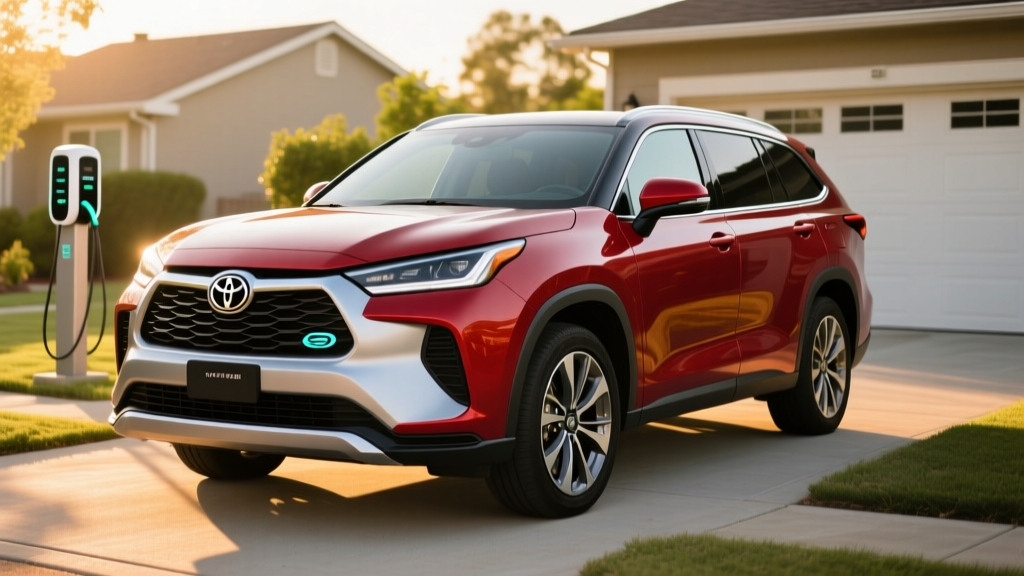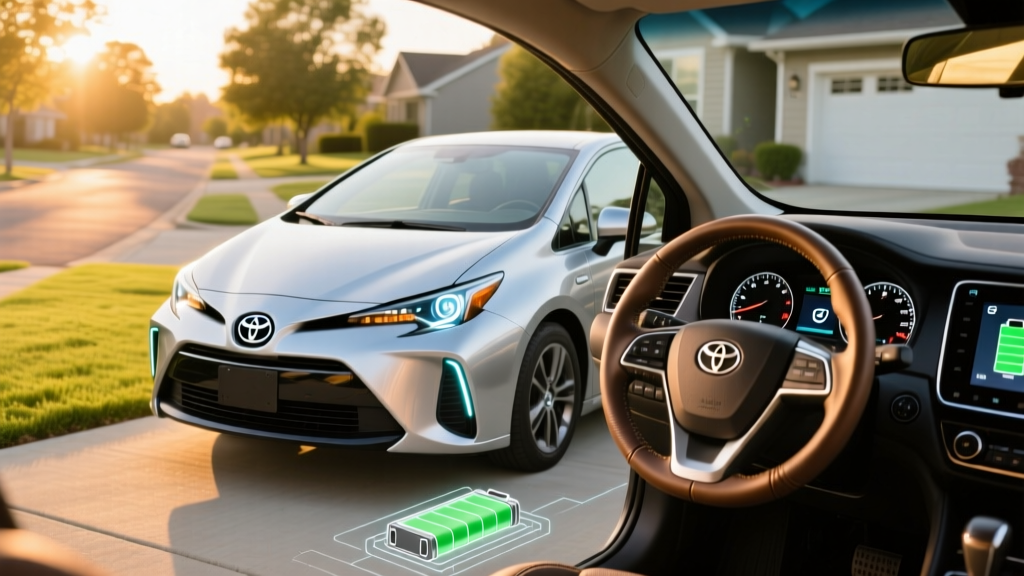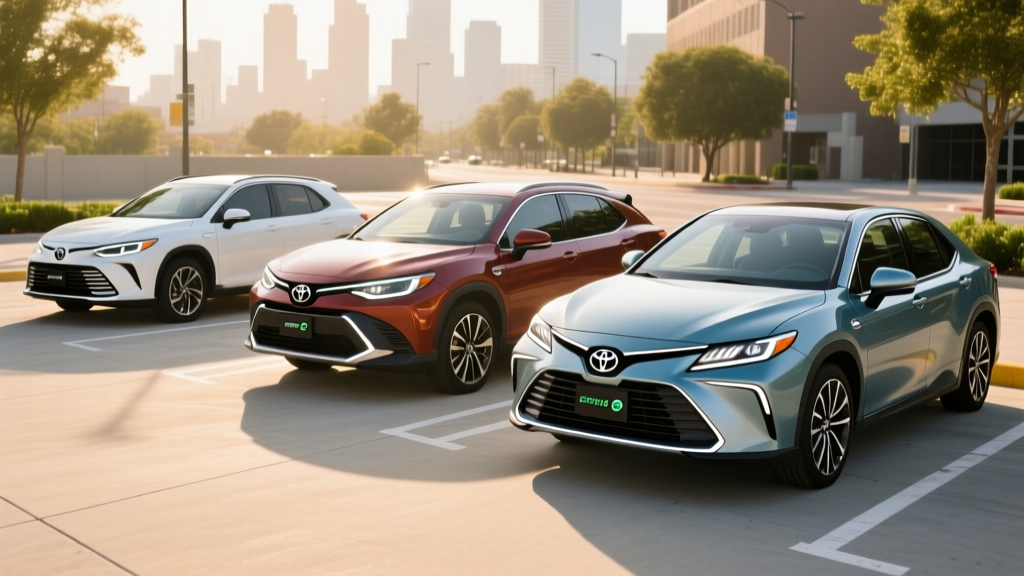
If you search for a Toyota hybrid car in 2026, you're not choosing between one or two models — you're navigating a lineup that spans a compact hatchback, a midsize sedan, two SUVs, and a minivan, with both conventional hybrid (HEV) and plug-in hybrid (PHEV) variants. Toyota has effectively made hybrid powertrains standard across most of its portfolio, which is both a strength (proven reliability, strong MPG) and a source of confusion (which one actually fits your commute, budget, and charging situation?).
This guide cuts through the brochure. We'll break down every current Toyota hybrid by EPA fuel economy, real-world efficiency, powertrain specs, battery warranty, pricing, and tax credit eligibility — then help you decide whether an HEV, a PHEV, or a full battery-electric vehicle (BEV) is the right move.
HEV vs PHEV: What Toyota Actually Offers
Before we get into specific models, the distinction matters because it determines whether you plug in, how far you can drive on electricity alone, and whether you qualify for federal tax incentives.
| Feature | Conventional Hybrid (HEV) | Plug-In Hybrid (PHEV) |
|---|---|---|
| Plug in to charge? | No — regenerates via braking and engine | Yes — Level 1/Level 2 AC charging |
| Electric-only range | Typically under 1 mile at low speed | 25–45 miles (model dependent) |
| Battery size | ~1.0–1.6 kWh (small buffer) | ~13–18 kWh usable |
| DC fast charging? | No | Generally no (Toyota PHEVs use AC only) |
| Federal tax credit (§30D) | Not eligible | Up to $3,750–$7,500 (sourcing/income rules apply) |
| Best for | No home charging access; want simple MPG gains | Home charging available; short commute on electric |
Toyota's current HEV models include the Prius, Camry Hybrid, RAV4 Hybrid, Highlander Hybrid, Sienna, Corolla Hybrid, Crown, and Venza. The PHEV options are the Prius Prime and the RAV4 Prime. Let's examine each with hard numbers.
Fuel Economy: EPA Ratings and Real-World MPG
Toyota's hybrids are among the most efficient vehicles on the road, but the EPA sticker doesn't always tell the full story. Hybrids tend to exceed their EPA city rating in stop-and-go traffic (more regen braking = more electric assist) but may fall slightly short on sustained highway drives where the gasoline engine carries more of the load.
| Model (2025–2026 MY) | City MPG | Highway MPG | Combined MPG | Real-World Expectation |
|---|---|---|---|---|
| Prius (LE FWD) | 57 | 56 | 57 | 52–60 (city-favors high end) |
| Prius (XLE/LTD AWD) | 49 | 50 | 49 | 45–52 |
| Prius Prime (PHEV, EV mode) | 127 MPGe combined; ~44 mi electric-only range | 38–46 mi EV; 48–52 MPG hybrid mode | ||
| Camry Hybrid (LE FWD) | 53 | 50 | 51 | 47–55 |
| Camry Hybrid (AWD) | 51 | 49 | 50 | 46–53 |
| RAV4 Hybrid (AWD) | 41 | 38 | 39 | 36–42 |
| RAV4 Prime (PHEV, EV mode) | 94 MPGe combined; ~42 mi electric-only range | 36–44 mi EV; 36–40 MPG hybrid mode | ||
| Highlander Hybrid (AWD) | 35 | 35 | 35 | 31–37 |
| Sienna (HEV, FWD) | 36 | 36 | 36 | 32–38 |
| Corolla Hybrid (AWD) | 47 | 41 | 44 | 40–48 |
Source: fueleconomy.gov — EPA official estimates. Real-world figures based on aggregated owner reports and independent testing; your results will vary with climate, terrain, and driving style.
Powertrain Specs: Horsepower, Engines, and Motors
Toyota's fifth-generation hybrid system pairs a naturally aspirated Atkinson-cycle four-cylinder engine with one or two electric motor-generators and a lithium-ion battery pack. The result is seamless torque fill at low RPM and regenerative energy capture during deceleration.
| Model | Combined HP | Engine | Motor Config | 0–60 mph | Drivetrain |
|---|---|---|---|---|---|
| Prius | 194 (FWD) / 196 (AWD) | 2.0L I4 | 2 motor-generators + rear motor (AWD) | 7.2s (FWD) | FWD or AWD |
| Prius Prime | 220 | 2.0L I4 | 2 motor-generators | 6.6s | FWD |
| Camry Hybrid | 225 (FWD) / 232 (AWD) | 2.5L I4 | 2 motor-generators + rear motor (AWD) | 7.0s (FWD) | FWD or AWD |
| RAV4 Hybrid | 219 | 2.5L I4 | 2 motor-generators + rear motor | 7.4s | AWD (standard) |
| RAV4 Prime | 302 | 2.5L I4 | Higher-output motor-generators + rear motor | 5.7s | AWD (standard) |
| Highlander Hybrid | 243 | 2.5L I4 | 2 motor-generators + rear motor | 7.8s | AWD (standard) |
| Sienna | 245 | 2.5L I4 | 2 motor-generators + rear motor (AWD) | 7.5s | FWD or AWD |
The standout is the RAV4 Prime: at 302 combined horsepower and a 5.7-second 0–60, it's the quickest vehicle in Toyota's non-sports-car lineup. The Prius Prime has also been transformed — the current generation shed its econobox reputation with a 220-hp output and a sub-7-second sprint.
PHEV Deep Dive: Electric-Only Range, Charging, and Battery
If you're considering the Prius Prime or RAV4 Prime, here's what the ownership experience actually looks like.
Prius Prime
- Battery: 13.6 kWh usable (lithium-ion, NMC chemistry)
- EPA electric-only range: 44 miles (SE trim); 40 miles (XSE/XS trim due to larger wheels)
- Total combined range: ~460+ miles (EV + gasoline tank)
- Level 1 charging (120V, 12A): ~11 hours from empty
- Level 2 charging (240V, 32A): ~4 hours from empty
- DC fast charging: Not supported
RAV4 Prime
- Battery: 18.1 kWh usable (lithium-ion, NMC chemistry)
- EPA electric-only range: 42 miles
- Total combined range: ~600 miles
- Level 1 charging (120V): ~12 hours
- Level 2 charging (240V, 16A): ~4.5 hours; (240V, 32A): ~2.5 hours with upgraded onboard charger
- DC fast charging: Not supported
Practical reality: For commutes under 40 miles round-trip, a RAV4 Prime or Prius Prime owner who plugs in nightly may use gasoline only on weekend road trips. Expect to visit a gas station once every 4–8 weeks in that scenario. However, in cold weather (below 32°F / 0°C), electric-only range drops 15–25% due to cabin heating demands and reduced battery efficiency — plan for ~30–35 miles of EV range in winter for the RAV4 Prime.
Pricing and Tax Credit Eligibility
Here's where Toyota's lineup gets complicated from a buyer's perspective. Federal tax credit rules under IRS §30D have strict battery sourcing, critical mineral, MSRP, and buyer income requirements.
| Model | Base MSRP (approx.) | Federal Tax Credit (§30D) | Notes |
|---|---|---|---|
| Corolla Hybrid | ~$24,000 | Not eligible (HEV) | — |
| Prius | ~$29,000 | Not eligible (HEV) | — |
| Prius Prime | ~$34,000 | Up to $3,750 | Meets MSRP cap; battery sourcing may limit to partial credit; income caps apply ($150K single / $300K joint) |
| Camry Hybrid | ~$30,000 | Not eligible (HEV) | — |
| RAV4 Hybrid | ~$33,000 | Not eligible (HEV) | — |
| RAV4 Prime | ~$44,500 | Up to $3,750 | Under $80K SUV MSRP cap; partial credit likely due to battery sourcing; income caps apply |
| Highlander Hybrid | ~$42,000 | Not eligible (HEV) | — |
| Sienna | ~$39,000 | Not eligible (HEV) | — |
Key §30D caveats for 2026:
- Only PHEVs (Prius Prime, RAV4 Prime) qualify — conventional HEVs do not.
- Credit amount depends on battery component and critical mineral sourcing; many Toyota PHEVs qualify for the $3,750 half-credit rather than the full $7,500.
- Buyer income caps: $150,000 single / $225,000 head of household / $300,000 joint filers.
- MSRP caps: $55,000 for sedans; $80,000 for SUVs/pickups/vans.
- Point-of-sale transfer is available — the dealer applies the credit as a down-payment reduction.
- Rules can change; verify current eligibility at fueleconomy.gov before purchase.
Battery Warranty, Reliability, and Replacement Cost
This is the single biggest concern for hybrid buyers, and it's where Toyota has the strongest track record in the industry. The Prius has been in production since 1997 (Japan) and 2000 (US), giving us over two decades of real-world battery longevity data.
| Coverage | Term |
|---|---|
| Hybrid battery warranty | 10 years / 150,000 miles (whichever comes first) |
| Hybrid system components (inverter, motor-generators) | 8 years / 100,000 miles |
| Basic vehicle warranty | 3 years / 36,000 miles |
| Powertrain warranty | 5 years / 60,000 miles |
Real-world battery lifespan: Data from fleet operators, taxi services, and long-term owners consistently shows Toyota hybrid batteries lasting 150,000–200,000+ miles before significant degradation. It's common to see 15-year-old Priuses still on their original battery. The lithium-ion packs in newer models (5th-gen system) are expected to perform at least as well as the older nickel-metal hydride packs.
Replacement cost if out of warranty:
- Prius / Prius Prime: $2,500–$4,000 (OEM replacement)
- Camry Hybrid: $3,000–$4,500
- RAV4 Hybrid / Prime: $3,500–$5,500
- Highlander / Sienna: $4,000–$6,000
Third-party refurbishment shops offer reconditioned batteries for 40–60% less than OEM, though warranty coverage varies. For most buyers planning to own the vehicle within the 10-year/150,000-mile window, battery replacement cost is a non-issue.
Who Should Buy a Toyota Hybrid vs. a Full EV?
Toyota's hybrid lineup is excellent — but it isn't the right answer for everyone. Here's a practical decision framework:
Choose a Toyota HEV (Prius, Camry Hybrid, RAV4 Hybrid, Sienna) if:
- You don't have reliable access to home or workplace charging.
- You want maximum MPG with zero behavior change — no plugging in, no route planning.
- You regularly take long road trips and don't want to plan around DC fast chargers.
- You live in an area with limited public charging infrastructure.
- Upfront cost matters — HEVs are typically $3,000–$8,000 less than comparable BEVs.
Choose a Toyota PHEV (Prius Prime, RAV4 Prime) if:
- You have Level 2 (or at least Level 1) charging at home.
- Your daily commute is under 40 miles round-trip (you'll rarely use gas on weekdays).
- You want EV-like daily driving with gasoline backup for road trips.
- You want to capture some federal tax credit (up to $3,750).
Choose a full BEV (Tesla Model Y, Hyundai Ioniq 5, etc.) instead if:
- You have reliable home Level 2 charging AND your daily drive is under 250 miles.
- You want the lowest per-mile energy cost (electricity is typically $0.04–$0.06/mile vs. $0.10–$0.14/mile for a 40-MPG hybrid on $3.50/gal gas).
- You want to eliminate oil changes and engine maintenance entirely.
- You qualify for the full $7,500 federal tax credit on a qualifying BEV.
Pros and Cons of the Toyota Hybrid Lineup
Pros
- Best-in-class reliability and proven battery longevity (10yr/150K mi warranty)
- Exceptional city MPG — Prius LE at 57 combined is the most efficient non-PHEV on the market
- RAV4 Prime's 302 HP and 42-mi EV range make it one of the most versatile PHEVs available
- Standard AWD on most SUV hybrids (RAV4, Highlander, RAV4 Prime)
- No charging infrastructure required for HEVs — works for apartment dwellers and street parkers
- Strong resale value; Toyota hybrids hold value better than most competitors
Cons
- No DC fast charging on PHEVs — Level 2 only, limiting on-the-go electric replenishment
- PHEV tax credit is partial ($3,750 vs. $7,500 for qualifying BEVs) due to battery sourcing rules
- RAV4 Prime has limited dealer availability; markups of $3,000–$8,000 over MSRP remain common
- Highlander Hybrid and Sienna MPG (35–36 combined) is good for the class but trails smaller models significantly
- Toyota's infotainment and driver-assist tech trails Hyundai/Kia and Tesla in interface responsiveness
- No fully electric Toyota SUV currently on sale in the US (bZ4X has limited range and availability)
Frequently Asked Questions
How many MPG does a Toyota hybrid car get?
It depends on the model. The Prius LE leads the lineup at 57 MPG combined (57 city / 56 highway). The Camry Hybrid achieves 51 combined, the RAV4 Hybrid gets 39 combined, and the three-row Highlander Hybrid delivers 35 combined. In real-world city driving with frequent stops, many owners report exceeding EPA estimates by 2–5 MPG thanks to aggressive regenerative braking. Highway-only driving at 75+ mph may drop 3–5 MPG below the sticker.
How far can the Toyota PHEV models go on electric only?
The Prius Prime achieves an EPA-rated 44 miles of electric-only range (SE trim) or 40 miles (XSE/XS). The RAV4 Prime delivers 42 miles of EV range. In cold weather (below freezing), expect a 15–25% reduction — roughly 33–37 miles for the Prius Prime and 30–35 miles for the RAV4 Prime. Once the battery depletes, both models seamlessly switch to hybrid mode with no driver intervention needed.
Are Toyota hybrid batteries reliable, and what does replacement cost?
Toyota's hybrid battery track record is the strongest in the industry. Real-world data shows most batteries lasting 150,000–200,000+ miles. Toyota backs the hybrid battery with a 10-year/150,000-mile warranty. If replacement is needed out of warranty, expect $2,500–$6,000 depending on the model (OEM). Third-party reconditioned options are available for less.
Does a Toyota hybrid qualify for a federal tax credit?
Only Toyota's PHEV models — the Prius Prime and RAV4 Prime — are eligible for the federal §30D clean vehicle tax credit, and the amount is typically $3,750 (not the full $7,500) due to battery component sourcing requirements. Conventional Toyota hybrids (Prius, Camry Hybrid, RAV4 Hybrid, Sienna, Highlander Hybrid) do not qualify for any federal tax credit. Always verify current eligibility at fueleconomy.gov and consult a tax professional, as income caps ($150K single / $300K joint) and MSRP limits apply.
Do I need to plug in a Toyota hybrid?
No — unless you choose a Prime (PHEV) model. Conventional Toyota hybrids (HEV) never need to be plugged in. They charge their small battery through regenerative braking and the gasoline engine. You simply fill up at a gas station as normal. The Prime models benefit from being plugged in (to maximize electric-only range) but will still operate perfectly as a standard hybrid if you never plug them in.
Toyota hybrid vs. full EV — which should I choose?
If you lack home charging access, drive more than 250 miles daily, or live in a charging-desert region, a Toyota HEV is the pragmatic choice — zero infrastructure needed, 35–57 MPG. If you have home charging and a sub-40-mile commute, a PHEV like the RAV4 Prime gives you daily electric driving with gasoline flexibility. If you have home charging, a manageable commute, and want the lowest cost per mile plus the full $7,500 tax credit, a full BEV may be the better financial play over 5+ years of ownership.