Quick Verdict: The Family-Hauler Sweet Spot
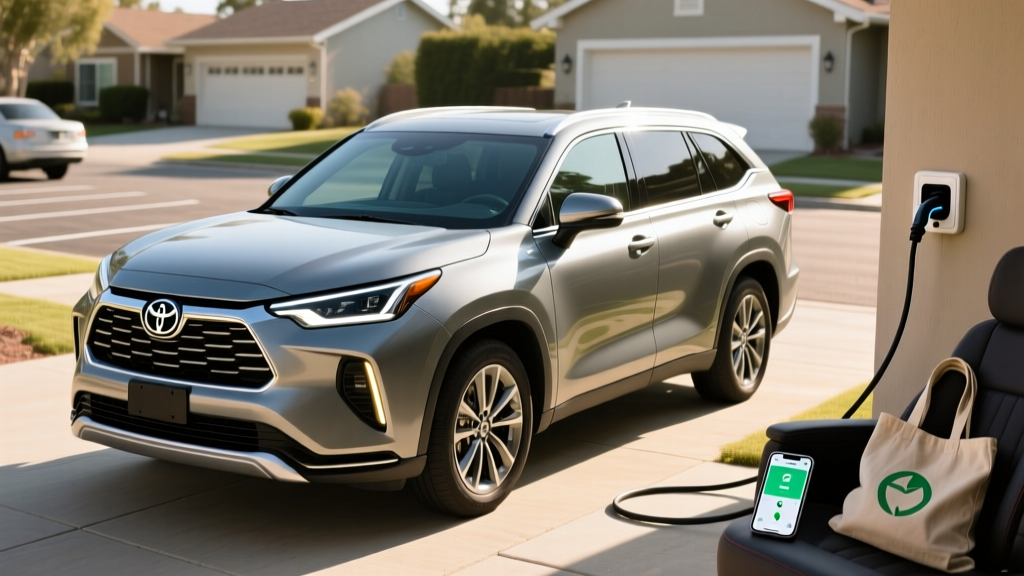
The 2026 Toyota Highlander Hybrid XLE occupies a narrow but compelling lane: three-row SUV practicality with fuel economy that shames compact sedans. It's a conventional hybrid (HEV), meaning no plug, no range anxiety, and no behavioral change required — you just drive it and it sips fuel. With an EPA-rated 35 MPG combined and a starting MSRP around $45,000, the XLE trim hits the value sweet spot in Toyota's hybrid SUV lineup, bundling the most-used comfort and tech features without stepping into the premium pricing of Limited or Platinum trims.
But spec sheets don't tell the whole story. This guide breaks down real-world fuel economy, the hybrid powertrain's strengths and limitations, battery longevity, total cost of ownership, and whether the Highlander Hybrid XLE is the right choice versus a plug-in hybrid (PHEV) or full battery-electric vehicle (BEV).
EPA Fuel Economy vs. Real-World MPG
The 2026 Highlander Hybrid carries over Toyota's proven 2.5-liter four-cylinder hybrid system. All-wheel drive (AWD) is standard on the XLE — Toyota dropped the front-wheel-drive hybrid option several model years ago, simplifying the lineup but slightly reducing peak efficiency compared to the old FWD variant.
| Metric | MPG |
|---|---|
| City | 35 |
| Highway | 35 |
| Combined | 35 |
| Fuel Tank Capacity | 17.9 gallons |
| Total Driving Range (EPA est.) | ~626 miles |
Source: EPA / fueleconomy.gov
Hybrid Powertrain: What's Under the Hood
The Highlander Hybrid uses Toyota's fourth-generation hybrid system (THS IV), pairing a naturally aspirated 2.5L inline-four engine with two motor-generators at the front axle and a third electric motor powering the rear axle for electronic AWD (eAWD). There's no mechanical driveshaft connecting front and rear — the rear motor engages independently when traction is needed.
| Specification | Value |
|---|---|
| Engine | 2.5L 4-cylinder Atkinson-cycle |
| Combined Net Horsepower | 243 hp |
| Front Motor Output | 134 hp (100 kW) |
| Rear Motor Output | 54 hp (40 kW) |
| Hybrid Battery Type | Nickel-Metal Hydride (NiMH), ~1.6 kWh |
| Transmission | eCVT (planetary gearset, no fixed gears) |
| Drivetrain | Electronic AWD (eAWD) |
| 0–60 MPH (est.) | ~7.9 seconds |
| Towing Capacity | 3,500 lbs |
The 243 combined horsepower is adequate for family hauling but won't win any stoplight sprints. Highway merging requires planning rather than confidence. The eCVT is smooth — there are no gear shifts because there are no gears — but it produces the characteristic "rubber-band" engine drone under hard acceleration. Most owners barely notice it in daily driving.
HEV vs. PHEV: Which Highlander Is Right?
Toyota does not currently offer a plug-in hybrid (PHEV) version of the Highlander in the US market. The RAV4 Prime (a PHEV) is the closest Toyota plug-in SUV, but it's a two-row compact. If you want three rows and a plug, you'd need to look at competitors like the Kia Sorento PHEV or Mazda CX-90 PHEV.
| Factor | Highlander Hybrid (HEV) | Typical 3-Row PHEV |
|---|---|---|
| Plug-in Required? | No — self-charging via engine + regen | Yes — for EV range benefit |
| Electric-Only Range | ~1 mile at low speed | 25–35 miles typical |
| Battery Size | ~1.6 kWh (NiMH) | 13–18 kWh (NMC lithium-ion) |
| Fuel Economy (gas mode) | 35 MPG combined | 25–30 MPG combined (after battery depleted) |
| MSRP Range | $42,000–$53,000 | $50,000–$62,000 |
| Federal Tax Credit | None | Up to $7,500 (if eligible under §30D) |
The math is straightforward: if you have access to Level 2 home charging and your daily round-trip commute is under 30 miles, a PHEV can eliminate most gas consumption on weekdays while retaining road-trip range. But if you lack home charging, drive mostly highway miles, or want the lowest upfront cost, the Highlander Hybrid HEV delivers consistent efficiency with zero infrastructure requirements.
Pricing, Trims, and Tax Credit Eligibility
The 2026 Highlander Hybrid XLE starts at approximately $45,170 MSRP (including destination charge). The XLE sits in the middle of the Hybrid trim stack:
- LE Hybrid: ~$42,170 — cloth seats, basic 8-inch touchscreen, 18-inch wheels
- XLE Hybrid: ~$45,170 — SofTex synthetic leather, heated front seats, power liftgate, wireless CarPlay/Android Auto, 20-inch wheels
- Limited Hybrid: ~$49,170 — genuine leather, ventilated front seats, 12.3-inch touchscreen, JBL audio
- Platinum Hybrid: ~$53,000 — panoramic roof, head-up display, 360-degree camera
Battery Warranty, Lifespan, and Replacement Cost
Hybrid battery anxiety is the single biggest concern prospective buyers raise — and it's largely overstated for modern Toyotas. The Highlander Hybrid's NiMH battery pack is small (~1.6 kWh), operates within a conservative state-of-charge window (roughly 40–80%), and never sees the deep discharge cycles that stress larger EV batteries.
- Hybrid Battery: 10 years / 150,000 miles (whichever comes first) — covers capacity below a defined threshold
- Hybrid System Components: 8 years / 100,000 miles (inverter, motors, control modules)
- Basic Bumper-to-Bumper: 3 years / 36,000 miles
- Powertrain (engine/transaxle): 5 years / 60,000 miles
Real-world data from Toyota's hybrid fleet (over 20 million hybrids sold globally since 1997) shows NiMH packs routinely lasting 150,000–200,000+ miles with minimal degradation. Failures before 100,000 miles are rare. When replacement is eventually needed out of warranty, a new OEM hybrid battery for the Highlander Hybrid runs approximately $3,000–$4,500 including labor. Refurbished/reconditioned packs are available from independent hybrid specialists for $1,500–$2,500 — a fraction of full EV battery replacement costs.
Toyota's 10-year/150,000-mile hybrid battery warranty (extended from 8 years/100,000 miles starting with 2020 models) is among the best in the industry and should cover the vast majority of ownership periods for first and second owners.
Ownership Costs: 5-Year TCO vs. Gas-Only Highlander
The hybrid premium over a conventional gas Highlander has narrowed significantly. With Toyota now making the hybrid the standard powertrain (the V6 gas-only Highlander was discontinued after 2022), there's no longer a hybrid upcharge — every new Highlander is a hybrid.
| Cost Factor | Highlander Hybrid (35 MPG) | Gas 3-Row SUV Baseline (22 MPG) |
|---|---|---|
| Fuel Cost (75k mi, $3.40/gal avg) | ~$7,285 | ~$11,590 |
| Fuel Savings Over 5 Years | ~$4,305 saved with hybrid | |
| Maintenance (est. 5 yr) | ~$3,200 | ~$3,800 |
| Insurance (avg annual) | ~$1,900/yr | ~$1,800/yr |
| Estimated Depreciation (5 yr) | ~$18,000 | ~$20,000 |
The hybrid saves roughly $4,300 in fuel alone over five years of average driving (15,000 miles/year). Maintenance costs are slightly lower — the hybrid system eliminates the alternator and starter motor, and regenerative braking extends pad life significantly. Toyota Hybrids also tend to hold resale value well, particularly in markets with high fuel prices.
Who Should Choose the Highlander Hybrid XLE?
✓ Choose the Highlander Hybrid XLE If:
- You need three rows but want minivan-rivaling fuel costs
- You don't have access to home EV charging
- Your driving is a mix of city/suburban/highway
- You want Toyota's long-term reliability reputation
- You tow occasionally (3,500-lb capacity covers small boats/trailers)
- You prefer zero behavioral change — no plugging in, no route planning
✗ Look Elsewhere If:
- You want EV-only commuting (consider a PHEV or BEV)
- You need more than 243 hp for mountain driving or heavy towing
- Third-row space is a daily necessity (the Highlander's third row is tight for adults — the Toyota Sienna hybrid minivan offers far more room)
- You want the latest EV tech (one-pedal driving, V2L, OTA updates)
- Federal tax credits are critical to your purchase math
The XLE trim specifically is the pragmatic pick. You get SofTex upholstery (more durable than cloth, easier to clean than leather), heated front seats, a power liftgate, and wireless smartphone integration. The step up to Limited adds genuine leather and a larger screen but costs $4,000 more — money that could go toward a Level 2 home charger for your next EV.
Reliability and Safety Ratings
Toyota's hybrid powertrain is one of the most proven in automotive history. The 2.5L Atkinson-cycle engine is under-stressed (it produces only 186 hp on its own), and the eCVT has no clutch packs, belts, or friction bands to wear out. Consumer Reports and J.D. Power consistently rate the Highlander Hybrid at or near the top of the midsize SUV segment for predicted reliability.
For safety, the 2026 Highlander comes standard with Toyota Safety Sense 3.0 (TSS 3.0), which includes:
- Pre-Collision System with Pedestrian Detection
- Full-Speed Range Dynamic Radar Cruise Control
- Lane Departure Alert with Steering Assist
- Lane Tracing Assist
- Automatic High Beams
- Road Sign Assist
The Highlander has earned the IIHS Top Safety Pick designation and a 5-Star overall rating from NHTSA. Note that TSS 3.0 is a Level 1–2 driver-assistance system — it is not autonomous driving and requires continuous driver attention and hands on the steering wheel.
Frequently Asked Questions
How many MPG does the 2026 Highlander Hybrid XLE get?
The EPA rates it at 35 MPG city / 35 MPG highway / 35 MPG combined with standard AWD. Real-world city driving often yields 36–38 MPG thanks to aggressive regenerative braking, while sustained 75+ MPH highway driving may drop to 30–32 MPG.
Does the Highlander Hybrid need to be plugged in?
No. The Highlander Hybrid is a conventional hybrid (HEV). It charges its small battery through regenerative braking and the gasoline engine. There is no plug, no charging port, and no electric-only driving range to manage.
Is the Highlander Hybrid available as a plug-in hybrid (PHEV)?
Not in the US market. Toyota offers the RAV4 Prime as a PHEV (42 miles EV range), but it's a two-row compact SUV. If three rows and plug-in capability are both requirements, look at the Kia Sorento PHEV (32 miles EV range) or the Mazda CX-90 PHEV (26 miles EV range).
What does it cost to replace the hybrid battery?
An OEM replacement NiMH battery pack runs approximately $3,000–$4,500 installed. Refurbished options are available for $1,500–$2,500. However, Toyota's 10-year/150,000-mile hybrid battery warranty covers most ownership periods, and real-world data shows these packs commonly exceed 200,000 miles.
Does the 2026 Highlander Hybrid qualify for any federal tax credit?
No. The IRS §30D Clean Vehicle Credit applies only to plug-in vehicles (BEVs and PHEVs). Conventional hybrids like the Highlander Hybrid are not eligible. Check your state energy office for any local hybrid incentives, which vary by jurisdiction.
How does the Highlander Hybrid compare to the Toyota Sienna hybrid?
The Sienna minivan uses a similar hybrid powertrain and achieves 36 MPG combined — slightly better due to its lower ride height and more aerodynamic profile. The Sienna offers significantly more third-row space and cargo volume but lacks the SUV image and has a higher starting price (~$40,000 base). If third-row usability is a priority, the Sienna is objectively the better family vehicle.