Quick Verdict
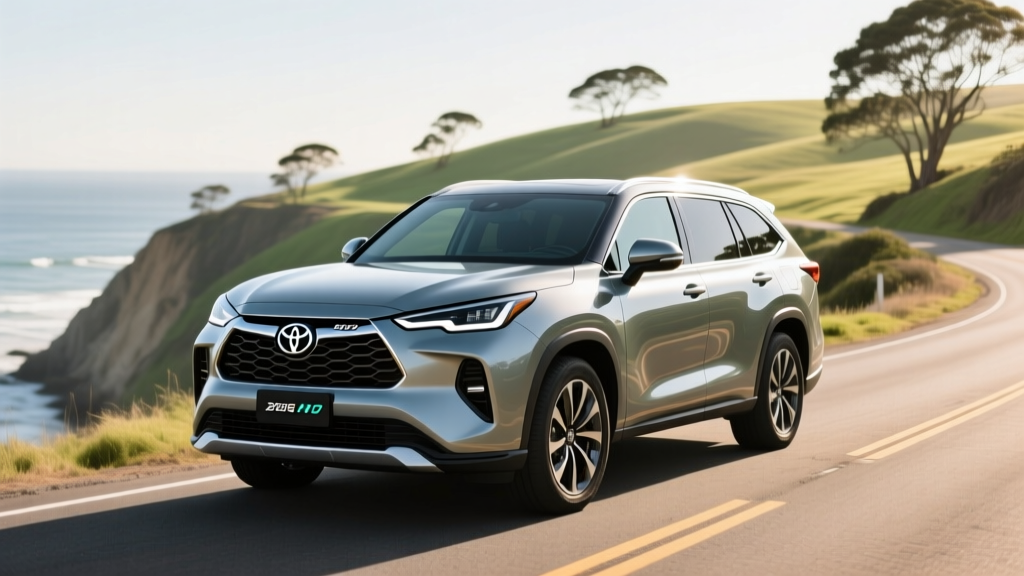
The 2026 Toyota Highlander Hybrid remains one of the most practical three-row family haulers for drivers who want serious fuel savings without plugging in. With an EPA-estimated 36 MPG combined, standard all-wheel drive, and Toyota's proven hybrid reliability, it occupies a specific niche: families who need space, can't charge at home, and want lower running costs without EV range trade-offs. Starting at $42,320, it commands a premium over the gas Highlander but pays back over time at the pump.
Highlander Hybrid Fuel Economy: EPA vs. Real World
The core reason buyers choose the Highlander Hybrid over the conventional gas model comes down to fuel efficiency. Toyota's fourth-generation hybrid system pairs a 2.5-liter four-cylinder engine with two electric motors (front and rear) to deliver substantial MPG gains, especially in stop-and-go driving.
| Metric | AWD-i (All Trims) |
|---|---|
| City MPG | 35 |
| Highway MPG | 35 |
| Combined MPG | 35 |
| Fuel Tank Capacity | 17.1 gal |
| Estimated Total Range | ~598 miles |
Source: fueleconomy.gov
In mixed suburban and highway driving, many Highlander Hybrid owners report achieving 33–37 MPG combined, which aligns closely with the EPA estimate. Hybrids often exceed EPA city figures in stop-and-go traffic because regenerative braking recovers energy that gas cars waste as heat. On sustained highway trips at 75+ mph, expect the hybrid advantage to narrow slightly — closer to 32–34 MPG — as aerodynamic drag dominates and the electric motors assist less. In cold weather (below 30°F), the engine runs more frequently for cabin heat, temporarily reducing efficiency by 2–4 MPG until the powertrain reaches operating temperature.
For context, the gas-only 2026 Highlander with the turbocharged 2.4-liter four-cylinder achieves 22 city / 29 highway / 25 combined with AWD. That's a 10 MPG combined advantage for the hybrid — roughly a 40% improvement in fuel economy.
Powertrain Specs: How the Hybrid System Works
The Highlander Hybrid uses Toyota's proven series-parallel hybrid architecture. Unlike a plug-in hybrid (PHEV) or a full battery-electric vehicle (BEV), a conventional hybrid like this one never needs to be plugged in. The 1.87 kWh nickel-metal hydride (NiMH) traction battery charges exclusively through regenerative braking and the gasoline engine.
| Specification | Detail |
|---|---|
| Engine | 2.5L DOHC 4-cylinder (186 hp) |
| Front Electric Motor | 134 hp |
| Rear Electric Motor (AWD-i) | 54 hp |
| Net Combined Horsepower | 243 hp |
| Transmission | eCVT (electronically controlled) |
| Drivetrain | Electronic On-Demand AWD (standard) |
| Traction Battery | 1.87 kWh NiMH |
| 0–60 mph (est.) | ~7.8 seconds |
| Towing Capacity | 3,500 lbs |
The AWD-i system uses the rear electric motor to power the rear axle when needed — there's no mechanical driveshaft connecting the engine to the rear wheels. This provides confident traction in rain and light snow while keeping weight and mechanical complexity lower than a traditional AWD system.
HEV vs. PHEV — What's the Difference?
| Feature | Highlander Hybrid (HEV) | Plug-In Hybrid (PHEV) |
|---|---|---|
| Plugs in to charge? | No | Yes (optional but recommended) |
| Electric-only range | None (EV mode under ~1 mile at low speed) | 20–45 miles typical |
| Battery size | ~1–2 kWh | ~13–20 kWh |
| Home charging needed? | No | Yes (Level 1 or 2) |
| Federal tax credit (§30D)? | No | Up to $7,500 (if eligible) |
| Price premium over gas model | ~$2,000–$3,000 | ~$5,000–$10,000 |
Toyota does not currently offer a Highlander PHEV in the U.S. market. If you need electric-only commuting capability in a three-row SUV, the closest competitor is the Jeep Grand Cherokee 4xe (PHEV, ~26 miles electric) or the Kia Sorento PHEV (~32 miles electric).
Pricing, Trims, and Tax Credit Eligibility
The 2026 Highlander Hybrid is available across multiple trims, all equipped with AWD-i as standard:
| Trim | MSRP | Key Features |
|---|---|---|
| LE | $42,320 | Toyota Safety Sense 3.0, 8" touchscreen, tri-zone climate |
| XLE | $45,870 | SofTex seats, sunroof, 20" wheels, power liftgate |
| Limited | $49,570 | Leather, 12.3" display, JBL audio, panoramic roof |
| Platinum | $53,070 | Head-up display, 360° camera, ventilated front seats |
Source: Toyota.com — MSRP excludes destination charge (~$1,495).
The Highlander Hybrid is a conventional hybrid (HEV) and does not qualify for the federal §30D clean vehicle tax credit. That credit applies only to plug-in electric vehicles (PHEVs and BEVs) meeting specific battery sourcing, MSRP, and buyer income requirements under current IRS guidelines. Conventional hybrids may qualify for certain state-level rebates or utility incentives depending on your jurisdiction — check your state's energy office for specifics.
Reliability and Hybrid Battery Warranty
Toyota's hybrid system is among the most proven in the industry, with over two decades of real-world deployment since the original Prius. The Highlander Hybrid's powertrain carries no exotic technology — the eCVT has no traditional gears or belts to wear, and the electric motors have minimal moving parts.
Hybrid Battery & Powertrain Warranty
- Hybrid Battery: 10 years / 150,000 miles (whichever comes first)
- Hybrid System Components: 8 years / 100,000 miles
- Powertrain (engine, transaxle): 5 years / 60,000 miles
- Bumper-to-Bumper: 3 years / 36,000 miles
Toyota covers hybrid battery capacity retention — if the battery falls below a specified performance threshold during the warranty period, Toyota will repair or replace it at no cost.
What about battery replacement cost? If a hybrid battery fails outside warranty, replacement typically costs between $3,000 and $5,000 including labor for a new OEM unit. However, this is rare — Toyota's NiMH hybrid batteries routinely last 200,000+ miles with minimal degradation because they operate in a shallow charge cycle (roughly 40–80% state of charge), avoiding the deep cycling that accelerates wear. Third-party remanufactured batteries are also available for $1,500–$2,500 if needed.
In terms of long-term reliability data, Consumer Reports consistently rates the Highlander Hybrid among the more reliable midsize SUVs, and Toyota's hybrid components have demonstrated exceptional longevity in fleet and taxi service. The primary maintenance items remain the same as any vehicle: tires, brakes (which last longer thanks to regenerative braking), fluids, and cabin filters.
Hybrid vs. PHEV vs. Full EV: Which Is Right for You?
Choosing between the Highlander Hybrid, a plug-in hybrid SUV, or a full electric vehicle depends on your driving patterns, home charging access, and budget. Here's a practical decision framework:
Choose the Highlander Hybrid (HEV) If:
- You can't install a home charger (apartment, street parking, no garage)
- You frequently take long road trips and don't want to plan around charging stops
- You want a simpler ownership experience — just fill up with gas as usual
- You tow occasionally (3,500-lb capacity exceeds most EVs in this price range)
- Your priority is reducing fuel costs without changing your habits
Choose a PHEV (e.g., Sorento PHEV, Grand Cherokee 4xe) If:
- You have home charging and a commute under 30 miles round-trip
- You want electric-only daily driving but gas flexibility for road trips
- You want to potentially qualify for the $7,500 federal tax credit
- You're willing to pay a higher upfront premium for lower daily operating cost
Choose a Full EV (e.g., Kia EV9, Tesla Model X) If:
- You have reliable home Level 2 charging
- Your daily driving is under 250 miles and you can plan road-trip charging
- You want zero tailpipe emissions and minimal maintenance (no oil changes, fewer moving parts)
- You want the lowest per-mile fuel cost (electricity at $0.13/kWh ≈ $0.04/mile vs. gas at $3.50/gal ≈ $0.14/mile at 25 MPG)
5-Year Ownership Cost Comparison
To understand whether the hybrid premium pays off, consider this simplified 5-year fuel cost comparison assuming 15,000 miles/year and $3.50/gallon regular unleaded:
| Cost Factor (5 years) | Gas Highlander AWD (25 MPG) | Highlander Hybrid (35 MPG) | Savings |
|---|---|---|---|
| Total Miles Driven | 75,000 | 75,000 | — |
| Gallons Consumed | 3,000 | 2,143 | 857 fewer |
| Fuel Cost ($3.50/gal) | $10,500 | $7,500 | $3,000 |
| Estimated Maintenance | $3,200 | $2,800 | $400 |
| Total Operating Cost | $13,700 | $10,300 | $3,400 |
The hybrid's ~$2,000–$3,000 price premium over the gas model is typically recovered within 3–4 years through fuel savings alone, making the hybrid the financially sound choice for most buyers who plan to keep the vehicle beyond that period.
Pros and Cons at a Glance
✓ Pros
- 35 MPG combined — exceptional for a 3-row AWD SUV
- No plug-in required; works with existing gas infrastructure
- Standard AWD-i with no drivetrain penalty
- 10-year/150,000-mile hybrid battery warranty
- Proven Toyota hybrid reliability and strong resale value
- 3,500-lb towing capacity
- Smooth, quiet acceleration from electric motor assist
✗ Cons
- No electric-only driving range (always uses some gas)
- Not eligible for federal §30D tax credit
- Third-row space is tight for adults on long trips
- 243 hp feels adequate but not quick for a 4,500-lb vehicle
- eCVT drone under hard acceleration
- Infotainment system lags behind competitors in responsiveness
- Higher base price than gas-only competitors (Mazda CX-90, Hyundai Palisade)
Frequently Asked Questions
How many MPG does the Highlander Hybrid get?
The 2026 Toyota Highlander Hybrid is EPA-rated at 35 MPG city, 35 MPG highway, and 35 MPG combined across all trims with standard AWD-i. Real-world results typically fall between 32–37 MPG depending on driving style, terrain, and temperature.
Does the Highlander Hybrid need to be plugged in?
No. The Highlander Hybrid is a conventional hybrid (HEV), not a plug-in hybrid. Its small 1.87 kWh battery charges entirely through regenerative braking and the gasoline engine. You fuel it exactly like any other gas vehicle — the hybrid system operates automatically in the background.
Is there a Highlander PHEV or plug-in version?
Toyota does not offer a plug-in hybrid (PHEV) version of the Highlander in the United States. If you need a three-row SUV with electric-only range, the closest alternatives are the Kia Sorento PHEV (~32 miles electric, ~34 MPG combined after battery depletion) and the Jeep Grand Cherokee 4xe (~26 miles electric).
Is the hybrid battery reliable, and what does replacement cost?
Toyota's hybrid batteries are among the most reliable in the industry, routinely lasting 200,000+ miles. The 2026 Highlander Hybrid includes a 10-year/150,000-mile hybrid battery warranty. Out-of-warranty replacement runs $3,000–$5,000 for a new OEM battery, or $1,500–$2,500 for a remanufactured unit. Failures before 150,000 miles are uncommon.
Does the Highlander Hybrid qualify for any tax credit?
No. The federal §30D clean vehicle credit applies only to plug-in electric vehicles (PHEVs and BEVs). As a conventional hybrid, the Highlander Hybrid does not qualify for this credit. Some states or local utilities may offer small incentives for hybrid purchases — check your state energy office or utility provider for details.
How does the Highlander Hybrid compare to a full EV like the Kia EV9?
The Kia EV9 (a three-row electric SUV starting around $56,000) offers ~270–300 miles of range, zero tailpipe emissions, and roughly $0.04/mile fuel cost at home charging rates. However, it requires home Level 2 charging infrastructure, costs more upfront, and road trips require DC fast-charging planning. The Highlander Hybrid is the better choice if you lack home charging, tow frequently, or regularly drive 400+ mile trips without wanting to stop to charge.
What's the maintenance difference between the hybrid and gas Highlander?
Maintenance is nearly identical, with one notable advantage: the hybrid's regenerative braking significantly reduces brake pad wear, often extending brake service intervals to 80,000–100,000 miles. The hybrid has no additional fluid changes or filter replacements beyond what the gas model requires. There is no hybrid-specific routine maintenance.
Safety ratings: Check the latest NHTSA and IIHS results for crash-test performance. Toyota Safety Sense 3.0 (standard on all trims) includes adaptive cruise control, lane-keeping assist, automatic emergency braking, and blind-spot monitoring — all SAE Level 1 driver-assistance features requiring active driver engagement.