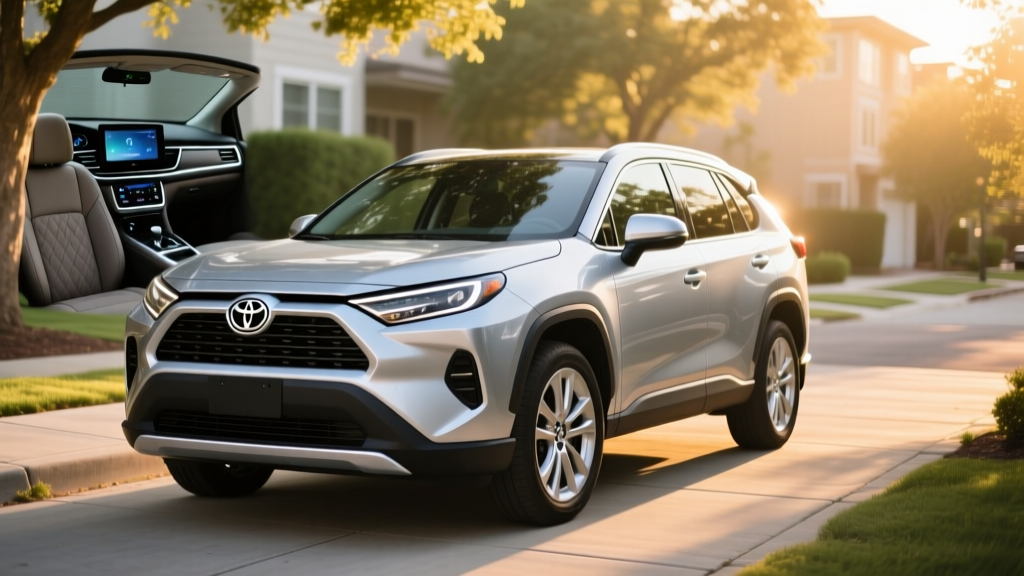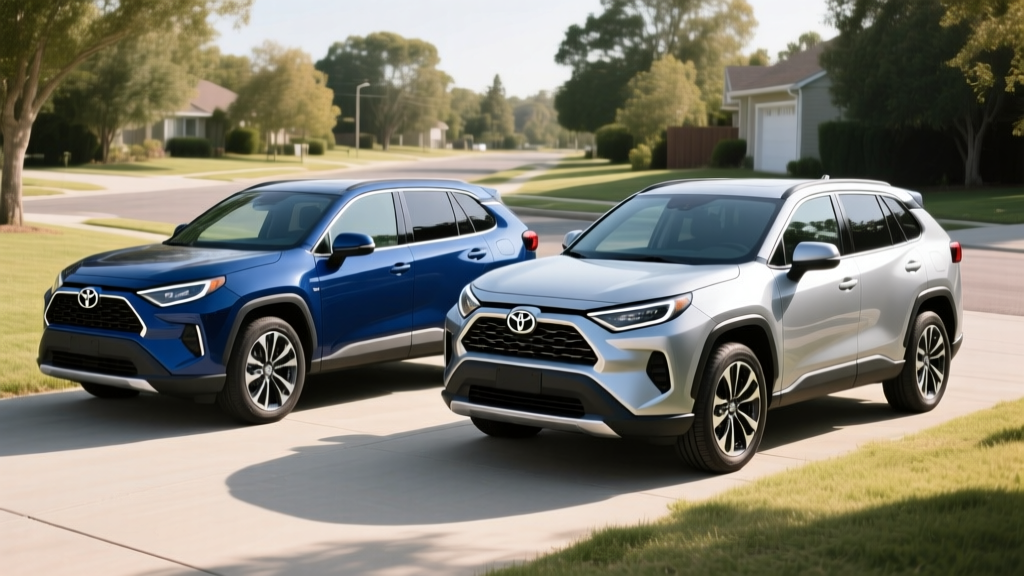
The Toyota Highlander Hybrid occupies a narrow but valuable lane in the three-row SUV market: it delivers usable family space without the fuel cost penalty that usually comes with it. For 2026, Toyota continues the fourth-generation Highlander Hybrid with its proven 2.5-liter four-cylinder hybrid powertrain, targeting buyers who need seven or eight seats but want to keep their fuel budget in check. If you've been searching for Highlander Hybrid MPG data beyond the brochure, this guide covers the EPA numbers, real-world expectations, powertrain details, battery longevity, and how it stacks up against plug-in hybrids and full EVs.
2026 Highlander Hybrid MPG: EPA Numbers and Real-World Results
The 2026 Toyota Highlander Hybrid carries over the powertrain architecture that debuted with this generation, pairing a 2.5-liter Atkinson-cycle inline-four with Toyota's hybrid synergy drive system. The EPA rates it as follows:
| Drivetrain | City MPG | Highway MPG | Combined MPG |
|---|---|---|---|
| FWD | 36 | 35 | 36 |
| AWD (Electronic On-Demand) | 35 | 35 | 35 |
For context, the non-hybrid gas Highlander with its turbocharged 2.4-liter four-cylinder rates around 24 MPG combined with AWD — meaning the hybrid delivers roughly 45% better fuel economy in mixed driving. That's the core value proposition here.
Powertrain Specs: Engine, Motors, and Horsepower
The Highlander Hybrid's powertrain is built around efficiency rather than acceleration. Here's the full breakdown:
| Specification | Detail |
|---|---|
| Engine | 2.5L Atkinson-cycle inline-4 |
| Engine Output | 186 hp / 173 lb-ft torque |
| Front Electric Motor | 134 kW (180 hp) |
| Rear Electric Motor (AWD) | 40 kW (54 hp) |
| Net Combined Horsepower | 243 hp |
| Transmission | eCVT (planetary gearset) |
| 0–60 mph (est.) | ~7.8 seconds |
| Towing Capacity | 3,500 lbs |
| Hybrid Battery | 1.87 kWh (NiMH), sealed, self-charging |
That 243 combined horsepower is adequate for merging and passing, but this is not a performance SUV. The eCVT delivers smooth, linear acceleration without the rubber-band feeling of some older CVTs, thanks to Toyota's planetary gearset design. The rear electric motor on AWD models provides torque to the rear axle only when needed — there's no mechanical driveshaft, which reduces weight and parasitic loss.
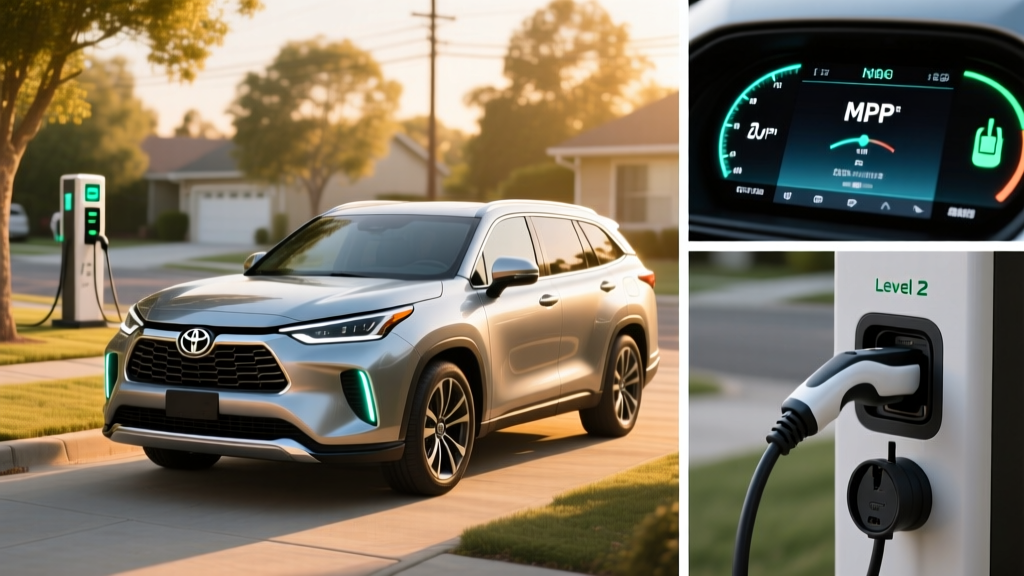
A critical distinction: the Highlander Hybrid is a conventional hybrid (HEV), not a plug-in hybrid. Its 1.87 kWh nickel-metal hydride battery is charged exclusively through regenerative braking and the gasoline engine. You never plug it in. This is a common point of confusion, so let's clarify the hybrid categories.
HEV vs PHEV vs EV: Which Highlander Fits Your Life?
Toyota does not currently offer a plug-in hybrid (PHEV) version of the Highlander in the U.S. market. If you want a three-row Toyota with plug-in capability, you'd need to look at the Grand Highlander Hybrid (still an HEV) or consider competitors like the Kia Sorento PHEV or Mazda CX-90 PHEV. Here's how the three electrification paths compare for a family SUV buyer:
| Factor | HEV (Highlander Hybrid) | PHEV (e.g., Sorento PHEV) | BEV (e.g., Kia EV9) |
|---|---|---|---|
| Plug-in Required? | No — self-charging | Yes — 12–32 mi electric range | Yes — 230–310 mi range |
| Combined MPG/MPGe | 35–36 MPG | ~33 MPG + 79 MPGe electric | 85–89 MPGe |
| Home Charging Needed | No | Recommended (Level 2) | Essential (Level 2) |
| Fuel Cost (15k mi/yr) | ~$1,500–$1,800 | ~$800–$1,400 (varies) | ~$500–$900 |
| Base MSRP Range | $42,000–$53,000 | $51,000–$58,000 | $56,000–$75,000 |
| Federal Tax Credit (§30D) | Not eligible | Up to $7,500 (if eligible) | Up to $7,500 (if eligible) |
| Best For | No home charging access, road trips | Short commutes + long trips | Home charging, low daily cost |
- Choose the Highlander Hybrid (HEV) if you lack reliable home charging, frequently take long road trips, want the lowest purchase price, or simply want to cut fuel costs without changing any habits.
- Choose a PHEV SUV if you have a garage with a 120V or 240V outlet, your daily commute is under 30 miles, and you still want gas-engine flexibility for weekend trips.
- Choose a BEV SUV if you can install a Level 2 home charger, want the lowest per-mile energy cost, and are comfortable planning DC fast-charging stops on road trips.
Pricing, Trims, and Tax Credit Eligibility
The 2026 Highlander Hybrid is available across multiple trim levels. Pricing reflects Toyota's MSRP before destination charges:
| Trim | FWD MSRP | AWD MSRP |
|---|---|---|
| LE | $42,320 | $43,920 |
| XLE | $46,370 | $47,970 |
| XSE | $48,170 | $49,770 |
| Limited | $51,520 | $53,120 |
| Platinum | $54,670 | $56,270 |
Federal Tax Credit: Does the Highlander Hybrid Qualify?
No. Under the current IRS §30D Clean Vehicle Credit rules, only plug-in electric vehicles (PHEVs and BEVs) with sufficient battery capacity qualify for the federal tax credit. Conventional hybrids like the Highlander Hybrid do not have a plug and do not meet the minimum battery capacity threshold. There is no federal tax credit available for this vehicle.
Some states and local utilities offer rebates or incentives for conventional hybrids, but these vary widely by jurisdiction. Check your state energy office or utility provider for current programs. If you're considering a PHEV or BEV alternative to access the §30D credit (up to $7,500), be aware that eligibility depends on MSRP caps ($80,000 for SUVs), buyer income limits ($300,000 joint / $150,000 single), battery component sourcing requirements, and critical mineral thresholds — all of which are subject to change. Consult a tax professional for your specific situation.
Battery Longevity, Warranty, and Replacement Cost
Hybrid battery anxiety is one of the most common concerns we hear from prospective buyers. Here's what the data shows for the Highlander Hybrid:
The Highlander Hybrid uses a nickel-metal hydride (NiMH) battery pack — a chemistry Toyota has refined over more than 25 years of hybrid production. NiMH is less energy-dense than the lithium-ion packs in PHEVs and BEVs, but it has proven exceptionally durable in real-world use. Data from Toyota's hybrid fleet (over 20 million vehicles sold globally) shows that the vast majority of hybrid batteries last the full life of the vehicle without replacement.
What If the Battery Does Need Replacement?
If your Highlander Hybrid's battery fails outside the warranty window, here's what to expect:
- New OEM battery pack: $3,000–$4,500 (parts and labor at a Toyota dealer)
- Refurbished/reconditioned pack: $1,500–$2,500 (from authorized remanufacturers)
- Individual cell module replacement: $500–$1,200 (only the failed modules, performed by hybrid specialists)
For comparison, a BEV battery replacement can run $10,000–$20,000+. The Highlander Hybrid's small 1.87 kWh pack is far less expensive to service because of its size and the mature NiMH supply chain. Many independent hybrid repair shops now offer module-level repair, which can extend battery life at a fraction of full-pack replacement cost.
Ownership Costs: 5-Year Projection
Fuel savings are the headline, but total cost of ownership tells the full story. Here's a five-year comparison for a Highlander Hybrid AWD versus the gas-only Highlander Turbo AWD, assuming 15,000 miles per year and $3.50/gallon regular unleaded:
| Cost Category | Highlander Hybrid AWD | Highlander Gas AWD (Turbo) |
|---|---|---|
| Base MSRP (LE trim) | $43,920 | $40,920 |
| Fuel (5 yrs, 75k mi) | $7,500 (35 MPG avg) | $13,125 (24 MPG avg) |
| Maintenance (5 yrs) | ~$3,200 | ~$3,600 |
| Insurance (5 yrs, avg) | ~$9,500 | ~$9,000 |
| Estimated Depreciation | ~$18,000 | ~$17,500 |
| 5-Year Total | ~$82,120 | ~$84,145 |
The hybrid's $3,000 price premium is typically recovered within 3–4 years through fuel savings alone, depending on your local gas prices and driving mix. Hybrids also tend to have slightly lower maintenance costs because regenerative braking reduces brake pad wear, and the engine cycles off at low speeds, reducing oil degradation and engine hours.
Reliability and Safety Ratings
Toyota's hybrid powertrains consistently rank among the most reliable in the industry. The Highlander as a nameplate has benefited from Toyota's conservative engineering approach — the hybrid system in this generation has been in production since 2020 with minimal changes, which is typically a strong reliability indicator.
For safety, refer to current ratings from the National Highway Traffic Safety Administration (NHTSA) and the Insurance Institute for Highway Safety (IIHS). The Highlander comes standard with Toyota Safety Sense 3.0, which includes:
- Pre-Collision System with Pedestrian Detection
- Full-Speed Range Dynamic Radar Cruise Control
- Lane Departure Alert with Steering Assist
- Lane Tracing Assist
- Road Sign Assist
- Automatic High Beams
Note: Toyota Safety Sense is a Level 2 driver-assistance system under SAE automation standards. It provides steering and speed support but requires the driver to remain fully engaged and attentive at all times. It is not self-driving.
Pros and Cons: The Honest Assessment
✓ Pros
- 35–36 MPG combined is exceptional for a 3-row SUV
- No plug-in required — zero behavior change from gas cars
- 10-year/150,000-mile hybrid battery warranty
- Strong resale value and Toyota reliability reputation
- Smooth, quiet hybrid powertrain in city driving
- 3,500-lb towing capacity (adequate for small trailers/boats)
- Standard Toyota Safety Sense 3.0 across all trims
✗ Cons
- No PHEV option — can't drive on electric-only power
- 243 hp feels underpowered for a 4,500-lb SUV when merging
- Third row is tight for adults on longer trips
- Highway MPG drops to ~30–32 at 75+ mph
- No federal tax credit eligibility
- Cargo space reduced vs. non-hybrid (battery placement)
- Infotainment interface lags behind competitors
Frequently Asked Questions
How many MPG does the 2026 Highlander Hybrid get?
The EPA rates the Highlander Hybrid at 36 MPG combined for FWD and 35 MPG combined for AWD (35 city / 35 highway for AWD; 36/35/36 for FWD). In real-world driving, expect 33–35 MPG on average, with city driving often exceeding the EPA estimate and highway driving at high speeds dropping to around 30–32 MPG. Cold weather reduces efficiency by roughly 5–10%.
Does the Highlander Hybrid need to be plugged in?
No. The Highlander Hybrid is a conventional hybrid (HEV). Its battery is charged entirely through regenerative braking and the gasoline engine. You fuel it like any other car — just with fewer fill-ups. If you want plug-in capability with electric-only driving, you'd need to look at PHEV competitors like the Kia Sorento PHEV.
Is the Highlander Hybrid reliable? What about battery replacement?
Toyota's hybrid systems are among the most reliable powertrains on the market, with over 25 years of continuous refinement. The hybrid battery is covered for 10 years or 150,000 miles. Out-of-warranty replacement costs range from $1,500 (refurbished) to $4,500 (new OEM), and module-level repair can be even less. Most hybrid batteries outlast the vehicle.
Does the Highlander Hybrid qualify for a tax credit?
No. Under current IRS §30D rules, only plug-in vehicles (PHEVs and BEVs) qualify for the federal Clean Vehicle Credit. The Highlander Hybrid, as a conventional HEV, is not eligible. Some state or utility incentives may apply — check your local programs.
How does the Highlander Hybrid compare to a three-row EV like the Kia EV9?
The EV9 offers lower per-mile energy costs (~$0.04–$0.06/mi vs. $0.10–$0.12/mi for the hybrid), a quieter ride, and access to HOV lanes in many states. However, it starts around $56,000, requires home Level 2 charging for practical ownership, and road trips require DC fast-charging planning. The Highlander Hybrid costs less upfront, needs no charging infrastructure, and is the better choice for buyers without reliable home charging or who regularly drive long distances in areas with sparse charging networks.
How far can the Highlander Hybrid drive on a full tank?
With a 17.1-gallon fuel tank and 35 MPG combined (AWD), the Highlander Hybrid delivers approximately 600 miles of total range per tank — one of the longest ranges of any three-row SUV. In city-heavy driving where the hybrid excels, some owners report 620–650 miles between fill-ups.
Should I get FWD or AWD on the Highlander Hybrid?
The AWD system adds only 1 MPG penalty (35 vs. 36 combined) and $1,600 to the MSRP. If you live in a region with snow, rain, or unpaved roads, the electronic on-demand AWD is worth the modest cost and efficiency trade. In mild climates where traction is rarely a concern, FWD saves money at purchase and the pump.