Quick Verdict: The Highlander Hybrid at a Glance
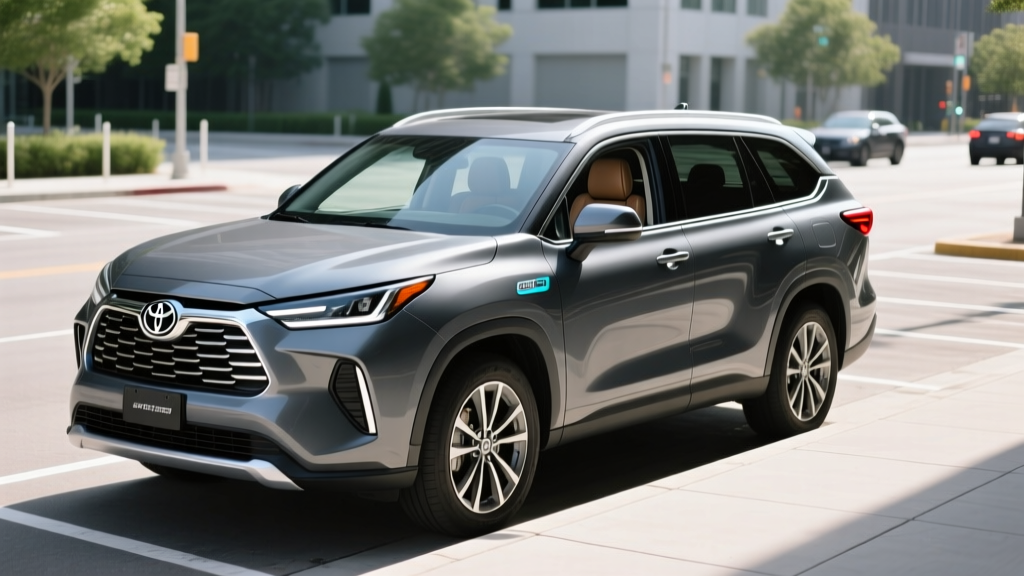
The Toyota Highlander Hybrid occupies a specific niche: three-row family hauling without the charging logistics of a plug-in vehicle or the fuel bills of a conventional V6 SUV. For the 2026 model year, Toyota continues to offer the Highlander Hybrid exclusively as a conventional hybrid electric vehicle (HEV) — meaning it generates its own electricity through regenerative braking and the gasoline engine. There is no plug, no charging cord, and no electric-only driving range. You simply fill it with gas and drive.
That simplicity is its strongest selling point for buyers who want hybrid efficiency without altering their daily routine. The trade-off is that it cannot access the federal §30D tax credit reserved for plug-in vehicles, and it cannot drive on electricity alone. If you need electric-only commuting, you'll want to look at a PHEV or BEV alternative — we cover those comparisons below.
HEV vs. PHEV: Understanding What the Highlander Hybrid Is (and Isn't)
Toyota's naming conventions can blur important distinctions. Here is what you need to know before visiting a dealer:
Conventional Hybrid (HEV) — Toyota Highlander Hybrid
- Plug-in required: No. Charges its own small battery via regen and the engine.
- Electric-only range: Less than 1 mile at very low speeds. Not usable as an EV.
- Battery size: ~1.7 kWh (nickel-metal hydride), sealed and maintenance-free.
- Primary benefit: 35 MPG combined without changing how you refuel.
- Federal tax credit: Not eligible under IRS §30D (requires plug-in capability).
Plug-In Hybrid (PHEV) — e.g., Toyota RAV4 Prime, Grand Highlander Hybrid MAX
- Plug-in required: Yes, to access electric-only range and full efficiency.
- Electric-only range: Typically 30–45 miles depending on model.
- Battery size: 13–18+ kWh (lithium-ion), requires Level 1 or Level 2 charging.
- Primary benefit: Electric commuting + gas engine for longer trips.
- Federal tax credit: May qualify for up to $7,500 under §30D if battery sourcing, MSRP caps, and buyer income limits are met (see IRS guidelines).
The Highlander Hybrid is strictly an HEV. Toyota does not currently offer a plug-in Highlander variant in the U.S. market. If three-row PHEV capability is a priority, competitors like the Kia Sorento PHEV or the larger Toyota Grand Highlander (which also remains HEV-only in its standard hybrid form) are worth cross-shopping.
Fuel Economy: EPA Ratings and Real-World MPG
The 2026 Highlander Hybrid carries over the powertrain architecture that has made it one of the most efficient three-row SUVs on the market. Here is what the EPA rates it at, alongside what owners typically see in mixed driving:
| Drivetrain | City MPG | Highway MPG | Combined MPG | Real-World Expectation |
|---|---|---|---|---|
| FWD (LE trim) | 36 | 35 | 36 | 33–38 combined |
| AWD (LE–Platinum) | 35 | 34 | 35 | 32–37 combined |
Source: EPA fueleconomy.gov
Why Hybrids Often Beat Their EPA City Estimate
Unlike conventional gas vehicles, hybrids like the Highlander use regenerative braking and electric motor assist most heavily in stop-and-go traffic. This means city driving — where the engine shuts off at stops and the electric motor handles low-speed acceleration — is where the Highlander Hybrid shines. Many owners report exceeding the 36 MPG city figure on suburban commutes with frequent stops. Highway driving at sustained 70+ mph speeds is where efficiency dips slightly, as the gasoline engine bears a greater share of the workload.
Cold-Weather and Terrain Adjustments
Expect a 5–10% reduction in fuel economy during sustained sub-freezing temperatures, as the engine runs more frequently to maintain cabin heat and battery temperature. Mountain driving with extended climbs will also reduce MPG, though regenerative braking on descents partially recovers that energy.
Powertrain Specs: 243 Horsepower from a 2.5L Four-Cylinder Hybrid System
The Highlander Hybrid pairs a 2.5-liter inline-four Atkinson-cycle gasoline engine with two electric motor-generators (three on AWD models, which add a rear-axle motor). The system is managed by Toyota's Series-Parallel hybrid architecture, which seamlessly blends electric and gas power based on demand.
| Specification | Detail |
|---|---|
| Engine | 2.5L 4-cylinder Atkinson-cycle |
| Combined System Horsepower | 243 hp |
| Engine Horsepower | 186 hp @ 6,000 rpm |
| Front Motor Output | 134 hp (182 lb-ft) |
| Rear Motor (AWD only) | 54 hp (89 lb-ft) |
| Transmission | eCVT (electronically controlled) |
| Battery Type | NiMH (nickel-metal hydride), ~1.7 kWh |
| 0–60 mph | ~7.8 seconds |
| Towing Capacity | 3,500 lbs |
| Drivetrain | FWD or electronic AWD |
The eCVT is not a traditional belt-and-pulley CVT. It uses a planetary gearset to blend power sources, resulting in smooth, stepless acceleration without the "rubber band" feel some CVTs exhibit. The 243 hp combined output is adequate for highway merging and loaded family hauling, though it will not match the punch of a turbocharged V6 competitor. The 3,500-lb tow rating is sufficient for a small boat or light trailer but falls short of body-on-frame SUVs.
Pricing, Trims, and Tax Credit Eligibility
The 2026 Highlander Hybrid is available across four trims. Pricing below reflects base MSRP before destination charges:
| Trim | Drivetrain | Base MSRP | Key Features |
|---|---|---|---|
| LE | FWD | $41,620 | Toyota Safety Sense 3.0, 8" touchscreen, tri-zone climate |
| LE | AWD | $43,220 | Same as FWD LE + electronic AWD |
| XLE | AWD | $46,470 | SofTex seats, sunroof, power liftgate, 20" wheels |
| Limited | AWD | $50,070 | Leather, 12.3" screen, JBL audio, panoramic roof |
| Platinum | AWD | $53,120 | Head-up display, 360° camera, heated/ventilated 2nd row |
Federal Tax Credit Status
The Highlander Hybrid does not qualify for the federal §30D Clean Vehicle Credit. Under current IRS rules, only plug-in electric vehicles (BEVs and PHEVs) with a battery capacity of at least 7 kWh and external charging capability are eligible. Since the Highlander Hybrid is a conventional HEV with a ~1.7 kWh NiMH battery that charges only through regenerative braking and the engine, it does not meet the threshold.
Some states offer their own incentives for conventional hybrids, though these have become less common as incentive programs shift toward plug-in vehicles. Check your state's energy or DMV website for current programs.
Reliability, Battery Warranty, and Replacement Costs
Hybrid battery longevity remains one of the most common concerns among first-time hybrid buyers. Toyota's track record here is among the strongest in the industry, with hybrid systems dating back to the 2001 Prius demonstrating 15–20 year lifespans under normal use.
Hybrid Battery & Powertrain Warranty
- Hybrid Battery Warranty: 10 years / 150,000 miles (whichever comes first)
- Hybrid System Components: 8 years / 100,000 miles
- Powertrain Warranty: 5 years / 60,000 miles
- Basic Warranty: 3 years / 36,000 miles
What Happens When the Battery Ages?
The NiMH battery pack in the Highlander Hybrid is far smaller and less stressed than the lithium-ion packs in full EVs. Degradation manifests as a gradual reduction in electric-assist capability rather than a sudden failure. Most Toyota hybrid owners never require a battery replacement within the warranty period. When replacement is needed out of warranty, expect the following cost ranges:
- OEM replacement (dealer): $3,000–$4,500 including labor
- Refurbished/reconditioned pack: $1,500–$2,500 from independent hybrid specialists
- Individual module replacement: $200–$500 if only specific cells have degraded (available through specialized shops)
Toyota's hybrid system is also notably repairable compared to EV battery packs. Because the NiMH pack is composed of individual modules, a qualified technician can often replace only the degraded modules rather than the entire assembly — a significant cost advantage over the monolithic lithium-ion packs in most EVs.
Highlander Hybrid vs. Full EV vs. Gasoline SUV: Which Fits You?
The right choice depends on your driving patterns, home charging access, and budget. Here is a decision framework based on common buyer profiles:
Choose the Highlander Hybrid if:
- You want three rows and 35 MPG without plugging in anything
- You lack reliable home or workplace charging access
- You take frequent road trips beyond 300 miles where charging infrastructure is sparse
- You plan to keep the vehicle 10+ years and want proven hybrid longevity
- Your budget is $42,000–$54,000 and you don't qualify for EV tax credits
Choose a PHEV (e.g., Kia Sorento PHEV) if:
- You can charge at home and want 30+ miles of electric-only commuting
- Your daily driving is under 35 miles but you still need three rows for weekends
- You want to qualify for the §30D federal tax credit (up to $7,500, subject to sourcing and income rules)
Choose a Full EV (e.g., Kia EV9, Tesla Model X) if:
- You have Level 2 home charging and want zero tailpipe emissions
- Your daily driving is under 250 miles and you're comfortable with road-trip charging planning
- You want the lowest per-mile "fuel" cost (electricity vs. gasoline)
- You want to maximize federal and state incentives
Stick with a Gasoline SUV if:
- You drive fewer than 8,000 miles per year (the hybrid premium takes longer to recoup)
- You need maximum towing capacity (5,000+ lbs)
- Upfront cost is the primary decision driver
Pros and Cons
Pros
- 35 MPG combined is class-leading for a three-row SUV
- No charging infrastructure needed — operates like a conventional gas car
- 10-year/150,000-mile hybrid battery warranty provides long-term peace of mind
- Toyota Safety Sense 3.0 standard on all trims (adaptive cruise, lane-keeping, auto emergency braking)
- Strong resale value — Toyota hybrids historically depreciate slower than non-hybrid competitors
- Smooth, quiet electric assist in city driving
Cons
- No electric-only driving capability — cannot do zero-emission school runs or errands
- No federal tax credit eligibility
- 243 hp is adequate but not quick for a 4,500+ lb vehicle
- Third row is tight for adults on long trips
- No plug-in Highlander variant available — Toyota limits PHEV to smaller models
- AWD system is electronic (rear motor) rather than mechanical — not for serious off-roading
Frequently Asked Questions
How many MPG does the Toyota Highlander Hybrid get?
The 2026 Highlander Hybrid is EPA-rated at 36 city / 35 highway / 36 combined for FWD models and 35/34/35 for AWD models. In real-world driving, many owners report 33–38 MPG combined, with city driving often exceeding the EPA estimate thanks to regenerative braking.
Does the Highlander Hybrid need to be plugged in?
No. The Highlander Hybrid is a conventional HEV. Its small NiMH battery charges through regenerative braking and the gasoline engine. There is no plug, no charging cord, and no electric-only driving range to manage.
How far can the Highlander Hybrid drive on electric power alone?
Less than one mile, and only at very low parking-lot speeds. It is not designed for electric-only driving. If electric-only commuting is a priority, consider a PHEV like the Kia Sorento PHEV (32 miles electric-only) or a full EV.
Is the Highlander Hybrid reliable, and what does a battery replacement cost?
Toyota's hybrid system has an extensive track record spanning over two decades. The hybrid battery is warranted for 10 years / 150,000 miles, and most units last well beyond that. Out-of-warranty replacement costs range from $1,500 (refurbished) to $4,500 (OEM dealer replacement). Individual module repair can cost as little as $200–$500.
Does the Toyota Highlander Hybrid qualify for any tax credit?
No. The federal §30D Clean Vehicle Credit applies only to plug-in vehicles (BEVs and PHEVs) with battery capacities of 7 kWh or more. The Highlander Hybrid's ~1.7 kWh NiMH battery and lack of plug-in capability make it ineligible. Check your state's energy office for any local hybrid incentives, though these are increasingly rare.
How does the Highlander Hybrid compare to the Grand Highlander Hybrid?
The Grand Highlander Hybrid is larger, offering genuinely usable third-row space for adults and more cargo room. It uses a similar hybrid powertrain but with slightly different tuning. The standard Highlander Hybrid is more compact, easier to park, and marginally more fuel-efficient. If third-row comfort is a priority, the Grand Highlander is worth the premium. Per Toyota's official specs, both remain HEV-only with no plug-in variant.
What is the towing capacity of the Highlander Hybrid?
The 2026 Highlander Hybrid is rated to tow up to 3,500 lbs across all trims with the proper tow package. This covers small utility trailers, a pair of jet skis, or a light pop-up camper. For heavier towing needs, a body-on-frame SUV or truck remains necessary.
For the latest safety ratings, consult NHTSA and IIHS once 2026 model-year testing is published.