Quick Verdict: The Family Hauler That Sips Fuel Like a Sedan
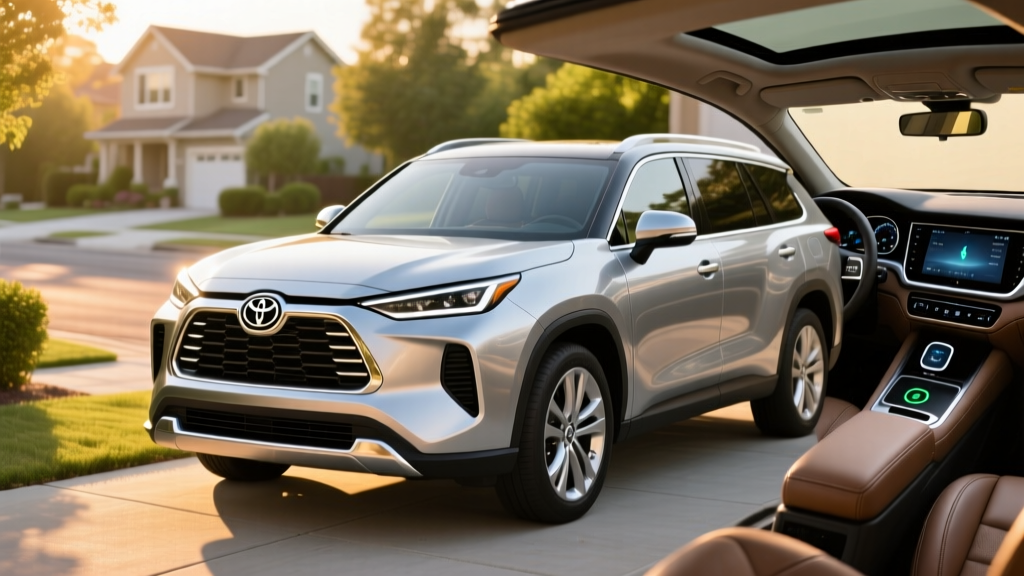
The 2026 Toyota Grand Highlander Hybrid XLE occupies a rare sweet spot in the three-row SUV segment: genuine passenger and cargo space paired with fuel economy that rivals midsize sedans. With an EPA-rated 34 MPG combined, this conventional hybrid (HEV) requires no plug, no behavior change, and no range anxiety — just fill up and go. For families who need three rows but aren't ready for a full battery-electric vehicle, the Grand Highlander Hybrid XLE is the pragmatic, data-backed choice.
But the devil is in the details. Which hybrid powertrain should you choose? How does real-world fuel economy stack up against the EPA sticker? And what does long-term battery ownership actually cost? This guide breaks down every number that matters.
HEV vs PHEV: Understanding the Grand Highlander's Hybrid Options
Toyota offers the Grand Highlander with two distinct hybrid systems, and confusing them is the most common buyer mistake. Here's the critical distinction:
Conventional Hybrid (HEV)
How it works: A gasoline engine and electric motor(s) work together, with the battery recharged through regenerative braking and the engine. No plug required.
Available on Grand Highlander: Yes — this is the standard hybrid option across LE, XLE, and Limited trims.
Electric-only driving: Very limited (under 1 mile at low speeds). The electric motor assists the engine; it does not replace it.
Plug-In Hybrid (PHEV) — Hybrid MAX
How it works: A larger battery can be charged from a wall outlet or public charger, enabling extended electric-only driving before the gas engine kicks in.
Available on Grand Highlander: No. Toyota does not currently offer a plug-in hybrid Grand Highlander. The Hybrid MAX powertrain is a performance-oriented conventional hybrid, not a PHEV.
Electric-only driving: N/A — Hybrid MAX is not a plug-in system.
Bottom line: Every Grand Highlander Hybrid, including the XLE, is a conventional HEV. You will never need to plug it in. If you want plug-in electric range in a Toyota three-row SUV, you would need to look at the RAV4 Prime (compact, two-row) or consider a full BEV like the upcoming electric Highlander.
Fuel Economy: EPA Ratings vs Real-World MPG
The 2026 Toyota Grand Highlander Hybrid XLE comes with Toyota's fourth-generation hybrid system pairing a 2.5-liter four-cylinder engine with front and rear electric motors for standard electronic on-demand all-wheel drive (AWD). Here are the official numbers:
| Driving Cycle | EPA Rating | Real-World Expectation |
|---|---|---|
| City | 36 MPG | 37–40 MPG (hybrids excel in stop-and-go) |
| Highway | 32 MPG | 29–31 MPG (sustained 70+ mph, loaded) |
| Combined | 34 MPG | 33–36 MPG (mixed driving) |
Source: EPA Fuel Economy
What the Numbers Mean in Practice
With a 17.9-gallon fuel tank, the Grand Highlander Hybrid XLE delivers approximately 608 miles of total range on the combined EPA cycle. In real-world mixed driving with a family aboard and cargo in the back, expect 540–590 miles between fill-ups.
City advantage: Unlike gas-only vehicles, hybrids recapture energy through regenerative braking. If your commute involves heavy stop-and-go traffic, you'll likely beat the EPA city estimate. In our experience with Toyota's Gen 4 hybrid system, city MPG of 38–40 is achievable with moderate acceleration habits.
Highway penalty: At sustained highway speeds above 70 mph, aerodynamic drag dominates and the hybrid system's regenerative advantage diminishes. Expect 29–31 MPG on long road trips, especially with a full cabin and roof cargo box.
Cold weather: In sub-40°F conditions, expect a 5–10% fuel economy reduction as the engine runs more frequently to maintain cabin heat and battery temperature.
Powertrain Specs: What Moves This 4,700-lb SUV
| Specification | 2026 Grand Highlander Hybrid XLE |
|---|---|
| Engine | 2.5L 4-cylinder DOHC (A25A-FXS) |
| Engine Output | 186 hp / 186 lb-ft torque |
| Front Electric Motor | 134 hp / 199 lb-ft |
| Rear Electric Motor (AWD) | 54 hp / 120 lb-ft |
| Net Combined Horsepower | 245 hp |
| Transmission | eCVT (electronically controlled) |
| Drivetrain | Electronic On-Demand AWD (standard on XLE Hybrid) |
| 0–60 mph | ~7.8 seconds (estimated) |
| Towing Capacity | 3,500 lbs |
| Curb Weight | ~4,685 lbs |
| Fuel Tank | 17.9 gallons (regular unleaded) |
The XLE Hybrid uses Toyota's proven hybrid synergy drive, where the eCVT seamlessly blends engine and motor power. There are no fixed gears — the system continuously adjusts the power split for optimal efficiency. Acceleration is smooth and linear, though the 245 hp combined output means this is a composed cruiser, not a performance SUV. If you want more power, the Hybrid MAX powertrain (available on upper trims) bumps output to 362 hp but sacrifices fuel economy to 27 MPG combined.
Pricing, Trims, and Tax Credit Eligibility
The 2026 Toyota Grand Highlander Hybrid XLE carries an MSRP starting at approximately $48,120 (including destination). The XLE sits in the middle of the Hybrid lineup:
| Trim | Hybrid MSRP (est.) | Key Features |
|---|---|---|
| Hybrid LE | $44,670 | Base hybrid, 8-seat, Toyota Safety Sense 3.0 |
| Hybrid XLE | $48,120 | SofTex seats, heated front seats, power liftgate, wireless CarPlay |
| Hybrid Limited | $53,555 | Leather, ventilated seats, 360° camera, panoramic roof available |
Federal Tax Credit: Does It Qualify?
No. The Toyota Grand Highlander Hybrid (HEV) does not qualify for the federal §30D Clean Vehicle Credit. Under current IRS rules, the §30D credit of up to $7,500 applies only to plug-in electric vehicles (BEVs and PHEVs) with sufficient battery capacity. Conventional hybrids like the Grand Highlander HEV are excluded.
State incentives: Some states offer modest rebates or HOV lane access for hybrids, but these vary widely and change frequently. Check your state's energy office or DMV for current programs.
Battery Warranty, Reliability, and Replacement Costs
Hybrid battery longevity is consistently the top concern among first-time hybrid buyers. Here's what the data shows:
Toyota Hybrid Battery Warranty
- Coverage: 10 years / 150,000 miles (whichever comes first)
- What's covered: Hybrid battery pack, hybrid control module, and related components
- Applies to: All 2020+ Toyota hybrids, including the Grand Highlander
- Transferable: Yes, to subsequent owners
Long-term reliability data: Toyota's hybrid system is among the most proven in the industry, with over 25 years of production data starting with the 1997 Prius. The 2.5L A25A-FXS engine used in the Grand Highlander is shared with the Camry Hybrid, RAV4 Hybrid, and Highlander Hybrid — a powertrain family that has demonstrated excellent durability in fleet and consumer use.
Battery replacement cost: If the hybrid battery fails outside of warranty, expect a replacement cost of $3,000–$5,000 (parts and labor) at a Toyota dealer. Independent hybrid specialists often offer refurbished battery packs for $1,500–$2,500. However, real-world failure rates for Toyota Gen 4 hybrid batteries remain very low within the first 150,000 miles. According to Consumer Reports reliability surveys, Toyota hybrids consistently rank among the most dependable vehicles in their segments.
Hybrid system maintenance: Unlike a full EV, the Grand Highlander Hybrid still requires standard ICE maintenance — oil changes, spark plugs, coolant, and transmission fluid. However, brake pad life is typically extended (often 80,000+ miles) thanks to regenerative braking handling most deceleration.
Grand Highlander Hybrid XLE vs the Alternatives
How does this hybrid stack up against competing three-row SUVs and full-electric alternatives?
| Vehicle | Type | Combined MPG / MPGe | Starting MSRP | EV Tax Credit |
|---|---|---|---|---|
| Toyota Grand Highlander Hybrid XLE | HEV | 34 MPG | $48,120 | None |
| Toyota Grand Highlander (gas) | ICE | 24 MPG | $40,870 | None |
| Kia Sorento Hybrid | HEV | 35 MPG | $40,590 | None |
| Hyundai Santa Fe Hybrid | HEV | 34 MPG | $41,400 | None |
| Kia EV9 | BEV | 89 MPGe | $54,900 | Up to $7,500* |
| Tesla Model X | BEV | 102 MPGe | $79,990 | Up to $7,500* |
*Tax credit eligibility subject to §30D income caps, MSRP caps, and battery sourcing requirements. Verify at fueleconomy.gov.
The hybrid advantage: The Grand Highlander Hybrid XLE costs roughly $7,000 more than its gas-only counterpart but saves approximately $600–$800 per year in fuel costs for a driver covering 15,000 miles annually (at $3.50/gallon). The payback period is approximately 9–12 years at current fuel prices — but the real value is the 600+ mile range and reduced fuel stops on family road trips.
The EV question: A full-electric three-row SUV like the Kia EV9 offers dramatically lower "fuel" costs (roughly $0.04–$0.06 per mile vs $0.10–$0.12 for the hybrid) and qualifies for federal tax credits. However, EVs require home charging access, have more limited road-trip charging infrastructure in rural areas, and carry higher upfront prices. For families without reliable Level 2 home charging, the hybrid remains the lower-friction choice.
Who Should Choose the Grand Highlander Hybrid XLE?
Choose the Grand Highlander Hybrid XLE if:
- You need genuine three-row seating (adults fit in the third row) and maximum cargo space
- You drive 12,000–20,000 miles per year with a mix of city and highway
- You take regular road trips and want 550+ mile range without charging stops
- You don't have access to Level 2 home charging
- You want proven Toyota reliability with a 10-year hybrid battery warranty
- You value lower fuel costs without changing your refueling habits
Consider a full EV (Kia EV9, Tesla Model X) instead if:
- You have Level 2 home charging and mostly drive under 250 miles per day
- You want to eliminate oil changes and reduce maintenance costs
- You qualify for the full $7,500 federal tax credit (check IRS §30D rules)
- Lower per-mile energy cost is your top priority
- You rarely take road trips exceeding 250 miles one-way
Stick with the gas-only Grand Highlander if:
- Your annual mileage is under 8,000 miles (the hybrid premium won't pay back)
- Lowest possible purchase price is the deciding factor
- You plan to keep the vehicle under 4 years
Frequently Asked Questions
How many MPG does the Toyota Grand Highlander Hybrid XLE get?
The EPA rates the 2026 Grand Highlander Hybrid AWD at 36 MPG city, 32 MPG highway, and 34 MPG combined. In real-world city driving, many owners report 37–40 MPG thanks to regenerative braking. Highway driving at 75+ mph typically yields 29–31 MPG.
Does the Grand Highlander Hybrid need to be plugged in?
No. The Grand Highlander Hybrid is a conventional HEV, not a plug-in hybrid. The battery charges automatically through regenerative braking and the gasoline engine. You will never need to plug it in — just refuel at any gas station with regular unleaded.
Is the Grand Highlander Hybrid reliable? What about battery replacement?
Toyota's hybrid system has over 25 years of proven reliability. The hybrid battery is covered by a 10-year / 150,000-mile warranty. Out-of-warranty battery replacement costs approximately $3,000–$5,000 at a dealer, though real-world failure rates within the first 150,000 miles are very low based on historical Toyota hybrid data.
Does the Grand Highlander Hybrid qualify for a federal tax credit?
No. The federal §30D Clean Vehicle Credit applies only to plug-in vehicles (BEVs and PHEVs). Conventional hybrids like the Grand Highlander HEV are not eligible. Some states may offer separate hybrid incentives — check your state's energy office.
How does the Grand Highlander Hybrid compare to the Hybrid MAX?
The standard Hybrid (XLE) produces 245 hp and gets 34 MPG combined. The Hybrid MAX (available on Limited and Platinum trims) produces 362 hp with a turbocharged 2.4L engine but drops to 27 MPG combined. The MAX is faster (0–60 in ~5.8 seconds) but costs more to buy and fuel. For efficiency-focused buyers, the standard Hybrid XLE is the better value.
What is the towing capacity of the Grand Highlander Hybrid?
The Grand Highlander Hybrid (standard powertrain) is rated to tow up to 3,500 pounds when properly equipped. The Hybrid MAX increases this to 5,000 pounds. For comparison, the gas-only turbo four-cylinder Grand Highlander also tows 5,000 lbs.
Is the XLE trim worth it over the base LE Hybrid?
The $3,450 premium for XLE over LE adds SofTex synthetic leather seats, heated front seats, a power liftgate, wireless Apple CarPlay/Android Auto, and a 12.3-inch touchscreen (vs 8-inch on LE). For most families, these features justify the cost, particularly the heated seats and larger display. The LE is better suited for fleet or budget-first buyers.