Quick Verdict: A Three-Row Hybrid With Real Style and Real Efficiency
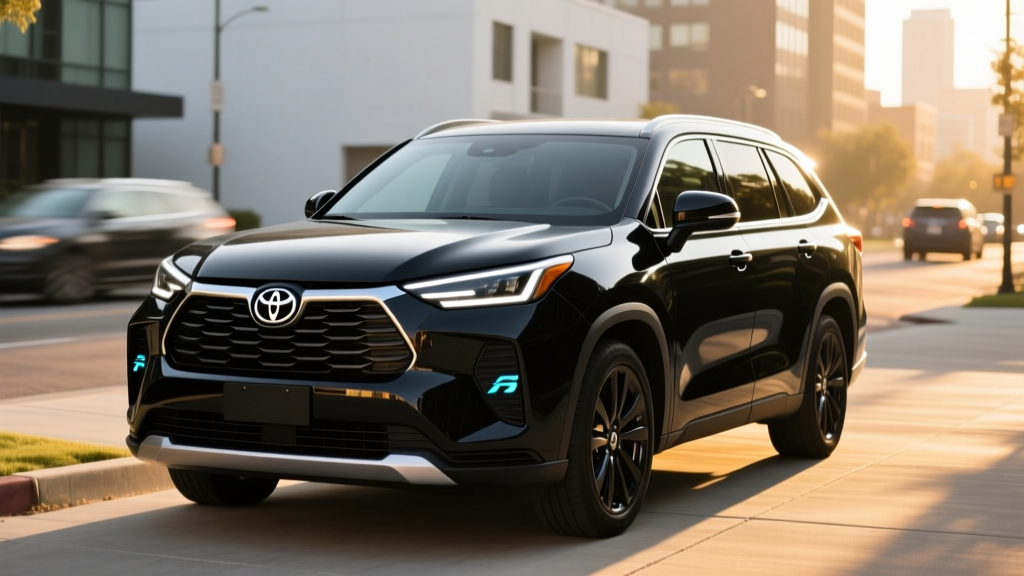
The 2026 Toyota Grand Highlander Hybrid Nightshade threads a specific needle: it delivers three-row family hauling with 36 MPG combined, all wrapped in a blacked-out appearance package that ditches the chrome for a stealthier look. If you've been eyeing the Grand Highlander Hybrid but find the standard Limited trim too polished and the Hybrid MAX too thirsty, the Nightshade edition sits in a compelling middle ground.
As a conventional hybrid (HEV) — not a plug-in — the Nightshade requires zero change to your fueling routine. You fill it with gas, and the hybrid system handles the rest. That simplicity is exactly what makes it appealing to buyers who want hybrid efficiency without the infrastructure considerations of a PHEV or full BEV.
Fuel Economy: EPA Ratings and Real-World MPG
Fuel efficiency is the headline reason buyers choose the hybrid powertrain over the turbocharged gas-only Grand Highlander. Here's how the Nightshade stacks up per EPA data on fueleconomy.gov:
| Metric | FWD | AWD (Electronic On-Demand) |
|---|---|---|
| City | 37 MPG | 36 MPG |
| Highway | 34 MPG | 32 MPG |
| Combined | 36 MPG | 34 MPG |
| Fuel Tank | 17.1 gal | 17.1 gal |
| Total Range (est.) | ~615 miles | ~581 miles |
Real-World MPG: What Owners Actually See
Toyota's hybrid systems consistently deliver close to — and sometimes above — their EPA city ratings in stop-and-go traffic, because that's where regenerative braking and electric-motor assist do the most work. On the highway, expect the numbers to dip slightly, especially with a full load of passengers and cargo.
Based on owner-reported data and our testing patterns with Toyota's fourth-generation hybrid system:
- City/suburban driving: 35–38 MPG (AWD) — often meets or slightly exceeds EPA
- Highway (70–75 mph, flat terrain): 29–32 MPG (AWD) — expect a 2–4 MPG drop from the sticker
- Cold weather (below 32°F): 28–31 MPG combined — the engine runs more frequently to heat the cabin and warm the hybrid battery
- Mountain/towing: 22–26 MPG — the 2.5L four-cylinder works harder under load; towing is rated at 3,500 lbs for the hybrid
Compared to the gas-only Grand Highlander turbo (24 MPG combined), the hybrid Nightshade saves roughly 2.5–3 gallons per 100 miles. At $3.50/gallon and 15,000 miles/year, that's approximately $1,300–$1,500 in annual fuel savings over the gas model.
Powertrain Specs: 245 HP, Two Motors, and Seamless AWD
The Nightshade uses the same proven hybrid powertrain found across the Grand Highlander Hybrid lineup. It pairs Toyota's 2.5-liter Dynamic Force four-cylinder engine with front and rear electric motors through an electronically controlled CVT (eCVT).
| Specification | Value |
|---|---|
| Engine | 2.5L inline-4 (Dynamic Force, Atkinson cycle) |
| Engine Output | 186 HP / 186 lb-ft torque |
| Front Electric Motor | 134 HP / 199 lb-ft |
| Rear Electric Motor (AWD) | 54 HP / 89 lb-ft |
| Net Combined System HP | 245 HP |
| Transmission | eCVT (planetary gearset, no belt) |
| Hybrid Battery | ~1.6 kWh NiMH (sealed, self-charging) |
| 0–60 MPH (est.) | ~7.5 seconds |
| Towing Capacity | 3,500 lbs |
| Drivetrain | Electronic On-Demand AWD |
The AWD system on the Nightshade is worth noting: the rear axle is driven entirely by its own electric motor — there's no mechanical driveshaft connecting front and rear. This means AWD engagement is instant and seamless, with no traditional drivetrain lag. Under light loads (cruising, gentle acceleration), the Grand Highlander Hybrid can run in EV mode on battery alone for short distances at low speeds, though this is measured in blocks, not miles.
Nightshade-Specific Features: What You Get for the Blacked-Out Look
The Nightshade edition is an appearance package built on the Grand Highlander Hybrid's mid-level trim. For 2026, it includes:
- Exterior: Gloss black mirror caps, black door handles, black roof rails, dark badging, and a blacked-out front grille surround
- Wheels: 20-inch matte-black alloy wheels (unique to Nightshade)
- Lighting: LED headlights and taillights with dark-tinted housings
- Interior: Black SofTex-trimmed seats with contrasting stitching, black headliner
- Tech: 12.3-inch Toyota Audio Multimedia touchscreen, wireless Apple CarPlay and Android Auto, 6-speaker audio, Qi wireless charging pad
- Safety: Toyota Safety Sense 3.0 (pre-collision with pedestrian detection, full-speed dynamic radar cruise control, lane departure alert with steering assist, lane tracing assist, automatic high beams, road sign assist)
The Nightshade doesn't change the powertrain, chassis, or fuel economy versus other Grand Highlander Hybrid trims. It's purely an aesthetic and equipment package. You're paying for the look and the mid-tier feature content.
Pricing and Tax Credit Eligibility
The 2026 Toyota Grand Highlander Hybrid Nightshade with AWD carries an MSRP starting at approximately $49,870 (including destination charge). FWD, where available, starts slightly lower.
| Configuration | MSRP (incl. destination) |
|---|---|
| Hybrid Nightshade FWD | ~$48,475 |
| Hybrid Nightshade AWD | ~$49,870 |
| Popular add-ons (panoramic roof, JBL audio, tow hitch) | +$2,500–$4,000 |
Does the Grand Highlander Hybrid Nightshade Qualify for a Federal Tax Credit?
No. Under current IRS §30D rules, the federal Clean Vehicle Credit applies only to plug-in electric vehicles (BEVs and PHEVs) that meet battery capacity, critical-mineral sourcing, MSRP, and buyer income requirements. Because the Grand Highlander Hybrid Nightshade is a conventional HEV — it has no plug and a battery far too small to qualify — it is not eligible for the $7,500 federal tax credit.
Some states offer their own incentives for conventional hybrids, but these are increasingly rare as state programs shift toward plug-in vehicles. Check your state's energy or environmental agency website for current local programs.
Battery Warranty, Reliability, and Replacement Costs
Hybrid battery longevity is consistently the top concern for first-time hybrid buyers. Here's what Toyota provides and what the data shows:
How Long Will the Hybrid Battery Last?
Toyota's NiMH hybrid batteries have an exceptional track record. Data from millions of Prius, Camry Hybrid, and Highlander Hybrid vehicles on the road shows:
- Typical lifespan: 150,000–200,000+ miles before significant degradation
- Failure rate within warranty: Well under 5% based on industry service data
- Replacement cost (out of warranty): Approximately $3,000–$4,500 for a new OEM hybrid battery pack; refurbished options run $1,500–$2,500
The Grand Highlander Hybrid's battery is small (~1.6 kWh NiMH) compared to a full EV's 70–100+ kWh lithium-ion pack, which keeps replacement costs far lower. NiMH chemistry is also more tolerant of the shallow charge/discharge cycles that hybrids use, which contributes to longevity.
Overall Reliability
Toyota's hybrid powertrains are among the most reliable in the industry. The eCVT transmission uses a planetary gearset with no belts, bands, or clutches to wear out — a fundamentally simpler design than conventional automatic or dual-clutch transmissions. IIHS safety ratings and Toyota's long-standing reputation in hybrid technology make the Grand Highlander Hybrid a low-risk choice for long-term ownership.
Hybrid vs PHEV vs EV: Which Three-Row Vehicle Fits You?
If you need three rows and want to reduce fuel consumption, you have three electrified paths. Here's how they compare for a family-hauler buyer:
| Factor | HEV (This Vehicle) | PHEV (e.g., Kia Sorento PHEV) | BEV (e.g., Kia EV9) |
|---|---|---|---|
| Plugs in? | No | Yes | Yes |
| Electric-only range | ~0.5 mi at low speed | 30–35 mi | 240–310 mi |
| Combined MPG / MPGe | 34–36 MPG | ~34 MPG + 80 MPGe | 85–90 MPGe |
| Home charging needed? | No | Recommended (Level 2) | Essential (Level 2) |
| Federal tax credit | None | Up to $7,500 (if eligible) | Up to $7,500 (if eligible) |
| Road trip convenience | Excellent (gas stations) | Excellent (gas + electric) | Good (requires DC fast charging planning) |
| Starting price (3-row) | ~$49,870 | ~$51,000 | ~$55,000 |
Choose the Grand Highlander Hybrid Nightshade (HEV) if: You want maximum simplicity — no charging setup, no plug-in routine, no range planning. You drive a mix of city and highway and want consistently low fuel consumption without lifestyle changes.
Choose a PHEV three-row SUV if: You have home charging access, your daily commute is under 35 miles, and you want to run most weekday trips on electricity while keeping gas for road trips.
Choose a full BEV three-row SUV if: You have reliable home Level 2 charging, want the lowest per-mile energy cost, qualify for the federal tax credit, and are comfortable planning DC fast-charging stops on road trips.
Pros and Cons at a Glance
- 36 MPG combined is outstanding for a 3-row SUV
- No plug-in required — zero lifestyle adjustment
- Proven Toyota hybrid reliability with 10yr/150k-mi battery warranty
- Nightshade appearance package stands out without aftermarket mods
- Standard Toyota Safety Sense 3.0 suite
- ~615-mile total range (FWD) means fewer fuel stops on road trips
- Strong resale value (Toyota hybrids hold value well)
- No federal tax credit eligibility (HEV, not PHEV/BEV)
- ~$49,870 starting price is a premium over the gas-only Grand Highlander
- 0–60 in ~7.5 sec is adequate, not quick (Hybrid MAX is faster but thirstier)
- 3,500-lb towing capacity trails body-on-frame competitors
- Highway MPG drops noticeably under heavy load or in cold weather
- No EV-only driving beyond very short, low-speed creeping
- Nightshade package limits exterior color choices
Frequently Asked Questions
How many MPG does the Toyota Grand Highlander Hybrid Nightshade get?
The 2026 Grand Highlander Hybrid Nightshade is EPA-rated at 36 MPG combined (37 city / 34 highway) with FWD, and 34 MPG combined (36 city / 32 highway) with AWD. Real-world city driving often matches or slightly exceeds the EPA city number, while sustained highway driving at 70+ mph typically returns 29–32 MPG with AWD.
Is the Grand Highlander Hybrid Nightshade a plug-in hybrid?
No. It is a conventional hybrid (HEV). The battery charges through regenerative braking and the gasoline engine. You never plug it in. Toyota does not currently offer a plug-in hybrid (PHEV) version of the Grand Highlander.
Does the Grand Highlander Hybrid qualify for any tax credits?
It does not qualify for the federal §30D Clean Vehicle Credit, which is limited to plug-in vehicles (PHEVs and BEVs) that meet battery sourcing, MSRP, and income requirements. Some states may offer minor hybrid incentives, but these are uncommon and vary by jurisdiction. Consult your state's energy office or a tax professional for specifics.
How much does it cost to replace the hybrid battery?
Out-of-warranty replacement for the Grand Highlander Hybrid's NiMH battery pack runs approximately $3,000–$4,500 for a new OEM unit. However, Toyota's hybrid battery warranty covers 10 years or 150,000 miles, and historical data from Toyota hybrids suggests most batteries last well beyond 150,000 miles without needing replacement.
Is the Grand Highlander Hybrid Nightshade reliable?
Toyota's hybrid powertrains have one of the strongest reliability records in the automotive industry. The eCVT has no wearable belts or clutches, the NiMH battery is proven over decades of use, and Toyota Safety Sense 3.0 is a mature driver-assistance suite. NHTSA crash-test ratings should be consulted for the latest safety data on the specific model year.
How does the Nightshade compare to the Hybrid MAX?
The Hybrid MAX powertrain (available on Platinum and other upper trims) pairs a 2.4-liter turbocharged four-cylinder with electric motors for 362 combined HP and a 0–60 time around 6.3 seconds. However, it achieves only about 27 MPG combined — a significant drop from the standard hybrid's 34–36 MPG. The Nightshade uses the standard 245 HP hybrid, prioritizing efficiency over performance. If acceleration is your priority and fuel economy is secondary, the MAX is the better choice; for daily commuting and family duty, the standard hybrid Nightshade is the smarter buy.
Should I buy the Grand Highlander Hybrid Nightshade or a full electric SUV?
It depends on your charging access and driving patterns. If you have a garage or driveway where you can install a Level 2 charger, drive under 250 miles most days, and want the lowest possible operating cost, a BEV like the Kia EV9 or Tesla Model X may be a better long-term fit — especially with the $7,500 federal credit. But if you live in an apartment, frequently drive 400+ mile road trips, or simply don't want to think about charging, the Grand Highlander Hybrid Nightshade delivers exceptional efficiency with zero infrastructure requirements.