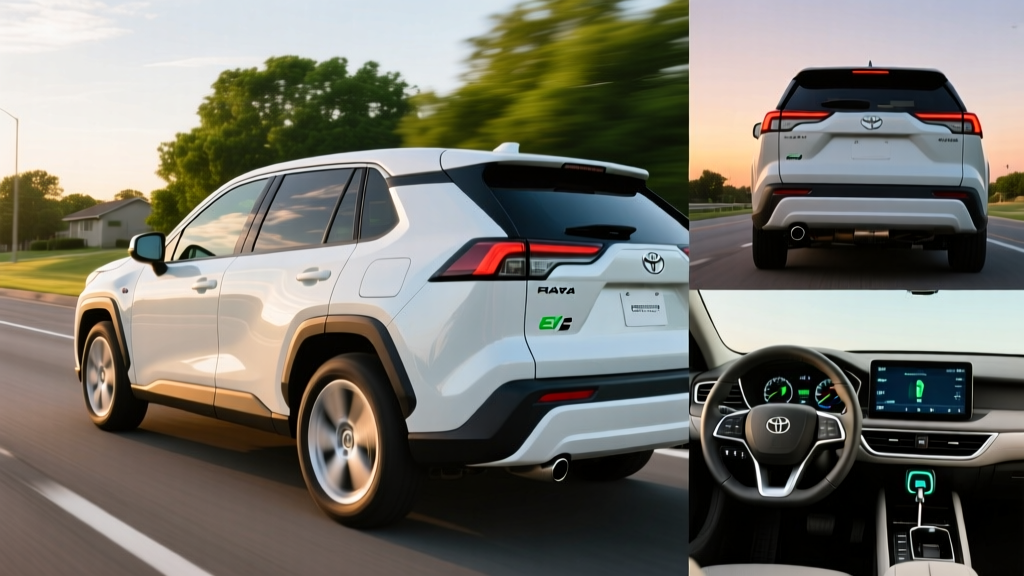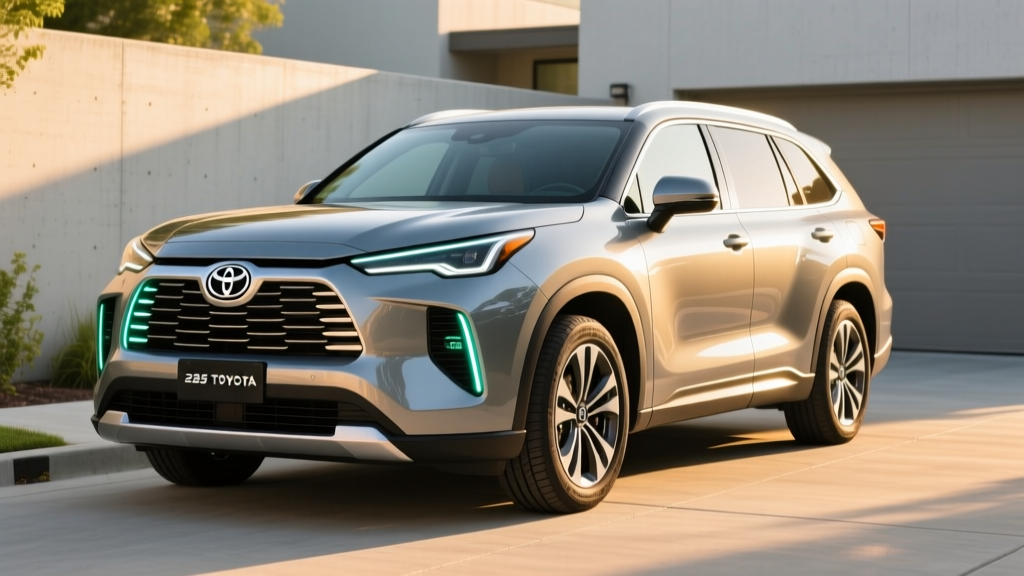
The three-row SUV segment rarely rewards enthusiasts, but the 2026 Toyota Grand Highlander Hybrid MAX Limited threads a needle most competitors miss: it delivers genuine performance, seats seven adults comfortably, and still sips fuel at a rate that embarrasses body-on-frame rivals. If you've been cross-shopping the Mazda CX-90, Kia Sorento Hybrid, or even considering a full electric alternative like the Kia EV9, this powertrain deserves a hard look — especially if you lack reliable home charging access.
Below, we break down every number that matters: EPA fuel economy, real-world MPG expectations, the Hybrid MAX powertrain architecture, battery warranty coverage, and whether the Limited trim's premium over lower grades actually pays off.
HEV vs PHEV vs EV: Where the Grand Highlander Hybrid MAX Fits
Before diving into specs, it's worth clarifying what this vehicle is — and what it isn't. The Grand Highlander Hybrid MAX is a conventional hybrid electric vehicle (HEV). It does not plug in. There is no electric-only driving range to deplete, no Level 2 charger to install, and no federal §30D tax credit eligibility. The hybrid system recovers energy during braking and deceleration, stores it in a small lithium-ion battery, and deploys it to assist the turbocharged gas engine during acceleration.
| Attribute | HEV (This Vehicle) | PHEV (e.g., Grand Highlander PHEV) | BEV (e.g., Kia EV9) |
|---|---|---|---|
| Plugs in? | No | Yes | Yes |
| Electric-only range | N/A | ~30 mi (est.) | 250–300 mi |
| Home charging needed | No | Recommended (Level 2) | Essential |
| Federal tax credit (§30D) | Not eligible | Up to $7,500* | Up to $7,500* |
| Best for | No home charger, road trips | Short commutes + road trips | Home charging + daily driving |
*§30D credit eligibility depends on MSRP caps, buyer income limits, battery sourcing, and point-of-sale transfer rules. Verify current-year rules at irs.gov.
Toyota also offers a standard Grand Highlander Hybrid (non-MAX) and has introduced a plug-in hybrid variant in select markets. The Hybrid MAX is the performance-oriented HEV — think of it as Toyota's answer to the turbocharged V6 engines that used to dominate this segment, but with roughly 30% better fuel economy.
Fuel Economy: EPA Ratings and Real-World MPG
The Hybrid MAX powertrain sacrifices a small amount of efficiency for its additional output. Here's what the EPA says, versus what you should actually expect in daily use.
| Driving Cycle | EPA Estimate | Real-World Expectation |
|---|---|---|
| City | 26 MPG | 27–29 MPG (hybrids excel in stop-and-go) |
| Highway | 27 MPG | 24–26 MPG (turbo engine works harder at speed) |
| Combined | 27 MPG | 25–27 MPG |
The counterintuitive result — city MPG matching or exceeding highway MPG — is a hallmark of Toyota's hybrid system. Regenerative braking recaptures kinetic energy in traffic, and the electric motor handles low-speed launches where gas engines are least efficient. On a 200-mile highway loop at 75 mph, expect the Hybrid MAX to settle around 24–25 MPG, particularly with the AWD system engaged and three rows occupied.
Compared to the standard Grand Highlander Hybrid (non-MAX), which achieves an EPA-estimated 34 MPG combined, the MAX's turbocharged 2.4-liter engine and sport-tuned calibration cost you roughly 7 MPG. That's the trade-off for 110 additional horsepower and a noticeably more responsive driving character.
Hybrid MAX Powertrain: 362 HP, Turbocharged Architecture
The Hybrid MAX system pairs a 2.4-liter turbocharged four-cylinder engine with a high-output electric motor integrated into the front transaxle, plus a rear-mounted electric motor for electronic all-wheel drive (AWD). Combined output is 362 horsepower and 400 lb-ft of torque.
| Specification | 2026 Grand Highlander Hybrid MAX Limited |
|---|---|
| Engine | 2.4L turbocharged 4-cylinder |
| Combined horsepower | 362 hp |
| Combined torque | 400 lb-ft |
| Transmission | 6-speed automatic (Direct Shift) |
| Drivetrain | AWD (electronic rear motor) |
| 0–60 mph | ~5.8 seconds (mfr. estimate) |
| Towing capacity | 5,000 lbs |
| Seating | 7 passengers (standard) |
| Cargo volume (behind 3rd row) | 20.6 cu ft |
| Cargo volume (all rows folded) | 97.5 cu ft |
Unlike the standard Hybrid's continuously variable transmission (CVT), the Hybrid MAX uses a conventional 6-speed automatic. This gives it a more linear, familiar acceleration feel — no "motorboat" drone under hard throttle. The rear electric motor provides instant torque to the rear axle, improving traction without a mechanical driveshaft. In practice, the Hybrid MAX pulls away from stoplights with authority that the standard hybrid simply can't match, and highway passing confidence is excellent.
Battery Warranty, Lifespan, and Replacement Costs
Hybrid Battery Warranty: Toyota covers the hybrid battery assembly for 10 years or 150,000 miles (whichever comes first) on all 2020+ model-year hybrids. This is one of the most comprehensive hybrid battery warranties in the industry.
Hybrid Battery Replacement Cost: Out-of-warranty replacement for a Toyota hybrid battery pack typically ranges from $3,000 to $5,000 depending on the model, including labor. Third-party refurbishment services can reduce this to $1,500–$2,500.
The Hybrid MAX uses a compact lithium-ion battery pack — significantly smaller than a PHEV or BEV battery (typically 1–2 kWh usable capacity versus 15–100+ kWh in plug-in vehicles). Because the battery never fully depletes or fully charges during normal operation — Toyota's system maintains a state-of-charge window between roughly 40% and 80% — degradation is minimal. Data from Toyota's earlier hybrid systems (Prius, Camry Hybrid) shows battery packs routinely lasting 150,000–200,000+ miles before capacity loss becomes noticeable.
The hybrid system battery is separate from the standard 12V auxiliary battery, which follows a typical 3–5 year replacement cycle identical to any conventional vehicle.
Pricing, Trims, and Tax Credit Eligibility
The 2026 Grand Highlander Hybrid MAX Limited starts at an MSRP of approximately $54,000 (including destination). Key Limited-trim upgrades over the Hybrid MAX XLE include a panoramic glass roof, heated and ventilated second-row captain's chairs, a 12.3-inch digital instrument cluster, leather-trimmed seats, and Toyota's 360-degree camera system.
Federal tax credit status: The Grand Highlander Hybrid MAX is a conventional HEV and does not qualify for the IRS §30D Clean Vehicle Credit, which applies only to plug-in electric vehicles (PHEVs and BEVs) meeting battery sourcing, MSRP, and buyer income requirements. Some states may offer separate incentives for hybrid purchases — check your state energy office for current programs.
For buyers who specifically want federal tax credit eligibility, Toyota's plug-in hybrid options (such as the RAV4 Prime or Prius Prime, depending on current-year sourcing compliance) or a full BEV like the Hyundai Ioniq 5 or Tesla Model Y would be required. The §30D credit phases based on manufacturer sales volume and has specific MSRP caps ($80,000 for SUVs) and adjusted gross income limits ($300,000 joint / $150,000 single). Always verify current rules at irs.gov before purchasing.
Who Should Choose the Hybrid MAX Over an EV or Gas SUV?
Choose the Grand Highlander Hybrid MAX if:
- You regularly drive 300+ mile road trips and don't want to plan around charging stops
- You lack access to home Level 2 charging (apartment, street parking, no garage)
- You need 5,000-lb towing capacity with three-row seating
- You want responsive acceleration without the fuel cost of a turbo V6
- You plan to own the vehicle 8–12 years and value Toyota's reliability track record
Consider a PHEV or full EV instead if:
- Your daily commute is under 30 miles and you can install a Level 2 home charger
- You want to minimize or eliminate gasoline use
- You qualify for the full $7,500 federal tax credit (significantly reducing EV/PHEV effective cost)
- You live in a state with low electricity rates and high gas prices (California, New York, Hawaii)
The Hybrid MAX occupies a specific niche: buyers who need three-row utility and road-trip capability but still want meaningful fuel savings and modern powertrain technology. It's the pragmatic choice when home charging isn't feasible, or when you simply don't want to alter your refueling habits.
Pros, Cons, and the Verdict
Pros
- 362 hp provides genuine passing power and confident merging
- 27 MPG combined in a 3-row, 5,000-lb-tow SUV is exceptional
- No plug-in required — fuel anywhere, no range planning
- 10-year / 150,000-mile hybrid battery warranty
- 7-passenger seating with usable third row (adults fit)
- Toyota Safety Sense 3.0 standard (adaptive cruise, lane centering, auto emergency braking)
Cons
- 7 MPG penalty vs. standard Grand Highlander Hybrid (non-MAX)
- No federal tax credit eligibility (HEV, not PHEV/BEV)
- $54,000+ starting price for Limited trim is steep
- Hybrid MAX AWD system adds weight; handling is competent but not sporty
- Third-row cargo space (20.6 cu ft) is tight with all seats in use
Frequently Asked Questions
How many MPG does the Toyota Grand Highlander Hybrid MAX Limited get?
The EPA rates the 2026 Grand Highlander Hybrid MAX at 26 city / 27 highway / 27 combined MPG. In real-world driving, expect 27–29 MPG in city traffic (where the hybrid system excels) and 24–26 MPG on sustained highway trips at 70–80 mph.
Does the Grand Highlander Hybrid MAX plug in?
No. The Hybrid MAX is a conventional hybrid (HEV). It charges its own battery through regenerative braking and engine power. You never plug it in — you simply refuel at any gas station.
Is the Hybrid MAX reliable, and what does battery replacement cost?
Toyota's hybrid systems have an extensive reliability track record spanning two decades. The hybrid battery is warrantied for 10 years / 150,000 miles. Out-of-warranty replacement typically costs $3,000–$5,000, though many Toyota hybrid batteries last well beyond 200,000 miles without significant degradation.
Does the Grand Highlander Hybrid MAX qualify for a federal tax credit?
No. The IRS §30D Clean Vehicle Credit applies only to plug-in electric vehicles (PHEVs and BEVs) meeting specific battery sourcing and MSRP requirements. The Hybrid MAX is a conventional HEV and is not eligible. Check your state energy office for any local hybrid incentives.
Hybrid MAX vs. standard Grand Highlander Hybrid — which should I choose?
Choose the standard Hybrid (34 MPG combined, 245 hp) if fuel economy is your top priority and you don't need aggressive acceleration or 5,000-lb towing. Choose the Hybrid MAX (27 MPG combined, 362 hp) if you want confident highway passing power, faster acceleration (~5.8 sec 0–60), and maximum towing capability.
Can the Hybrid MAX tow a boat or camper trailer?
Yes. The Hybrid MAX is rated to tow up to 5,000 pounds when properly equipped, sufficient for most small-to-medium boat trailers, pop-up campers, and utility trailers.
Sources: EPA fuel economy data via fueleconomy.gov; Toyota specifications via toyota.com; IRS §30D credit rules via irs.gov.