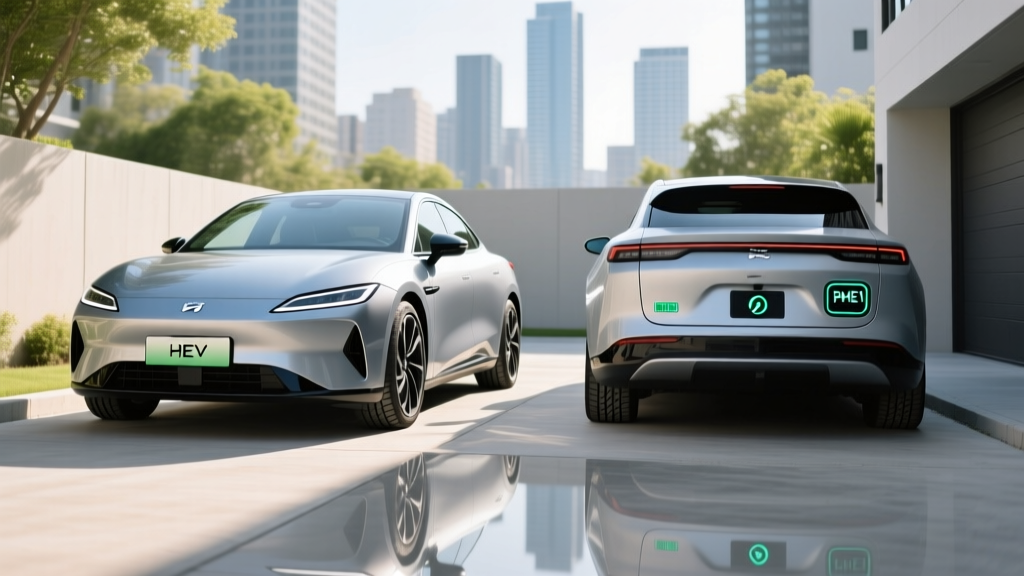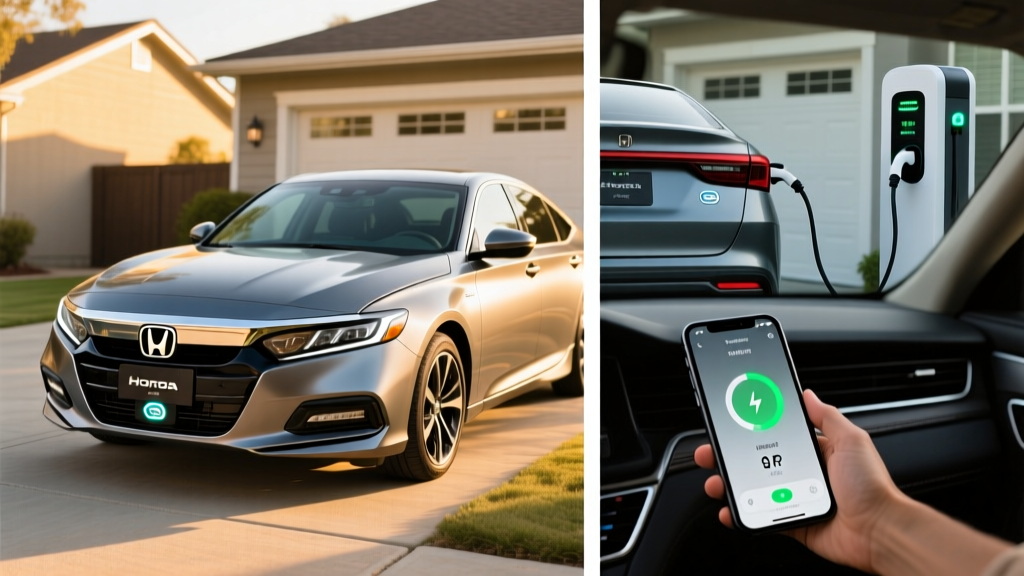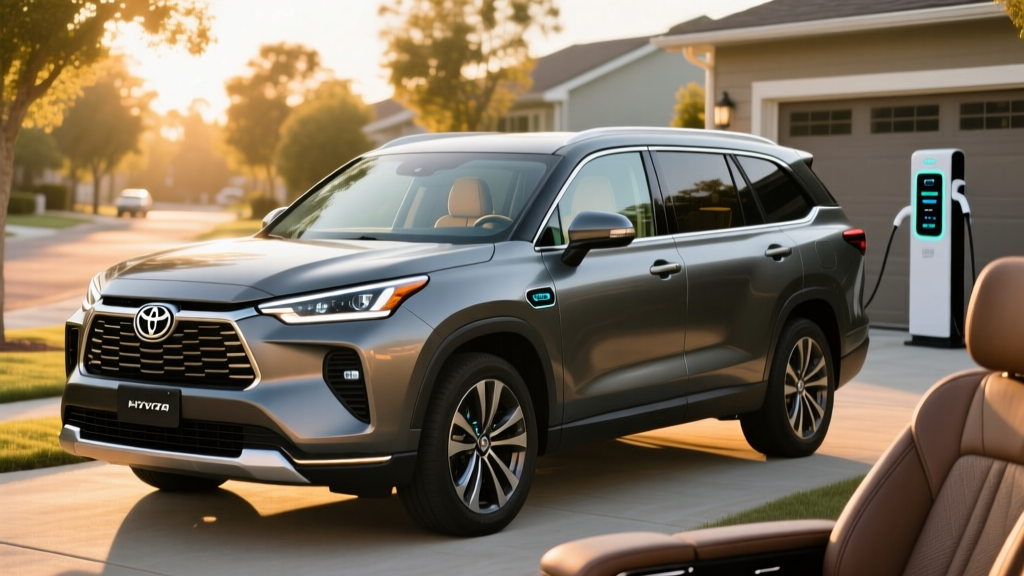
If your household needs three usable rows, all-wheel drive, and fuel economy that embarrasses most midsize crossovers, the Toyota Grand Highlander Hybrid 7 seater sits at the top of a very short list. For 2026, Toyota continues to offer this three-row hybrid in two distinct powertrain flavors — a conventional hybrid (HEV) and a plug-in hybrid (PHEV) variant called the Hybrid MAX — each with very different efficiency profiles, pricing, and daily-use cases. This guide breaks down exact EPA numbers, real-world fuel economy expectations, powertrain specs, warranty coverage, and tax-credit eligibility so you can decide which version fits your driving life.
HEV vs PHEV: Which Grand Highlander Hybrid Is Which?
Toyota sells the Grand Highlander with two electrified powertrains, and confusing them is easy if you only glance at the badge. Here is the critical distinction:
Grand Highlander Hybrid (HEV)
A conventional self-charging hybrid. It pairs a 2.5-liter four-cylinder engine with front and rear electric motors. You never plug it in — the battery recharges through regenerative braking and the engine. It operates seamlessly between electric and gas power, prioritizing efficiency in stop-and-go driving.
Grand Highlander Hybrid MAX (PHEV)
A plug-in hybrid that pairs a turbocharged 2.4-liter engine with more powerful electric motors and a larger battery pack. You can plug it in to charge, and it delivers a meaningful electric-only driving range before the gas engine engages. It also produces substantially more horsepower.
The HEV is the volume seller and the fuel-economy champion. The Hybrid MAX trades some efficiency for 362 combined horsepower and a sportier driving feel. Both seat seven (or eight with a second-row bench), but the HEV is the version most families should consider first.
Fuel Economy: EPA MPG and Real-World Expectations
The standard Grand Highlander Hybrid with all-wheel drive (AWD) carries EPA ratings that put it ahead of nearly every three-row crossover on the market. According to fueleconomy.gov, the 2026 Grand Highlander Hybrid AWD achieves:
| Configuration | City MPG | Highway MPG | Combined MPG |
|---|---|---|---|
| Grand Highlander Hybrid AWD (HEV) | 36 | 32 | 34 |
| Grand Highlander Hybrid FWD (HEV) | 37 | 34 | 36 |
| Grand Highlander Hybrid MAX AWD (PHEV) | 27 | 28 | 27 |
Real-world MPG reality check: Toyota's hybrid system excels in city driving, where the electric motors handle low-speed propulsion and regenerative braking recaptures energy at every stop. In mixed suburban driving, many owners report matching or slightly exceeding the EPA combined rating — 35 to 38 MPG is achievable if you avoid heavy highway cruising at 80+ mph. On a sustained 75-mph highway run, expect the HEV to settle around 29–31 MPG. Cold weather (below 30°F) will reduce efficiency by roughly 8–12%, as the engine runs more frequently to provide cabin heat and maintain battery temperature.
The Hybrid MAX, despite its plug-in capability, returns lower gas-only MPG because its turbocharged 2.4-liter engine and performance tuning prioritize output over efficiency. Its advantage comes from electric-only miles, not from fuel sipping once the battery is depleted.
Hybrid MAX PHEV: Electric-Only Range and Charging
For buyers considering the plug-in variant, the electric-only range is the number that matters most for daily commuting. The 2026 Grand Highlander Hybrid MAX includes an 18.1 kWh lithium-ion battery pack that delivers an EPA-estimated 32 miles of electric-only range. Total combined range (electric + gas) exceeds 450 miles.
| Specification | Hybrid MAX (PHEV) |
|---|---|
| Battery Capacity | 18.1 kWh |
| Electric-Only Range (EPA) | 32 miles |
| Total Combined Range | ~450+ miles |
| Level 2 Charge Time (0–100%) | ~2.5 hours at 7.2 kW |
| DC Fast Charging | Not available |
| Level 1 Charge Time (120V) | ~7 hours |
Charging reality: The Hybrid MAX does not support DC fast charging — a limitation worth knowing if you were hoping to top up on road trips. However, a Level 2 home charger (240V, 32A or higher) will fully replenish the battery in about 2.5 hours, making it practical to recharge overnight or between errands. On a standard 120V household outlet (Level 1), a full charge takes roughly 7 hours — feasible for overnight use if your daily electric commute stays under 30 miles.
If your round-trip commute is 25–30 miles and you can charge at home nightly, the Hybrid MAX lets you drive most weekdays without burning a drop of gasoline. Once the battery depletes, the vehicle operates as a conventional hybrid, though at the Hybrid MAX's lower 27 MPG combined rating rather than the standard HEV's 34 MPG.
Powertrain Specs: Horsepower, Engine, and Drivetrain
Both Grand Highlander Hybrid powertrains use Toyota's proven e-CVT architecture, but the hardware underneath differs substantially.
| Specification | Hybrid HEV | Hybrid MAX (PHEV) |
|---|---|---|
| Engine | 2.5L 4-cylinder | 2.4L Turbo 4-cylinder |
| Combined Horsepower | 245 hp | 362 hp |
| Combined Torque | 186 lb-ft (engine) + electric motor torque | 400 lb-ft (combined) |
| Front Motor | 134 hp / 199 lb-ft | 83 hp / 184 lb-ft |
| Rear Motor (AWD) | 54 hp / 89 lb-ft | 101 hp / 252 lb-ft |
| 0–60 mph (est.) | ~7.8 seconds | ~5.6 seconds |
| Drivetrain | FWD or AWD (eAWD) | AWD standard |
| Towing Capacity | 3,500 lbs | 5,000 lbs |
The standard HEV's 245 combined horsepower is adequate for a family hauler — merging onto highways and climbing grades requires planning but never feels underpowered. The electronic AWD system (eAWD) uses the rear motor to provide traction without a mechanical driveshaft, adding minimal weight and no efficiency penalty.
The Hybrid MAX's 362 horsepower and 400 lb-ft of torque transform the Grand Highlander into a genuinely quick crossover. The 5.6-second 0–60 time puts it in the same territory as many sport sedans, and the 5,000-pound towing capacity is a significant advantage if you pull a small boat or camper trailer.
Pricing, Trims, and Tax Credit Eligibility
The 2026 Toyota Grand Highlander Hybrid 7 seater is priced to compete with the Kia Sorento Hybrid, Mazda CX-90 PHEV, and Jeep Grand Cherokee L — though it undercuts most three-row plug-in hybrids.
| Trim / Configuration | Starting MSRP |
|---|---|
| Grand Highlander Hybrid LE (FWD) | $41,405 |
| Grand Highlander Hybrid XLE (AWD) | $44,855 |
| Grand Highlander Hybrid Limited (AWD) | $48,905 |
| Grand Highlander Hybrid MAX Limited (PHEV) | $54,990 |
| Grand Highlander Hybrid MAX Platinum (PHEV) | $59,290 |
Federal tax credit — the critical detail: Under current IRS §30D rules, only the Hybrid MAX PHEV variants are potentially eligible for the federal plug-in electric vehicle credit, since conventional hybrids (HEVs) do not qualify. However, eligibility is far from guaranteed. The credit depends on:
- Battery sourcing and critical minerals: The vehicle's battery components and critical minerals must meet phased-in domestic-content thresholds that tighten each year through 2030.
- MSRP caps: SUVs must have an MSRP at or below $80,000 — the Grand Highlander Hybrid MAX clears this easily.
- Buyer income limits: Modified adjusted gross income must not exceed $300,000 (joint), $225,000 (head of household), or $150,000 (single).
- Point-of-sale transfer: Eligible buyers can apply the credit as an upfront discount at the dealership rather than waiting for tax filing.
As of 2026, Toyota's PHEV credit eligibility varies by model year and production batch. Always verify the specific VIN on the fueleconomy.gov tax credit lookup tool before purchasing, and consult a tax professional to confirm your personal eligibility. The standard HEV receives no federal purchase credit, though some states offer rebates for hybrids — check your state energy office for local programs.
Battery Warranty, Reliability, and Replacement Costs
Toyota Hybrid Battery Warranty
Hybrid Battery: 10 years / 150,000 miles (whichever comes first), covering capacity below 60% of original.
Hybrid System Components: 8 years / 100,000 miles (inverter, motors, control modules).
Bumper-to-Bumper: 3 years / 36,000 miles.
Powertrain (engine/transmission): 5 years / 60,000 miles.
Toyota's hybrid reliability track record is among the strongest in the industry. The Prius, Camry Hybrid, and RAV4 Hybrid have collectively accumulated billions of real-world miles, and the 2.5-liter hybrid powertrain in the Grand Highlander HEV is a direct evolution of this proven architecture. Battery degradation in Toyota's nickel-metal hydride and lithium-ion hybrid packs is gradual — most owners see less than 10% capacity loss over the first decade.
Replacement cost if out of warranty: A Grand Highlander Hybrid battery replacement (refurbished or new) currently ranges from $3,500 to $5,500 installed at a dealership. Independent hybrid specialists often offer refurbished packs for $2,000–$3,500. For the Hybrid MAX's larger PHEV battery, expect $6,000–$9,000. However, Toyota's 10-year/150,000-mile warranty means most original owners will never face this cost, and the battery typically outlasts the vehicle's ownership cycle.
For reliability ratings, check the latest IIHS safety ratings and Consumer Reports predicted-reliability scores. Toyota's hybrid systems consistently rank at or near the top of their segment.
Who Should Choose the Grand Highlander Hybrid vs a Full EV or Gas SUV?
Decision Framework
Choose the Grand Highlander Hybrid HEV if: You want three rows, AWD, and 34+ MPG without changing any habits. No charging needed. Ideal for families who road-trip frequently, lack home charging access, or want the lowest total cost of ownership in the three-row segment.
Choose the Hybrid MAX PHEV if: Your daily commute is under 30 miles round-trip, you can install a Level 2 charger at home, and you want the option of electric-only weekday driving with 362 hp and 5,000-lb towing for weekends. You'll pay ~$10,000 more upfront but may offset it with fuel savings and a potential tax credit.
Consider a full EV (like the Kia EV9 or Tesla Model X) if: You have reliable home charging, your daily driving is under 250 miles, you want zero tailpipe emissions, and you're comfortable with DC fast charging on road trips. Full EVs have lower per-mile fuel costs but higher purchase prices and require charging infrastructure planning.
Stick with a gas-only SUV if: You drive very low annual miles (under 8,000), the hybrid premium isn't justified by fuel savings, or you need maximum towing capacity (6,000+ lbs) that only body-on-frame SUVs provide.
Pros and Cons at a Glance
Pros
- Class-leading 34–36 MPG combined (HEV) for a three-row SUV
- Genuine third-row space fits adults on shorter trips
- 10-year/150,000-mile hybrid battery warranty
- Hybrid MAX offers 362 hp and 5,000-lb towing
- No charging required for HEV — seamless ownership
- Strong Toyota resale value and reliability reputation
- Hybrid MAX PHEV: 32 miles electric-only covers most commutes
Cons
- HEV feels underpowered when fully loaded at highway speeds
- Hybrid MAX PHEV drops to just 27 MPG once battery depletes
- No DC fast charging on the PHEV variant
- HEV not eligible for federal §30D purchase credit
- Third row still tight for tall adults on long trips
- Hybrid MAX pricing pushes near $60K fully loaded
- Infotainment system lags behind competitors in responsiveness
Frequently Asked Questions
How many MPG does the Toyota Grand Highlander Hybrid get?
The 2026 Grand Highlander Hybrid AWD achieves 36 city / 32 highway / 34 combined MPG per the EPA. The FWD variant improves slightly to 37/34/36. In real-world suburban driving, 35–38 MPG is common; sustained highway driving at 75+ mph drops efficiency to roughly 29–31 MPG.
How far can the Grand Highlander Hybrid MAX go on electric only?
The Hybrid MAX PHEV delivers an EPA-estimated 32 miles of electric-only range from its 18.1 kWh battery. Real-world range varies with temperature and driving style — expect 26–30 miles in cold weather or at highway speeds, and up to 34 miles in mild conditions around town.
Does the Grand Highlander Hybrid qualify for a tax credit?
The conventional Hybrid (HEV) does not qualify for the federal §30D purchase credit — only plug-in vehicles are eligible. The Hybrid MAX PHEV may qualify for up to $7,500 depending on battery-sourcing compliance, buyer income limits, and MSRP caps. Verify your specific VIN on fueleconomy.gov and consult a tax professional before relying on the credit.
Is the Grand Highlander Hybrid reliable? What does a battery replacement cost?
Toyota's hybrid powertrains are among the most reliable in the automotive industry, backed by a 10-year/150,000-mile hybrid battery warranty. Out-of-warranty battery replacement costs $3,500–$5,500 for the HEV and $6,000–$9,000 for the Hybrid MAX PHEV. Most owners will sell or trade the vehicle before facing this expense.
Should I get the Grand Highlander Hybrid or a full electric SUV?
If you lack home charging, take frequent road trips over 300 miles, or want the lowest purchase price, the Grand Highlander Hybrid is the pragmatic choice. If you have Level 2 home charging, drive under 250 miles daily, and want minimal per-mile fuel costs, a full EV like the Kia EV9 may save more over five years despite a higher sticker price.
Do I need to plug in the standard Grand Highlander Hybrid?
No. The standard Grand Highlander Hybrid (HEV) is a self-charging conventional hybrid. It recovers energy through regenerative braking and the gasoline engine — you simply fill it with gas and drive. Only the Hybrid MAX PHEV variant requires (or benefits from) plugging in.