Toyota's Hybrid Crossover Lineup at a Glance
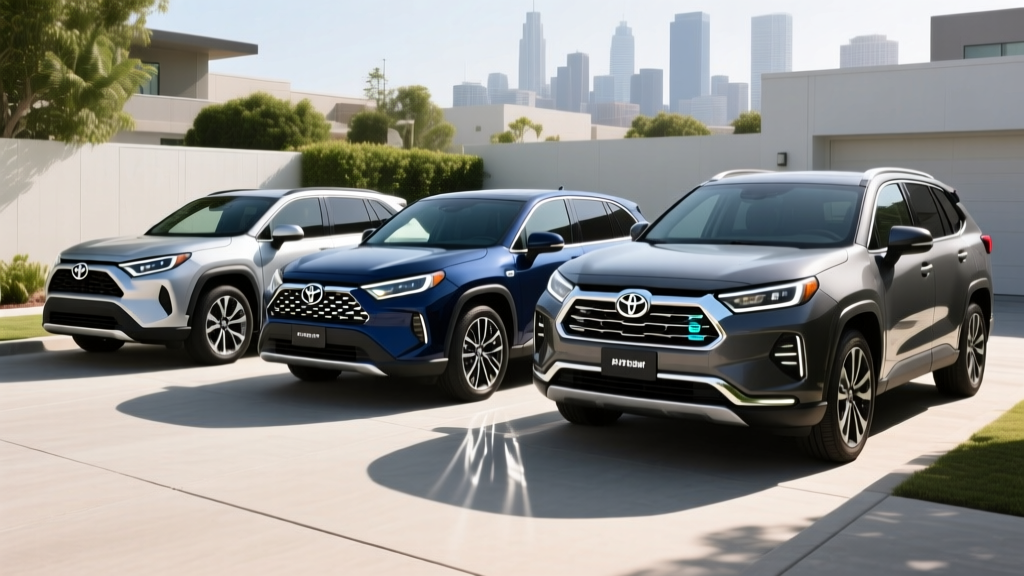
Toyota sells more hybrid crossovers in the US than any other automaker, and the 2026 lineup spans four distinct models — each built around the fifth-generation Toyota Hybrid System (THS). If you're searching for a Toyota crossover hybrid, the real decision isn't whether Toyota makes one that fits your life. It's whether you want a conventional hybrid (HEV) that never needs plugging in, or a plug-in hybrid (PHEV) that runs on electricity for short commutes before the gas engine takes over.
This guide breaks down every current Toyota hybrid crossover — the RAV4 Hybrid, the RAV4 Prime (PHEV), the Venza, and the Highlander Hybrid — with exact EPA figures, pricing, and ownership economics so you can choose confidently.
HEV vs PHEV: Which Toyota Hybrid Crossover Architecture Is Right for You?
Before comparing models, the fundamental architecture distinction matters because it dictates your fueling behavior, operating cost, and tax-credit eligibility.
Conventional Hybrid (HEV) — RAV4 Hybrid, Venza, Highlander Hybrid
- How it works: A small battery (1.0–1.6 kWh) captures energy from regenerative braking and the gas engine. You never plug it in.
- Electric-only driving: Brief, low-speed EV mode (typically under 1 mile at parking-lot speeds).
- Best for: Drivers without home charging access, apartment dwellers, or anyone who wants maximum simplicity.
- Tax credit: Not eligible for the federal §30D credit (that's reserved for PHEVs and BEVs).
Plug-In Hybrid (PHEV) — RAV4 Prime
- How it works: A larger battery (18.1 kWh usable) stores grid electricity. You plug it in at home or a public Level 2 charger to access its full electric range.
- Electric-only driving: Up to 42 EPA-rated miles on battery alone at full highway speeds.
- Best for: Commuters with home Level 2 charging who want EV daily driving plus gas-engine range for road trips.
- Tax credit: Potentially eligible for a partial federal §30D credit (up to $3,750) — subject to battery-sourcing, income, and MSRP rules.
2026 Toyota RAV4 Hybrid: The Best-Selling Crossover Hybrid in America
The RAV4 Hybrid remains the volume leader. For 2026, Toyota continues the fifth-generation 2.5-liter Dynamic Force inline-four paired with three electric motors (front and rear) in the electronic on-demand AWD configuration.
| Spec | Value |
|---|---|
| Powertrain | 2.5L I4 + 3 electric motors (AWD) |
| Combined Horsepower | 219 hp |
| 0–60 mph | 7.4 seconds |
| Battery | 1.6 kWh lithium-ion (sealed NiMH on base LE) |
| EPA MPG (City / Hwy / Combined) | 41 / 38 / 40 |
| Total Driving Range | ~580 miles |
| Fuel Tank | 14.5 gallons |
| Starting MSRP (LE AWD) | $33,575 |
| Federal Tax Credit | Not eligible (§30D requires plug-in capability) |
| Hybrid Battery Warranty | 10 years / 150,000 miles |
Real-World MPG vs. EPA Sticker
Toyota hybrids consistently match or exceed their EPA city ratings in stop-and-go driving because regenerative braking recaptures energy that a gas car wastes as heat. Owner-reported data on fueleconomy.gov shows the RAV4 Hybrid averaging 38–43 MPG in mixed driving. Highway-only trips at 75+ mph typically drop to 34–36 MPG, since the electric motor contributes less at sustained high speeds and aerodynamic drag dominates.
Real-world MPG expectation: EPA combined 40 MPG. Expect 38–43 MPG in city-heavy commuting, 34–36 MPG on highway road trips. Cold weather (below 30°F) can reduce fuel economy by 5–10% due to engine warm-up cycles and cabin heating demands.
2026 Toyota RAV4 Prime: The Plug-In Hybrid With 42 Miles of Electric Range
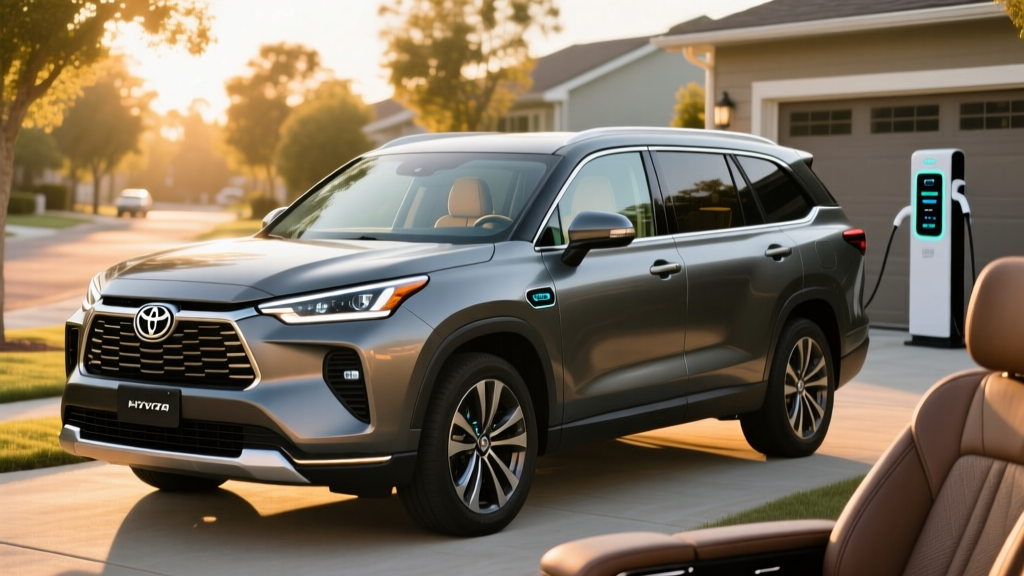
The RAV4 Prime is Toyota's most powerful RAV4 and the only plug-in hybrid crossover in the lineup. It pairs the same 2.5L engine with more powerful electric motors and an 18.1 kWh battery pack — delivering 302 combined horsepower and genuine EV-mode commuting capability.
| Spec | Value |
|---|---|
| Powertrain | 2.5L I4 + front/rear electric motors (AWD) |
| Combined Horsepower | 302 hp |
| 0–60 mph | 5.7 seconds |
| Battery (Usable) | 18.1 kWh lithium-ion |
| EPA Electric-Only Range | 42 miles |
| EPA MPGe (EV Mode) | 94 MPGe combined |
| EPA MPG (Hybrid Mode, After Battery Depletes) | 38 combined (36 city / 40 hwy) |
| Total Combined Range | ~600 miles |
| Level 2 Charging (240V, 32A) | ~2.5 hours (0–100%) |
| DC Fast Charging | Not available |
| Starting MSRP (SE) | $44,915 |
| Federal §30D Tax Credit | Up to $3,750 (subject to eligibility — see below) |
| Hybrid Battery Warranty | 10 years / 150,000 miles |
Electric-Only Range: What 42 Miles Actually Gets You
The EPA-rated 42 miles of EV range is sufficient for most daily commutes. According to EPA data, the average American drives roughly 37 miles per day. Charge nightly at home, and many Prime owners report using zero gasoline during the work week.
However, real-world electric range varies with conditions. In warm weather at city speeds, owners routinely see 44–48 miles. At sustained 70 mph highway speeds, expect 32–36 miles. In freezing temperatures with the cabin heater running, electric range can drop to 28–32 miles — the gasoline engine may activate to provide supplemental heat.
Charging the RAV4 Prime
The RAV4 Prime accepts up to 3.3 kW on Level 1 (120V household outlet) or 6.6 kW on Level 2 (240V). At 6.6 kW, a full charge takes approximately 2.5 hours — practical for overnight top-ups or workplace charging.
No DC fast charging. Toyota does not equip the Prime with a CCS or NACS DC fast-charge port. This is typical for PHEVs: the smaller battery doesn't justify the cost and weight of DC fast-charge hardware. For road trips, the gas engine eliminates range anxiety entirely.
2026 Toyota Venza and Highlander Hybrid: The Alternatives
If the RAV4 doesn't match your needs, Toyota offers two other hybrid crossovers:
| Model | City MPG | Highway MPG | Combined MPG | Combined HP | Starting MSRP |
|---|---|---|---|---|---|
| RAV4 Hybrid AWD | 41 | 38 | 40 | 219 | $33,575 |
| RAV4 Prime PHEV AWD | 36* | 40* | 38* / 94 MPGe | 302 | $44,915 |
| Venza AWD | 40 | 37 | 39 | 219 | $36,070 |
| Highlander Hybrid AWD | 35 | 35 | 35 | 243 | $42,670 |
* RAV4 Prime MPG figures shown are for charge-sustaining (hybrid) mode after battery depletion. See MPGe rating for blended EV+gas operation.
The Venza is mechanically similar to the RAV4 Hybrid but styled as a more premium two-row crossover with standard AWD and a slightly more refined interior. Fuel economy drops by 1 MPG combined due to additional weight and a more aerodynamic roofline that trades cargo height for style.
The Highlander Hybrid is Toyota's only three-row hybrid crossover, using a 2.5L hybrid system tuned for 243 hp. At 35 MPG combined, it outperforms every three-row gas SUV in its class. For 2026, it remains the default choice for families needing seven or eight seats without the fuel cost of a body-on-frame SUV.
Pricing, Trims, and Federal Tax Credit Eligibility
Toyota prices its hybrid crossovers at a modest premium over their gas-only equivalents — typically $1,500–$2,000 more for the hybrid powertrain. That premium pays for itself in fuel savings within 2–4 years for most drivers.
Federal §30D Tax Credit for the RAV4 Prime
Under current IRS rules, the RAV4 Prime may qualify for a partial federal tax credit. The maximum available for PHEVs with batteries under 16 kWh is limited, but the Prime's 18.1 kWh pack qualifies for a credit of up to $3,750, contingent on:
- Battery component sourcing: A percentage of battery components must be manufactured or assembled in North America (thresholds increase annually through 2029).
- Critical minerals: A percentage of critical minerals must be sourced from the US or a free-trade-agreement partner.
- Buyer income caps: Modified AGI must not exceed $150,000 (single), $225,000 (head of household), or $300,000 (joint).
- MSRP cap: The vehicle MSRP must not exceed $80,000 for SUVs/PHEVs.
- Point-of-sale transfer: Eligible buyers can transfer the credit to the dealer at purchase for an immediate price reduction.
Conventional hybrids (RAV4 Hybrid, Venza, Highlander Hybrid) do not qualify for the §30D credit. That credit is reserved for plug-in vehicles (PHEVs and BEVs). Always verify current-year eligibility on IRS.gov before purchasing — sourcing requirements tighten annually.
Hybrid Battery Reliability and Replacement Costs
Hybrid battery longevity is consistently the top concern for first-time hybrid buyers. Toyota's track record here is among the best in the industry, dating back to the original Prius in 1997.
Toyota Hybrid Battery Warranty (2026 models): 10 years or 150,000 miles, whichever comes first. This covers the hybrid traction battery against defects and capacity loss below a defined threshold (typically 60–70% of original capacity, varying by model).
How Long Do Toyota Hybrid Batteries Actually Last?
Real-world data from fleet operators, taxi services, and high-mileage owners shows Toyota hybrid batteries routinely lasting 150,000–250,000 miles before significant degradation. The RAV4 Hybrid uses a relatively small battery (1.6 kWh) that operates within a narrow state-of-charge window (roughly 40–80%), which dramatically extends cycle life compared to a full EV battery that cycles from 10–90%.
The RAV4 Prime's larger 18.1 kWh pack is similarly managed — Toyota's battery management system (BMS) maintains buffers at the top and bottom of the pack to prevent overcharging and deep discharge, the two primary causes of lithium-ion degradation.
Replacement Cost If the Battery Fails
Out-of-warranty hybrid battery replacement for a RAV4 Hybrid currently runs $2,500–$4,000 including parts and labor at a Toyota dealer. The RAV4 Prime's larger PHEV battery is more expensive — typically $5,000–$8,000. Independent hybrid specialists often offer refurbished or reconditioned packs at 30–50% lower cost. Third-party extended warranties are also available if you plan to keep the vehicle past the 10-year mark.
Hybrid vs PHEV vs Full EV: Which Toyota Fits Your Driving Pattern?
Choose the RAV4 Hybrid or Venza (HEV) if:
- You live in an apartment or lack access to home/workplace charging
- You want zero change to your fueling habits — just fill up at any gas station
- Your budget is under $38,000
- You drive mostly city miles where regenerative braking maximizes MPG
Choose the RAV4 Prime (PHEV) if:
- You have Level 2 home charging (240V) and a commute under 40 miles round-trip
- You want to drive on electricity daily but need gas-engine flexibility for road trips
- You want 302 hp — the quickest RAV4 Toyota makes
- You can potentially capture a $3,750 federal tax credit
Choose a full EV (like the Toyota bZ4X or a competitor) if:
- You have reliable home and/or workplace charging
- You want zero tailpipe emissions and minimal maintenance (no oil changes, no gas engine)
- You qualify for the full $7,500 §30D federal tax credit on a BEV
- Your daily driving is under 250 miles and you're comfortable planning DC fast-charge stops on road trips
Pros and Cons of Toyota's Hybrid Crossover Lineup
Pros
- Class-leading fuel economy across the lineup (35–40 MPG combined)
- Standard AWD on nearly all trims — rare in this segment
- 10-year / 150,000-mile hybrid battery warranty
- RAV4 Prime delivers 42 miles EV range + 302 hp + gas-engine road-trip flexibility
- Strong resale value — Toyota hybrids hold value better than most competitors
- Proven fifth-generation hybrid system with extensive reliability history
Cons
- RAV4 Hybrid highway MPG drops at sustained 75+ mph (34–36 real-world)
- RAV4 Prime has no DC fast charging — Level 2 only
- PHEV premium is steep: RAV4 Prime costs ~$11,000 more than the RAV4 Hybrid LE
- Infotainment and cabin materials lag behind Hyundai/Kia hybrid competitors
- Highlander Hybrid is the only three-row option — no hybrid 4Runner yet for 2026
- Federal tax credit for Prime is partial ($3,750 max) and subject to sourcing/income rules
2026 Toyota Crossover Hybrid FAQ
How many MPG does the Toyota RAV4 Hybrid get?
The 2026 RAV4 Hybrid AWD is EPA-rated at 41 city / 38 highway / 40 combined MPG. Real-world owners report 38–43 MPG in city-heavy driving and 34–36 MPG on sustained highway trips. Cold weather reduces these figures by roughly 5–10%.
How far can the RAV4 Prime go on electric only?
The 2026 RAV4 Prime delivers an EPA-rated 42 miles of electric-only range. In warm city driving, real-world range can reach 44–48 miles. Highway driving at 70 mph reduces this to 32–36 miles, and freezing temperatures may cut it to 28–32 miles as the engine activates for cabin heat.
Do Toyota hybrid crossovers need to be plugged in?
No — the RAV4 Hybrid, Venza, and Highlander Hybrid are conventional hybrids (HEVs). They charge their small batteries through regenerative braking and the gas engine. You never plug them in. Only the RAV4 Prime is a plug-in hybrid (PHEV) that benefits from being plugged into a Level 2 charger to access its full 42-mile EV range.
Is the Toyota hybrid system reliable, and what does battery replacement cost?
Toyota's hybrid system is one of the most proven in the industry, with over 25 years of production history. Hybrid batteries commonly last 150,000–250,000 miles. The warranty covers 10 years / 150,000 miles. Out-of-warranty replacement runs $2,500–$4,000 for the RAV4 Hybrid and $5,000–$8,000 for the RAV4 Prime.
Does any Toyota hybrid crossover qualify for a federal tax credit?
Only the RAV4 Prime (PHEV) is potentially eligible for the federal §30D clean vehicle credit — up to $3,750, subject to battery-sourcing requirements, buyer income caps ($150K single / $300K joint), and the $80,000 MSRP cap for SUVs. Conventional hybrids (RAV4 Hybrid, Venza, Highlander Hybrid) do not qualify. Verify current eligibility at IRS.gov.
How does the RAV4 Prime charge without DC fast charging?
The RAV4 Prime charges via Level 1 (120V standard outlet at ~3.3 kW, taking ~5.5 hours for a full charge) or Level 2 (240V at 6.6 kW, taking ~2.5 hours). Most Prime owners charge overnight at home. The lack of DC fast charging is typical for PHEVs and rarely a practical limitation since the gas engine provides unlimited range on road trips.
Toyota Venza vs RAV4 Hybrid — which should I buy?
They share the same 219 hp hybrid AWD powertrain and similar fuel economy (39 vs 40 MPG combined). The Venza offers a more premium interior, standard panoramic roof options, and slightly quieter ride, but sacrifices ~5 cubic feet of cargo space. Choose the Venza for style and refinement, the RAV4 Hybrid for utility and a lower starting price.