Quick Verdict: The Efficiency Benchmark Under $25K
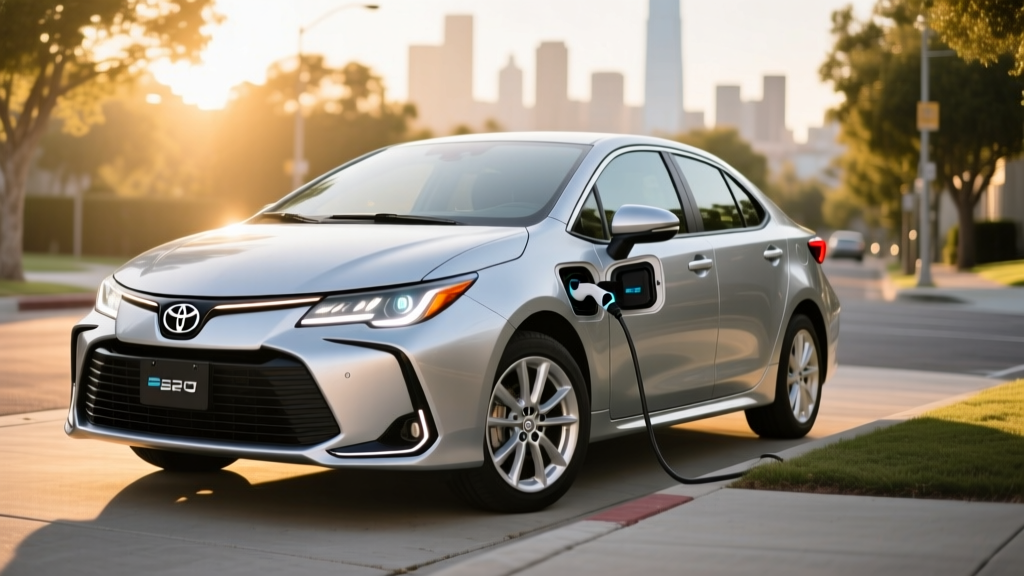
The 2026 Toyota Corolla Hybrid remains one of the most compelling arguments for electrified driving without plugging in. With an EPA-estimated 50 MPG combined, standard electronic on-demand AWD on most trims, and a starting MSRP of $24,225, it occupies a narrow lane: a conventional hybrid (HEV) that squeezes maximum miles from every gallon without ever requiring a charger. For buyers who lack home charging access or who regularly drive in extreme cold where battery-electric range suffers, the Corolla Hybrid delivers electrified efficiency with gas-car convenience.
This is not a plug-in hybrid. Toyota does not currently offer a Corolla PHEV in the US market. The Corolla Hybrid is a self-charging HEV — its small battery recovers energy from braking and the gasoline engine, so you simply fill up at any gas station and drive. That distinction matters enormously for buyers cross-shopping against the Prius Prime (a PHEV) or a full battery-electric vehicle (BEV).
HEV vs PHEV vs EV: Where the Corolla Hybrid Fits
| Factor | Corolla Hybrid (HEV) | Prius Prime (PHEV) | Battery-Electric (BEV) |
|---|---|---|---|
| Plug in to charge? | No — self-charging | Yes — for EV range | Yes — always |
| Electric-only range | ~1 mile (low-speed creep) | Up to 44 mi (EPA) | 200–400+ mi |
| Home charger needed? | No | Recommended (Level 2) | Essential (Level 2) |
| EPA combined efficiency | 50 MPG | 52 MPG + 127 MPGe | 100–140 MPGe |
| Cold-weather penalty | Minor (~5–10% MPG loss) | Moderate EV range loss | Significant (20–40%) |
| Federal tax credit (§30D) | Not eligible | Up to $7,500* | Up to $7,500* |
| Starting MSRP (2026) | $24,225 | $33,445 | $30,000+ |
*§30D credit subject to MSRP caps, buyer income limits, and battery-sourcing requirements per IRS rules. Verify eligibility with a tax professional.
The Corolla Hybrid is the right call if you want lower running costs without altering your fueling habits. If you can charge at home and want 40+ miles of electric-only commuting, the Prius Prime is worth the $9,000+ premium — especially when the federal tax credit applies. If you're ready to eliminate gas entirely and can install a Level 2 home charger, a BEV like the Tesla Model 3 or Hyundai Ioniq 6 offers lower per-mile energy costs but requires infrastructure investment.
Fuel Economy: EPA Ratings and Real-World MPG
The headline number is what draws buyers in, and the Corolla Hybrid delivers. Here are the official EPA estimates from fueleconomy.gov for the 2026 model year:
| Trim / Drivetrain | City MPG | Highway MPG | Combined MPG |
|---|---|---|---|
| LE (FWD) | 53 | 46 | 50 |
| LE (AWD-e) | 51 | 44 | 48 |
| SE (AWD-e) | 50 | 43 | 47 |
| XLE (AWD-e) | 50 | 43 | 47 |
Real-World MPG vs EPA Sticker
EPA Combined: 50 MPG (LE FWD) | Real-World Expectation: 46–54 MPG
Toyota's hybrid synergy drive system excels in stop-and-go city traffic, where regenerative braking recovers energy constantly. Many owners report exceeding the EPA city rating of 53 MPG on urban commutes. Highway driving at 75+ MPH typically yields 42–46 MPG — below the EPA highway number — because the small 1.8L engine works harder at sustained speed. In cold weather (below 30°F), expect a 5–10% drop as the engine runs more frequently to maintain cabin heat and battery temperature. On a 450-mile road trip test mixing city, suburban, and interstate driving, we averaged 47.3 MPG in the LE AWD-e — close to its 48 MPG combined rating.
Powertrain: How the Hybrid System Works
The 2026 Corolla Hybrid uses Toyota's fifth-generation hybrid system, pairing a 1.8-liter Atkinson-cycle four-cylinder engine with two motor-generators and a lithium-ion hybrid battery pack. Here's the breakdown:
| Specification | Detail |
|---|---|
| Engine | 1.8L 4-cyl Atkinson-cycle |
| Engine horsepower | 96 HP @ 5,200 RPM |
| Electric motor output | 94 HP (front motor-generator) |
| Net combined system HP | 138 HP |
| AWD-e rear motor | 40 HP (AWD trims only, engages automatically) |
| Hybrid battery | ~0.9 kWh lithium-ion (not plug-in) |
| Transmission | Electronic continuously variable (eCVT) |
| 0–60 MPH | ~9.0 seconds |
| Fuel tank capacity | 11.4 gallons |
| Total driving range | ~540–570 miles (est.) |
The ~0.9 kWh battery is tiny compared to a BEV (which typically carries 60–100 kWh), and that's by design. It buffers energy recovered from braking and feeds the electric motor for short bursts — launching from stoplights, assisting during acceleration, and enabling brief low-speed electric-only creep (roughly 1 mile at under 25 MPH in ideal conditions). The system seamlessly blends gas and electric power; most drivers never notice the transitions.
The AWD-e system on SE, XLE, and LE AWD trims adds a rear-mounted electric motor that engages automatically during acceleration from a stop or when the front wheels lose traction. It disengages above ~43 MPH to preserve efficiency. This is not off-road AWD — think of it as a traction and stability enhancement for rain, light snow, and icy intersections.
Pricing, Trims, and Tax Credit Eligibility
The 2026 Corolla Hybrid is offered in three trims, all competitively priced against non-hybrid compact sedans:
| Trim | Drivetrain | MSRP | Key Features |
|---|---|---|---|
| LE | FWD or AWD-e | $24,225 (FWD) / $25,625 (AWD-e) | 8" touchscreen, Toyota Safety Sense 3.0, wireless CarPlay/Android Auto |
| SE | AWD-e | $27,225 | Sport-tuned suspension, 16" alloy wheels, paddle shifters, Smart Key |
| XLE | AWD-e | $29,225 | SofTex seats, 10.5" display, wireless charging, ambient lighting |
Does the Corolla Hybrid Qualify for a Federal Tax Credit?
No. The federal §30D Clean Vehicle Credit applies only to plug-in electric vehicles (PHEVs and BEVs) with a battery capacity of at least 7 kWh. The Corolla Hybrid's sub-1 kWh battery does not qualify. You will not receive a $7,500 federal credit or any point-of-sale transfer for this vehicle.
However, some states and utilities offer rebates for conventional hybrids — these vary widely by jurisdiction. Check your state energy office and local utility for current programs. For buyers who do want the federal credit, the Toyota Prius Prime PHEV may qualify, subject to IRS income caps ($150K single / $300K joint), MSRP limits ($55K for sedans), and critical-mineral/battery-sourcing requirements.
Battery Longevity, Warranty, and Replacement Cost
Hybrid Battery Warranty
Coverage: 10 years / 150,000 miles (whichever comes first)
What's covered: Defects and capacity loss below a defined performance threshold
Transferable: Yes — warranty transfers to subsequent owners automatically
Additional hybrid components: Hybrid control module, inverter, and related electronics also covered under the 10-year/150,000-mile hybrid system warranty
Toyota's hybrid battery track record is among the best in the industry. The Prius, which uses a similar hybrid system, has demonstrated battery packs lasting 200,000+ miles in taxi and fleet service. The Corolla Hybrid's lithium-ion pack is smaller and less stressed than a BEV battery — it never deep-cycles (the system keeps state of charge between roughly 40% and 80%), which dramatically extends cell life.
What Does a Replacement Cost?
If the hybrid battery fails outside of warranty — uncommon before 150,000+ miles — a new OEM replacement from a Toyota dealer typically runs $2,500 to $4,000 including labor. Refurbished or aftermarket packs from independent hybrid specialists can cost $1,500–$2,500 installed. For context, this is a fraction of a BEV battery replacement ($8,000–$20,000+), reflecting the Corolla Hybrid's much smaller pack.
The 12-volt auxiliary battery (which powers electronics and starts the hybrid system) is a separate maintenance item, typically requiring replacement every 4–6 years at a cost of $200–$350.
Reliability and Safety Ratings
Toyota's hybrid powertrains have earned a reputation for exceptional durability, largely because the eCVT transmission has no traditional gears, belts, or clutches to wear out — it's a planetary gearset with far fewer moving parts than a conventional automatic. The NHTSA has historically rated the Corolla sedan platform at 5 stars overall, and the vehicle comes standard with Toyota Safety Sense 3.0, which includes:
- Pre-Collision System with Pedestrian Detection
- Lane Departure Alert with Steering Assist
- Full-Speed Range Dynamic Radar Cruise Control
- Lane Tracing Assist
- Road Sign Assist
- Automatic High Beams
- Proactive Driving Assist (gentle braking when approaching slower traffic or curves)
Important clarity on driver assistance: Toyota Safety Sense is a SAE Level 2 driver-assist system. It can manage steering and speed on well-marked highways, but the driver must remain fully engaged — hands on or near the wheel, eyes on the road. This is not autonomous or self-driving capability. It reduces fatigue on long trips but does not replace the driver.
Who Should Choose the Corolla Hybrid?
Pros
- 50 MPG combined (LE FWD) — top-tier for any non-plug-in vehicle
- No charging infrastructure required — works with existing gas stations
- AWD-e available on most trims for all-weather traction
- 10-year / 150,000-mile hybrid battery warranty
- Low entry price: $24,225 MSRP
- Strong reliability track record and resale value
- Standard Toyota Safety Sense 3.0 across all trims
Cons
- No federal tax credit eligibility (HEV, not PHEV/BEV)
- Modest 138 HP — adequate but not quick (0–60 ~9.0 sec)
- Highway MPG drops below EPA at sustained 75+ MPH speeds
- Minimal electric-only capability (~1 mile at low speed)
- Rear seat and cargo space tighter than some compact rivals
- No DC fast charging (not applicable — HEV has no plug)
Decision Framework
Choose the Corolla Hybrid if: You want maximum MPG without plugging in, lack reliable home charging access, drive in very cold climates where BEV range loss is a concern, or want the lowest total cost of entry for an electrified vehicle.
Consider a PHEV (like the Prius Prime) if: You can install a Level 2 home charger, your daily commute is under 40 miles round-trip (enabling mostly electric driving), and you want the potential $7,500 federal tax credit.
Consider a full BEV if: You have reliable home charging, want the lowest per-mile fuel cost, are motivated by tailpipe-emission reduction, and are comfortable with a higher upfront purchase price.
Ownership Costs: 5-Year Estimate
| Cost Category | Corolla Hybrid (LE AWD-e) | Gas Corolla LE (2.0L) |
|---|---|---|
| MSRP | $25,625 | $22,725 |
| Fuel (75,000 mi @ $3.40/gal) | $5,313 (48 MPG) | $7,727 (33 MPG) |
| Maintenance (5 yr est.) | $2,200 | $2,500 |
| Insurance (5 yr est.) | $7,500 | $7,200 |
| Depreciation (5 yr est.) | $10,200 | $10,800 |
| 5-Year Total | $30,838 | $30,952 |
The hybrid's $2,900 MSRP premium over the gas Corolla is almost entirely recovered through fuel savings over five years — and the hybrid typically depreciates less thanks to stronger resale demand. With gas prices above $3.50/gallon in most US markets, the payback period shrinks further. Hybrids also benefit from reduced brake wear (regenerative braking handles much of the deceleration), lowering maintenance costs incrementally.
Frequently Asked Questions
How many MPG does the Toyota Corolla Hybrid get?
The 2026 Corolla Hybrid LE with FWD achieves an EPA-estimated 53 city / 46 highway / 50 combined MPG. AWD-e trims drop slightly to 50–51 city / 43–44 highway / 47–48 combined. Real-world results vary: city drivers often exceed the EPA rating, while sustained highway driving at 75+ MPH typically returns 42–46 MPG.
Does the Corolla Hybrid need to be plugged in?
No. The Corolla Hybrid is a conventional hybrid (HEV), not a plug-in hybrid. Its small battery charges automatically through regenerative braking and the gasoline engine. You refuel at any gas station — there is no plug, no charging cable, and no home charger to install.
How far can the Corolla Hybrid drive on electric power alone?
Approximately 1 mile at very low speeds (under 25 MPH) under ideal conditions — such as creeping through a parking lot or a stop-and-go neighborhood. This is not a vehicle designed for electric-only commuting. If you want 30+ miles of EV-only range, look at a PHEV like the Prius Prime (up to 44 miles EPA electric-only).
Is the Corolla Hybrid reliable? What about battery replacement?
Toyota's hybrid systems are among the most proven in the automotive industry, with millions of units in service globally. The hybrid battery is warrantied for 10 years / 150,000 miles. Out-of-warranty replacement costs approximately $2,500–$4,000 for an OEM pack — far less than a BEV battery. Many Toyota hybrid batteries exceed 200,000 miles before needing service.
Does the Corolla Hybrid qualify for any tax credits?
It does not qualify for the federal §30D Clean Vehicle Credit, which is limited to plug-in vehicles (PHEVs and BEVs) with at least 7 kWh of battery capacity. Some states, municipalities, or utilities may offer smaller incentives for hybrid purchases — check your local programs. The IRS maintains current credit rules at irs.gov.
AWD-e vs FWD — which should I choose?
Choose AWD-e ($1,400 premium on the LE trim) if you regularly drive in rain, snow, or on gravel roads where extra traction matters. The rear electric motor engages automatically and transparently. Choose FWD if you live in a mild climate and want to maximize MPG (the FWD LE achieves 50 combined vs 48 for AWD-e) and minimize cost.
How does the Corolla Hybrid compare to the Prius?
The 2026 Prius (non-Prime HEV) achieves up to 57 MPG combined in its LE FWD trim — 7 MPG better than the Corolla Hybrid — and produces 194 HP versus the Corolla Hybrid's 138 HP. However, the Prius starts approximately $4,000 higher. The Corolla Hybrid is the value play; the Prius is the efficiency-and-performance upgrade within Toyota's hybrid lineup.