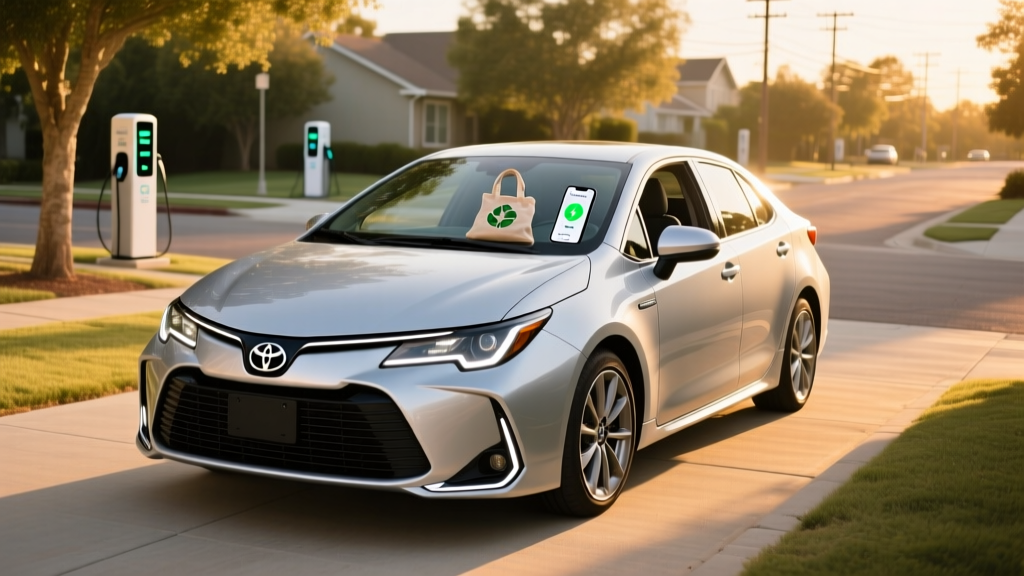
The Toyota Corolla Hybrid occupies a specific niche in the electrified-car landscape: it delivers exceptional fuel economy without requiring a plug, a lifestyle change, or a learning curve. For 2026, the Corolla Hybrid continues with the proven fifth-generation Toyota Hybrid System, offering up to 50 MPG combined on the EPA cycle, optional electronic all-wheel drive, and a starting price that undercuts most competitors in the compact hybrid segment. This guide covers every number a buyer needs — from real-world MPG to battery warranty coverage — so you can decide whether the Corolla Hybrid is the right electrified vehicle for your situation.
Corolla Hybrid at a Glance: Key Specifications
| Specification | LE FWD | LE AWD | SE AWD |
|---|---|---|---|
| Combined HP | 138 hp | 138 hp | 138 hp |
| Engine | 1.8L 4-cyl + 2 motors | 1.8L 4-cyl + 2 motors | 1.8L 4-cyl + 2 motors |
| EPA City / Hwy / Combined | 53 / 46 / 50 MPG | 51 / 44 / 48 MPG | 50 / 43 / 47 MPG |
| Drivetrain | FWD | AWD (e-AWD) | AWD (e-AWD) |
| Hybrid Battery | ~1.3 kWh NiMH | ~1.3 kWh NiMH | ~1.3 kWh NiMH |
| 0–60 mph (est.) | ~9.2 sec | ~9.5 sec | ~9.5 sec |
| Cargo Volume | 13.1 cu ft | 13.1 cu ft | 13.1 cu ft |
| Starting MSRP (2026) | $24,745 | $26,145 | $28,545 |
| Hybrid Battery Warranty | 10 yr / 150,000 mi | 10 yr / 150,000 mi | 10 yr / 150,000 mi |
Source: fueleconomy.gov and Toyota Motor Corporation 2026 specifications. Prices include destination charge and are subject to change.
Fuel Economy: EPA Numbers vs. Real-World MPG
The front-wheel-drive Corolla Hybrid LE achieves an EPA-rated 53 city / 46 highway / 50 combined MPG. That city-leading figure is a hallmark of Toyota's series-parallel hybrid architecture: the electric motor handles low-speed driving and stop-and-go traffic where gasoline engines are least efficient, while the 1.8-liter Atkinson-cycle engine takes over at sustained highway speeds.
| Trim / Drivetrain | City MPG | Highway MPG | Combined MPG |
|---|---|---|---|
| LE FWD | 53 | 46 | 50 |
| LE AWD | 51 | 44 | 48 |
| SE AWD | 50 | 43 | 47 |
In mixed suburban commuting with frequent stops, many Corolla Hybrid owners report matching or slightly exceeding the EPA city figure — 52–55 MPG is common. On long highway trips at 75+ mph, expect 42–45 MPG for the FWD model. In cold weather (below 35°F), the engine runs more often to maintain cabin heat and battery temperature, reducing observed economy to roughly 44–47 MPG combined until the powertrain warms up. These figures are based on aggregated owner reports and third-party testing; your results will vary with driving style, terrain, and climate.
The key insight for hybrid shoppers: if most of your driving is urban or suburban, the Corolla Hybrid's real-world economy will likely meet or beat its EPA sticker. Highway-dominant commuters will see numbers closer to the highway rating, which is still exceptional for a non-plug-in vehicle.
HEV vs. PHEV vs. EV: Where Does the Corolla Hybrid Fit?
Understanding the distinction between hybrid types is essential before committing to a purchase. The Corolla Hybrid is a conventional hybrid electric vehicle (HEV) — it does not plug in, has no electric-only driving range to speak of, and cannot be charged from an external source. It generates all its electricity through regenerative braking and the gasoline engine.
| Feature | HEV (Corolla Hybrid) | PHEV (e.g., Prius Prime) | BEV (e.g., Tesla Model 3) |
|---|---|---|---|
| Plug-in Charging | No | Yes (Level 1/2) | Yes (Level 1/2/DC) |
| Electric-Only Range | ~1 mi at low speed | ~40–44 mi | 250–350+ mi |
| Total Range | ~530 mi | ~440 mi (EV + gas) | 250–350+ mi |
| Home Charging Needed | No | Recommended | Required |
| Federal Tax Credit (§30D) | Not eligible | Up to $7,500* | Up to $7,500* |
| Starting Price Range | ~$24,745 | ~$33,445 | ~$38,990+ |
| Fuel Cost (15k mi/yr) | ~$1,050 | ~$650–$900 | ~$500–$700 |
*§30D federal tax credit eligibility depends on MSRP caps, buyer income limits, and battery critical-mineral sourcing requirements. Verify current-year rules at irs.gov before purchasing. The Corolla Hybrid, as a conventional HEV, does not qualify for §30D.
The Corolla Hybrid is the right choice if you want maximum fuel savings with zero behavioral change — no charging, no range planning, no home electrical upgrades. If you have home charging access and want 40+ miles of electric commuting before the gas engine engages, the Prius Prime (Toyota's PHEV) is the logical step up, though at a $8,000–$9,000 price premium before any tax credit.
Powertrain Deep Dive: The Fifth-Gen Toyota Hybrid System
The 2026 Corolla Hybrid uses Toyota's fifth-generation hybrid synergy drive, pairing a 1.8-liter four-cylinder Atkinson-cycle engine with two motor-generators and a planetary gearset that functions as a continuously variable transmission. Combined system output is 138 horsepower.
On FWD models, a single front-mounted motor-generator handles propulsion assist and regenerative braking. AWD variants add a rear-mounted electric motor (rated at approximately 40 hp) that engages during acceleration and low-traction conditions. This is an electronic AWD system — there is no mechanical driveshaft connecting the front and rear axles. The rear motor operates primarily below 43 mph and during initial acceleration, improving traction without the weight and friction losses of a traditional AWD system.
The nickel-metal hydride (NiMH) hybrid battery pack stores approximately 1.3 kWh of energy. This is not a large battery by EV standards — it exists to buffer energy between the engine, regenerative braking, and the electric motor, not to drive the car for meaningful distances on electricity alone. Toyota continues to use NiMH chemistry in the Corolla Hybrid for its proven longevity, thermal stability, and cost-effectiveness in a shallow-cycling application where the battery is never deeply discharged or fully charged.
Pricing, Trims, and Tax Credit Eligibility
The 2026 Toyota Corolla Hybrid is available in three trims:
- LE FWD — $24,745: Base model with 8-inch touchscreen, wireless Apple CarPlay/Android Auto, Toyota Safety Sense 3.0, and the best fuel economy in the lineup (50 MPG combined).
- LE AWD — $26,145: Adds electronic AWD for all-weather traction with a minor 2 MPG combined penalty.
- SE AWD — $28,545: Sport-tuned suspension, 16-inch alloy wheels, paddle shifters, and a slightly more aggressive exterior treatment. Fuel economy drops to 47 MPG combined.
The Corolla Hybrid is a conventional HEV and does not qualify for the IRS §30D Clean Vehicle Credit. That credit applies only to plug-in electric vehicles (PHEVs and BEVs) meeting battery sourcing, MSRP, and buyer income requirements. However, some states offer rebates or HOV lane access for hybrids — check your state energy office or AFDC Alternative Fuels Data Center for local incentives.
Battery Longevity, Warranty, and Replacement Cost
Battery lifespan is consistently the top concern among hybrid buyers, and Toyota's track record here is among the best in the industry. The Corolla Hybrid's NiMH battery pack is covered by a 10-year / 150,000-mile hybrid battery warranty (in all 50 states), which guarantees the battery against defects and excessive capacity loss. In California-emission states, hybrid system component coverage may extend further under specific conditions.
- Hybrid battery: 10 years / 150,000 miles
- Hybrid system components (inverter, motor-generators, ECU): 8 years / 100,000 miles
- Basic vehicle warranty: 3 years / 36,000 miles
- Powertrain warranty: 5 years / 60,000 miles
In practice, Toyota hybrid batteries routinely last well beyond their warranty periods. Real-world data from fleet operators and long-term owners shows NiMH packs in Toyota hybrids maintaining functional capacity for 150,000–200,000+ miles under normal use. The Corolla Hybrid's battery operates in a shallow state-of-charge window (roughly 40–80% SoC), which dramatically reduces degradation compared to the deep cycling seen in full EVs.
If replacement is eventually needed, a new OEM hybrid battery for the Corolla Hybrid typically costs $2,500–$3,500 including labor at a Toyota dealership. Refurbished or aftermarket NiMH packs are available for $1,500–$2,200 installed. Individual module replacement (replacing only the degraded cells within the pack) can bring costs down to $800–$1,200 at specialized hybrid repair shops. This is substantially less than EV traction battery replacements, which can exceed $10,000.
Reliability and Safety Ratings
Toyota's hybrid powertrains have earned a reputation for exceptional reliability over two decades of Prius production, and the Corolla Hybrid benefits directly from that engineering lineage. The planetary gearset transmission has no clutch packs, belts, or traditional friction components to wear out. The regenerative braking system reduces wear on the friction brakes, often allowing original brake pads to last 80,000–100,000 miles.
The 2026 Corolla Hybrid comes standard with Toyota Safety Sense 3.0, which includes:
- Pre-Collision System with Pedestrian Detection
- Full-Speed Range Dynamic Radar Cruise Control
- Lane Departure Alert with Steering Assist
- Lane Tracing Assist
- Automatic High Beams
- Road Sign Assist
This is a Level 1–2 driver-assistance suite — the driver must remain fully engaged at all times. For crash-test ratings, check the latest results from NHTSA and the IIHS, as the Corolla sedan has historically earned top marks in both programs.
Pros and Cons: An Honest Assessment
- 50 MPG combined (FWD) — among the highest of any non-plug-in vehicle
- No charging required — works with existing fueling habits
- Proven hybrid reliability with 10-year / 150,000-mi battery warranty
- Low starting price ($24,745) for an electrified vehicle
- Electronic AWD available for snow-belt buyers
- Toyota Safety Sense 3.0 standard on all trims
- Strong resale value and low total cost of ownership
- 138 hp — adequate but not quick; 0–60 in ~9.2 seconds
- 13.1 cu ft trunk is modest for the compact class
- No plug-in option — cannot access electric-only commuting
- Not eligible for the §30D federal tax credit
- Rear-seat headroom is tight for taller passengers
- CVT-like powertrain drone under hard acceleration
- No DC fast charging capability (not applicable to HEVs)
Who Should Buy the Corolla Hybrid?
- You want maximum MPG with zero lifestyle changes — no home charger, no plug-in routine
- Your commute is primarily urban or suburban, where the hybrid system shines
- You plan to own the car 8+ years and value proven long-term reliability
- You want AWD capability without the fuel-economy penalty of a conventional AWD gas car
- Your budget is under $30,000 and you want the lowest cost-per-mile in the segment
- You have home charging and a commute under 40 miles — you could drive months without buying gas
- You want to qualify for the federal tax credit (up to $7,500, subject to eligibility)
- You have reliable home Level 2 charging and want zero tailpipe emissions
- Your daily driving is under 250 miles and you want the lowest per-mile energy cost
- You want stronger acceleration and a quieter driving experience
Frequently Asked Questions
How many MPG does the 2026 Toyota Corolla Hybrid get?
The FWD Corolla Hybrid LE achieves an EPA-rated 53 city / 46 highway / 50 combined MPG. The AWD LE drops slightly to 51/44/48 MPG, and the sportier SE AWD is rated at 50/43/47 MPG. In real-world city and suburban driving, many owners report matching or exceeding the EPA city figure thanks to the hybrid system's efficiency at low speeds.
Does the Corolla Hybrid need to be plugged in?
No. The Corolla Hybrid is a conventional hybrid (HEV), not a plug-in hybrid (PHEV). It charges its small battery pack entirely through regenerative braking and the gasoline engine. You fuel it exactly like a regular gas car — the hybrid system works invisibly in the background to optimize fuel economy.
How far can the Corolla Hybrid drive on electric power alone?
Effectively about one mile at very low speeds (under 25 mph) on a fully charged battery. The 1.3 kWh NiMH pack is designed for energy buffering, not sustained electric driving. If electric-only commuting is a priority, look at a PHEV like the Toyota Prius Prime (44 miles electric-only) or a full BEV.
Is the Corolla Hybrid reliable, and what does a battery replacement cost?
Toyota's hybrid systems have an outstanding reliability track record spanning over 20 years. The hybrid battery is warrantied for 10 years / 150,000 miles, and real-world data shows these packs often last 150,000–200,000+ miles. If replacement is eventually needed, expect $2,500–$3,500 for a new OEM battery installed, or $1,500–$2,200 for a refurbished pack. The planetary gearset transmission has no wear-prone friction components, contributing to long-term durability.
Does the Toyota Corolla Hybrid qualify for a federal tax credit?
No. The federal §30D Clean Vehicle Credit applies only to plug-in electric vehicles (PHEVs and BEVs) that meet specific battery sourcing, MSRP cap, and buyer income requirements. As a conventional HEV, the Corolla Hybrid does not qualify. Check your state's energy office for any local hybrid incentives, and verify current federal rules at irs.gov.
How does the Corolla Hybrid compare to the Prius?
The 2026 Prius is larger, more powerful (194–196 hp), and offers a PHEV variant (Prius Prime). It also achieves slightly better highway fuel economy due to improved aerodynamics. The Corolla Hybrid is less expensive ($24,745 vs. ~$29,545 for the Prius LE), making it the value-oriented choice for buyers who prioritize low purchase price and don't need the extra cargo space or power. Both share Toyota's fifth-generation hybrid architecture and 10-year battery warranty.
What is the total range on a full tank?
With a 11.4-gallon fuel tank and 50 MPG combined (FWD LE), the Corolla Hybrid delivers approximately 530 miles of total range — enough for most drivers to go two to three weeks between fill-ups.