Why the Corolla Hybrid Dominates the Compact Hybrid Segment
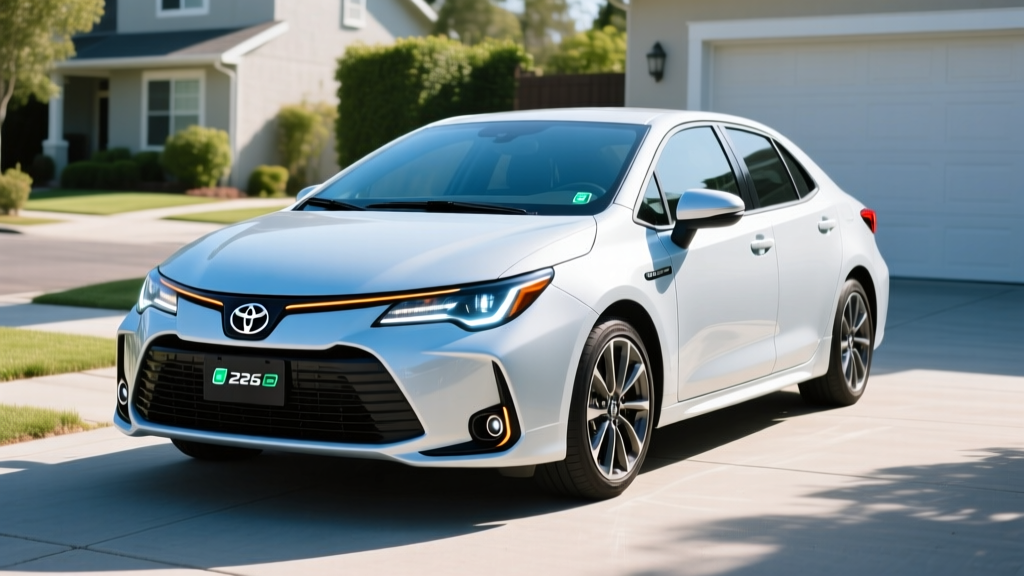
The Toyota Corolla Hybrid has carved out a reputation as one of the most efficient, reliable, and affordable hybrid sedans on the market. For 2026, it continues to offer an EPA-estimated 50 MPG combined — a figure that translates directly into lower monthly fuel costs and fewer stops at the pump. If you've been searching for Toyota Corolla Hybrid lease deals, this guide breaks down everything you need: real-world fuel economy, powertrain specs, reliability data, battery warranty details, and how this hybrid stacks up against plug-in hybrids and full EVs.
The Corolla Hybrid is a conventional hybrid (HEV), meaning it never needs to be plugged in. The gasoline engine and regenerative braking system recharge the battery automatically. This makes it an ideal choice for drivers who want maximum efficiency without changing their fueling habits.
HEV vs PHEV: Understanding What the Corolla Hybrid Is
Before evaluating lease deals, it's critical to understand exactly what you're getting. The Corolla Hybrid is a conventional hybrid electric vehicle (HEV), not a plug-in hybrid (PHEV). Here's the difference:
| Feature | Corolla Hybrid (HEV) | Typical PHEV (e.g., Prius Prime) |
|---|---|---|
| Plug-in charging required? | No | Yes (for EV range) |
| Electric-only range | N/A (motor assists engine) | ~40-44 miles |
| Battery size | ~0.9 kWh (small buffer) | ~13.6 kWh |
| DC fast charging | No | No (Level 2 AC only) |
| Federal tax credit (§30D) | Not eligible | Up to $7,500 (if eligible) |
| Best for | No home charging access | Short commutes + home charging |
The Corolla Hybrid's small battery pack is charged entirely through regenerative braking and the gasoline engine. You simply fill up with gas and drive — no charging cables, no home electrical upgrades, no range planning. If you want plug-in electric range, you'd look at the Toyota Prius Prime instead.
Fuel Economy: EPA Ratings vs Real-World MPG
Fuel efficiency is the Corolla Hybrid's headline feature. According to fueleconomy.gov, the 2026 Toyota Corolla Hybrid delivers:
| Trim / Drivetrain | City MPG | Highway MPG | Combined MPG |
|---|---|---|---|
| LE (FWD) | 53 | 46 | 50 |
| LE (AWD) | 51 | 44 | 48 |
| SE (AWD) | 50 | 43 | 47 |
With a 11.4-gallon fuel tank, the FWD LE model delivers a theoretical range of approximately 570 miles per tank at the combined EPA estimate. Real-world mixed driving typically yields 480-540 miles between fill-ups.
Powertrain Specs: What Powers the Corolla Hybrid
| Specification | 2026 Corolla Hybrid |
|---|---|
| Engine | 1.8L 4-cylinder Atkinson-cycle |
| Electric motor | Permanent-magnet synchronous (front); additional rear motor (AWD) |
| Combined net horsepower | 138 hp |
| Transmission | Continuously Variable (eCVT) |
| Drivetrain options | FWD or Electronic On-Demand AWD |
| 0-60 mph (est.) | ~9.0 seconds |
| Hybrid battery type | Lithium-ion |
| Hybrid battery capacity | ~0.9 kWh (system buffer) |
The 1.8L Atkinson-cycle engine is purpose-built for efficiency rather than power. It produces modest horsepower on its own, but the electric motor(s) fill in torque instantly from a stop, giving the Corolla Hybrid responsive acceleration around town. The eCVT is a planetary gearset — not a belt-driven CVT — which means it's mechanically simple and proven durable over millions of Toyota hybrid miles.
The Electronic On-Demand AWD system adds a small rear electric motor that activates only when the front wheels lose traction. It doesn't significantly impact fuel economy (only 2 MPG combined less than FWD) but provides confidence in rain and light snow.
2026 Pricing, Trims, and Lease Deal Considerations
The 2026 Toyota Corolla Hybrid is offered in three main trims:
- LE (FWD): Starting MSRP ~$24,195 — the efficiency champion at 50 MPG combined
- LE (AWD): Starting MSRP ~$25,595 — adds all-weather capability
- SE (AWD): Starting MSRP ~$27,395 — sport-tuned suspension, 18-inch alloy wheels, sport seats
Understanding Corolla Hybrid Lease Deals
Lease pricing varies by region, dealer, and current Toyota Financial Services incentives. As of early 2026, typical Corolla Hybrid lease structures look like this:
- 36-month lease, 12,000 miles/year: $250-$320/month with $2,500-$3,500 due at signing (varies by trim and market)
- Money factor: Typically 0.00225-0.00285 (equivalent to ~5.4%-6.8% APR)
- Residual value: 52-56% for 36-month leases (Toyota hybrids hold value well)
Key factors that affect your lease deal:
- Regional incentives: Toyota frequently offers $500-$1,000 lease cash in competitive markets
- Loyalty/conquest bonuses: Current Toyota owners or lessees coming from competitor brands may qualify for additional reductions
- Negotiate the sale price: Even on a lease, the capitalized cost is negotiable. A lower cap cost = lower monthly payment
- Avoid unnecessary add-ons: GAP insurance is typically included in Toyota leases; decline dealer-installed accessories rolled into the lease
Tax Credit Eligibility
Battery Warranty, Reliability, and Replacement Costs
Battery longevity is consistently the top concern among first-time hybrid buyers. Here's what the data shows:
| Component | Warranty Coverage |
|---|---|
| Hybrid battery | 10 years / 150,000 miles (whichever comes first) |
| Hybrid system components (inverter, motor, etc.) | 8 years / 100,000 miles |
| Basic vehicle | 3 years / 36,000 miles |
| Powertrain (engine, transaxle) | 5 years / 60,000 miles |
Toyota's hybrid battery warranty is among the best in the industry. The 10-year/150,000-mile coverage applies in all 50 states and transfers to subsequent owners if you sell the vehicle.
Real-World Hybrid Battery Longevity
Toyota's Hybrid Synergy Drive system has been in production since 1997 (Prius). Real-world data from millions of vehicles shows:
- Most Toyota hybrid batteries last 150,000-200,000+ miles before significant degradation
- Failure before 100,000 miles is uncommon and typically covered under warranty
- The Corolla Hybrid uses a relatively small lithium-ion pack that cycles shallowly (never fully depleted or fully charged), which maximizes cycle life
Battery Replacement Cost
If the hybrid battery does need replacement outside of warranty:
- New OEM battery (Toyota dealer): $2,500-$3,500 including labor
- Refurbished/remanufactured battery: $1,200-$2,000 including labor
- Individual cell/module replacement: $500-$1,000 at a hybrid specialist shop
Given that most Corolla Hybrid owners will drive 120,000-150,000 miles within the warranty period, out-of-pocket battery replacement is a low-probability expense. The NHTSA and IIHS safety records for the Corolla platform also remain strong, with top ratings across crash-test categories.
Corolla Hybrid vs PHEV vs Full EV: Which Is Right for You?
Choose the Corolla Hybrid (HEV) if:
- You don't have access to home or workplace charging
- You want maximum MPG without behavioral changes
- Your budget is under $30,000
- You drive 12,000+ miles/year and want low fuel cost without range planning
Choose a PHEV (e.g., Prius Prime) if:
- You can charge at home (Level 1 or Level 2)
- Your daily commute is under 40 miles round-trip
- You want to drive mostly electric with gas backup for road trips
- You want to potentially qualify for the §30D tax credit
Choose a full EV (e.g., Tesla Model 3, Hyundai Ioniq 6) if:
- You have reliable home Level 2 charging
- You want zero tailpipe emissions and minimal maintenance
- You want to qualify for the full $7,500 federal tax credit (income/sourcing permitting)
- Your typical trips fall within 250-300 miles or you're comfortable with DC fast-charging stops
The Corolla Hybrid's strongest competitive advantage is simplicity. There's no charging infrastructure to install, no range to monitor, and no plug-in routine to remember. You drive it exactly like a conventional car — it just uses dramatically less fuel.
Pros and Cons at a Glance
- 50 MPG combined EPA — among the best in any non-plug-in vehicle
- No charging required — works with existing gas-station infrastructure
- AWD available for all-weather traction
- 10-year/150,000-mile hybrid battery warranty
- Strong resale value (Toyota hybrid demand remains high)
- Low starting MSRP (~$24,195)
- Toyota Safety Sense 3.0 standard (adaptive cruise, lane-keeping, auto emergency braking)
- No federal tax credit eligibility (HEV, not PHEV/BEV)
- Modest 138 hp — adequate but not quick (0-60 ~9.0 sec)
- Small rear seat and trunk compared to Camry Hybrid
- No DC fast-charging capability (not applicable to HEV)
- Infotainment system functional but not class-leading
- Engine noise noticeable under hard acceleration
Frequently Asked Questions
How many MPG does the 2026 Toyota Corolla Hybrid get?
The FWD LE trim achieves an EPA-estimated 53 city / 46 highway / 50 combined MPG. The AWD LE drops slightly to 51/44/48, and the sportier SE AWD is rated at 50/43/47. Real-world city driving often exceeds the EPA estimate, while sustained highway speeds above 70 mph may yield slightly lower numbers.
Does the Corolla Hybrid need to be plugged in?
No. The Corolla Hybrid is a conventional HEV — the battery is recharged entirely through regenerative braking and the gasoline engine. You never plug it in. If you want a Toyota hybrid that plugs in for electric-only driving, look at the Prius Prime PHEV.
How far can the Corolla Hybrid go on electric only?
The Corolla Hybrid cannot drive on electric power alone for any meaningful distance. The electric motor assists the gasoline engine during acceleration and can propel the car at very low speeds for short distances (under 1 mile at low speed), but it is not designed for electric-only commuting. For 40+ miles of EV range, you need a PHEV.
Does the Toyota Corolla Hybrid qualify for any tax credit?
The Corolla Hybrid does not qualify for the federal §30D clean vehicle tax credit, which is limited to plug-in vehicles (BEVs and PHEVs) meeting battery sourcing, MSRP, and income requirements. Some states or local utilities may offer small incentives for hybrid purchases — check the Alternative Fuels Data Center for your state's programs.
Is the Corolla Hybrid reliable, and what does a battery replacement cost?
Toyota's hybrid system has over 25 years of proven reliability. The hybrid battery is warranted for 10 years/150,000 miles. Most batteries last well beyond 150,000 miles. If replacement is needed out of warranty, expect $2,500-$3,500 for a new OEM battery or $1,200-$2,000 for a refurbished unit at an independent hybrid shop.
What should I look for in a Corolla Hybrid lease deal?
Focus on the capitalized cost (negotiated sale price), money factor (interest rate equivalent), and residual value. Aim for a money factor below 0.00250 and a residual above 54% on a 36-month lease. Ask about Toyota Financial Services lease cash, loyalty incentives, and avoid rolling unnecessary dealer add-ons into the lease. A well-negotiated 36-month Corolla Hybrid LE lease should fall in the $250-$300/month range with moderate money down.
AWD or FWD — which Corolla Hybrid trim should I lease?
If you live in a region with mild weather and prioritize maximum fuel economy, the FWD LE at 50 MPG combined is the efficiency sweet spot. If you experience snow, rain, or gravel roads regularly, the AWD system (available on LE and SE) is worth the 2 MPG penalty. The SE adds sport-tuned suspension and 18-inch wheels but drops efficiency to 47 MPG combined.