Why the Toyota Corolla Hybrid Still Sets the Bar for Japanese Efficiency
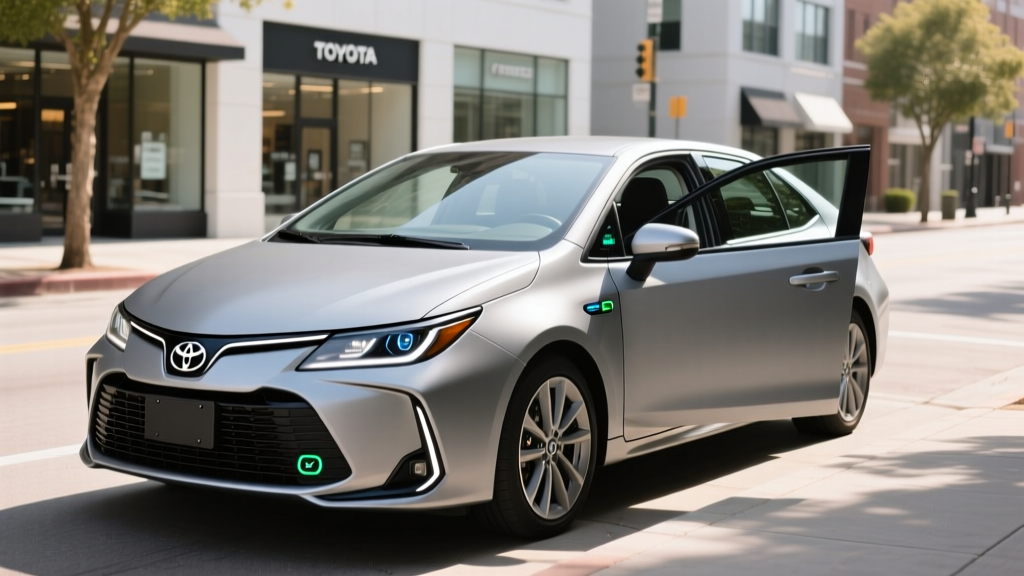
The Toyota Corolla has been the world's best-selling nameplate for decades, and its hybrid variant — engineered and assembled in Japan — represents one of the most refined conventional hybrid powertrains on the market. For 2026, the US-spec Corolla Hybrid continues to use Toyota's fifth-generation hybrid system, pairing a 1.8-liter Atkinson-cycle four-cylinder with a permanent-magnet electric motor to deliver exceptional fuel economy without requiring a plug.
This guide breaks down exactly what US buyers need to know about the Corolla Hybrid's Japanese engineering roots: real-world MPG versus EPA stickers, powertrain specifications, battery longevity and replacement costs, and how it stacks up against plug-in hybrids and full battery-electric vehicles. If you're researching the Corolla Hybrid from Japan and wondering whether it's the right electrified choice for your commute, this is your data-driven reference.
HEV vs PHEV vs EV: Where the Corolla Hybrid Fits
Before diving into specs, it's essential to distinguish the three main electrified vehicle categories. The Corolla Hybrid is a conventional hybrid electric vehicle (HEV) — it cannot be plugged in. Its small battery charges exclusively through regenerative braking and the gasoline engine.
| Feature | HEV (Corolla Hybrid) | PHEV (e.g., Prius Prime) | BEV (e.g., bZ4X) |
|---|---|---|---|
| Plug-in required? | No | Yes | Yes |
| Electric-only range | None (motor assists engine) | ~40 mi (varies by model) | 220–300+ mi |
| Battery size | ~1.0 kWh (buffer) | 10–18 kWh usable | 60–80+ kWh usable |
| Fuel/energy source | Gasoline only | Gasoline + grid electricity | Grid electricity only |
| Home charging install | Not needed | Recommended (Level 2) | Essential (Level 2) |
| Federal tax credit (§30D) | Not eligible | Up to $7,500* | Up to $7,500* |
| Upfront cost premium | Low (~$1,500 over gas) | Medium ($4,000–$8,000) | High ($8,000–$15,000+) |
*§30D credit eligibility depends on MSRP caps, buyer income limits, and battery critical-mineral sourcing requirements. Always verify current-year rules at IRS.gov.
The Corolla Hybrid sits in the lowest-commitment electrified category: no charging infrastructure needed, no range anxiety, and a modest price premium over the gas-only Corolla. It's the right choice for drivers who want better fuel economy without changing their refueling habits.
Fuel Economy: EPA Ratings and Real-World MPG
For the 2026 model year, the Toyota Corolla Hybrid (FWD LE trim) carries EPA ratings of 53 MPG city / 46 MPG highway / 50 MPG combined. The available AWD-e trim, which adds a rear-axle electric motor for all-wheel traction, rates slightly lower at 47 city / 41 highway / 44 combined.
| Trim | City MPG | Highway MPG | Combined MPG | Annual Fuel Cost* |
|---|---|---|---|---|
| Corolla Hybrid LE (FWD) | 53 | 46 | 50 | ~$1,050 |
| Corolla Hybrid SE/XSE (AWD-e) | 47 | 41 | 44 | ~$1,200 |
| Corolla Gas LE (baseline) | 32 | 41 | 35 | ~$1,500 |
*Annual fuel cost based on 15,000 miles/year and $3.50/gallon regular unleaded. Source: fueleconomy.gov.
Real-World MPG vs EPA Sticker
Toyota's hybrid system excels in city driving, where the electric motor handles low-speed propulsion and regenerative braking recaptures energy at every stop. In real-world mixed commuting, many owners report meeting or slightly exceeding the 50 MPG combined EPA figure in suburban and city-heavy driving.
However, sustained highway driving at 75+ MPH shifts more load to the gasoline engine, and real-world highway-only trips typically yield 42–46 MPG in the FWD model. Cold weather (below 35°F) reduces efficiency by roughly 5–10% as the engine runs more frequently to maintain cabin heat and battery temperature. Drivers in northern climates should budget for winter MPG in the mid-40s combined rather than the EPA's 50.
Powertrain Specs: What's Under the Hood
The 2026 Corolla Hybrid uses Toyota's fifth-generation Hybrid Synergy Drive, manufactured at Toyota's plants in Aichi Prefecture, Japan. Here are the exact specifications:
| Specification | Corolla Hybrid FWD | Corolla Hybrid AWD-e |
|---|---|---|
| Engine | 1.8L 4-cyl Atkinson-cycle | 1.8L 4-cyl Atkinson-cycle |
| Engine output | 97 hp / 105 lb-ft | 97 hp / 105 lb-ft |
| Front electric motor | 94 hp / 139 lb-ft | 94 hp / 139 lb-ft |
| Rear electric motor | — | 41 hp / 63 lb-ft |
| Net combined horsepower | 138 hp | 138 hp |
| Transmission | eCVT (planetary gearset) | eCVT (planetary gearset) |
| 0–60 mph | ~9.0 seconds | ~8.8 seconds |
| Hybrid battery | ~1.0 kWh lithium-ion | ~1.0 kWh lithium-ion |
| Curb weight | ~3,050 lbs | ~3,150 lbs |
| Fuel tank | 11.4 gallons | 11.4 gallons |
| Total driving range | ~570 miles | ~500 miles |
The eCVT is not a traditional belt-and-cone CVT — it's a planetary gearset that seamlessly blends engine and motor power with no fixed gear ratios. This design is mechanically simpler than a conventional automatic and is a key reason for Toyota hybrid reliability.
The AWD-e system deserves a note: the rear motor engages only when the system detects front-wheel slip, such as during hard acceleration from a stop or on wet/snowy pavement. It disengages above ~43 MPH to preserve efficiency. This is not a performance AWD system — it's a traction-aid system, and the ~6 MPG combined penalty reflects the added weight and occasional rear-motor drag.
Battery Longevity, Warranty, and Replacement Cost
Hybrid battery lifespan is the number-one concern among first-time hybrid buyers. The Corolla Hybrid's lithium-ion traction battery is compact (~1.0 kWh) and operates within a tightly managed state-of-charge window — typically between 40% and 80% — to minimize degradation. Toyota never fully charges or fully depletes the pack, which dramatically extends cycle life.
Toyota Hybrid Battery Warranty
- Hybrid battery: 10 years / 150,000 miles (whichever comes first)
- Hybrid system components (inverter, motor, eCVT): 8 years / 100,000 miles
- Transferable: Yes — warranty transfers to subsequent owners
- Capacity threshold: Toyota covers the battery if it cannot hold sufficient charge to power the hybrid system normally
How Long Does a Corolla Hybrid Battery Actually Last?
Based on fleet data from Toyota Prius and Corolla Hybrid taxis, rideshare vehicles, and long-term owner reports, the hybrid traction battery commonly lasts 150,000–200,000+ miles before any meaningful capacity loss. Many original batteries in 2010-era Prius vehicles are still in service beyond 200,000 miles.
The key difference from a full EV battery: the Corolla Hybrid's pack is small and inexpensive to replace. If replacement is needed out of warranty, expect to pay $2,000–$3,500 for a new OEM battery at a Toyota dealer, or $1,000–$2,000 for a refurbished/reconditioned unit from a specialist. This is a fraction of the $10,000–$20,000+ cost of replacing a large BEV battery pack.
Pricing, Trims, and Tax Credit Eligibility
The 2026 Toyota Corolla Hybrid starts at approximately $23,500 MSRP for the LE FWD trim, with the AWD-e SE starting around $26,000 and the top XSE AWD-e near $28,500. Destination charges add roughly $1,095.
Does the Corolla Hybrid Qualify for a Federal Tax Credit?
No. Under current IRS §30D rules, the federal Clean Vehicle Credit applies only to plug-in electric vehicles — battery-electric vehicles (BEVs) and plug-in hybrids (PHEVs) with a minimum battery capacity of 7 kWh. The Corolla Hybrid's ~1.0 kWh battery and lack of a charge port make it ineligible for the federal credit.
Some states offer their own hybrid incentives or HOV-lane access for hybrid vehicles, but these vary by jurisdiction. Check your state's energy office or DMV for current programs. The Corolla Hybrid's value proposition doesn't depend on incentives — its low MSRP and exceptional fuel economy deliver payback through reduced fuel costs, typically within 2–3 years versus the gas-only Corolla for a driver covering 15,000 miles annually.
Who Should Choose the Corolla Hybrid vs a PHEV or EV?
Corolla Hybrid Advantages
- No plug or home charging setup required
- Lowest upfront cost among electrified options
- Proven reliability with 10-year/150k-mile battery warranty
- 500+ mile total range — no range anxiety on road trips
- 50 MPG combined in real-world city/suburban driving
- Minimal maintenance (no oil change interval change vs gas Corolla)
Corolla Hybrid Limitations
- No electric-only driving mode — always burns gasoline
- No federal tax credit eligibility
- Modest 138 hp — adequate for commuting, not spirited driving
- AWD-e system reduces fuel economy by ~6 MPG
- Not ideal for drivers with short, pluggable commutes who could go full electric
Decision Framework
- Choose the Corolla Hybrid if: You lack home charging access (apartment, street parking), drive more than 40 miles daily, want the lowest total cost of ownership without behavioral changes, or need a reliable commuter with minimal upfront investment.
- Choose a PHEV (e.g., Prius Prime) if: You have home charging, your daily commute is under 40 miles (so you can drive mostly on electricity), you still want gasoline backup for road trips, and you want to capture the §30D federal tax credit.
- Choose a BEV (e.g., Tesla Model 3, Hyundai Ioniq 6) if: You have reliable home Level 2 charging, your daily driving is under 250 miles, you want zero tailpipe emissions, and you're comfortable with public DC fast charging for longer trips.
Japanese Manufacturing Quality and Reliability Track Record
The Corolla Hybrid sold in the US market is manufactured at Toyota's Tsutsumi Plant in Aichi Prefecture, Japan — the same facility that builds the Prius and other Toyota hybrids. This plant has been a benchmark for Toyota Production System (TPS) quality control for decades.
Toyota's hybrid powertrain has accumulated over 25 million global sales since the 1997 Prius launch, giving the company the deepest dataset of any automaker on hybrid battery longevity, eCVT durability, and inverter reliability. The Corolla Hybrid benefits directly from this institutional knowledge.
For reliability ratings, the Corolla Hybrid consistently earns top marks from IIHS for crashworthiness, and Toyota's hybrid-specific components (battery, inverter, motor) have historically shown failure rates well below 1% within the warranty period. Consumer surveys consistently rank Toyota hybrids among the most trouble-free vehicles in their segments.
Ownership Costs: Corolla Hybrid vs Gas Corolla vs EV
| 5-Year Cost Factor | Corolla Hybrid LE ($23,500) | Corolla Gas LE ($22,000) | Model 3 RWD (~$39,000) |
|---|---|---|---|
| Purchase price (after credits) | $23,500 | $22,000 | ~$31,500* |
| Fuel/energy (5 yr, 75k mi) | ~$5,250 | ~$7,500 | ~$3,000 |
| Maintenance (5 yr) | ~$2,200 | ~$2,800 | ~$1,500 |
| Insurance (5 yr avg) | ~$7,500 | ~$7,000 | ~$9,500 |
| Estimated 5-yr total | ~$38,450 | ~$39,300 | ~$45,500 |
*Model 3 price assumes $7,500 §30D point-of-sale credit. Actual eligibility varies by buyer income, MSRP caps, and battery sourcing. Electricity cost assumed at $0.15/kWh. Gas at $3.50/gal. Source: author estimates using fueleconomy.gov data.
The Corolla Hybrid's total cost of ownership edges out the gas Corolla within roughly three years, primarily through fuel savings. It also undercuts most EVs on 5-year cost for buyers who don't qualify for the full federal credit or who face higher insurance premiums on electric vehicles.
Frequently Asked Questions
How many MPG does the Toyota Corolla Hybrid get?
The 2026 Corolla Hybrid LE (FWD) achieves an EPA-rated 53 city / 46 highway / 50 combined MPG. The AWD-e trims rate at 47 city / 41 highway / 44 combined. Real-world city driving often meets or slightly exceeds EPA figures, while sustained highway driving at higher speeds typically yields 42–46 MPG.
Does the Corolla Hybrid need to be plugged in?
No. The Corolla Hybrid is a conventional hybrid (HEV). Its small lithium-ion battery charges exclusively through regenerative braking and the gasoline engine. There is no charge port and no plug-in capability. If you want plug-in capability from Toyota, look at the Prius Prime (PHEV).
Is the Corolla Hybrid reliable, and what does a battery replacement cost?
Toyota's hybrid system is among the most reliable powertrains in the automotive industry, backed by over 25 million global hybrid sales. The hybrid battery carries a 10-year/150,000-mile warranty. Out-of-warranty replacement costs $2,000–$3,500 for a new OEM pack or $1,000–$2,000 for a refurbished unit. Real-world battery lifespan commonly exceeds 150,000 miles.
Does the Corolla Hybrid qualify for any federal tax credit?
No. The IRS §30D Clean Vehicle Credit applies only to plug-in vehicles (BEVs and PHEVs) with at least 7 kWh of battery capacity. The Corolla Hybrid's ~1.0 kWh battery disqualifies it. Some states may offer separate hybrid incentives — check your local programs.
Corolla Hybrid vs Prius: which is better?
The Prius offers slightly higher combined MPG (~57 vs 50), more cargo versatility (hatchback), and an available PHEV variant (Prius Prime with ~40 miles electric-only range). The Corolla Hybrid costs less, offers a traditional sedan trunk, and may be easier to find in dealer inventory. Both share Toyota's proven hybrid architecture.
How does the AWD-e system work?
The AWD-e adds a 41 hp electric motor to the rear axle. It engages automatically during low-speed acceleration when front-wheel slip is detected (wet roads, snow, hard launches) and disengages above approximately 43 MPH. It improves traction but reduces combined fuel economy by about 6 MPG and adds ~100 lbs of curb weight.