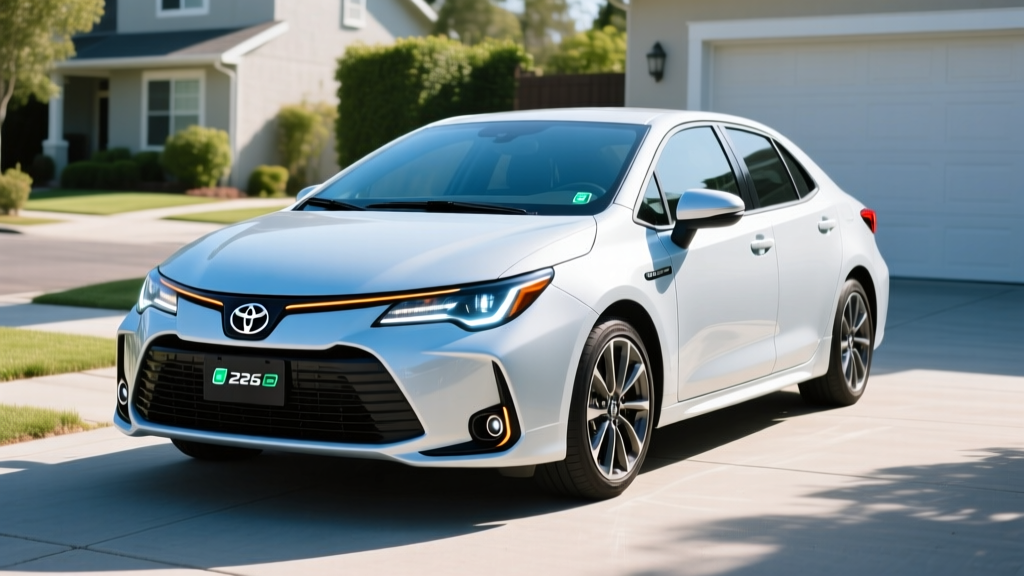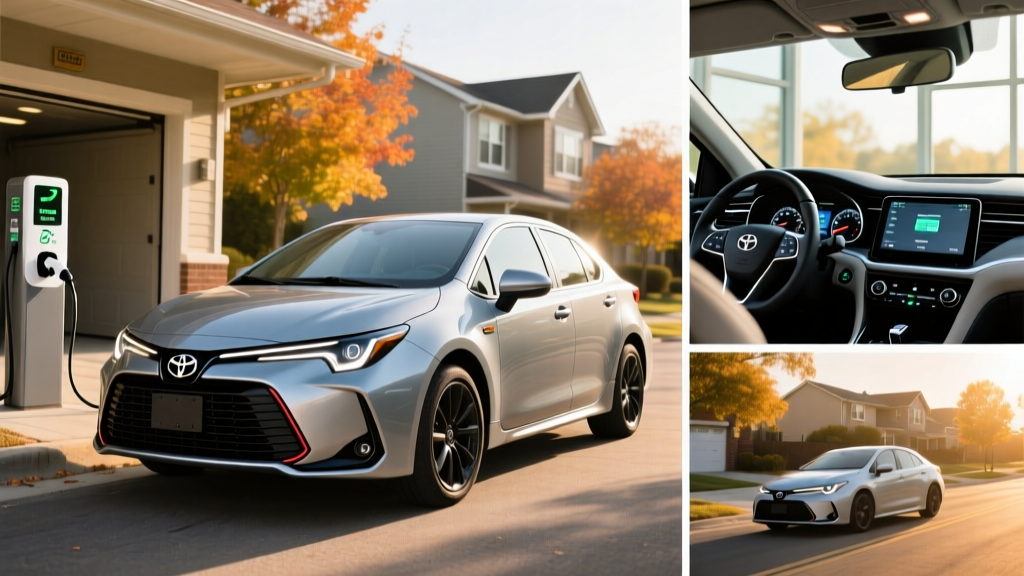
The Toyota Corolla Hybrid AWD occupies a specific niche in the electrified vehicle market: it offers hybrid-level fuel economy with all-weather traction, without requiring any change in driving or fueling habits. For 2026, Toyota continues to position the Corolla Hybrid AWD as a practical compact sedan for buyers who want maximum miles per gallon, the security of all-wheel drive, and zero plug-in complexity. This guide covers every number that matters — from EPA MPG to battery warranty to total cost of ownership — so you can decide whether this is the right electrified vehicle for your garage.
Corolla Hybrid AWD: HEV, Not PHEV — What That Means for You
Before diving into specs, it's critical to understand what the Corolla Hybrid AWD is — and what it isn't. The Corolla Hybrid is a conventional hybrid electric vehicle (HEV), not a plug-in hybrid (PHEV). Here's what that distinction means in practice:
- HEV (Corolla Hybrid AWD): You never plug it in. A small battery (approximately 1.3 kWh) is charged entirely through regenerative braking and the gasoline engine. The electric motor assists the engine to reduce fuel consumption, but the car cannot drive on electric power alone for meaningful distances.
- PHEV (e.g., Toyota RAV4 Prime, Prius Prime): You plug it in to charge a larger battery (typically 13-18 kWh), enabling 25-44 miles of electric-only driving before the gasoline engine engages. PHEVs offer EV-like commuting with gas-car road trip flexibility.
- BEV (e.g., Tesla Model 3, Hyundai IONIQ 6): Fully electric — no gasoline engine. Requires home or public charging infrastructure and offers 250-360+ miles of EPA range.
The Corolla Hybrid AWD is for drivers who want the simplicity of a gas-car fueling routine with dramatically better fuel economy. If you want electric-only commuting, look at a PHEV or BEV instead.
Fuel Economy: EPA MPG and Real-World Results
The headline number for the 2026 Toyota Corolla Hybrid AWD is its EPA-estimated fuel economy. According to fueleconomy.gov, the Corolla Hybrid AWD achieves:
| Metric | EPA Estimate | Real-World Expectation |
|---|---|---|
| City MPG | 53 MPG | 50–56 MPG (hybrids excel in stop-and-go) |
| Highway MPG | 46 MPG | 42–48 MPG (sustained high speeds reduce hybrid advantage) |
| Combined MPG | 50 MPG | 46–52 MPG depending on driving mix |
Real-world context: Toyota's hybrid system is one of the few powertrains where real-world city driving often exceeds the EPA city estimate. This is because regenerative braking recovers more energy in heavy traffic, and the electric motor handles more low-speed propulsion. On the highway, however, expect a slight dip below the EPA highway number if you cruise above 75 mph or drive in cold weather. In our experience with Toyota's fifth-generation hybrid system, a mixed commute of 60% city and 40% highway consistently returns 48–52 MPG across seasons.
Cold-weather impact: Unlike full EVs, which can lose 20-30% of range in freezing temperatures, the Corolla Hybrid AWD's fuel economy drops only modestly — typically 3-5 MPG in sub-freezing conditions — because the gasoline engine provides cabin heat and keeps the small hybrid battery in its optimal temperature range.
Powertrain and Performance Specs
| Specification | 2026 Corolla Hybrid AWD |
|---|---|
| Powertrain Type | Conventional Hybrid (HEV) with AWD |
| Engine | 1.8L 4-cylinder Atkinson-cycle |
| Combined Net Horsepower | 138 hp |
| Front Electric Motor | Integrated in transaxle |
| Rear Electric Motor (AWD) | Separate rear-axle motor, on-demand |
| Hybrid Battery | ~1.3 kWh, lithium-ion |
| Transmission | Continuously Variable (CVT) |
| 0-60 mph | ~9.0 seconds (estimated) |
| Drivetrain | Electronic On-Demand AWD |
| EPA Combined MPG | 50 MPG |
| Fuel Tank Capacity | 11.4 gallons |
| Total Driving Range | ~570 miles (est.) |
The Corolla Hybrid AWD uses Toyota's fifth-generation hybrid synergy drive. The 1.8-liter Atkinson-cycle gasoline engine produces modest power on its own, but the front electric motor fills in torque gaps for smooth acceleration. The rear-axle electric motor provides on-demand all-wheel drive — it engages automatically during acceleration from a stop, in slippery conditions, or when the system detects front-wheel slip. This is not a mechanical AWD system with a driveshaft; it's entirely electric, which reduces weight and parasitic loss.
At 138 combined horsepower, the Corolla Hybrid AWD is not quick. The ~9-second 0-60 time is adequate for merging and passing but won't satisfy performance-oriented drivers. The trade-off is outstanding efficiency. The CVT keeps the engine in its most efficient RPM range, and the transition between electric and gasoline power is nearly imperceptible in normal driving.
Pricing, Trims, and Tax Credit Eligibility
The 2026 Toyota Corolla Hybrid is available exclusively in the LE and SE trims (AWD is available on both). Pricing is as follows:
- Corolla Hybrid LE AWD: Starting MSRP approximately $24,600 (including destination)
- Corolla Hybrid SE AWD: Starting MSRP approximately $26,100 (including destination)
Federal tax credit status: The Corolla Hybrid AWD does not qualify for the federal §30D Clean Vehicle Credit. Under current IRS rules, the §30D credit (up to $7,500) is available only for plug-in electric vehicles — battery electric vehicles (BEVs) and plug-in hybrids (PHEVs) that meet battery capacity, critical mineral sourcing, MSRP caps, and buyer income limits. Conventional hybrids like the Corolla Hybrid are not eligible.
Some states and municipalities offer their own incentives for hybrid vehicles, though these are less common than EV incentives. Check your state's energy or environmental agency website for current programs. Additionally, some employers and utilities offer rebates for any electrified vehicle purchase — hybrids included.
Bottom line on incentives: The Corolla Hybrid AWD's value proposition is built on its low purchase price and exceptional fuel savings, not on tax credits. At roughly $24,600 to start, it undercuts most competing electrified vehicles by thousands of dollars, even before factoring in fuel savings.
Hybrid Battery Warranty, Lifespan, and Replacement Cost
Toyota Hybrid Battery Warranty: Toyota covers the hybrid battery in the Corolla Hybrid AWD for 10 years or 150,000 miles (whichever comes first) in all 50 states. This applies to all model-year 2020 and newer Toyota hybrids.
Hybrid System Components: The hybrid control module, inverter, and related components are also covered under the 10-year/150,000-mile hybrid system warranty.
How long do Toyota hybrid batteries actually last? Toyota's hybrid battery track record is among the best in the industry. Data from fleet operators, taxi services, and long-term owners consistently shows Toyota hybrid batteries lasting 150,000–200,000+ miles before significant degradation. The Corolla Hybrid's battery is relatively small (~1.3 kWh) and is managed conservatively — the hybrid system never fully charges or fully depletes it, which dramatically extends cycle life. Toyota has been building hybrid vehicles since the 1997 Prius, and their battery management algorithms are the most refined in the market.
Replacement cost if out of warranty: If the hybrid battery does need replacement after the warranty period, expect to pay approximately $2,000–$3,500 for a new OEM battery, or $1,000–$2,000 for a refurbished/remanufactured unit, plus labor. This is significantly less than a full EV battery replacement ($8,000–$20,000+) because the hybrid battery is much smaller.
Reliability: The Corolla nameplate is synonymous with reliability, and the hybrid variant is no exception. Toyota's hybrid system has fewer moving parts than a conventional powertrain (no traditional alternator, starter motor, or accessory belt), and the CVT eliminates the complexity of a multi-speed automatic transmission. According to IIHS, the Corolla sedan earns top marks in crashworthiness, and Toyota Safety Sense 3.0 (standard on all trims) provides comprehensive driver-assistance features.
Corolla Hybrid AWD vs. PHEV vs. Full EV: Which Fits Your Life?
The Corolla Hybrid AWD is one option among several electrified paths. Here's a practical decision framework:
Choose the Corolla Hybrid AWD if:
- You cannot install a home charger (apartment, street parking, no garage)
- You want maximum fuel economy with zero change to your fueling routine
- You need AWD for snow, rain, or unpaved roads
- Your budget is under $28,000
- You drive 12,000–18,000 miles/year and want to minimize fuel costs without range anxiety
Choose a PHEV (e.g., Prius Prime) if:
- You can charge at home and have a short commute (under 40 miles)
- You want electric-only daily driving but gas flexibility for road trips
- You want to qualify for the $7,500 federal tax credit (if eligible)
Choose a full EV (e.g., Tesla Model 3, Chevrolet Equinox EV) if:
- You can charge at home and your daily driving is under 250 miles
- You want zero tailpipe emissions and minimal maintenance
- You want the lowest per-mile fuel cost (electricity vs. gasoline)
- You're willing to plan charging on road trips
5-Year Ownership Cost Snapshot
To put the Corolla Hybrid AWD's value in context, here's a simplified 5-year / 60,000-mile cost comparison against a comparable gas-only compact sedan (28 MPG combined) and a comparable BEV (120 MPGe / $0.13/kWh):
| Cost Factor | Corolla Hybrid AWD (50 MPG) | Gas Sedan (28 MPG) | Compact BEV |
|---|---|---|---|
| Fuel / Energy (60k mi) | ~$4,080 (at $3.40/gal) | ~$7,286 (at $3.40/gal) | ~$2,600 (at $0.13/kWh) |
| Maintenance (5 yr) | ~$1,800 | ~$2,500 | ~$1,200 |
| Federal Tax Credit | $0 | $0 | Up to $7,500* |
| Estimated Insurance (5 yr) | ~$7,500 | ~$7,000 | ~$8,500 |
*BEV tax credit subject to §30D eligibility — income caps, MSRP caps, battery sourcing requirements. Verify at irs.gov.
Over five years, the Corolla Hybrid AWD saves approximately $3,200 in fuel compared to a gas-only compact sedan. That savings essentially covers the hybrid premium over a gas Corolla within the first two to three years of ownership. While a BEV saves more on fuel and may qualify for the federal credit, the Corolla Hybrid requires no charging infrastructure, no route planning, and carries a significantly lower purchase price.
Pros and Cons at a Glance
Pros
- 50 MPG combined — among the highest of any AWD vehicle sold in the U.S.
- Standard electronic AWD — excellent for snow and rain without a fuel-economy penalty
- No plug-in required — zero infrastructure or routine change
- Low starting price (~$24,600) — undercuts most PHEVs and BEVs by $5,000+
- Toyota's industry-leading 10-year/150,000-mile hybrid battery warranty
- Toyota Safety Sense 3.0 standard (adaptive cruise, lane-keeping, auto emergency braking)
- ~570-mile total range — fewer fuel stops than most gas cars
Cons
- No federal tax credit eligibility (HEV, not PHEV/BEV)
- Modest 138 hp — not a performance-oriented car
- AWD available only on LE and SE trims (no sporty XSE AWD variant)
- Rear-seat and cargo space is compact-class — tight for families
- Cannot drive on electric-only power for any meaningful distance
- No DC fast charging (not applicable — HEVs don't plug in)
Frequently Asked Questions
How many MPG does the Toyota Corolla Hybrid AWD get?
The 2026 Toyota Corolla Hybrid AWD is EPA-rated at 53 city / 46 highway / 50 combined MPG. In real-world driving, most owners report 46–52 MPG combined, with city driving often exceeding the EPA estimate thanks to regenerative braking.
Does the Corolla Hybrid AWD need to be plugged in?
No. The Corolla Hybrid AWD is a conventional hybrid (HEV). Its small battery charges entirely through regenerative braking and the gasoline engine. You fuel it like any other car — at a gas station — and never need a charger or outlet.
Is the Corolla Hybrid AWD reliable, and what does a battery replacement cost?
Toyota hybrids have an outstanding reliability record. The hybrid battery is warranted for 10 years/150,000 miles, and real-world data shows these batteries commonly lasting 150,000–200,000+ miles. If replacement is needed out of warranty, expect $2,000–$3,500 for a new OEM battery — far less than an EV battery replacement.
Does the Corolla Hybrid AWD qualify for any tax credit?
No. The federal §30D Clean Vehicle Credit applies only to plug-in vehicles (PHEVs and BEVs). The Corolla Hybrid is a conventional hybrid and is not eligible. Some state or local incentives may apply — check your state energy office for details.
How does the AWD system work on the Corolla Hybrid?
The Corolla Hybrid AWD uses an electronic on-demand system. A separate electric motor powers the rear wheels when the system detects front-wheel slip, during hard acceleration from a stop, or in low-traction conditions. There is no mechanical driveshaft connecting the front and rear axles. This keeps weight down and preserves fuel economy.
Hybrid vs. PHEV vs. EV — which should I buy?
If you can't charge at home, the Corolla Hybrid AWD is the clear choice — it requires no infrastructure change. If you can charge at home and commute under 40 miles, a PHEV like the Prius Prime gives you electric-only commuting plus gas flexibility and potential tax credit eligibility. If you can charge at home and want the lowest running costs with zero emissions, a BEV is ideal — but requires a higher upfront investment and road-trip charging planning.
How does the Corolla Hybrid AWD compare to the Prius AWD?
The Toyota Prius (redesigned for 2023 and continuing through 2026) offers slightly higher combined MPG (up to 57 MPG on FWD trims, ~54 MPG on AWD) and a more modern interior, but starts at a higher price (~$28,000+ for AWD). The Corolla Hybrid AWD is the more budget-friendly option with a traditional sedan trunk, while the Prius offers a hatchback cargo area. Both share Toyota's proven hybrid system and 10-year/150,000-mile battery warranty.