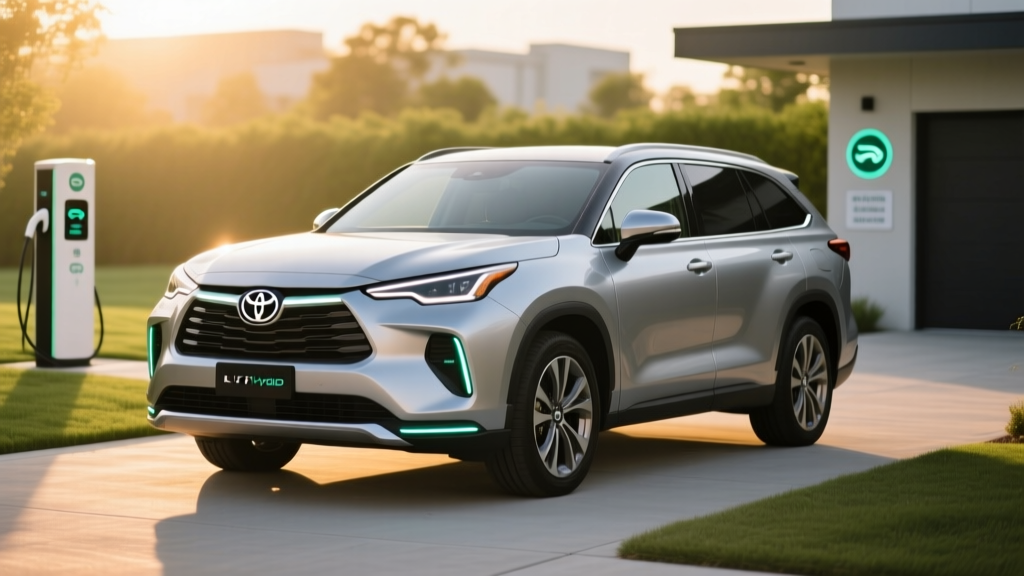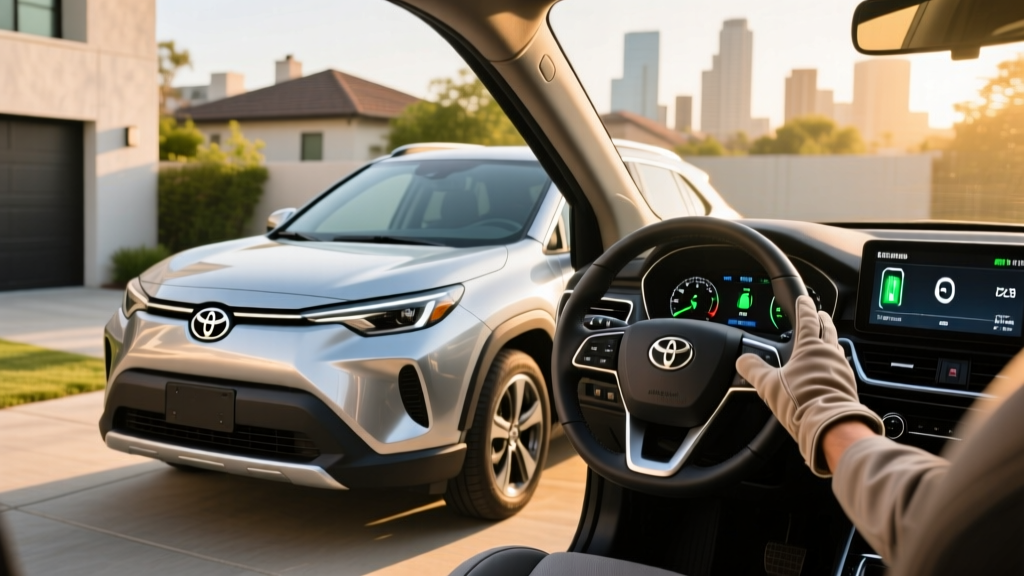
The Toyota Corolla Cross Hybrid SUV occupies a rare sweet spot in the compact crossover market: standard all-wheel drive, a proven hybrid powertrain, and fuel economy that undercuts nearly every gas-powered rival — all without requiring a charger, a lifestyle change, or a second mortgage. For 2026, Toyota continues to offer the Corolla Cross Hybrid in three trims with the same 2.0-liter hybrid system introduced for the 2023 model year, refined with incremental software and packaging updates.
If you've been cross-shopping small SUVs and keep landing on this model, this guide gives you the exact numbers — EPA MPG, real-world fuel economy, powertrain output, warranty coverage, and tax-credit reality — so you can decide whether the Corolla Cross Hybrid fits your garage or whether a plug-in hybrid (PHEV) or full battery-electric vehicle (BEV) makes more sense.
HEV vs. PHEV: What the Corolla Cross Hybrid Actually Is
Let's clear up the most common confusion first. The Corolla Cross Hybrid is a conventional hybrid electric vehicle (HEV), not a plug-in hybrid (PHEV). It has no charging port, no electric-only driving range to speak of, and no battery you can plug into a wall outlet. Instead, a 1.3 kWh nickel-metal hydride (NiMH) traction battery charges itself through regenerative braking and the gasoline engine.
HEV vs. PHEV at a Glance
| Feature | Corolla Cross Hybrid (HEV) | Typical Compact PHEV (e.g., RAV4 Prime) |
|---|---|---|
| Plug-in charging? | No — self-charging | Yes — Level 1/Level 2 |
| Electric-only range | ~1 mile at low speed | 25–42 miles |
| Battery size | 1.3 kWh (NiMH) | 14–19 kWh (Li-ion) |
| Federal tax credit (§30D) | Not eligible | Up to $7,500 (if eligible) |
| EPA combined MPG (hybrid mode) | 42 MPG | ~38 MPG (after battery depletes) |
The Corolla Cross Hybrid trades electric-only range for simplicity: no charging infrastructure needed, lower purchase price, and a lighter, less complex battery.
Toyota does not currently offer a Corolla Cross PHEV in the United States. If plug-in capability is a priority, you'd need to step up to the RAV4 Prime or look outside the Toyota lineup entirely.
Fuel Economy: EPA Ratings and Real-World MPG
The headline number for the 2026 Corolla Cross Hybrid is 42 MPG combined, with an EPA-rated 45 MPG city and 38 MPG highway. Those figures apply across all three trims (S, SE, and XSE) because every Corolla Cross Hybrid uses the same powertrain and comes with electronic all-wheel drive (AWD) as standard equipment.
| Metric | EPA Rating | Real-World Expectation |
|---|---|---|
| City MPG | 45 | 44–48 (hybrids excel in stop-and-go) |
| Highway MPG | 38 | 35–38 (aerodynamic drag at 70+ mph) |
| Combined MPG | 42 | 40–44 |
| Fuel tank capacity | 10.6 gal | ~440 mi total range |
Real-world context: Toyota's hybrid system is one of the few powertrains that routinely exceeds its EPA city rating in actual driving. The reason is physics: regenerative braking recaptures energy during the frequent stops of urban driving, and the engine shuts off at low speeds. On a 12-mile city commute with traffic lights, owners regularly report 46–50 MPG. Highway driving is the opposite story — above 65 mph, the gasoline engine does most of the work, and the hybrid advantage narrows. Expect 35–38 MPG on a 75-mph interstate cruise.
For comparison, the gas-only Corolla Cross AWD is rated at 29 MPG combined (source: fueleconomy.gov). That's a 13 MPG gap — roughly 45% better fuel economy — for the hybrid, which translates to about $400–$550 in annual fuel savings for a driver covering 12,000 miles per year at $3.40/gallon.
Powertrain Specs: Engine, Motors, and Horsepower
| Specification | 2026 Corolla Cross Hybrid |
|---|---|
| Engine | 2.0L DOHC 4-cylinder |
| Combined net horsepower | 196 hp |
| Front motor | 83 kW (111 hp) AC synchronous |
| Rear motor (AWD) | 30 kW (40 hp) AC synchronous |
| Traction battery | 1.3 kWh NiMH (sealed) |
| Transmission | eCVT (electronically controlled) |
| Drivetrain | Electronic AWD (standard) |
| 0–60 mph (est.) | ~7.5 seconds |
| Towing capacity | Not rated for towing |
The 196 combined horsepower figure is a significant step up from the gas-only Corolla Cross, which makes just 169 hp from its 2.0-liter four-cylinder. The electric motors deliver instant torque from a stop, which makes the hybrid feel noticeably quicker in city driving and merging situations, even though the 0–60 time of roughly 7.5 seconds is brisk rather than fast. The rear motor provides electronic AWD — there's no mechanical driveshaft — engaging the rear wheels when the system detects slip or when extra traction is needed under acceleration.
Pricing, Trims, and Tax Credit Reality
For the 2026 model year, the Corolla Cross Hybrid is offered in three trims:
- S: ~$29,845 MSRP (including destination) — base hybrid with 8-inch touchscreen, wireless Apple CarPlay/Android Auto, Toyota Safety Sense 3.0
- SE: ~$31,095 MSRP — adds sport-tuned suspension, 18-inch alloy wheels, heated front seats, dual-zone climate
- XSE: ~$33,095 MSRP — adds SofTex-trimmed seats, power driver's seat, JBL premium audio, 10.5-inch display
Federal Tax Credit: Not Eligible
The Corolla Cross Hybrid does not qualify for the federal §30D clean vehicle tax credit (up to $7,500). Under current IRS rules, only plug-in electric vehicles (BEVs and PHEVs) with sufficient battery capacity and qualifying battery/mineral sourcing are eligible. Conventional hybrids like this one are excluded regardless of price or buyer income.
Some states offer their own hybrid incentives — check your state energy office or department of environmental quality for current programs. These vary widely and change frequently.
The lack of a federal credit is the main financial drawback compared to a PHEV or BEV. However, the Corolla Cross Hybrid's lower base price (roughly $7,000–$12,000 less than a RAV4 Prime or comparable BEV crossover) and absence of home-charging installation costs often offset that gap over a five-year ownership period.
Battery Warranty, Lifespan, and Replacement Cost
Hybrid Battery Warranty
Coverage: 10 years / 150,000 miles (whichever comes first)
What's covered: Defects and capacity loss below a defined performance threshold
Transferable: Yes — transfers to subsequent owners automatically
Source: Toyota's official warranty guide
Toyota has been building hybrid powertrains since the 1997 Prius, and the company's hybrid battery reliability record is among the best in the industry. The 1.3 kWh NiMH pack in the Corolla Cross Hybrid is small, conservatively managed (the system never fully charges or fully depletes it), and operates within a narrow state-of-charge window — all of which extend its life significantly.
Real-world lifespan data: Toyota hybrid batteries from the Prius and Camry Hybrid lineages routinely last 150,000–200,000+ miles before significant degradation. Taxi fleets using Toyota hybrids have logged 300,000+ miles on original batteries. The Corolla Cross Hybrid uses the same fifth-generation Toyota Hybrid System (THS) architecture, so similar longevity is expected.
Replacement cost if out of warranty: A new OEM hybrid battery for a Toyota compact hybrid typically runs $2,500–$4,000 installed at a dealer. Third-party refurbished batteries are available for $1,500–$2,500. Given the 10-year/150,000-mile warranty and the proven track record, battery replacement is a low-probability event for most original owners.
Who Should Choose the Corolla Cross Hybrid — And Who Shouldn't
Pros
- 42 MPG combined with standard AWD — no charging required
- 196 hp is punchy for the class; city driving feels effortless
- 10-year/150,000-mile hybrid battery warranty
- Lower MSRP than any PHEV or BEV crossover
- Toyota Safety Sense 3.0 standard (adaptive cruise, lane-keep, auto emergency braking)
- Proven powertrain reliability from decades of Toyota hybrid production
Cons
- No federal tax credit eligibility
- No plug-in / electric-only driving capability
- Cargo space is modest (~25 cu ft behind rear seats)
- Not rated for towing
- Highway MPG drops to ~35–38 at sustained 70+ mph speeds
- Rear-seat legroom is tight for taller passengers
Choose the Corolla Cross Hybrid if:
- You want maximum fuel economy without installing a home charger or changing your refueling habits
- You live in an apartment or condo without charging access
- Your daily commute is mostly city/suburban driving where the hybrid system shines
- You want AWD for snow/rain but don't need serious off-road or towing capability
- You plan to keep the vehicle 8–12 years and value long-term reliability
Look at a PHEV or BEV instead if:
- You have home charging and want to drive 25–40+ miles on electricity alone (consider the RAV4 Prime or a BEV like the Hyundai Ioniq 5)
- You want to claim the $7,500 federal tax credit to reduce effective purchase price
- You need more cargo room or towing capacity (RAV4 Hybrid offers 38 MPG and 1,500-lb towing)
- You want to eliminate gasoline purchases entirely for daily driving
Corolla Cross Hybrid vs. Competitors
| Model | Combined MPG | AWD | HP | Starting MSRP |
|---|---|---|---|---|
| Toyota Corolla Cross Hybrid | 42 | Standard | 196 | ~$29,845 |
| Honda CR-V Hybrid | 40 | Available | 204 | ~$35,395 |
| Subaru Crosstrek Hybrid (HEV) | 36 | Standard | 194 | ~$31,995 |
| Kia Niro HEV | 49 | FWD only | 139 | ~$28,395 |
The Corolla Cross Hybrid's combination of 42 MPG, standard AWD, and sub-$30K pricing is difficult to match. The Kia Niro gets better fuel economy but lacks AWD entirely. The Honda CR-V Hybrid is roomier and more powerful but costs $5,500+ more at the entry point. The Subaru Crosstrek Hybrid offers ruggedness but trails on efficiency.
Frequently Asked Questions
How many MPG does the Toyota Corolla Cross Hybrid get?
The EPA rates the 2026 Corolla Cross Hybrid at 45 MPG city, 38 MPG highway, and 42 MPG combined. In real-world city driving, many owners report 44–50 MPG thanks to the hybrid system's regenerative braking. Highway fuel economy settles around 35–38 MPG at sustained speeds above 65 mph.
Can I plug in the Corolla Cross Hybrid to charge?
No. The Corolla Cross Hybrid is a conventional (self-charging) hybrid, not a plug-in hybrid. It has no charging port. The small 1.3 kWh battery charges automatically through regenerative braking and the gasoline engine. You refuel it exactly like a gas car — at any gas station.
Does the Corolla Cross Hybrid qualify for a tax credit?
It does not qualify for the federal §30D clean vehicle credit, which is limited to plug-in vehicles (BEVs and PHEVs). Some states may offer their own incentives for hybrid purchases — check your state's energy or environmental agency for current programs.
How long will the hybrid battery last, and what does replacement cost?
Toyota covers the hybrid battery for 10 years or 150,000 miles. Based on Toyota's long track record with hybrid systems (Prius, Camry Hybrid, RAV4 Hybrid), these batteries commonly last 150,000–200,000+ miles. If replacement is ever needed out of warranty, expect $2,500–$4,000 for a new OEM battery installed at a dealership.
Is the Corolla Cross Hybrid better than a full EV for my situation?
It depends on your charging access and driving pattern. If you can install a Level 2 home charger and most of your driving is under 250 miles per day, a BEV will cost less per mile to operate and may qualify for a $7,500 federal credit. If you lack home charging, drive long highway routes frequently, or want to avoid any charging-planning overhead, the Corolla Cross Hybrid delivers excellent efficiency with zero infrastructure changes.
Is the Corolla Cross Hybrid reliable?
Toyota's hybrid powertrains are among the most reliable in the automotive industry. The fifth-generation Toyota Hybrid System used in the Corolla Cross Hybrid has fewer wear components than a conventional gasoline powertrain (no traditional transmission, no starter motor, no alternator, regenerative braking reduces brake pad wear). Toyota consistently ranks at or near the top in long-term reliability surveys from Consumer Reports and J.D. Power.