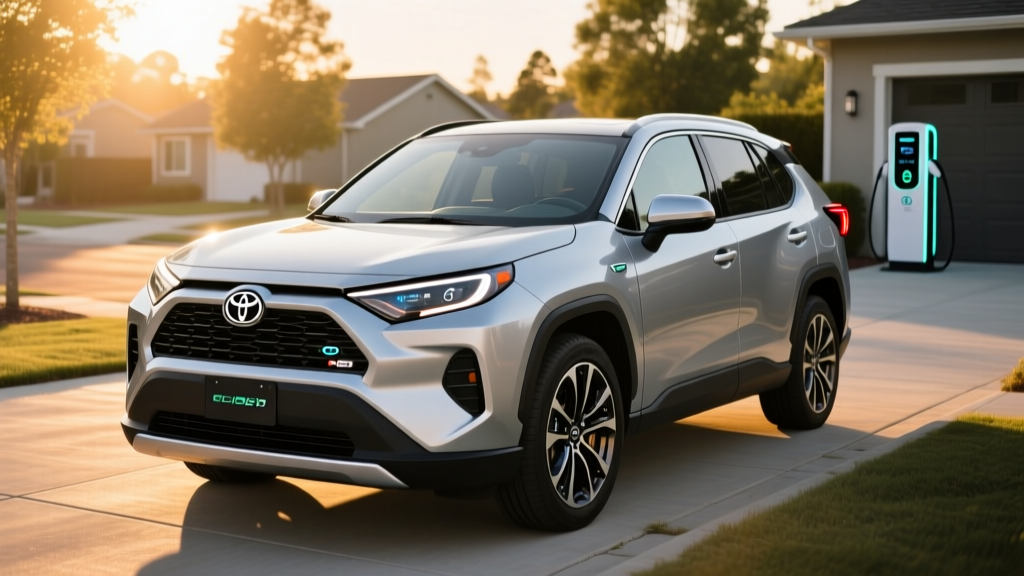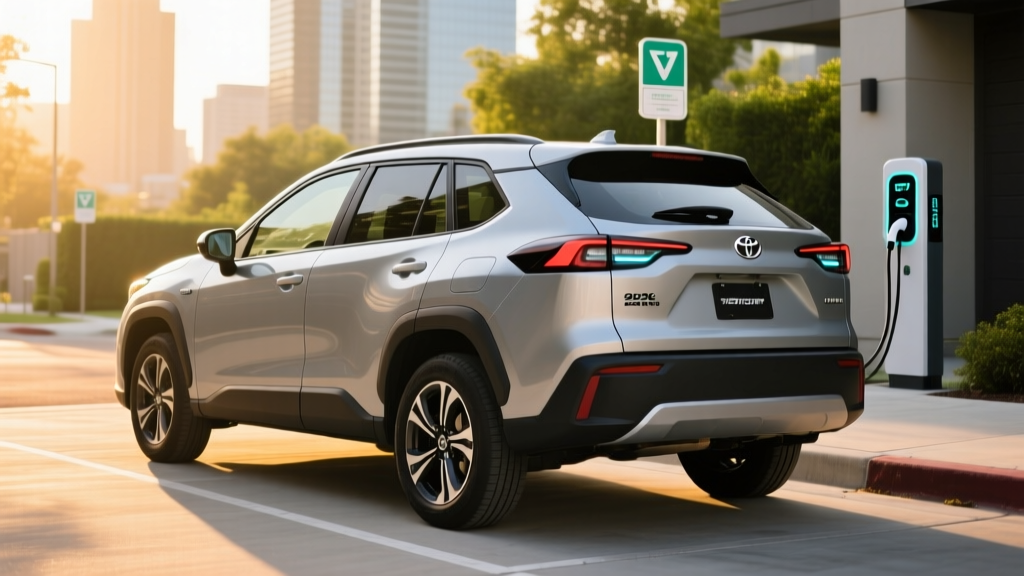
The subcompact crossover segment is crowded, but the Toyota Corolla Cross Hybrid occupies a rare sweet spot: standard all-wheel drive, genuinely excellent city fuel economy, and Toyota's hybrid reliability reputation—all without ever needing to plug in. For buyers weighing the Toyota Corolla Cross Hybrid all-wheel drive against plug-in hybrids or full battery-electric vehicles, this guide breaks down exactly what you get, what it costs to own, and where the limits of the hybrid powertrain show.
Quick Verdict
The Corolla Cross Hybrid is a conventional hybrid (HEV), not a plug-in. You never plug it in. It generates its own electricity through regenerative braking and the gasoline engine. The payoff: an EPA-estimated 42 MPG combined with standard electronic AWD, making it one of the most efficient all-wheel-drive crossovers available without the price premium, charging logistics, or range anxiety of a PHEV or BEV.
HEV vs PHEV: What the Corolla Cross Hybrid Actually Is
Before examining the numbers, a critical distinction that trips up many shoppers:
| Feature | Corolla Cross Hybrid (HEV) | Plug-In Hybrid (PHEV) Example: RAV4 Prime | Battery Electric (BEV) |
|---|---|---|---|
| Plug in to charge? | No — self-charging | Yes — requires outlet/charger | Yes — requires charger |
| Electric-only driving | Very short distances at low speed | 20–42 miles typical | 200–400+ miles |
| Gas engine | Yes, primary power source | Yes, backup after battery depletes | None |
| Battery size | ~1.0 kWh (small buffer) | 13–18 kWh usable | 60–100+ kWh |
| Federal tax credit (§30D) | Not eligible | Up to $7,500 (if eligible) | Up to $7,500 (if eligible) |
| Home charging install needed | No | Recommended (Level 2) | Essential (Level 2) |
The Corolla Cross Hybrid uses Toyota's fifth-generation hybrid system. A small lithium-ion battery pack (approximately 1.0 kWh) buffers energy recovered from braking and excess engine output. The electric motors assist the 2.0-liter four-cylinder engine, but they cannot propel the vehicle for meaningful distances on electricity alone. This is by design: HEVs maximize fuel efficiency without requiring any change in driver behavior or home infrastructure.
Fuel Economy: EPA Ratings and Real-World MPG
The headline number is why buyers cross-shop this vehicle. According to fueleconomy.gov, the 2025/2026 Toyota Corolla Cross Hybrid AWD carries the following EPA estimates:
| Driving Cycle | EPA Estimate |
|---|---|
| City | 45 MPG |
| Highway | 38 MPG |
| Combined | 42 MPG |
Real-World Expectations
Hybrids typically exceed their EPA city rating in stop-and-go traffic because regenerative braking recovers energy that a gas car wastes as heat. Owners who do mostly urban and suburban driving frequently report 44–48 MPG in warm weather.
Highway driving tells a different story. At sustained speeds above 70 mph, the electric motor contributes less and the 2.0L engine does most of the work. Expect 35–38 MPG on long interstate trips, dropping to 32–34 MPG in cold weather (below 35°F) when the engine runs more often for cabin heat and battery conditioning.
For a 13.2-gallon fuel tank, real-world range varies from approximately 420 miles (highway/cold) to 550+ miles (city/warm). That's 1–2 fewer fuel stops per month compared to the non-hybrid Corolla Cross AWD, which rates at 29 MPG combined.
Powertrain Specs: 196 HP with Electronic AWD
| Specification | Value |
|---|---|
| Engine | 2.0L 4-cylinder Atkinson-cycle |
| Combined system horsepower | 196 hp |
| Front electric motor | Integrated into transaxle |
| Rear electric motor (AWD) | Separate rear-axle motor, up to ~40 hp |
| Transmission | eCVT (electronically controlled) |
| Drivetrain | Electronic AWD (eAWD) — standard on all Hybrid trims |
| 0–60 mph (est.) | ~7.5 seconds |
| Towing capacity | Not rated for towing |
The rear axle has no mechanical connection to the engine. Instead, a dedicated electric motor engages the rear wheels when the system detects slip, during hard acceleration, or in low-traction conditions (rain, snow, gravel). Under steady-state cruising, the rear motor disengages to minimize drag and maximize efficiency.
This eAWD system is not designed for off-roading or heavy towing—it's a traction and stability system. If you need to tow a small trailer, the non-hybrid Corolla Cross (rated at 1,500 lbs) is the appropriate choice, though you'll sacrifice roughly 13 MPG combined.
Pricing, Trims, and Tax Credit Eligibility
The 2026 Toyota Corolla Cross Hybrid is offered in three trims. All include standard AWD:
| Trim | MSRP (approx.) | Key Features |
|---|---|---|
| S | $29,845 | 8-inch touchscreen, Toyota Safety Sense 3.0, 17-inch alloy wheels |
| SE | $31,345 | Sport-tuned suspension, SofTex seats, 18-inch wheels, paddle shifters |
| XSE | $33,295 | JBL premium audio, heated front seats, power liftgate, wireless charging |
Federal Tax Credit: Not Eligible
Under current IRS §30D rules, the federal clean vehicle credit applies only to plug-in electric vehicles (BEVs and PHEVs) that meet battery capacity, critical mineral sourcing, and MSRP thresholds. The Corolla Cross Hybrid is a conventional hybrid (HEV) with no plug and a battery far below the 7 kWh minimum. It does not qualify for the $7,500 federal tax credit.
Some states offer their own incentives for hybrids, but these are increasingly rare as programs shift toward zero-emission vehicles. Check your state's energy office or department of revenue for current programs.
Battery Warranty, Reliability, and Replacement Cost
Toyota Hybrid Battery Warranty
- Coverage: 10 years / 150,000 miles (whichever comes first), transferable to subsequent owners
- What's covered: Hybrid battery pack, hybrid control module, inverter, and related hybrid-system components
- Capacity threshold: Toyota warrants against defects and abnormal degradation; there is no published minimum State of Health percentage, but owner reports indicate less than 10% capacity loss over 100,000+ miles is typical for Gen 5 systems
Long-Term Reliability
Toyota's hybrid system is among the most proven in the industry, with over 25 years of continuous production since the original Prius. The Corolla Cross Hybrid uses the fifth-generation Toyota Hybrid System (THS V), which benefits from decades of iteration. The eCVT has no conventional clutch packs, bands, or torque converter—it's a planetary gearset with two motor-generators, making it mechanically simpler and more durable than traditional automatic transmissions.
The lithium-ion hybrid battery is small (~1.0 kWh) and operates within a narrow state-of-charge window (roughly 40–80%), which dramatically reduces stress and extends cycle life. Based on historical data from Toyota's hybrid fleet, battery replacement before 150,000 miles is uncommon.
Battery Replacement Cost
If the hybrid battery does require replacement outside of warranty:
- New OEM battery: $2,500–$4,000 (parts and labor, varies by dealer)
- Refurbished/reconditioned: $1,500–$2,500 from independent hybrid specialists
- Individual module replacement: Some shops can replace only the failed modules for $500–$1,200
For context, a conventional gas car's transmission replacement often costs $3,000–$5,000, and the hybrid system eliminates that failure point entirely.
Who Should Buy the Corolla Cross Hybrid AWD?
Choose the Corolla Cross Hybrid If:
- You want AWD capability (snow, rain, light gravel) without the fuel-economy penalty of traditional AWD systems
- You cannot install a home charger (apartment, street parking, no garage) and don't want to rely on public charging
- Your driving is primarily city and suburban, where the hybrid system delivers its biggest MPG advantage
- You plan to own the vehicle 8–10+ years and value Toyota's long-term reliability track record
- You want low operating costs without the upfront price premium of a PHEV or BEV
Consider a PHEV Instead If:
- You have home charging access and a short commute (under 30 miles round-trip) — a PHEV like the Toyota RAV4 Prime (42 miles electric-only) could eliminate most gasoline use
- You want to qualify for the $7,500 federal tax credit to offset a higher purchase price
- You want the option of zero-emission driving for daily errands
Consider a Full EV Instead If:
- You have reliable home Level 2 charging and want to eliminate gasoline entirely
- Your state offers strong EV incentives (e.g., California, Colorado, Massachusetts)
- You drive 15,000+ miles annually and want to maximize fuel savings ($1,500–$2,500/year vs. gas at current prices)
Pros
- 42 MPG combined EPA — among the best for any AWD crossover
- Standard AWD on every trim, no option delete needed
- No plug-in required; zero infrastructure change
- 196 hp is genuinely quick for the class (~7.5s 0–60)
- 10-year/150,000-mile hybrid battery warranty
- Toyota Safety Sense 3.0 standard (adaptive cruise, lane-keeping, auto emergency braking)
- Proven THS V hybrid system with decades of reliability data
Cons
- No federal tax credit eligibility (HEV, not PHEV/BEV)
- Cargo space is modest (~25.5 cu ft behind rear seats) — less than RAV4
- Not rated for towing
- Rear seat is tight for taller adults on long trips
- No DC fast charging capability (not applicable — it's an HEV)
- Highway MPG advantage narrows vs. efficient gas-only crossovers
- Infotainment system is functional but not class-leading in responsiveness
Frequently Asked Questions
How many MPG does the Toyota Corolla Cross Hybrid AWD get?
The EPA rates it at 45 MPG city, 38 MPG highway, and 42 MPG combined. In real-world city driving, many owners see 44–48 MPG. Highway driving at 70+ mph typically yields 35–38 MPG, with cold weather reducing that to the low 30s.
Does the Corolla Cross Hybrid need to be plugged in?
No. It is a conventional hybrid (HEV), not a plug-in hybrid. The battery charges through regenerative braking and the gasoline engine. You fuel it exactly like a regular gas car—just fill up at any gas station.
How far can it drive on electric power alone?
Not far. The Corolla Cross Hybrid can creep on electric power at very low speeds (parking lots, stop-and-go traffic) for short bursts, but it cannot sustain highway speeds or travel meaningful distances on battery alone. If electric-only range is a priority, you need a PHEV or BEV.
Is the Corolla Cross Hybrid reliable, and what does battery replacement cost?
Toyota's hybrid system has over 25 years of production history and is among the most reliable powertrains in the industry. The hybrid battery is warranted for 10 years / 150,000 miles. Out-of-warranty replacement runs $2,500–$4,000 for a new OEM pack, or $1,500–$2,500 for a refurbished unit. Most owners never need a replacement within typical ownership periods.
Does the Corolla Cross Hybrid qualify for any tax credit?
It does not qualify for the federal §30D clean vehicle credit, which requires a plug-in vehicle with at least 7 kWh of battery capacity. The Corolla Cross Hybrid's battery is approximately 1.0 kWh and has no plug. Some states may offer small hybrid incentives, but these are increasingly uncommon. Check your state's energy or revenue department for current programs.
How does the AWD system work?
The Corolla Cross Hybrid uses electronic AWD (eAWD). A dedicated electric motor on the rear axle engages when the system detects front-wheel slip, during hard acceleration from a stop, or in low-traction conditions. Under normal highway cruising, the rear motor disengages entirely to save energy. There is no mechanical driveshaft connecting the engine to the rear wheels.
Is it good in snow?
The eAWD system provides confident traction in moderate snow and ice, comparable to other light-duty AWD crossovers. Pair it with winter tires for significantly improved braking and cornering grip. It is not a substitute for a dedicated off-road vehicle or one with a locking rear differential, but for typical winter commuting, it performs well.
How does it compare to the non-hybrid Corolla Cross?
The gas-only Corolla Cross AWD rates at 29 MPG combined (vs. 42 for the hybrid) and produces 169 hp (vs. 196). The hybrid costs approximately $2,500–$3,000 more at the equivalent trim level. At 15,000 miles per year and $3.50/gallon gas, the hybrid saves roughly $550–$650 annually in fuel, paying back the premium in about 4–5 years. If you keep the vehicle longer, the hybrid is the clear economic winner.
Sources: EPA fuel economy data from fueleconomy.gov; IRS §30D credit rules from irs.gov; vehicle specifications from Toyota Motor North America press materials. Pricing and incentives subject to change; verify with your dealer and tax professional before purchase.