The Toyota Camry has been America's best-selling sedan for years, and its transition to an exclusively hybrid lineup has only sharpened its value proposition. For 2026, the Camry Hybrid pairs a refined cabin with class-leading fuel economy, making it a compelling bridge between conventional gas sedans and full battery-electric vehicles. This guide breaks down the 2026 Toyota Camry Hybrid interior, powertrain, real-world efficiency, and long-term ownership economics so you can decide whether it's the right electrified choice for your driveway.
2026 Toyota Camry Hybrid Interior: Materials, Tech & Space
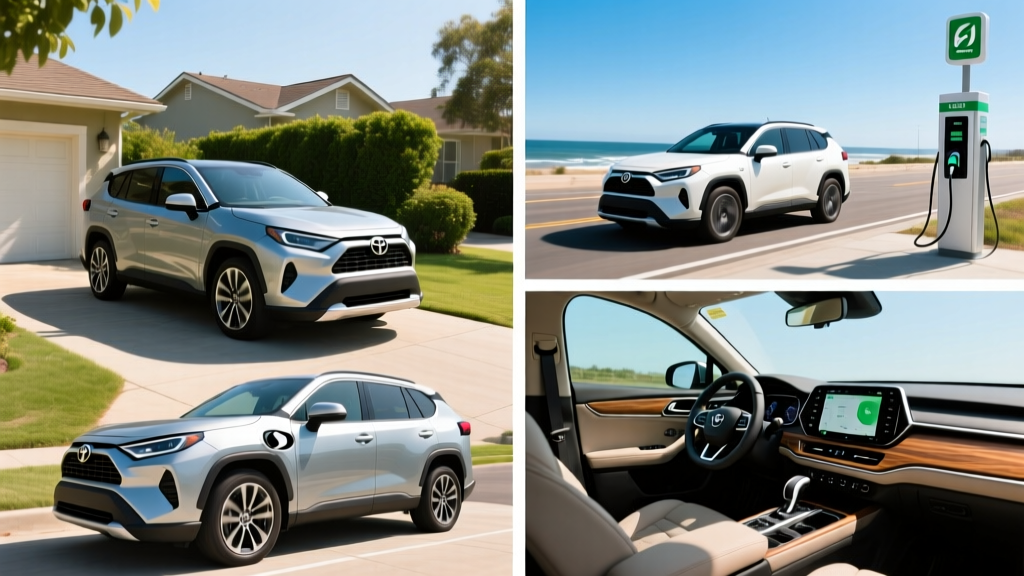
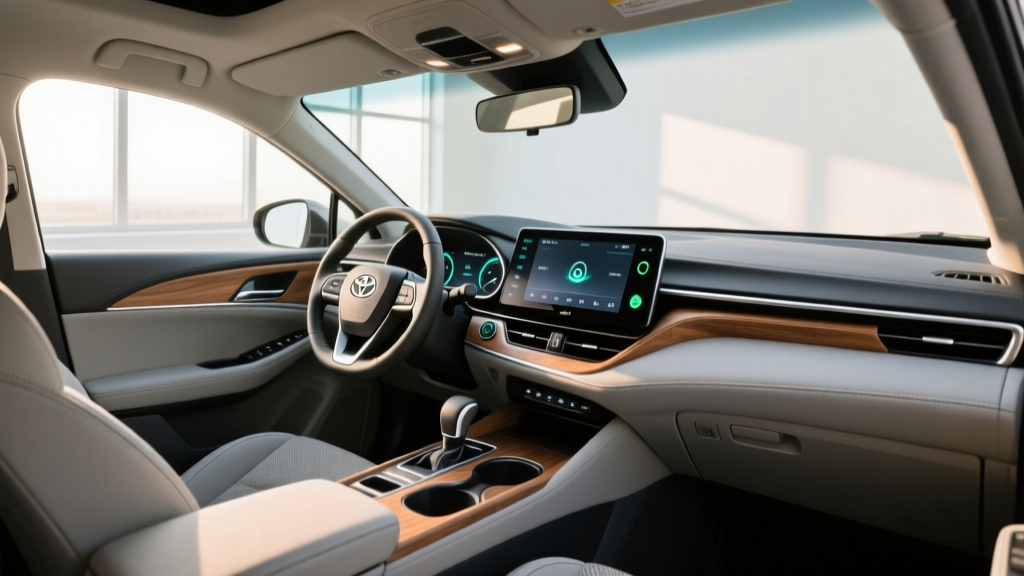
The 2026 Camry Hybrid interior represents a meaningful step up in perceived quality over the previous generation. Toyota has dressed the cabin in soft-touch materials across the dashboard and door panels, with available leather-trimmed seats on the XLE and XSE trims. The driver faces a standard 7-inch digital instrument cluster (12.3-inch on upper trims) that displays real-time energy flow, battery state of charge, and hybrid system status alongside conventional speed and trip data.
The centerpiece is Toyota's latest Audio Multimedia system, offered in 8-inch or available 12.3-inch touchscreen formats. Wireless Apple CarPlay and Android Auto are standard across all trims, and the system supports over-the-air updates. A wireless Qi charging pad, dual USB-C ports in the front row, and available rear-seat USB-C ports keep devices powered. The center console offers a usable storage bin, and the trunk provides 15.1 cubic feet of cargo space — identical to non-hybrid predecessors, since the hybrid battery is packaged under the rear seats rather than intruding into the cargo area.
Front-seat comfort is excellent, with 42.1 inches of legroom. Rear-seat passengers get 38.0 inches of legroom, competitive with the Honda Accord Hybrid and Hyundai Sonata Hybrid. Cabin noise levels are well-controlled, aided by acoustic-laminated front glass and active noise cancellation on higher trims.
HEV vs PHEV: Where the Camry Hybrid Fits
Important distinction: The 2026 Toyota Camry Hybrid is a conventional hybrid electric vehicle (HEV), not a plug-in hybrid (PHEV). This means:
- No plug required. The Camry Hybrid charges its small battery entirely through regenerative braking and the gasoline engine. You never need to plug it in.
- No electric-only driving range. Unlike a PHEV (such as the Toyota RAV4 Prime or Prius Prime), the Camry Hybrid cannot drive meaningful distances on electricity alone. The electric motor assists the gas engine and enables brief low-speed EV-mode operation, but the gas engine is always the primary power source.
- No federal tax credit. Because it lacks a plug and a sufficiently large battery, the Camry Hybrid does not qualify for the IRS §30D Clean Vehicle Credit, which is reserved for plug-in electric vehicles (BEVs and PHEVs) meeting battery-sourcing and income requirements.
If you're looking for plug-in capability with electric-only commuting range, Toyota offers the Prius Prime (up to 44 miles of electric-only range) as a PHEV alternative in the sedan segment. The Camry Hybrid is purpose-built for drivers who want maximum fuel efficiency without changing their refueling habits.
Powertrain Specs & Fuel Economy Breakdown
Every 2026 Camry Hybrid uses Toyota's fifth-generation hybrid system, pairing a 2.5-liter four-cylinder engine with two electric motor-generators and a continuously variable transmission (eCVT). Front-wheel drive is standard; electronic on-demand all-wheel drive (AWD) adds a rear-mounted electric motor for improved traction.
| Specification | FWD Trims | AWD Trims |
|---|---|---|
| Combined Horsepower | 225 hp | 232 hp |
| Engine | 2.5L 4-cyl Atkinson-cycle + 2 motor-generators | |
| Transmission | eCVT (planetary gearset) | |
| Hybrid Battery | ~1.0 kWh lithium-ion (under rear seat) | |
| EPA City MPG | 53 mpg | 51 mpg |
| EPA Highway MPG | 50 mpg | 49 mpg |
| EPA Combined MPG | 51 mpg | 50 mpg |
| Fuel Tank | 13.2 gallons | |
| Total Range (est.) | ~673 miles | ~660 miles |
| 0–60 mph | ~7.2 sec | ~7.0 sec |
| Cargo Volume | 15.1 cu ft | |
Source: EPA Fuel Economy Guide — Toyota Camry Hybrid
How Many MPG Does the Camry Hybrid Actually Get?
The EPA rates the 2026 Camry Hybrid FWD at 53 city / 50 highway / 51 combined MPG. AWD models drop slightly to 51/49/50 MPG. In real-world driving, Toyota's hybrid system tends to exceed EPA city estimates because regenerative braking recovers more energy in stop-and-go traffic. Many owners report 54–58 MPG on city commutes. Highway driving at sustained 70–80 mph speeds typically yields 46–50 MPG, as the gas engine bears more of the load without regen assistance. Cold weather can reduce efficiency by 5–10% due to increased engine warm-up cycles and cabin heating demands.
Battery Warranty: Toyota covers the Camry Hybrid's hybrid battery for 10 years or 150,000 miles (whichever comes first) across all 50 states. This is one of the longest hybrid battery warranties in the industry and applies to the hybrid battery pack, control module, and related components.
Real-World Ownership: Costs, Reliability & Battery Longevity
The Camry Hybrid's ownership story is defined by low operating costs and Toyota's long-standing hybrid reliability record. With over two decades of hybrid production experience (since the original 1997 Prius), Toyota's hybrid systems have proven exceptionally durable. Taxi fleets and high-mileage drivers routinely report 200,000+ miles on original hybrid batteries.
Fuel Cost Savings vs. a Gas-Only Sedan
At $3.30/gallon for regular unleaded and 12,000 miles driven annually, the Camry Hybrid (51 combined MPG) costs approximately $776 per year in fuel. A comparable gas-only midsize sedan averaging 30 combined MPG would cost $1,320 per year — a difference of roughly $544 annually. Over a typical 5-year ownership period, that's $2,720 in fuel savings, not accounting for potential fuel price increases.
Hybrid Battery Replacement Cost
If the hybrid battery does fail outside warranty, replacement costs have dropped significantly. A new OEM Toyota hybrid battery for the Camry typically runs $2,000–$3,500 installed at a dealership. Independent hybrid specialists and refurbished battery options can reduce this to $1,000–$2,000. Given the 10-year/150,000-mile warranty and the battery's track record, most owners will never face this expense.
Insurance & Maintenance
Insurance premiums for the Camry Hybrid are competitive with gas-powered equivalents — typically within $50–$100/year of a non-hybrid Camry. Maintenance costs are lower than gas-only vehicles because regenerative braking extends brake pad life (60,000–100,000 miles is common), there's no traditional starter motor or alternator to replace, and the eCVT has no belts, pulleys, or clutch packs to service. Standard oil changes every 10,000 miles round out the routine maintenance schedule.
2026 Camry Hybrid Pricing by Trim
| Trim | Drivetrain | MSRP (incl. destination) |
|---|---|---|
| LE | FWD | $29,990 |
| LE | AWD | $31,390 |
| SE | FWD | $31,490 |
| SE | AWD | $32,890 |
| XLE | FWD | $34,490 |
| XLE | AWD | $35,890 |
| XSE | FWD | $35,490 |
| XSE | AWD | $36,890 |
Note: Pricing shown reflects estimated 2026 model-year MSRPs including destination charges. Confirm current pricing with your local Toyota dealer.
Does the Camry Hybrid Qualify for Any Tax Credit?
No. The 2026 Camry Hybrid is a conventional HEV and does not qualify for the federal IRS §30D Clean Vehicle Credit. That credit applies exclusively to plug-in vehicles (BEVs and PHEVs) with battery packs of at least 7 kWh that meet critical-mineral sourcing and buyer income requirements. The Camry Hybrid's ~1.0 kWh battery is far below the threshold.
Some states and local utilities offer rebates for conventional hybrids, but these are uncommon and vary by jurisdiction. Check your state energy office or utility provider for current programs. If a federal tax credit is a priority, you'd need to consider a PHEV like the Prius Prime or a full BEV like the Tesla Model 3 or Hyundai Ioniq 6.
Camry Hybrid vs. the Competition
The midsize hybrid sedan segment is competitive. Here's how the Camry Hybrid stacks up against key rivals on the metrics that matter:
| Metric | Toyota Camry Hybrid | Honda Accord Hybrid | Hyundai Sonata Hybrid |
|---|---|---|---|
| EPA Combined MPG | 51 (FWD) | 48 | 47 |
| Combined HP | 225–232 | 204 | 192 |
| Starting MSRP | ~$29,990 | ~$33,990 | ~$31,250 |
| Hybrid Battery Warranty | 10 yr / 150k mi | 8 yr / 100k mi | 10 yr / 100k mi |
| AWD Available? | Yes | No | No |
| Cargo Volume | 15.1 cu ft | 16.7 cu ft | 16.0 cu ft |
The Camry Hybrid leads on fuel economy, starting price, and available AWD. The Accord Hybrid offers more trunk space and a sportier driving feel. The Sonata Hybrid provides a long warranty and available solar roof panel, though at a higher base price. Source: fueleconomy.gov
Who Should Buy the Camry Hybrid — and Who Shouldn't?
Choose the Camry Hybrid if:
- You want maximum MPG without plugging in or changing habits
- You drive 12,000+ miles/year and want meaningful fuel savings
- You need AWD for snow/rain but don't want an SUV
- You value proven reliability and a 10-year battery warranty
- You want a comfortable, tech-forward interior under $35,000
Look elsewhere if:
- You want electric-only commuting range (consider a PHEV like the Prius Prime)
- You need a federal tax credit (only BEVs and PHEVs qualify under §30D)
- You prioritize maximum cargo space (Accord Hybrid offers 16.7 cu ft)
- You want a fully electric driving experience (consider a BEV like the Ioniq 6)
- You need towing capacity (the Camry Hybrid is not rated for towing)
Hybrid vs PHEV vs EV — Which Fits You?
HEV (Camry Hybrid): Best for drivers without home charging access who want better fuel economy with zero behavioral change. No plug, no range anxiety, just fill up at any gas station and go. Ideal for apartment dwellers or those in areas with limited charging infrastructure.
PHEV (e.g., Prius Prime): Best for drivers with home Level 2 charging who commute 25–44 miles round-trip and want electric-only daily driving with a gas engine for longer trips. You get EV-like daily costs with road-trip flexibility.
BEV (e.g., Tesla Model 3, Ioniq 6): Best for drivers with reliable home or workplace charging who want zero tailpipe emissions, minimal maintenance, and access to the $7,500 federal tax credit (subject to income, MSRP, and battery-sourcing rules). Requires planning for longer trips around DC fast-charging infrastructure.
Frequently Asked Questions
How many MPG does the 2026 Toyota Camry Hybrid get?
The EPA rates the FWD Camry Hybrid at 53 city / 50 highway / 51 combined MPG. AWD models achieve 51/49/50 MPG. Real-world city driving often exceeds EPA estimates, with many owners reporting 54–58 MPG in stop-and-go traffic.
Does the Camry Hybrid need to be plugged in?
No. The Camry Hybrid is a conventional HEV that charges its battery through regenerative braking and the gasoline engine. You never plug it in. If you want plug-in capability, look at the Toyota Prius Prime PHEV.
How far can the Camry Hybrid drive on electric only?
The Camry Hybrid can operate in EV mode for very short distances (roughly 0.5–1 mile) at low speeds under 25 mph, such as in a parking lot or residential street. It is not designed for meaningful electric-only driving. For 25–44 miles of electric-only range, you need a PHEV.
Is the Camry Hybrid reliable, and what does battery replacement cost?
Toyota's hybrid systems have an outstanding reliability record spanning 25+ years. The hybrid battery is covered by a 10-year/150,000-mile warranty. Out-of-pocket replacement, if needed, typically costs $2,000–$3,500 at a dealer, or $1,000–$2,000 through independent hybrid specialists using refurbished packs.
Does the Camry Hybrid qualify for any tax credit?
No federal tax credit applies to the Camry Hybrid because it is a conventional HEV, not a plug-in vehicle. The IRS §30D credit requires a plug-in vehicle with at least 7 kWh of battery capacity. Some state or utility incentives may apply — check local programs.
Is the Camry Hybrid interior quiet and comfortable?
Yes. The 2026 Camry Hybrid features acoustic-laminated front glass, soft-touch interior surfaces, and available leather seating. Cabin noise is well-suppressed, and the hybrid system's electric-only low-speed operation makes for near-silent departure from stops. The interior offers 42.1 inches of front legroom and 38.0 inches of rear legroom.
How does the Camry Hybrid compare to a full EV?
A BEV like the Hyundai Ioniq 6 offers lower per-mile energy costs (~$0.04/mi vs. ~$0.065/mi for the Camry Hybrid), zero tailpipe emissions, and access to the $7,500 federal credit. But a BEV requires home or workplace charging access and route planning for trips beyond ~300 miles. The Camry Hybrid eliminates charging concerns entirely while still delivering excellent efficiency.
For the latest EPA ratings, visit fueleconomy.gov. For current IRS tax credit rules, see irs.gov. Always verify 2026 model-year pricing and availability with your local Toyota dealer, as specifications and incentives are subject to change.