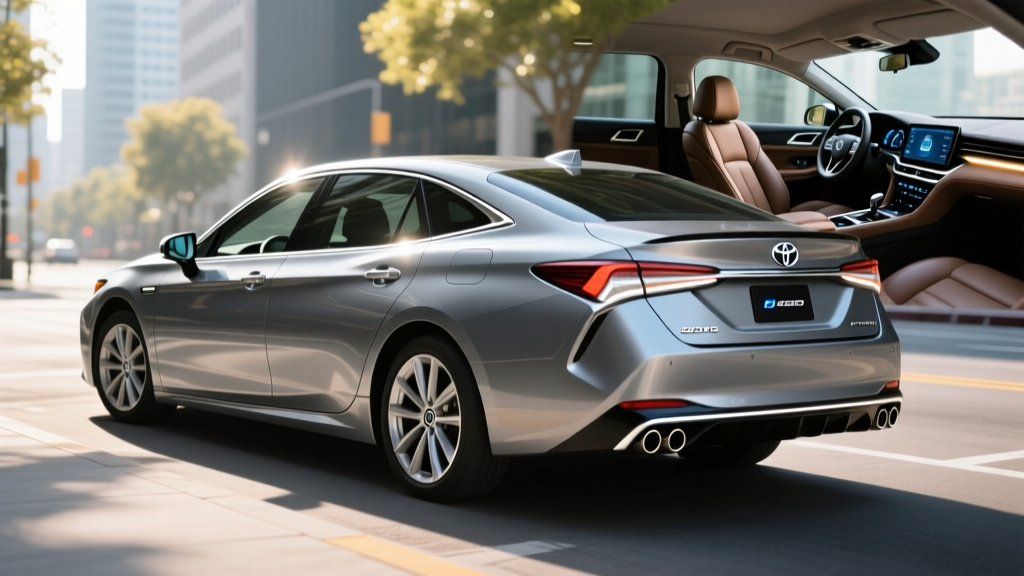
The Toyota Avalon Hybrid was discontinued after the 2022 model year, but it remains one of the most fuel-efficient full-size sedans ever sold in the United States. If you're shopping the used market in 2026 and searching for a hybrid Avalon Toyota, you're looking at a proven, naturally aspirated hybrid system wrapped in a spacious, comfortable sedan that routinely returns over 40 MPG in real-world driving.
This guide covers everything a used-car buyer needs to know: exact EPA fuel economy by model year, real-world MPG expectations, battery longevity and warranty coverage, replacement costs, and how the Avalon Hybrid stacks up against modern plug-in hybrids and full EVs available today.
What the Toyota Avalon Hybrid Is (and Isn't)
The Toyota Avalon Hybrid is a conventional hybrid electric vehicle (HEV). It pairs a 2.5-liter four-cylinder gasoline engine with one or more electric motors and a small nickel-metal hydride (NiMH) or lithium-ion battery pack. It charges its battery entirely through regenerative braking and the gas engine — there is no plug, no electric-only driving mode, and no external charging capability.
HEV vs PHEV vs EV: Where Does the Avalon Hybrid Fit?
| Feature | HEV (Avalon Hybrid) | PHEV (e.g., RAV4 Prime) | BEV (e.g., Model 3) |
|---|---|---|---|
| Plugs in? | No | Yes | Yes |
| Electric-only range | None | 25–42 mi | 250–360 mi |
| Gas engine? | Yes (primary) | Yes (backup) | No |
| Home charger needed? | No | Recommended | Essential |
| Federal tax credit (§30D)? | No | Up to $7,500* | Up to $7,500* |
| Tailpipe emissions | Yes (reduced) | Yes (reduced) | None |
*§30D credit eligibility depends on MSRP caps, buyer income limits, battery sourcing, and point-of-sale transfer rules. See IRS.gov for current requirements. Conventional hybrids like the Avalon do not qualify.
EPA Fuel Economy: Avalon Hybrid MPG by Model Year
The Avalon Hybrid's fuel economy improved significantly with the 2019 redesign (XA50 generation), which introduced Toyota's fourth-generation hybrid system. Here are the official EPA numbers from fueleconomy.gov:
| Model Year | City MPG | Highway MPG | Combined MPG | Hybrid System |
|---|---|---|---|---|
| 2019–2022 (XA50) | 43 | 44 | 44 | 2.5L I4 + 2 motors (215 hp) |
| 2013–2018 (XA40) | 40 | 39 | 40 | 2.5L I4 + 1 motor (200 hp) |
The XA50 generation (2019–2022) is the one to target. Its 44 MPG combined figure was best-in-class for a full-size sedan and remains competitive in 2026 against newer offerings.
Real-World MPG: What Owners Actually Report
EPA estimates are measured on a dynamometer under controlled conditions. Real-world results for the Avalon Hybrid depend heavily on driving style, climate, and route profile.
Real-World Fuel Economy Expectations (2019–2022 Avalon Hybrid)
| City / stop-and-go | 44–48 MPG (hybrids excel here — regen braking recovers energy) |
| Highway (70 mph cruise) | 38–42 MPG (aerodynamic drag reduces hybrid advantage) |
| Mixed driving | 40–45 MPG |
| Cold weather (below 30°F) | 35–40 MPG (engine runs more for cabin heat, battery less efficient) |
| Annual fuel cost (15,000 mi at $3.40/gal) | ~$1,159 (combined 44 MPG) |
A key advantage of Toyota's hybrid system: city MPG often exceeds highway MPG. The electric motor handles low-speed propulsion where gas engines are least efficient, and regenerative braking recaptures energy at every stop. If your commute is primarily urban, expect to beat the EPA estimate.
Powertrain and Performance Specs
The 2019–2022 Avalon Hybrid uses Toyota's Hybrid Synergy Drive with the A25A-FXS Dynamic Force engine — a 2.5-liter inline-four running the Atkinson cycle for maximum thermal efficiency.
| Specification | 2019–2022 Avalon Hybrid |
|---|---|
| Engine | 2.5L I4 Atkinson-cycle (176 hp / 163 lb-ft) |
| Electric motor (front) | Permanent magnet synchronous (118 hp / 149 lb-ft) |
| Net combined output | 215 hp |
| Transmission | eCVT (planetary gearset, no belt) |
| 0–60 mph | ~7.6 seconds |
| Drivetrain | Front-wheel drive (AWD not available on hybrid) |
| Hybrid battery (XA50) | ~1.6 kWh lithium-ion (sealed NiMH on earlier models) |
| Curb weight | ~3,680 lbs |
| Fuel tank | 13.2 gallons |
| Total driving range | ~580 miles per tank |
Acceleration is adequate for highway merging and passing but not sporty — the eCVT prioritizes smoothness and efficiency over urgency. The planetary-gearset eCVT has no belts, clutches, or traditional shifting components, which contributes to its exceptional reliability record.
Hybrid Battery Warranty, Lifespan, and Replacement Cost
Battery longevity is the single biggest concern for used hybrid buyers. Here's what you need to know about the Avalon Hybrid's battery pack:
Toyota Hybrid Battery Warranty
- 2020–2022 models: 10 years / 150,000 miles (whichever comes first)
- 2019 and earlier models: 8 years / 100,000 miles (10/150,000 in California and CARB states)
- Coverage: Defects and capacity loss below a defined threshold
- Transferable: Yes — warranty follows the vehicle, not the original owner
Source: Toyota Owner's Warranty Guide
How Long Do Avalon Hybrid Batteries Actually Last?
Toyota's hybrid battery packs are among the most durable in the industry. The Avalon Hybrid's battery is relatively small (~1.6 kWh) and operates within a narrow state-of-charge window (roughly 40%–80%), which dramatically reduces stress on the cells. Toyota Prius taxis routinely surpass 300,000 miles on original battery packs using the same hybrid architecture.
For a 2019–2022 Avalon Hybrid in 2026, most examples will have 30,000–80,000 miles and remain well within the warranty period. Battery failure before 150,000 miles is uncommon.
Battery Replacement Cost
If the battery does eventually need replacement out of warranty:
- New OEM battery (Toyota dealer): $2,500–$4,000 including labor
- Refurbished/remanufactured battery: $1,500–$2,500 including labor
- Individual module replacement: $500–$1,200 (if only specific cells have degraded — a hybrid specialist can test and replace individual modules)
Compared to a full EV battery replacement ($5,000–$20,000+), the Avalon Hybrid's small battery is relatively affordable to service.
Pricing in 2026: What You'll Pay for a Used Avalon Hybrid
Since the Avalon was discontinued after 2022, all available examples are pre-owned. Here's the approximate market in early 2026:
| Model Year | Typical Mileage | Price Range | Original MSRP (Hybrid) |
|---|---|---|---|
| 2022 | 25,000–45,000 mi | $28,000–$36,000 | $37,350–$43,550 |
| 2021 | 35,000–60,000 mi | $24,000–$32,000 | $36,750–$42,950 |
| 2020 | 45,000–75,000 mi | $21,000–$28,000 | $36,050–$42,350 |
| 2019 | 55,000–90,000 mi | $18,000–$25,000 | $36,550–$42,250 |
Does the Avalon Hybrid Qualify for Any Tax Credit?
No. The federal §30D Clean Vehicle Credit applies only to plug-in electric vehicles (BEVs and PHEVs) with a minimum battery capacity of 7 kWh. The Avalon Hybrid's ~1.6 kWh battery and lack of a plug make it ineligible for the federal credit or any state EV rebate tied to plug-in capability.
However, the lower purchase price of a used Avalon Hybrid (vs. a new PHEV or BEV) often offsets the lack of incentives. A 2021 Avalon Hybrid at $28,000 with no charging infrastructure cost can be more economical over five years than a $40,000+ new PHEV that requires a Level 2 home charger installation ($500–$2,000).
Avalon Hybrid vs. Alternatives in 2026
If you're cross-shopping, here's how the Avalon Hybrid compares to vehicles currently available:
✅ Choose the Avalon Hybrid If
- You want 40+ MPG with zero behavior change (no plugging in)
- You need a full-size sedan with rear-seat room and a large trunk (16.1 cu ft)
- You want proven Toyota hybrid reliability with remaining factory warranty
- Your budget is $20,000–$35,000
- You don't have access to home or workplace charging
- You drive primarily in city/suburban conditions where hybrid efficiency peaks
❌ Look Elsewhere If
- You want electric-only driving for short commutes (consider a PHEV like the RAV4 Prime or Prius Prime)
- You want zero tailpipe emissions (consider a BEV like the Tesla Model 3 or Hyundai Ioniq 6)
- You need all-wheel drive (the Avalon Hybrid is FWD only; the Camry Hybrid offers AWD)
- You want the latest infotainment and ADAS tech (2019–2022 Avalon tech is a generation behind)
- You want new-vehicle warranty coverage and the latest safety features
Key Competitors
| Vehicle | Type | Combined MPG / MPGe | Elec. Range | Approx. Price (2026) |
|---|---|---|---|---|
| Toyota Avalon Hybrid (2019–2022) | HEV | 44 MPG | — | $18K–$36K (used) |
| Toyota Camry Hybrid (2026) | HEV | 52 MPG | — | $30,000+ (new) |
| Toyota Prius Prime (2026) | PHEV | 52 MPG / 127 MPGe | 44 mi | $33,000+ (new) |
| Hyundai Sonata Hybrid (2026) | HEV | 47 MPG | — | $31,000+ (new) |
| Honda Accord Hybrid (2026) | HEV | 44 MPG | — | $33,000+ (new) |
The 2026 Camry Hybrid now surpasses the Avalon Hybrid on fuel economy (52 vs. 44 MPG combined) and is available new with full warranty. However, the Camry is a midsize sedan with less rear legroom and trunk space. If full-size comfort is a priority and you want to save $10,000+ vs. a new car, the used Avalon Hybrid remains compelling.
Safety and Reliability Record
The 2019–2022 Avalon earned strong safety marks:
- IIHS: Top Safety Pick (2019–2021), with Good ratings across all crash tests (IIHS.org)
- NHTSA: 5-star overall safety rating for 2020–2022 models
- Toyota Safety Sense P (2019–2020) / TSS 2.5+ (2021–2022): Includes pre-collision braking, lane departure alert with steering assist, automatic high beams, and full-speed adaptive cruise control
Toyota's hybrid system has an exceptional reliability track record spanning over 25 years since the original Prius. The eCVT transmission has no belts or friction clutches to wear out, and the hybrid battery's conservative charge window minimizes degradation. Consumer Reports consistently rates the Avalon Hybrid above average for predicted reliability.
Ownership Costs Over 5 Years
Here's a realistic five-year cost projection for a 2021 Avalon Hybrid purchased at $28,000, driven 15,000 miles/year:
| Category | 5-Year Cost | Notes |
|---|---|---|
| Fuel (75,000 mi at 44 MPG, $3.40/gal avg) | $5,795 | ~$1,159/year |
| Insurance (national avg for sedan) | $7,500–$9,500 | Varies by state/driver profile |
| Maintenance (oil, filters, brakes, tires) | $2,000–$3,000 | Regen braking extends pad life significantly |
| Depreciation (est. resale after 5 more years) | $8,000–$12,000 | Toyota hybrids hold value well |
| Total estimated 5-year cost | $23,295–$30,295 | Excludes purchase price |
For comparison, a gas-only full-size sedan averaging 25 MPG combined would cost approximately $10,200 in fuel over the same period — nearly double the Avalon Hybrid's fuel spend.
Frequently Asked Questions
How many MPG does the Toyota Avalon Hybrid get?
The 2019–2022 Toyota Avalon Hybrid is EPA-rated at 43 city / 44 highway / 44 combined MPG. The older 2013–2018 generation is rated at 40 city / 39 highway / 40 combined. In real-world city driving, many owners report 45–48 MPG thanks to the hybrid system's efficiency at low speeds and during stop-and-go traffic.
Does the Avalon Hybrid need to be plugged in?
No. The Avalon Hybrid is a conventional hybrid (HEV), not a plug-in hybrid (PHEV). It charges its battery entirely through regenerative braking and the gasoline engine. You fuel it like any other car — with gasoline at any station. There is no charging port, no plug, and no electric-only driving mode.
Is the Toyota Avalon Hybrid reliable?
Yes. Toyota's Hybrid Synergy Drive is one of the most proven hybrid systems in production, with over 25 years of real-world use across millions of vehicles. The eCVT transmission uses a planetary gearset with no belts or clutches, and the battery operates in a conservative charge window that maximizes lifespan. The Avalon Hybrid consistently earns above-average reliability ratings from Consumer Reports and similar evaluators.
What does it cost to replace the Avalon Hybrid battery?
A new OEM replacement battery from a Toyota dealer costs approximately $2,500–$4,000 including labor. Refurbished or remanufactured batteries run $1,500–$2,500. In some cases, individual battery modules can be replaced for $500–$1,200 by a hybrid specialist. However, battery failure before 150,000 miles is uncommon, and 2020–2022 models carry a 10-year/150,000-mile hybrid battery warranty that transfers to subsequent owners.
Does the Avalon Hybrid qualify for a federal tax credit?
No. The federal §30D Clean Vehicle Credit requires a plug-in electric vehicle with a battery capacity of at least 7 kWh. The Avalon Hybrid's ~1.6 kWh battery and lack of a charging port make it ineligible. This also applies to most state EV incentives, which typically require plug-in capability. However, the lower purchase price of a used Avalon Hybrid (vs. a new PHEV or BEV) can offset the lack of incentives.
Should I buy an Avalon Hybrid or a new Camry Hybrid?
If full-size sedan comfort, rear-seat space, and trunk volume are priorities, and you want to save $10,000+ over a new vehicle, the used Avalon Hybrid is an excellent choice. If you prefer new-car warranty coverage, the latest tech, and slightly better fuel economy (52 vs. 44 MPG combined), the current Camry Hybrid is the better pick — though it's a midsize sedan with less interior room. Test-drive both to compare.
Is the Avalon Hybrid good for highway road trips?
Yes, with a caveat. The 13.2-gallon fuel tank and 44 MPG combined rating yield roughly 580 miles of total range — excellent for long trips. However, highway-only driving at 70+ mph typically returns 38–42 MPG (hybrids are most efficient in city driving). The ride is smooth and quiet, the seats are supportive, and Toyota Safety Sense provides adaptive cruise control for reduced fatigue. It's a capable road-trip car, just not as highway-efficient as its EPA sticker might suggest.