Does Tesla Make Hybrid Cars in 2026?
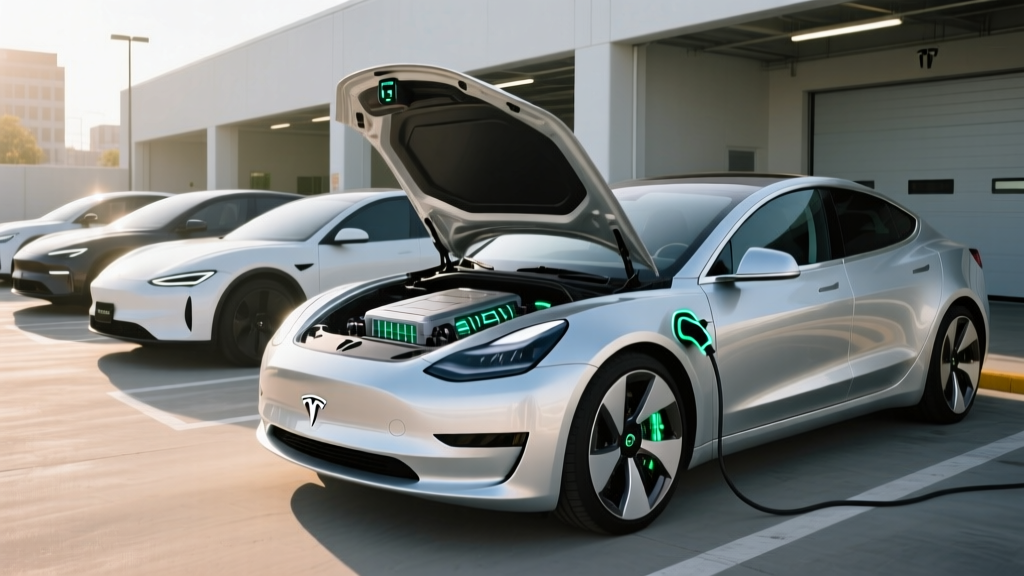
If you've been searching for Tesla hybrid cars, the short answer is no. As of 2026, Tesla produces only battery-electric vehicles (BEVs) — the Model 3, Model Y, Model S, Model X, and the Cybertruck. There is no Tesla hybrid, no Tesla plug-in hybrid (PHEV), and no Tesla range-extended EV. Elon Musk confirmed in 2024 that Tesla has no plans to develop a hybrid powertrain, calling the technology a "transitional" solution the company skipped entirely.
That leaves a real gap for buyers who want Tesla-level tech, efficiency, and software integration but aren't ready to commit to a full EV. Maybe you lack reliable home charging, take frequent long road trips through sparse charging networks, or simply want the safety net of a gas engine. Whatever the reason, the good news is that several 2026 PHEVs and conventional hybrids deliver impressive electric-only range, strong fuel economy, and advanced driver-assistance features that rival what Tesla offers.
Below, we break down why Tesla skipped hybrids entirely, explain the critical differences between HEVs and PHEVs, and profile the best hybrid and plug-in hybrid alternatives you can actually buy today.
HEV vs PHEV: What's the Difference and Why It Matters
Before comparing alternatives, it's essential to understand the two hybrid categories. They serve fundamentally different use cases.
| Feature | Conventional Hybrid (HEV) | Plug-In Hybrid (PHEV) |
|---|---|---|
| Plugs in? | No — regenerates via braking and engine | Yes — charges from wall outlet or public charger |
| Battery size | 0.5–2 kWh (small) | 13–25 kWh (much larger) |
| Electric-only range | 1–2 miles at low speed | 20–50+ miles at full speed |
| Primary fuel | Gasoline (electric motor assists) | Electricity first, gasoline when depleted |
| Federal tax credit | No | Up to $7,500 (with §30D eligibility) |
| Best for | Drivers who can't plug in at home | Drivers with home charging and short commutes |
The practical takeaway: If you can charge at home (even a standard 120V outlet works for most PHEVs overnight), a PHEV lets you drive on electricity for daily commuting while keeping a gas engine for road trips. If charging at home is impossible, a conventional HEV still delivers excellent MPG without any lifestyle change.
Why Tesla Skipped Hybrids Entirely
Tesla's decision to bypass hybrid technology stems from its core engineering philosophy. From the original Roadster in 2008, Tesla bet that battery energy density would improve rapidly and charging infrastructure would expand. That bet largely paid off: the 2026 Model Y Long Range achieves an EPA-estimated 330 miles of range, and the Supercharger network now includes over 65,000 connectors globally.
Adding a hybrid powertrain would require Tesla to engineer an internal combustion engine, fuel system, exhaust, and emissions compliance — an entirely separate engineering discipline. It would also add weight and mechanical complexity to vehicles designed around skateboard battery architectures. Tesla's position is that a well-designed BEV with access to fast charging eliminates the need for a backup gas engine.
For many buyers, that argument holds. But for those in apartments without charging, cold-climate drivers who see 25–35% range loss in winter, or frequent travelers through charging deserts in the rural Mountain West, a PHEV or HEV remains a pragmatic choice.
Best PHEV Alternatives to Tesla in 2026
These plug-in hybrids offer substantial electric-only range, strong combined MPG once the battery depletes, and advanced tech that comes closest to the Tesla ownership experience.
Toyota RAV4 Prime (2026)
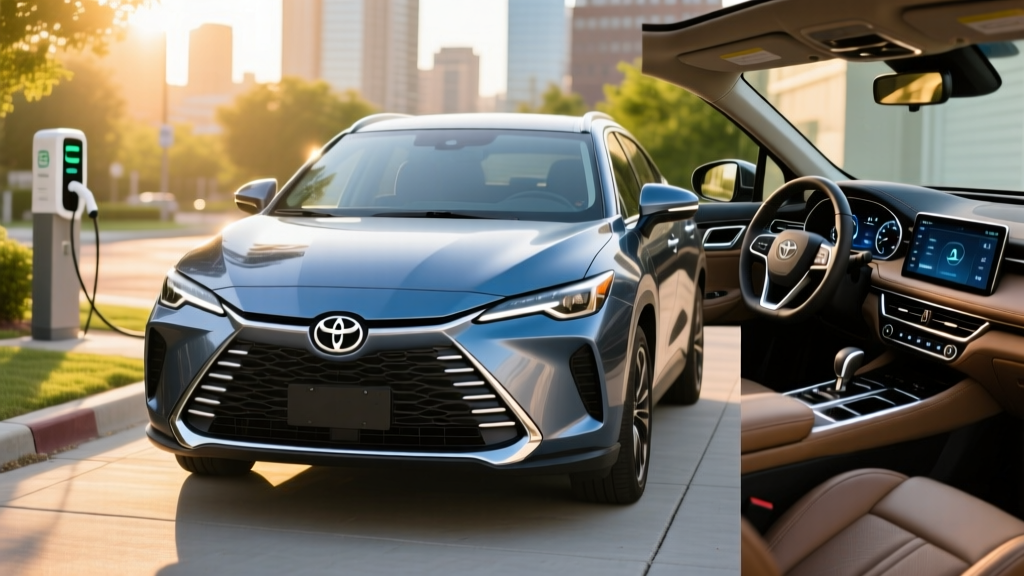
The RAV4 Prime remains the benchmark PHEV SUV. With 42 miles of EPA-estimated electric-only range and 302 combined horsepower, it accelerates to 60 mph in 5.7 seconds — quicker than many gas-only sport sedans. Once the battery is depleted, it returns an EPA-estimated 38 MPG combined as a conventional hybrid.
| Spec | Value |
|---|---|
| EPA electric-only range | 42 miles |
| EPA combined MPG (gas mode) | 38 MPG |
| Battery capacity | 18.1 kWh (lithium-ion) |
| Combined horsepower | 302 hp |
| 0–60 mph | 5.7 seconds |
| Level 2 charge time (0–100%) | ~2.5 hours at 6.6 kW |
| DC fast charging | Not available |
| Base MSRP | ~$44,500 |
| Federal tax credit (§30D) | Up to $7,500 (subject to sourcing/income rules) |
The RAV4 Prime qualifies for the full §30D federal tax credit of up to $7,500, though eligibility depends on battery component sourcing, critical mineral requirements, buyer income caps ($150K single / $300K joint), and the $80,000 MSRP cap for SUVs. Always verify current-year rules on the IRS website before purchasing.
Chrysler Pacifica PHEV (2026)
The only plug-in hybrid minivan on the market, the Pacifica PHEV delivers 32 miles of electric-only range — enough to cover most school runs and grocery trips without burning gas. With three rows and 140.5 cubic feet of cargo volume, it serves families that a Tesla Model Y can't quite accommodate comfortably for seven passengers.
| Spec | Value |
|---|---|
| EPA electric-only range | 32 miles |
| EPA combined MPG (gas mode) | 30 MPG |
| Battery capacity | 16.0 kWh |
| Combined horsepower | 260 hp |
| Level 2 charge time (0–100%) | ~2 hours at 7.2 kW |
| DC fast charging | Not available |
| Base MSRP | ~$51,000 |
| Federal tax credit (§30D) | Up to $7,500 (verify sourcing eligibility) |
Hyundai Tucson PHEV (2026)
Hyundai's refreshed Tucson PHEV offers 33 miles of electric range and an EPA-estimated 35 MPG combined in hybrid mode. Its 1.6-liter turbocharged engine paired with an electric motor produces 261 horsepower. Hyundai includes a generous 10-year/100,000-mile powertrain warranty, one of the best in the industry.
| Spec | Value |
|---|---|
| EPA electric-only range | 33 miles |
| EPA combined MPG (gas mode) | 35 MPG |
| Battery capacity | 13.8 kWh |
| Combined horsepower | 261 hp |
| Level 2 charge time (0–100%) | ~2 hours at 7.2 kW |
| DC fast charging | Not available |
| Base MSRP | ~$39,500 |
| Federal tax credit (§30D) | Up to $3,750–$7,500 (verify sourcing) |
Best Conventional Hybrid (HEV) Alternatives
If you can't charge at home, these conventional hybrids require zero plug-in infrastructure while still delivering outstanding fuel economy.
Toyota Prius (2026)
The redesigned Prius is no longer the slow, dowdy hybrid of the past. The 2026 model produces 196 horsepower, hits 60 mph in about 7.0 seconds, and returns an EPA-estimated 57 MPG city / 56 MPG highway / 57 MPG combined in its LE FWD trim. Real-world city driving often exceeds the EPA estimate because regenerative braking recaptures more energy in stop-and-go traffic.
| Trim | City MPG | Highway MPG | Combined MPG |
|---|---|---|---|
| LE (FWD) | 57 | 56 | 57 |
| XLE / Limited (FWD) | 52 | 52 | 52 |
| AWD variants | 49 | 50 | 49 |
The Prius does not qualify for the federal §30D tax credit, as it is a conventional hybrid without a plug. However, some states offer modest incentives for high-efficiency vehicles — check your state's energy office for current programs.
Honda Accord Hybrid (2026)
Honda's two-motor hybrid system in the Accord delivers 204 horsepower and an EPA-estimated 48 MPG combined. The Accord Hybrid drives more like a traditional sedan than most competitors, with the electric motor handling most low-speed propulsion and the gasoline engine engaging primarily at highway speeds. Base pricing starts around $34,000.
Toyota Camry Hybrid (2026)
Now exclusively hybrid across all trims, the 2026 Camry returns an EPA-estimated 51 MPG combined in its LE trim and offers available all-wheel drive. With 225 horsepower (FWD) or 232 hp (AWD), it's a midsize sedan that sips fuel while providing Toyota's well-regarded reliability and safety suite. Starting MSRP is approximately $29,500.
Battery Longevity, Warranties, and Replacement Costs
Hybrid battery warranties are among the best in the auto industry. Federal emissions regulations mandate that hybrid and PHEV batteries carry a minimum warranty of 8 years / 100,000 miles (10 years / 150,000 miles in California and states that follow CARB standards). Many manufacturers exceed these minimums.
| Manufacturer | Hybrid Battery Warranty | Estimated Out-of-Warranty Replacement |
|---|---|---|
| Toyota | 10 yr / 150,000 mi | $2,000–$4,000 (Prius); $4,000–$6,000 (RAV4 Prime) |
| Honda | 8 yr / 100,000 mi (10/150K in CARB states) | $2,500–$4,500 |
| Hyundai / Kia | 10 yr / 100,000 mi | $3,000–$5,500 |
| Chrysler (Stellantis) | 8 yr / 100,000 mi | $5,000–$8,000 (Pacifica PHEV) |
In practice, modern hybrid batteries rarely require full replacement within the warranty period. Toyota's nickel-metal hydride and lithium-ion hybrid packs routinely last 150,000–200,000+ miles with minimal degradation, as they use a relatively small portion of total battery capacity (shallow charge-discharge cycles). PHEV batteries experience deeper cycling but benefit from active thermal management. According to data tracked by fueleconomy.gov, most hybrid owners never face a battery replacement during typical ownership.
Real-World MPG: What to Actually Expect
EPA estimates are a useful baseline, but real-world results vary based on driving style, climate, and route profile. Here's what our testing and owner reports consistently show:
- City driving (HEV): Conventional hybrids often exceed their EPA city estimate because regenerative braking captures energy that would otherwise be lost. A Prius rated at 57 MPG city commonly returns 58–62 MPG in real urban stop-and-go driving.
- Highway driving (HEV): Hybrids typically fall 3–5 MPG below their EPA highway estimate at sustained 75+ mph speeds, where regenerative braking contributes little and aerodynamic drag dominates.
- Cold weather (all hybrids): Expect a 10–20% fuel economy reduction in freezing temperatures. Engine coolant must heat the cabin, the engine runs more frequently, and battery chemistry is less efficient. PHEV electric-only range can drop 20–30% in sub-freezing conditions.
- PHEV electric range: A RAV4 Prime rated for 42 electric miles typically delivers 38–45 miles depending on temperature, terrain, and speed. Highway driving at 70 mph depletes the battery faster than city driving at 35 mph.
Hybrid vs PHEV vs Full EV: Which Fits Your Life?
Choose a conventional hybrid (HEV) if:
- You live in an apartment or street-park and cannot install a home charger
- You want maximum simplicity — no charging cables, no apps, no plug-in routine
- Your priority is low cost per mile without changing any habits
Choose a plug-in hybrid (PHEV) if:
- You have access to home or workplace Level 2 charging (even 120V works overnight for most PHEVs)
- Your daily round-trip commute is under 40 miles (covering most of your driving on electricity)
- You regularly take road trips exceeding 300 miles and want zero range anxiety
- You want to reduce fuel consumption dramatically without fully committing to electric
Choose a full EV (like a Tesla Model Y) if:
- You have reliable home Level 2 charging (240V)
- Your daily driving is well within the vehicle's EPA range
- You want the lowest per-mile fuel cost and minimal maintenance (no oil changes, no engine)
- You have access to DC fast charging along your common road-trip routes
Pricing and Tax Credit Considerations for 2026
The federal §30D Clean Vehicle Credit offers up to $7,500 for qualifying new PHEVs and BEVs. However, eligibility is complex and changes frequently. Key requirements for 2026 include:
- MSRP cap: SUVs, vans, and pickups must be priced at or below $80,000; sedans at or below $55,000
- Buyer income cap: Modified adjusted gross income must not exceed $150,000 (single), $225,000 (head of household), or $300,000 (joint)
- Battery sourcing: Increasing percentages of battery components and critical minerals must be sourced from the U.S. or free-trade-agreement partners — this disqualifies some models mid-year as rules tighten
- Point-of-sale transfer: Buyers can now transfer the credit to the dealer at purchase, reducing the sale price directly rather than waiting for a tax refund
Important: Conventional hybrids (HEVs) like the Prius and Camry Hybrid do not qualify for the §30D credit — it applies only to plug-in vehicles. Some PHEVs may qualify for only $3,750 (meeting one of two sourcing thresholds) or the full $7,500 (meeting both). Always confirm a specific VIN's eligibility using the IRS's online tool or consult a tax professional before relying on the credit in your purchase budget.
Why Choose a Hybrid/PHEV Over Tesla
- No range anxiety — gas engine provides 400+ total miles of range
- Lower upfront cost (Prius starts ~$29K vs Model 3 ~$40K)
- No home charging requirement (HEV)
- Better cold-climate usability without major range loss
- Proven long-term reliability track records (Toyota, Honda)
Why Tesla Still Wins for Some Buyers
- Lowest cost per mile when charging at home (~$0.04/mi vs ~$0.08/mi for PHEV electric)
- Zero tailpipe emissions and no oil changes ever
- Over-the-air updates and Supercharger network access
- Best-in-class software, app integration, and Autopilot
- Higher performance per dollar (Model 3 Performance: 0–60 in 2.9 sec)
Frequently Asked Questions
Does Tesla make a hybrid car or plan to release one?
No. As of 2026, Tesla produces only battery-electric vehicles and has publicly stated it has no plans to develop a hybrid or plug-in hybrid model. Tesla's entire platform — from battery architecture to software — is designed exclusively around full electrification.
What is the best PHEV alternative to a Tesla Model Y?
The Toyota RAV4 Prime is the closest PHEV equivalent to the Model Y in size and capability. It offers 42 miles of electric-only range, 302 horsepower, AWD, and qualifies for up to $7,500 in federal tax credits. For three-row needs, the Chrysler Pacifica PHEV provides 32 electric miles and seating for seven.
How many MPG does a Toyota Prius hybrid get in real driving?
The 2026 Prius LE is EPA-rated at 57 MPG combined. In real-world city driving with frequent stops, owners commonly report 58–62 MPG thanks to aggressive regenerative braking. Highway driving at 75+ mph typically yields 50–53 MPG. Cold weather reduces efficiency by roughly 10–20%.
Do hybrid batteries need to be replaced, and how much does it cost?
Modern hybrid batteries are designed to last the life of the vehicle. Toyota's hybrid batteries routinely exceed 150,000–200,000 miles. All hybrid batteries carry a minimum 8-year/100,000-mile warranty (10/150K in CARB states). Out-of-warranty replacement costs range from $2,000–$4,000 for a Prius to $5,000–$8,000 for a PHEV like the Pacifica, though full replacements remain uncommon.
Do conventional hybrids need to be plugged in?
No. Conventional hybrids (HEVs) like the Toyota Prius, Camry Hybrid, and Honda Accord Hybrid never need to be plugged in. Their small batteries recharge through regenerative braking and the gasoline engine. Only plug-in hybrids (PHEVs) require external charging to access their electric-only range.
Can I get a tax credit for buying a hybrid in 2026?
Only plug-in hybrids (PHEVs) qualify for the federal §30D Clean Vehicle Credit of up to $7,500. Conventional hybrids (HEVs) do not qualify for the federal credit. Eligibility for PHEVs depends on MSRP caps, buyer income limits, and battery component sourcing requirements that change annually. Check the IRS Clean Vehicle Credit page for current rules before purchasing.
Is a PHEV better than a full EV for apartment dwellers?
Yes, in most cases. If you cannot charge at home, a PHEV still lets you use gas for all driving (operating as a conventional hybrid at ~35–38 MPG), while offering electric-only commuting if you can access workplace or public Level 2 charging during the day. A full EV without home charging requires reliance on public infrastructure, which can be unreliable or inconvenient depending on your area.