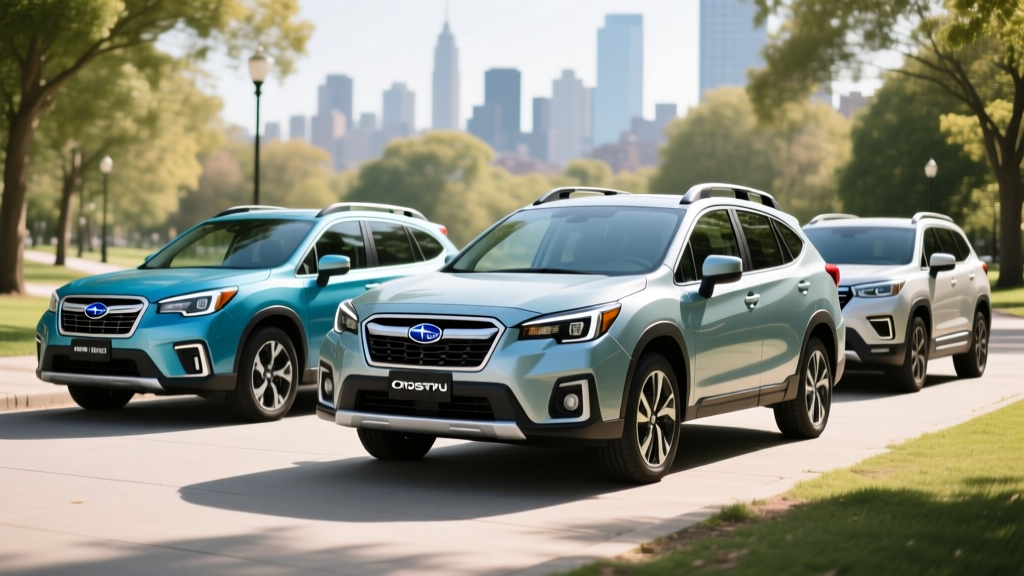
If you've been searching for a Subaru SUV hybrid, 2026 brings meaningful updates across the lineup. Subaru now offers hybrid variants of its two most popular compact/midsize crossovers — the Crosstrek Hybrid (conventional HEV) and the Forester Hybrid (conventional HEV) — while plug-in hybrid buyers must look to the Subaru-influenced Toyota RAV4 Prime platform or wait for Subaru's next-generation PHEV architecture. This guide breaks down every hybrid Subaru SUV available today with exact MPG figures, powertrain specs, pricing, and real-world ownership data so you can make an informed decision.
2026 Subaru Crosstrek Hybrid: MPG, Specs & Pricing
The Crosstrek Hybrid returns for 2026 as Subaru's most affordable hybrid SUV, pairing the brand's signature symmetrical all-wheel drive with a parallel hybrid system. Unlike the discontinued Crosstrek PHEV (last sold in 2023 in limited states), the 2026 model is a self-charging HEV available nationwide.
| Spec | Value |
|---|---|
| Powertrain | 2.0L flat-4 + electric motor (parallel HEV) |
| Combined Horsepower | 194 hp |
| EPA MPG (City / Highway / Combined) | 36 / 34 / 35 MPG |
| Drivetrain | Symmetrical AWD (standard) |
| Battery Type | Lithium-ion, ~1.1 kWh (not plug-in) |
| 0–60 mph | ~7.8 seconds |
| Cargo Volume | 20.4 cu ft (rear seats up) |
| Ground Clearance | 8.7 inches |
| Base MSRP | $31,995 (Premium Hybrid trim) |
| Hybrid Battery Warranty | 8 years / 100,000 miles |
Real-World MPG: What Owners Actually See
The EPA rates the 2026 Crosstrek Hybrid at 35 MPG combined, but real-world results vary. In city driving, where the electric motor handles low-speed acceleration and regenerative braking recovers energy at every stop, owners regularly report 37–39 MPG. Highway cruising at 70–75 mph leans more heavily on the 2.0L boxer engine, with observed figures around 31–33 MPG. Cold weather (below 30°F) typically drops efficiency by 8–12% due to increased engine idling for cabin heat and reduced battery efficiency.
Compared to the gas-only Crosstrek (rated at 29 MPG combined with the 2.0L engine), the hybrid delivers roughly 20% better fuel economy — translating to about 60 fewer gallons per year at 12,000 miles driven, or roughly $180–$220 in annual fuel savings depending on local gas prices.
2026 Subaru Forester Hybrid: The Family-Friendly Option
The Forester Hybrid joins the lineup as Subaru's answer to the Toyota RAV4 Hybrid and Honda CR-V Hybrid. It uses a revised version of Subaru's hybrid system tuned for the Forester's larger footprint and higher towing needs.
| Spec | Value |
|---|---|
| Powertrain | 2.5L flat-4 + electric motor (parallel HEV) |
| Combined Horsepower | 210 hp |
| EPA MPG (City / Highway / Combined) | 35 / 33 / 34 MPG |
| Drivetrain | Symmetrical AWD (standard) |
| Battery Type | Lithium-ion, ~1.3 kWh (not plug-in) |
| 0–60 mph | ~7.4 seconds |
| Cargo Volume | 28.9 cu ft (rear seats up) |
| Towing Capacity | 1,500 lbs |
| Base MSRP | $36,495 (Premium Hybrid trim) |
| Hybrid Battery Warranty | 8 years / 100,000 miles |
The Forester Hybrid's 34 MPG combined rating is competitive with the RAV4 Hybrid (39 MPG combined) but trails slightly due to Subaru's heavier AWD system and boxier aerodynamics. However, Subaru's X-Mode traction management and 8.7 inches of ground clearance give it a genuine advantage on unpaved roads and in deep snow — areas where the RAV4 Hybrid's AWD system is less robust.
Hybrid vs PHEV vs Full EV: Which Subaru SUV Buyer Are You?
Choosing between a conventional hybrid, plug-in hybrid, and battery electric vehicle depends on your driving patterns, home charging access, and budget. Here's a practical decision framework:
Choose the HEV (Crosstrek/Forester Hybrid) If:
- You lack home charging access (apartment, street parking)
- You want zero behavior change — just gas up and drive
- Your budget is under $38,000
- You drive 10,000–15,000 miles/year in mixed city/highway
- You want AWD for snow/rain without EV range-loss worries in winter
Choose a PHEV (RAV4 Prime/Tucson PHEV) If:
- You can install a Level 2 charger at home
- Your daily commute is under 35 miles round-trip
- You want EV-like daily driving with gas flexibility for road trips
- You qualify for the $7,500 federal tax credit (income + sourcing rules apply)
- You're willing to pay $40,000–$48,000 upfront
Choose a Full BEV (Ioniq 5, Model Y) If:
- You have reliable home Level 2 charging
- You drive under 250 miles/day and can plan road-trip charging
- You want minimal maintenance (no oil changes, fewer moving parts)
- You qualify for federal/state EV incentives
- You prioritize lowest per-mile fuel cost (~$0.04–$0.06/mi on home electricity)
Battery Longevity, Warranty & Replacement Costs
Subaru's hybrid batteries are small (1.1–1.3 kWh) compared to full EV packs (60–100 kWh), which means two things: replacement costs are far lower, and the batteries experience shallower charge/discharge cycles that extend lifespan. Based on long-term data from Toyota's similar hybrid systems (which share engineering philosophy), hybrid batteries typically last 12–15 years or 150,000–200,000 miles before significant degradation.
If replacement is needed out of warranty, expect to pay $2,500–$4,000 for a Subaru hybrid battery pack (parts and labor). This is a fraction of full EV battery replacement ($8,000–$20,000+) and comparable to replacing an automatic transmission in a conventional vehicle. Some independent shops now offer refurbished hybrid battery modules for $1,500–$2,500.
Tax Credit Eligibility: What Hybrid Buyers Need to Know
Here's where the distinction between HEV and PHEV matters most for your wallet:
- Conventional hybrids (Crosstrek Hybrid, Forester Hybrid): Do NOT qualify for the federal §30D Clean Vehicle Credit. This credit applies only to plug-in vehicles with battery capacity ≥7 kWh. Conventional hybrids are ineligible regardless of price or buyer income.
- Plug-in hybrids (if Subaru releases one): Would need to meet §30D requirements including MSRP caps ($80,000 for SUVs), buyer income limits ($150K single / $300K joint), and battery critical-mineral and component sourcing rules. Per IRS §30D guidelines, the credit can now be transferred to the dealer at point of sale as an immediate price reduction.
Some states offer their own hybrid incentives. For example, certain utility companies provide $200–$500 rebates for purchasing any hybrid vehicle. Check your state energy office and local utility for current programs — these vary widely by jurisdiction.
How Subaru Hybrids Compare to Rivals
| Model | Combined MPG | HP | AWD | Base MSRP | Battery Warranty |
|---|---|---|---|---|---|
| Subaru Crosstrek Hybrid | 35 | 194 | Standard | $31,995 | 8 yr / 100K mi |
| Toyota RAV4 Hybrid | 39 | 219 | Standard | $33,495 | 10 yr / 150K mi |
| Honda CR-V Hybrid | 37 | 204 | Available | $34,350 | 8 yr / 100K mi |
| Ford Escape Hybrid | 39 | 198 | Available | $34,500 | 8 yr / 100K mi |
| Hyundai Tucson Hybrid | 38 | 226 | Standard | $33,950 | 10 yr / 100K mi |
The Subaru Crosstrek Hybrid trails the RAV4 Hybrid by 4 MPG combined, but it undercuts Toyota on price by $1,500 and offers 0.7 inches more ground clearance (8.7 vs. 8.0). For buyers who regularly drive on gravel roads, ski-area parking lots, or deep-snow conditions, the Subaru's AWD system — which uses a mechanical center differential rather than an electric rear axle like the RAV4 — provides more predictable traction at the limit. According to IIHS ratings, Subaru consistently earns Top Safety Pick+ designations across its lineup.
Pros and Cons at a Glance
✓ Pros
- Standard AWD on every trim — no FWD base model
- 35 MPG combined without plugging in or changing habits
- 8.7 inches of ground clearance beats most competitors
- Lower starting price than RAV4 Hybrid and CR-V Hybrid
- Proven boxer-engine reliability; strong resale value
- X-Mode traction management for off-pavement use
- 8-year / 100K-mile hybrid battery warranty (10/150K in CARB states)
✗ Cons
- 35 MPG combined trails RAV4 Hybrid (39) and Escape Hybrid (39)
- No PHEV option in the 2026 Subaru lineup
- No federal tax credit eligibility for conventional hybrids
- 1,500-lb towing capacity limits utility for boat/trailer owners
- CVT transmission can drone under hard acceleration
- Infotainment system still lags behind Hyundai/Kia in responsiveness
- Smaller hybrid battery means less electric-only assist at low speeds
Frequently Asked Questions
How many MPG does the 2026 Subaru Crosstrek Hybrid get?
The EPA rates it at 36 city / 34 highway / 35 combined. Real-world city driving often yields 37–39 MPG thanks to regenerative braking, while sustained highway driving at 70+ mph drops to around 31–33 MPG. The Forester Hybrid is rated at 35 city / 33 highway / 34 combined. Data sourced from fueleconomy.gov.
Does Subaru make a plug-in hybrid SUV in 2026?
No. Subaru discontinued the Crosstrek PHEV after the 2023 model year, and no 2026 Subaru-branded PHEV is currently available. Subaru has announced plans for next-generation electrified vehicles in partnership with Toyota, but a new PHEV SUV has not been confirmed for the US market. If you need a plug-in hybrid with AWD and similar capability, the Toyota RAV4 Prime (42 miles electric-only range, 94 MPGe) remains the closest alternative.
Is the Subaru hybrid battery reliable and expensive to replace?
Subaru's hybrid batteries are small (~1.1–1.3 kWh) and experience shallow cycling, which extends their lifespan. Based on comparable Toyota hybrid data, expect 12–15 years or 150K–200K miles of service. The warranty covers 8 years/100,000 miles (10 years/150,000 miles in CARB states). Out-of-warranty replacement runs $2,500–$4,000 — significantly less than a full EV battery.
Do I need to plug in the Subaru Crosstrek or Forester Hybrid?
No. Both are conventional hybrids (HEVs) that recharge their batteries entirely through regenerative braking and the gasoline engine. There is no plug, no charging cable, and no need for home charging infrastructure. You fuel them exactly like a gas car.
Does the 2026 Subaru hybrid qualify for any tax credit?
Conventional hybrids do not qualify for the federal §30D Clean Vehicle Credit, which requires plug-in capability and a minimum 7 kWh battery. However, some state and local utility programs offer smaller incentives ($200–$500) for hybrid purchases. Check with your state energy office and electric utility for current programs. Always consult a tax professional for eligibility guidance.
Should I buy the Subaru hybrid or just get the gas version?
If you plan to keep the vehicle 5+ years and drive 12,000+ miles annually, the hybrid's $2,500–$3,500 price premium typically pays for itself in fuel savings within 4–6 years. The hybrid also delivers noticeably smoother low-speed acceleration (the electric motor fills the torque gap before the boxer engine's CVT spools up) and quieter stop-start operation. For low-mileage drivers under 8,000 miles/year, the payback period extends beyond 8 years, making the gas model more economical.