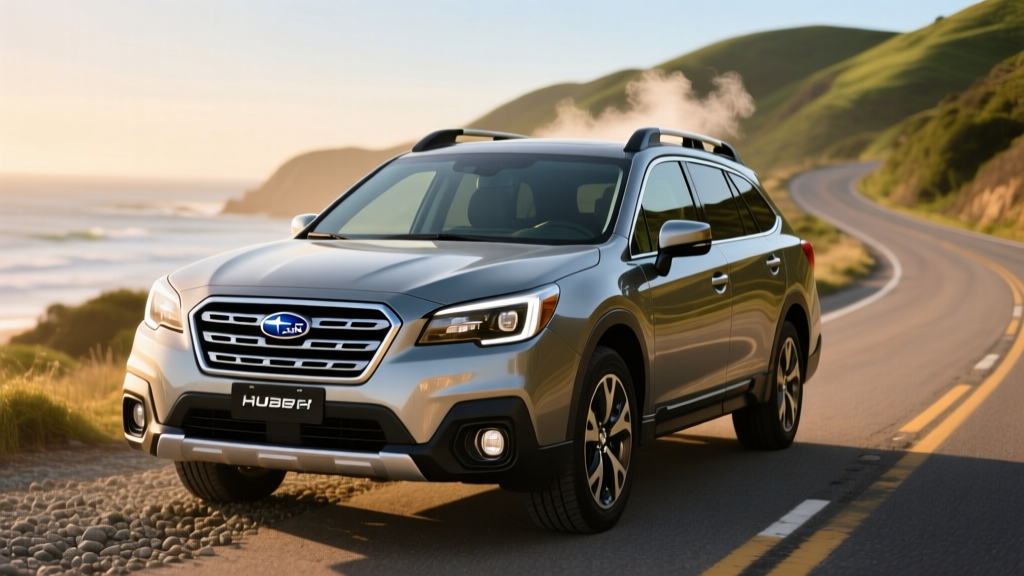
The Subaru Outback has long been the default wagon for outdoor-oriented buyers who need standard all-wheel drive, generous cargo space, and rough-road capability. For 2026, Subaru expands the lineup with a hybrid variant that pairs its proven 2.5-liter flat-four with an electric motor integrated into the transmission. But with the Outback nameplate historically tied to the conventional gas model — and the discontinued Crosstrek PHEV leaving a gap — buyers are asking: what exactly is the 2026 Outback Hybrid, and does it deliver meaningful fuel savings?
This guide breaks down every number that matters: EPA MPG, real-world efficiency, powertrain output, hybrid battery warranty, pricing across trims, and federal tax credit eligibility. We'll also help you decide whether the Outback Hybrid, a plug-in hybrid from a competitor, or a full battery-electric vehicle (BEV) is the right move for your driving pattern.
What Is the 2026 Subaru Outback Hybrid?
The 2026 Outback Hybrid is a conventional hybrid electric vehicle (HEV), not a plug-in hybrid (PHEV). That distinction matters enormously for how you'll own and operate the vehicle.
HEV vs. PHEV: What's the Difference?
Conventional Hybrid (HEV) — like the Outback Hybrid: Uses a small battery (typically 1–2 kWh) charged entirely by the gasoline engine and regenerative braking. You never plug it in. The electric motor assists the engine during acceleration and enables brief electric-only driving at low speeds. The result is better fuel economy without any change to your fueling routine.
Plug-in Hybrid (PHEV): Carries a much larger battery (typically 13–20+ kWh) that you plug in at home or a public charger. A PHEV can drive 25–50 miles on electricity alone before the gas engine takes over. Subaru previously offered the Crosstrek PHEV but discontinued it; as of 2026, Subaru's US lineup does not include a PHEV.
If you were searching for an "Outback PHEV" or "Outback plug-in hybrid," that configuration is not currently available from Subaru. The 2026 Outback Hybrid is strictly a self-charging HEV — no charging cable required or even possible.
EPA MPG Ratings: How Efficient Is the Outback Hybrid?
Fuel economy is the headline number for any hybrid buyer. Here's how the 2026 Outback Hybrid stacks up against the standard gas-powered Outback, based on EPA data at fueleconomy.gov:
| Model | City MPG | Highway MPG | Combined MPG |
|---|---|---|---|
| 2026 Outback Hybrid (2.5L HEV, AWD) | 33 | 30 | 32 |
| 2026 Outback 2.5i (gas, AWD) | 26 | 32 | 28 |
| 2026 Outback 2.4T (turbo, AWD) | 22 | 29 | 25 |
The Outback Hybrid earns a combined 32 MPG — a roughly 14% improvement over the standard 2.5i and a 28% gain versus the turbocharged 2.4T. The biggest gains come in city driving, where the hybrid system's regenerative braking and electric-motor assist shine. That 33 MPG city figure is 7 MPG better than the gas 2.5i in stop-and-go traffic.
Real-World MPG vs. EPA Sticker
Subaru hybrids tend to meet or slightly exceed EPA city estimates in real-world commuting, thanks to frequent regenerative braking opportunities. However, highway fuel economy can dip below the EPA rating at sustained 75+ MPH speeds, especially with a roof box or cargo carrier adding drag. Expect 30–34 MPG combined in mixed suburban/highway driving, and 28–30 MPG on long highway road trips at higher speeds. Cold weather (below 30°F) typically reduces hybrid efficiency by 5–10% as the engine runs more frequently to provide cabin heat.
Powertrain Specs: Engine, Motor, and Total Output
| Specification | 2026 Outback Hybrid |
|---|---|
| Engine | 2.5L DOHC flat-4 (Boxer) |
| Engine Output | 180 hp / 178 lb-ft torque |
| Electric Motor | Integrated AC synchronous motor |
| Motor Output | ~27 hp / 148 lb-ft torque |
| Combined System Output | ~194 hp |
| Transmission | Lineartronic CVT with hybrid motor integration |
| Drivetrain | Symmetrical AWD (standard) |
| Hybrid Battery | ~1.1 kWh lithium-ion (self-charging, no plug) |
| 0–60 MPH | ~8.1 seconds (est.) |
| Towing Capacity | 2,700 lbs |
| Ground Clearance | 8.7 inches |
The hybrid system adds low-end torque from the electric motor, which makes the Outback Hybrid feel more responsive off the line than the gas-only 2.5i despite similar peak horsepower numbers. The electric motor's instant torque fills in the gap before the Boxer engine reaches its power band — a characteristic common to all conventional hybrids. The CVT is tuned for efficiency, so don't expect sporty acceleration, but passing and merging are confident.
Subaru's Symmetrical AWD remains standard. The hybrid system does not alter the AWD architecture — there's no separate rear electric motor providing "e-AWD" as some competitors use. Mechanical AWD via the driveshaft means predictable traction behavior on loose surfaces, which matters for the Outback's core buyer.
Hybrid Battery Warranty and Longevity
Battery replacement cost is consistently the top concern for hybrid shoppers. Here's what Subaru provides:
Hybrid Battery Coverage
Warranty: 8 years / 100,000 miles (10 years / 150,000 miles in California and states adopting CARB emissions standards)
Battery Chemistry: Lithium-ion, ~1.1 kWh total capacity
Expected Lifespan: Conventional hybrid batteries typically last 10–15 years / 150,000–200,000+ miles before significant degradation, based on industry data from Toyota and Honda HEVs with similar architectures
Replacement Cost (out of warranty): Estimated $2,500–$4,500 including labor, depending on dealer and region. Because the Outback Hybrid uses a small battery pack (not a large PHEV or BEV pack), replacement costs are far lower than a full EV battery swap.
The small battery in a conventional hybrid undergoes relatively shallow charge/discharge cycles — it rarely drops below 40% or charges above 80% state of charge. This "shallow cycling" is the primary reason HEV batteries last so long. The battery management system (BMS) protects the pack by maintaining this buffer, trading usable capacity for longevity.
For context, Subaru's hybrid system shares design philosophy with Toyota's hybrid architecture (the two companies have collaborated on hybrid technology). Toyota's hybrid battery track record is among the best in the industry, with many Prius batteries lasting well past 200,000 miles.
Pricing, Trims, and Tax Credit Eligibility
The 2026 Outback Hybrid is positioned in the middle-to-upper portion of the Outback lineup. Here's the estimated MSRP by trim:
| Trim | Estimated MSRP | Key Features |
|---|---|---|
| Premium | ~$36,500 | Hybrid powertrain, EyeSight, 11.6" touchscreen, heated seats |
| Limited | ~$39,900 | Leather, power liftgate, blind-spot detection, Harman Kardon audio |
| Wilderness Hybrid | ~$41,500 | Enhanced ground clearance, all-terrain tires, skid plates |
| Touring XT Hybrid | ~$44,200 | Nappa leather, ventilated seats, 180° front camera, DriverFocus |
Does the Outback Hybrid Qualify for a Federal Tax Credit?
No. Under current IRS §30D rules, the federal clean vehicle credit applies only to plug-in electric vehicles — battery-electric vehicles (BEVs) and plug-in hybrids (PHEVs) with a minimum battery capacity of 7 kWh. Because the Outback Hybrid is a conventional HEV with a ~1.1 kWh battery and no plug-in capability, it does not qualify for the $7,500 federal tax credit. For current eligibility rules, see the IRS clean vehicle credit page.
However, some states offer their own incentives for conventional hybrids. A few states provide reduced registration fees, HOV lane access, or modest rebates for HEVs. Check your state's energy or environmental agency website for current programs — these vary significantly by jurisdiction and change frequently.
Outback Hybrid vs. PHEV vs. Full EV: Which Should You Choose?
This is the decision most Outback shoppers are actually making, even if they frame the question differently. Here's a practical framework:
| Factor | Outback Hybrid (HEV) | Competitor PHEV (e.g., Toyota RAV4 Prime) |
Full EV (e.g., Hyundai Ioniq 5 AWD) |
|---|---|---|---|
| Home Charging Needed? | No | Recommended | Essential |
| Electric-Only Range | None (brief low-speed assist) | ~42 miles | ~260 miles |
| Fuel Cost (per mile) | ~$0.11 | ~$0.04 (electric) / $0.11 (gas) | ~$0.04–$0.06 |
| Federal Tax Credit | None | Up to $7,500* | Up to $7,500* |
| Road Trip Ease | Excellent (gas stations) | Excellent (gas backup) | Good (requires planning) |
| AWD Capability | Best-in-class mechanical AWD | Strong (e-AWD rear motor) | Good (dual-motor AWD) |
| Maintenance | Standard (oil changes, etc.) | Standard (reduced when in EV mode) | Minimal (no engine) |
* Federal tax credit subject to MSRP caps, buyer income limits, battery sourcing requirements, and point-of-sale transfer rules. Verify eligibility at irs.gov.
Decision Framework
Choose the Outback Hybrid if: You can't charge at home (apartment, street parking, no garage), you regularly drive in remote areas with sparse charging infrastructure, you value Subaru's mechanical AWD for snow and dirt roads, and you want fuel savings without changing your fueling habits at all.
Choose a PHEV (like the RAV4 Prime) if: You have home charging and a commute under 40 miles (you'll rarely use gas on weekdays), you want federal tax credit eligibility, and you still want a gas engine for weekend road trips without route planning.
Choose a full EV (like the Ioniq 5 AWD) if: You have reliable home Level 2 charging, your daily driving is under 200 miles, you want the lowest per-mile fuel cost and minimal maintenance, and you're comfortable with DC fast charging on road trips.
Real-World Ownership: What to Expect
Beyond the spec sheet, here's what matters in daily life with the Outback Hybrid:
City commuting is where the hybrid pays off most. The electric motor handles low-speed acceleration, the engine shuts off at stops, and regenerative braking recaptures energy in traffic. If your commute is mostly stop-and-go suburban driving, you'll consistently see 33–35 MPG — sometimes beating the EPA city estimate.
Highway cruising narrows the gap. At a steady 70–80 MPH, the hybrid system has fewer opportunities to assist. The electric motor provides minimal benefit at sustained highway speed, and the added weight of the hybrid components (~150 lbs more than the gas 2.5i) slightly offsets the efficiency gain. Expect 28–31 MPG on the interstate.
Cold weather impacts are moderate. Unlike full EVs, which can lose 20–30% of range in freezing temperatures, the Outback Hybrid's fuel economy drops by roughly 5–10% in winter. The engine runs more often to provide cabin heat (since there's no large battery to power an electric heater), which reduces the hybrid system's ability to shut the engine off. A block heater isn't necessary, but expect 29–30 MPG combined in cold months versus 32–34 MPG in mild weather.
Towing reduces efficiency significantly. At the 2,700-lb max tow rating, expect fuel economy to drop to the low-to-mid 20s. This is comparable to the gas 2.5i under load, as the hybrid system's benefits are minimized under continuous high-load conditions.
Pros and Cons at a Glance
Pros
- 33 MPG city — significant gain over gas Outback in stop-and-go driving
- Standard Symmetrical AWD with no compromise for the hybrid system
- No plug-in required — no charging infrastructure needed
- 8.7 inches ground clearance maintained across trims
- 8-year/100,000-mile hybrid battery warranty
- Subaru EyeSight safety suite standard
- Strong resale value (Outback historically among segment leaders)
Cons
- No federal tax credit eligibility (HEV, not PHEV/BEV)
- Highway MPG improvement over gas model is modest (~2 MPG)
- No electric-only driving range for emissions-free short trips
- Higher MSRP than equivalent gas trim (~$2,500–$3,000 premium)
- Towing capacity slightly lower than gas 2.5i (2,700 vs. 2,700 lbs — comparable)
- No PHEV option if you want plug-in capability in an Outback
Frequently Asked Questions
How many MPG does the 2026 Outback Hybrid get?
The EPA rates the 2026 Outback Hybrid at 33 city / 30 highway / 32 combined MPG. In real-world driving, expect 30–34 MPG combined depending on your mix of city and highway driving, ambient temperature, and driving style. City-heavy commuters often match or slightly exceed the EPA city number.
Is the Outback Hybrid a plug-in hybrid?
No. The Outback Hybrid is a conventional hybrid (HEV). It charges its small battery through regenerative braking and the gasoline engine. You cannot plug it in, and it has no meaningful electric-only driving range. Subaru does not currently offer a plug-in hybrid in its US lineup for 2026.
How far can the Outback Hybrid drive on electric power alone?
Effectively zero miles at meaningful speeds. The hybrid system can propel the Outback at very low speeds (under ~15 MPH) for brief distances — such as creeping through a parking lot — but the gasoline engine engages almost immediately for normal driving. If electric-only range is a priority, you need a PHEV or BEV.
Is the Outback Hybrid reliable, and what does battery replacement cost?
Subaru's hybrid system is based on proven architecture developed in collaboration with Toyota, which has the industry's longest track record with conventional hybrids. The hybrid battery is warrantied for 8 years/100,000 miles (10 years/150,000 miles in CARB states). Out-of-warranty replacement is estimated at $2,500–$4,500, far less than a full EV battery. Conventional hybrid batteries routinely last 150,000–200,000+ miles due to shallow charge cycling.
Does the Outback Hybrid qualify for any tax credits?
The Outback Hybrid does not qualify for the federal §30D clean vehicle credit, which requires plug-in capability and a minimum 7 kWh battery. Some states offer their own hybrid incentives — check your state energy office for current programs. If federal tax credit eligibility is a dealbreaker, you'll need to look at PHEVs or BEVs.
How does the Outback Hybrid compare to the Toyota RAV4 Hybrid?
The RAV4 Hybrid is the closest competitor, offering a similar HEV architecture with EPA ratings around 39–41 MPG combined — notably higher than the Outback Hybrid, partly due to the RAV4's lighter weight and more aerodynamic profile. However, the Outback offers more cargo volume (32.5 cu ft vs. ~37.5 cu ft behind rear seats, but the Outback's wagon shape provides superior usable space), more ground clearance (8.7" vs. 8.1"), and standard AWD with a mechanical center differential. If maximum MPG is your priority, the RAV4 Hybrid wins. If cargo versatility and off-pavement capability matter more, the Outback Hybrid has the edge.
What's the annual fuel cost savings versus the gas Outback?
At 15,000 miles per year and $3.50/gallon gasoline, the gas Outback 2.5i (28 MPG combined) costs roughly $1,875/year in fuel. The Outback Hybrid (32 MPG combined) costs roughly $1,641/year. That's a savings of approximately $234 per year, or about $1,170 over five years. The hybrid's ~$2,500–$3,000 price premium takes roughly 10–13 years to recoup through fuel savings alone — so the financial case depends on how long you plan to keep the vehicle and how much city driving you do.