The Short Answer: Yes, Subaru Has Hybrids — But With Caveats
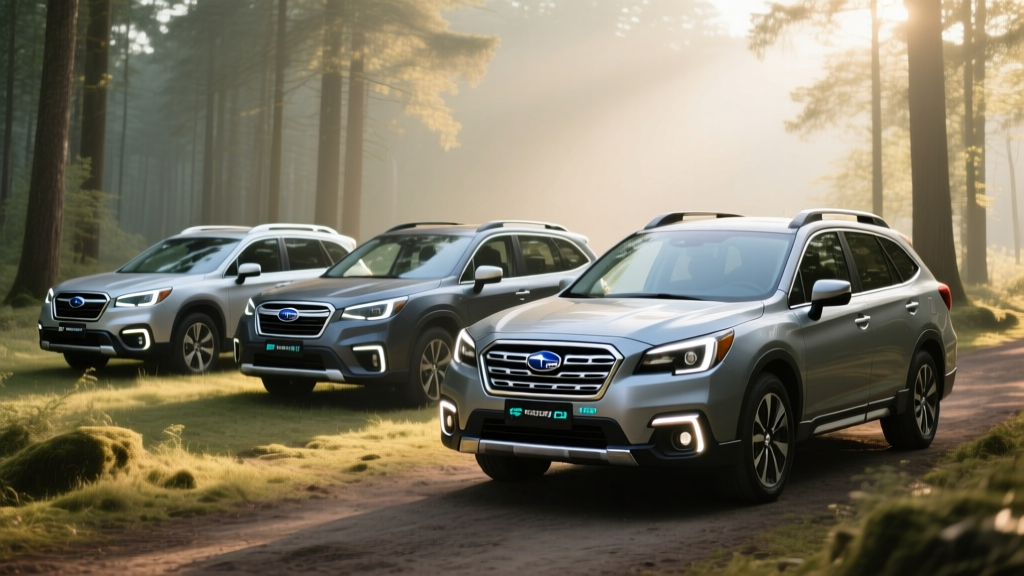
If you've been searching for whether Subaru offers a hybrid vehicle, the answer in 2026 is yes — but the lineup is narrower than what you'll find from Toyota or Honda. Subaru currently sells two primary hybrid models in the U.S.: the Crosstrek Hybrid (a conventional HEV) and the Forester Hybrid (also a conventional HEV). Subaru previously offered the Crosstrek Plug-In Hybrid (PHEV) but discontinued it after the 2023 model year, leaving the brand without a plug-in option as of 2026.
That's a meaningful distinction. A conventional hybrid (HEV) never plugs in — it generates electricity from the engine and regenerative braking. A plug-in hybrid (PHEV) has a larger battery you charge from a wall outlet or public charger and delivers 20-40 miles of pure electric driving before the gas engine kicks in. Subaru's absence from the PHEV segment means buyers wanting electric-only commuting range will need to look elsewhere or consider a full battery-electric vehicle like the Solterra.
HEV vs. PHEV: What Subaru Buyers Need to Know
| Feature | Conventional Hybrid (HEV) | Plug-In Hybrid (PHEV) |
|---|---|---|
| Plugs in? | No — refuels with gas only | Yes — charges via outlet/charger |
| Electric-only range | None (motor assists engine) | 20–40 miles typical |
| Battery size | ~1–2 kWh | ~13–20 kWh |
| Federal tax credit | Not eligible (§30D requires plug-in) | Up to $7,500 (with sourcing/income rules) |
| Best for | Drivers who can't charge at home | Home chargers wanting short EV commutes |
| Subaru 2026 options | Crosstrek Hybrid, Forester Hybrid | None currently offered |
2026 Subaru Crosstrek Hybrid: MPG, Specs, and Pricing
The Crosstrek Hybrid is Subaru's most popular hybrid offering and the brand's entry point into electrified driving. Built on the same platform as the gas-only Crosstrek, it pairs a 2.0-liter flat-four (Boxer) engine with an electric motor integrated into the drivetrain. Combined output sits at approximately 194 horsepower, a meaningful bump over the 152 hp in the base gas Crosstrek.
| Spec | Value |
|---|---|
| Powertrain | 2.0L Boxer-4 + electric motor (HEV) |
| Combined HP | ~194 hp |
| EPA MPG (city / hwy / combined) | 36 / 34 / 35 |
| Drivetrain | Symmetrical AWD (standard) |
| Battery | ~1.1 kWh lithium-ion (not plug-in) |
| Ground clearance | 8.7 inches |
| 0–60 mph | ~7.8 seconds (est.) |
| Base MSRP | ~$31,995 |
| Federal tax credit | Not eligible |
The Crosstrek Hybrid's EPA combined rating of 35 MPG represents a solid improvement over the non-hybrid Crosstrek's 29 MPG combined. In real-world driving, many owners report exceeding the EPA city figure — hybrids tend to perform better in stop-and-go traffic where regenerative braking recaptures energy frequently. Highway-heavy drivers will see numbers closer to or slightly below the 34 MPG highway sticker, especially at speeds above 70 mph or with roof cargo.
Hybrid Battery Warranty
Subaru covers the Crosstrek Hybrid's battery pack under its hybrid system warranty for 8 years / 100,000 miles (whichever comes first), in compliance with federal emissions-related warranty requirements. Hybrid battery replacement, if needed out of warranty, typically runs $2,000–$4,000 including labor — but most hybrid batteries outlast this warranty period by a significant margin. Toyota and Subaru hybrid systems have proven durable well past 150,000 miles in long-term fleet data.
2026 Subaru Forester Hybrid: The Family-Oriented Option
Subaru reintroduced the Forester Hybrid for the 2025 model year after a multi-year gap, and it carries into 2026 with the same powertrain architecture. The Forester Hybrid uses a 2.5-liter Boxer-4 paired with an electric motor for a combined output of approximately 194 horsepower (the same hybrid system architecture as the Crosstrek, tuned for the larger vehicle).
| Driving Cycle | EPA MPG | Real-World Expectation |
|---|---|---|
| City | 35 | 33–38 (hybrids often beat EPA in city) |
| Highway | 33 | 30–34 (drops at sustained 75+ mph) |
| Combined | 34 | 32–36 depending on driving mix |
The Forester Hybrid starts at approximately $35,495 — roughly a $3,500 premium over the base gas Forester. At 34 MPG combined versus the gas Forester's 29 MPG combined, the hybrid saves about 50 gallons of fuel per year at 15,000 miles driven. At $3.50/gallon, that's roughly $175 in annual fuel savings, meaning the hybrid premium pays for itself in approximately 20 years at current fuel prices. The math improves if gas prices rise or if you drive more than average, but buyers should know the hybrid is as much about the driving refinement (smoother stop-start, extra low-end torque from the electric motor) as the fuel savings.
What About the Subaru Crosstrek PHEV?
From 2019 through 2023, Subaru sold a Crosstrek Plug-In Hybrid based on Toyota's Hybrid Synergy Drive architecture (Subaru and Toyota share platform technology). That PHEV offered 17 miles of electric-only range, a 13.7 kWh battery, and about 400 miles of total range. It qualified for a portion of the federal tax credit when it was sold new.
However, Subaru discontinued the Crosstrek PHEV after 2023 due to slow sales and the transition to new platform architecture. As of 2026, Subaru does not sell any plug-in hybrid in the United States. If you need plug-in capability from Subaru, your only option is a used 2019–2023 Crosstrek PHEV. Under current IRS §30D rules, the used clean vehicle credit offers up to $4,000 (30% of sale price, capped) on eligible pre-owned PHEVs purchased through a dealer — subject to income caps ($75,000 single / $150,000 joint) and vehicle price limits ($25,000 max sale price).
Subaru Solterra: The Full EV Alternative
For buyers asking whether Subaru has a hybrid because they want to reduce gas consumption but aren't ready for full electric, it's worth noting the 2026 Subaru Solterra. This all-electric SUV (co-developed with Toyota's bZ4X) delivers an EPA-estimated 228 miles of range (with the higher-range trim), a 72.8 kWh battery, and standard AWD. Starting around $38,995, it may qualify for the full §30D federal tax credit of up to $7,500 depending on battery component sourcing, your income, and the point-of-sale transfer option.
The Solterra's tax credit eligibility effectively brings its net price close to the Forester Hybrid — making it a viable alternative for buyers with home charging access. However, if you regularly drive in areas with sparse charging infrastructure, tow, or take long road trips through rural areas, the hybrid models eliminate range and infrastructure concerns entirely.
Who Should Buy a Subaru Hybrid vs. a Full EV or Gas Car?
Choose a Subaru Hybrid (Crosstrek or Forester HEV) If:
- You can't install a home charger (apartment, street parking, no garage)
- You want AWD and 8+ inches of ground clearance for snow or trails
- You drive 10,000–15,000 miles/year and want lower fuel costs without behavior change
- You plan to keep the vehicle 8+ years (hybrid reliability is proven)
- You don't want to think about charging — ever
Choose a Full EV (Solterra or Competitor) If:
- You have reliable Level 2 home charging
- Your daily commute is under 80 miles round-trip
- You want to maximize the $7,500 federal tax credit
- You want the lowest per-mile "fuel" cost (electricity vs. gas)
- You value instant torque, quiet operation, and minimal maintenance
For most Subaru-loyal buyers in cold climates or mountainous regions — the brand's core demographic — the conventional hybrid models offer the most pragmatic path to better fuel economy. You get the Symmetrical AWD system Subaru is known for, meaningful MPG gains, and zero lifestyle adjustment.
Tax Credit Reality for Subaru Hybrids
This is where the news is less favorable for hybrid shoppers. Under current IRS §30D rules, the federal clean vehicle credit of up to $7,500 applies only to plug-in electric vehicles — battery-electric vehicles (BEVs) and plug-in hybrids (PHEVs) with at least 7 kWh of battery capacity. Conventional hybrids like the Crosstrek Hybrid and Forester Hybrid do not qualify for any federal purchase incentive.
Some states offer their own hybrid incentives, though these have become increasingly rare as state programs shift focus to zero-emission vehicles. Check your state's energy office or department of environmental quality for current programs. A few states still offer modest rebates ($500–$1,500) for HEV purchases, but these vary widely and change frequently.
Reliability and Long-Term Ownership Costs
Subaru's hybrid system benefits from its partnership with Toyota, whose Hybrid Synergy Drive architecture has accumulated billions of real-world miles across the Prius, RAV4 Hybrid, and Camry Hybrid lineups over two decades. The hybrid components — electric motor, inverter, and small battery pack — are among the most reliable systems in modern vehicles. The battery pack is far smaller and less stressed than a full EV battery, and replacement costs are proportionally lower.
According to data from IIHS and long-term owner surveys, Subaru hybrid models have shown no systemic battery failure patterns. The 8-year/100,000-mile hybrid warranty provides a strong safety net, and real-world evidence suggests these packs commonly last 150,000–200,000+ miles before significant degradation. For context, a hybrid battery replacement at a Subaru dealer typically costs $2,500–$3,500 — a fraction of a full EV battery replacement.
Frequently Asked Questions
How many MPG does the Subaru hybrid get?
The 2026 Crosstrek Hybrid achieves an EPA-estimated 36 city / 34 highway / 35 combined MPG. The Forester Hybrid rates at 35 city / 33 highway / 34 combined. Real-world results often exceed EPA city figures in stop-and-go driving thanks to regenerative braking.
Does Subaru make a plug-in hybrid in 2026?
No. Subaru discontinued the Crosstrek Plug-In Hybrid after the 2023 model year. The 2026 Subaru lineup includes only conventional hybrids (HEVs) — the Crosstrek Hybrid and Forester Hybrid — neither of which plugs in.
Do Subaru hybrids qualify for a federal tax credit?
No. The IRS §30D clean vehicle credit applies only to plug-in vehicles (BEVs and PHEVs). Subaru's current conventional hybrids are not eligible. The all-electric Solterra may qualify for up to $7,500 depending on battery sourcing, buyer income, and MSRP caps.
Is the Subaru hybrid battery expensive to replace?
Hybrid battery replacement typically costs $2,500–$3,500 at a Subaru dealer. However, Subaru hybrid batteries are covered under an 8-year/100,000-mile warranty and commonly last well beyond that period — often 150,000+ miles — based on Toyota-derived hybrid system durability data.
Should I buy a Subaru hybrid or wait for a Subaru PHEV?
Subaru has not announced a new PHEV for the U.S. market as of early 2026. If you need plug-in capability now, consider a competitor PHEV (Toyota RAV4 Prime, Hyundai Tucson PHEV) or the used Crosstrek PHEV market. If conventional hybrid efficiency meets your needs, the current Crosstrek and Forester hybrids are proven, reliable choices with no waiting required.
How does the Subaru hybrid compare to the Toyota RAV4 Hybrid?
The Toyota RAV4 Hybrid delivers 41 MPG combined (EPA) — notably higher than the Forester Hybrid's 34 MPG. However, the Subaru offers 8.7 inches of ground clearance versus the RAV4's 8.1, standard Symmetrical AWD, and a reputation for all-weather capability that many Subaru buyers prioritize. The choice often comes down to maximum efficiency (Toyota) versus off-road and winter confidence (Subaru).