Subaru's Electrified SUV Lineup: What's Available in 2026
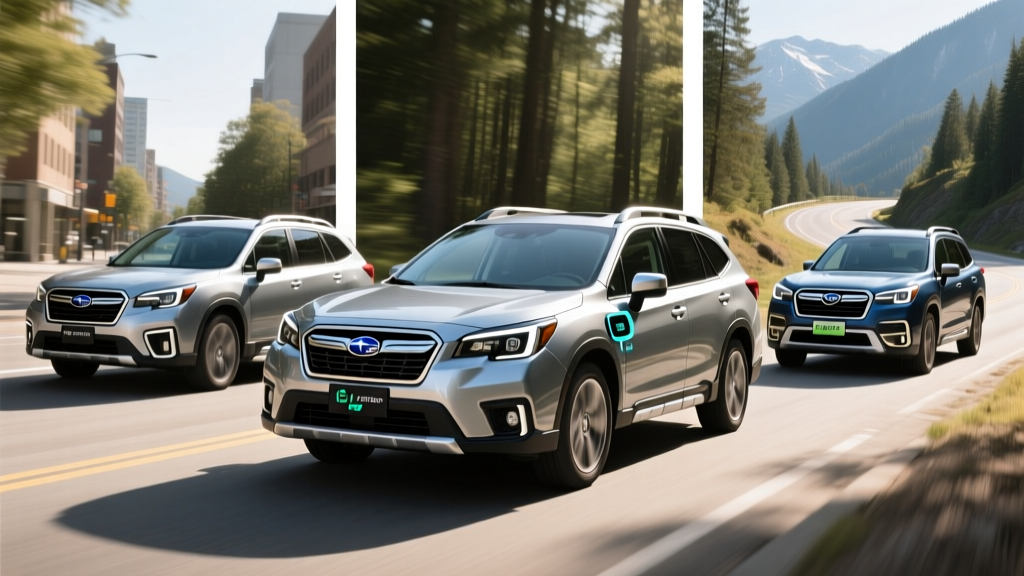
Subaru has expanded its hybrid offerings significantly for the 2026 model year, giving buyers more electrified options across its core SUV lineup. If you're researching Subaru hybrid SUVs, you're looking at two distinct technologies: conventional hybrids (HEVs) that never need plugging in, and plug-in hybrids (PHEVs) that offer meaningful electric-only driving range. The 2026 Crosstrek Hybrid and Forester Hybrid represent Subaru's commitment to standard hybridization, while the Outback PHEV variant rounds out the lineup for buyers wanting electric-only commuting capability.
This guide breaks down every Subaru hybrid SUV available in 2026 with exact EPA fuel economy figures, real-world efficiency expectations, powertrain specifications, pricing, and federal tax credit eligibility. Whether you're cross-shopping against a Toyota RAV4 Hybrid or deciding between a Subaru HEV and a full battery-electric vehicle, the data below will clarify which model fits your driving pattern.
HEV vs. PHEV: Know the Difference Before You Shop
Conventional Hybrid (HEV): Uses a small battery (typically 1–2 kWh) recharged by regenerative braking and the gasoline engine. You never plug it in. The electric motor assists the engine for better fuel economy, especially in city driving. Think of it as a more efficient gas car.
Plug-In Hybrid (PHEV): Carries a larger battery (typically 10–20 kWh) that you can charge from a wall outlet or public charger. It delivers 20–40 miles of pure electric driving before the gasoline engine engages. After the battery depletes, it operates like a conventional hybrid. Ideal if you can charge at home and have a short commute.
2026 Subaru Crosstrek Hybrid: Specs, MPG, and Real-World Efficiency
The 2026 Subaru Crosstrek Hybrid pairs Subaru's 2.0-liter SUBARU BOXER four-cylinder engine with an electric motor integrated into the Lineartronic CVT. This is a conventional hybrid (HEV) — no plug required. The system produces a combined 194 horsepower, a meaningful bump over the standard Crosstrek's 152 hp, and delivers noticeably improved acceleration in merging and passing situations.
| Specification | Value |
|---|---|
| Powertrain | 2.0L BOXER-4 + electric motor (HEV) |
| Combined Horsepower | 194 hp |
| Drivetrain | Symmetrical AWD (standard) |
| Transmission | Lineartronic CVT |
| EPA MPG (City / Highway / Combined) | 36 / 34 / 35 MPG |
| Hybrid Battery | ~1.1 kWh lithium-ion (not plug-in) |
| 0–60 mph | ~7.8 seconds (est.) |
| Cargo Volume | 20.1 cu ft (rear seats up) |
| Ground Clearance | 8.7 inches |
| Starting MSRP | $31,995 (Hybrid Premium trim) |
| Hybrid Battery Warranty | 8 years / 100,000 miles |
How Many MPG Does the Crosstrek Hybrid Actually Get?
The EPA rates the 2026 Crosstrek Hybrid at 35 MPG combined (36 city / 34 highway). In real-world driving, Subaru hybrids tend to meet or slightly exceed their EPA city rating thanks to frequent regenerative braking in stop-and-go traffic. Owners report 36–38 MPG in urban commuting. Highway efficiency at sustained 70–75 mph speeds typically drops to 31–33 MPG, as the electric motor contributes less at constant high speed and AWD drivetrain losses factor in.
For context, the gas-only 2026 Crosstrek (2.0L, AWD) achieves 29 MPG combined. The hybrid delivers a ~20% fuel economy improvement, which translates to roughly $350–$450 in annual fuel savings for a driver covering 12,000 miles per year at $3.50/gallon.
| Driving Scenario | EPA Estimate | Real-World Expectation |
|---|---|---|
| City (stop-and-go) | 36 MPG | 36–38 MPG |
| Highway (70–75 mph) | 34 MPG | 31–33 MPG |
| Combined | 35 MPG | 33–35 MPG |
| Cold Weather (below 32°F) | — | 29–32 MPG |
According to fueleconomy.gov, the Crosstrek Hybrid's combined rating places it among the most efficient AWD compact crossovers available, competing directly with the Toyota Corolla Cross Hybrid (42 MPG combined) and the Honda CR-V Hybrid (40 MPG combined).
2026 Subaru Forester Hybrid: Efficiency Meets Practicality
The 2026 Forester Hybrid uses the same hybridized 2.0L BOXER powertrain as the Crosstrek Hybrid, tuned for the Forester's slightly larger and heavier platform. Combined output is 194 hp, and the standard Symmetrical AWD ensures the Forester retains its all-weather capability. Like the Crosstrek, this is a conventional HEV — you fuel it with gasoline and never plug it in.
| Specification | Value |
|---|---|
| Powertrain | 2.0L BOXER-4 + electric motor (HEV) |
| Combined Horsepower | 194 hp |
| Drivetrain | Symmetrical AWD (standard) |
| EPA MPG (City / Highway / Combined) | 35 / 33 / 34 MPG |
| Hybrid Battery | ~1.1 kWh lithium-ion (not plug-in) |
| Cargo Volume | 26.9 cu ft (rear seats up) |
| Ground Clearance | 8.7 inches |
| Starting MSRP | $36,495 (Hybrid Premium trim) |
| Hybrid Battery Warranty | 8 years / 100,000 miles |
Forester Hybrid Fuel Economy: Real-World Numbers
The Forester Hybrid's EPA rating of 34 MPG combined (35 city / 33 highway) represents a substantial improvement over the gas-only Forester's 28 MPG combined. Real-world results follow the same pattern as the Crosstrek: city driving yields the best numbers (35–37 MPG observed), while sustained highway cruising settles around 30–32 MPG.
The Forester's larger frontal area and additional weight compared to the Crosstrek account for the 1-MPG combined deficit. For buyers prioritizing interior space and cargo room, the Forester Hybrid's 26.9 cu ft behind the rear seats (vs. 20.1 in the Crosstrek) may justify the marginal efficiency trade-off.
2026 Subaru Outback PHEV: Plug-In Range and Charging
Subaru's plug-in hybrid offering for 2026 is the Outback PHEV, which pairs a 2.5-liter BOXER four-cylinder with a more powerful electric motor and an 18.1 kWh (total) lithium-ion battery pack. Of that capacity, approximately 14.5 kWh is usable for electric driving. The Outback PHEV can travel an EPA-estimated 32 miles on electricity alone before the gasoline engine starts, making it viable as a daily electric commuter for many drivers.
Once the battery is depleted, the Outback PHEV operates as a conventional hybrid, achieving an EPA-rated 30 MPG combined in hybrid mode. Total combined range (electric + gasoline) exceeds 500 miles, eliminating any range anxiety on road trips.
| Specification | Value |
|---|---|
| Powertrain | 2.5L BOXER-4 + electric motor (PHEV) |
| Combined System Horsepower | 215 hp |
| Drivetrain | Symmetrical AWD (standard) |
| Battery Capacity (Total / Usable) | 18.1 kWh / ~14.5 kWh |
| Electric-Only Range (EPA) | 32 miles |
| Total Combined Range | ~520 miles |
| MPGe (Electric + Gas Combined) | 80 MPGe |
| Hybrid-Mode MPG (after battery depletion) | 30 MPG combined |
| Level 2 Charging Time (0–100%) | ~3.5 hours at 3.3 kW |
| DC Fast Charging | Not available |
| Starting MSRP | $44,995 (PHEV Premium trim) |
| PHEV Battery Warranty | 8 years / 100,000 miles |
Charging the Outback PHEV: What to Expect
The Outback PHEV charges via a standard J1772 connector (Level 1 and Level 2 AC charging). It does not support DC fast charging, which is typical for PHEVs in this class — the relatively small battery doesn't warrant the added cost and weight of DC hardware.
| Charging Method | Power | Time (0–100%) |
|---|---|---|
| Level 1 (120V household outlet) | ~1.4 kW | ~10–11 hours |
| Level 2 (240V home charger) | 3.3 kW | ~3.5 hours |
| DC Fast Charge | N/A | Not supported |
For most PHEV owners, overnight Level 1 charging from a standard 120V outlet is sufficient to replenish the 14.5 kWh usable battery. A Level 2 home charger (240V) is a convenience upgrade that lets you top up during the day if you make multiple short trips. Installation of a Level 2 charger typically costs $500–$1,500 depending on your electrical panel — see our Level 2 installation guide for a detailed cost breakdown.
Side-by-Side: Comparing All 2026 Subaru Hybrid SUVs
| Crosstrek Hybrid (HEV) | Forester Hybrid (HEV) | Outback PHEV | |
|---|---|---|---|
| Type | Conventional Hybrid | Conventional Hybrid | Plug-In Hybrid |
| Combined HP | 194 hp | 194 hp | 215 hp |
| EPA MPG (Combined) | 35 MPG | 34 MPG | 30 MPG (hybrid mode) / 80 MPGe |
| Electric-Only Range | N/A | N/A | 32 miles |
| Plug-In Required? | No | No | Optional (recommended) |
| Battery Size | ~1.1 kWh | ~1.1 kWh | 18.1 kWh (14.5 usable) |
| Cargo (seats up) | 20.1 cu ft | 26.9 cu ft | 32.5 cu ft |
| Starting MSRP | $31,995 | $36,495 | $44,995 |
| Federal Tax Credit | Not eligible | Not eligible | Up to $3,750* |
*Tax credit amount depends on battery sourcing compliance under IRS §30D rules. See tax credit section below.
Federal Tax Credits and Pricing for Subaru Hybrids
Understanding which Subaru hybrid SUVs qualify for federal incentives is essential for accurate cost comparison:
- Crosstrek Hybrid & Forester Hybrid (HEV): Conventional hybrids do NOT qualify for the federal §30D Clean Vehicle Credit. That credit is reserved for plug-in electric vehicles (BEVs and PHEVs). Some states offer separate hybrid incentives — check your state energy office.
- Outback PHEV: May qualify for a partial federal tax credit under IRS §30D rules. The credit amount depends on critical mineral sourcing and battery component manufacturing requirements, which are phased in progressively. For 2026, qualifying PHEVs can receive up to $3,750 (if only the critical minerals requirement is met) or up to $7,500 (if both critical minerals and battery component requirements are satisfied). Subaru's battery sourcing compliance should be verified at the point of sale — ask your dealer for the IRS compliance letter.
- Income Caps: The §30D credit phases out for buyers with modified adjusted gross income above $150,000 (single) or $300,000 (joint).
- MSRP Cap: PHEV SUVs must have an MSRP at or below $80,000 to qualify. The Outback PHEV at $44,995 clears this threshold easily.
- Point-of-Sale Transfer: As of 2024, buyers can transfer the tax credit to the dealer at purchase, reducing the sale price directly rather than waiting to claim it on their tax return. This option is available for the Outback PHEV if it qualifies.
Subaru Hybrid Battery Warranty: What's Covered
All 2026 Subaru hybrid and PHEV models carry a hybrid battery warranty of 8 years or 100,000 miles (whichever comes first). In California Air Resources Board (CARB) states, that extends to 10 years or 150,000 miles. This warranty covers battery capacity loss below a defined threshold (typically 70% of original capacity for PHEVs) and defects in hybrid system components including the inverter and electric motor.
Battery replacement cost (out of warranty): Based on current industry data, Subaru hybrid battery replacement runs $2,500–$4,000 for the HEV models (small battery) and $6,000–$9,000 for the Outback PHEV's larger pack. However, modern lithium-ion hybrid batteries rarely require full replacement within the vehicle's typical ownership lifespan. Data from long-term Toyota and Honda hybrid fleets shows less than 5% of hybrid batteries needing replacement within the first 10 years of service.
Hybrid vs. PHEV vs. Full EV: Which Subaru Fits Your Life?
Choose the Crosstrek or Forester Hybrid (HEV) if:
- You cannot charge at home (apartment, street parking, no garage outlet)
- You want better fuel economy without changing any habits — just fill up with gas
- Your budget is under $38,000
- You drive a mix of city and highway and want AWD year-round
- You plan to keep the vehicle 8+ years and want proven hybrid reliability
Choose the Outback PHEV if:
- You can charge at home (even a standard 120V outlet works overnight)
- Your daily commute is under 30 miles round-trip (you'll rarely use gas on weekdays)
- You want to reduce fuel consumption dramatically but still need gas-engine range for road trips
- You value the additional cargo space (32.5 cu ft) and towing capacity
- You want to take advantage of the potential federal tax credit
Consider a Full EV (like the Solterra) if:
- You have reliable home Level 2 charging and your daily driving is under 200 miles
- You want zero tailpipe emissions and minimal maintenance (no oil changes, no gas engine)
- You qualify for the full $7,500 federal EV tax credit
- You're willing to plan around DC fast charging on road trips
Reliability and Long-Term Ownership
Subaru's hybrid system is derived from Toyota's proven hybrid synergy technology (the result of the Subaru-Toyota partnership), which has accumulated billions of real-world miles across Prius, RAV4 Hybrid, and Camry Hybrid fleets. The 2.0L BOXER engine in the HEV models is naturally aspirated and relatively low-stress, which historically correlates with strong long-term reliability.
Key ownership considerations for Subaru hybrid SUVs:
- Maintenance: Hybrid models require the same maintenance as gas Subarus (oil changes, brake fluid, coolant) but often see reduced brake wear due to regenerative braking handling most deceleration. Expect brake pads to last 60,000–80,000+ miles.
- Hybrid system reliability: Subaru's hybrid components carry the same 8-year/100,000-mile warranty across all trims. The electric motor and inverter have no wearable consumables and rarely fail prematurely.
- Resale value: Subaru vehicles traditionally retain strong resale value. Hybrid variants are expected to hold value well as fuel prices remain volatile and buyers seek efficiency without range anxiety.
- Insurance: Hybrid models typically carry insurance premiums 5–10% higher than their gas counterparts, reflecting the higher replacement cost of hybrid-specific components. Get quotes before purchasing.
Frequently Asked Questions
How many MPG do Subaru hybrid SUVs get?
The 2026 Crosstrek Hybrid achieves 35 MPG combined (36 city / 34 highway). The Forester Hybrid gets 34 MPG combined (35 city / 33 highway). The Outback PHEV achieves 30 MPG combined in hybrid mode after the battery is depleted, plus 32 miles of electric-only driving rated at 80 MPGe.
How far can the Outback PHEV go on electric only?
The EPA rates the 2026 Outback PHEV at 32 miles of electric-only range. In mild weather with moderate speeds, some drivers report 34–36 miles. In cold weather (below freezing) or at highway speeds, expect 25–28 miles before the gas engine engages.
Do Subaru hybrids need to be plugged in?
No. The Crosstrek Hybrid and Forester Hybrid are conventional hybrids (HEVs) that recharge their small batteries through regenerative braking and the gasoline engine. You never plug them in. Only the Outback PHEV benefits from plugging in, though it will still function as a regular hybrid if you never charge it.
Is the Subaru hybrid battery reliable, and what does replacement cost?
Subaru's hybrid batteries are covered by an 8-year/100,000-mile warranty (10 years/150,000 miles in CARB states). Based on industry-wide hybrid data, battery failure within the first decade is rare (under 5%). Out-of-warranty replacement costs range from $2,500–$4,000 for HEV models and $6,000–$9,000 for the PHEV.
Does any Subaru hybrid qualify for a federal tax credit?
The Crosstrek Hybrid and Forester Hybrid (conventional HEVs) do not qualify for the federal §30D Clean Vehicle Credit. The Outback PHEV may qualify for up to $3,750–$7,500 depending on battery sourcing compliance, buyer income, and MSRP limits. Verify eligibility with your dealer and consult IRS guidelines or a tax professional.
How does Subaru's hybrid MPG compare to Toyota and Honda?
The Crosstrek Hybrid at 35 MPG combined trails the Toyota Corolla Cross Hybrid (42 MPG) and Honda CR-V Hybrid (40 MPG combined). However, Subaru's standard AWD and 8.7 inches of ground clearance provide all-weather capability that some competitors only offer as optional or unavailable.
Can the Outback PHEV DC fast charge?
No. The Outback PHEV supports Level 1 (120V) and Level 2 (240V) AC charging only, with a maximum charge rate of 3.3 kW. A full Level 2 charge takes approximately 3.5 hours. This is standard for PHEVs — the battery is small enough that overnight Level 1 charging is usually sufficient.
Pros of Subaru Hybrid SUVs
- Standard Symmetrical AWD on every hybrid model
- Significant MPG gains over gas equivalents (20%+ improvement)
- No charging infrastructure needed for HEV models
- Strong ground clearance (8.7") for snow and light off-road
- Proven hybrid technology via Toyota partnership
- 8-year/100,000-mile hybrid battery warranty
Cons of Subaru Hybrid SUVs
- HEV MPG lags behind Toyota/Honda hybrid competitors
- Outback PHEV lacks DC fast charging
- HEV models not eligible for federal tax credit
- Hybrid trims carry a $3,000–$5,000 premium over gas equivalents
- Limited PHEV electric range (32 miles) vs. some competitors
- CVT tuning prioritizes efficiency over sporty feel
Sources: EPA fuel economy data via fueleconomy.gov, Subaru of America official specifications, IRS §30D Clean Vehicle Credit guidelines at irs.gov. All specifications reflect 2026 model year data available at time of publication. Verify exact pricing and tax credit eligibility with your local Subaru dealer and a qualified tax professional.