The 2026 Subaru Hybrid SUV Landscape: What's Available Now
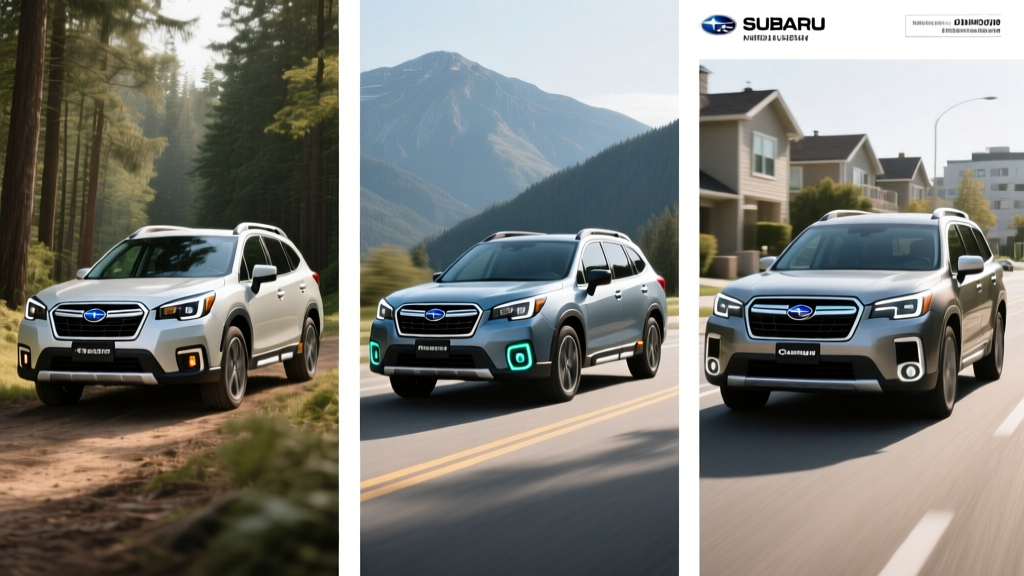
Subaru's approach to electrification has been methodical, and the 2026 model year reflects a brand straddling two worlds. The automaker offers two distinct hybrid SUV paths: the Subaru Crosstrek Hybrid as a plug-in hybrid (PHEV) with meaningful electric-only range, and the Subaru Forester Hybrid as a conventional hybrid (HEV) that requires no plug. Meanwhile, Subaru continues its partnership with Toyota for the all-electric Solterra, but for buyers who want Subaru's signature symmetrical all-wheel drive without range anxiety, the hybrid SUV lineup is where the action is.
If you're researching a hybrid SUV from Subaru, the critical first decision is whether a plug-in hybrid or a conventional hybrid fits your lifestyle. The difference isn't just about plugging in — it affects your daily driving, fuel costs, tax credit eligibility, and long-term ownership economics.
HEV vs. PHEV: The Core Difference
| Feature | Conventional Hybrid (HEV) | Plug-In Hybrid (PHEV) |
|---|---|---|
| Plug required? | No — charges via regenerative braking and engine | Yes — plug in to unlock electric-only range |
| Electric-only driving | Minimal (low-speed assist only) | 17+ miles on battery alone |
| Battery size | ~1.1 kWh (small buffer) | ~13.1 kWh usable |
| Federal tax credit | Not eligible | May qualify (up to $7,500, subject to IRS §30D rules) |
| Best for | Drivers without home charging access | Drivers with home/work charging and short commutes |
2026 Subaru Forester Hybrid: MPG, Powertrain & Real-World Efficiency
The 2026 Subaru Forester Hybrid is a conventional (HEV) compact SUV that pairs Subaru's 2.5-liter flat-four engine with an electric motor integrated into the transmission. This is not a plug-in vehicle — you fuel it like any other car, and the hybrid system works invisibly to reduce fuel consumption, particularly in stop-and-go city driving.
2026 Subaru Forester Hybrid Specifications
| Specification | Value |
|---|---|
| Powertrain | 2.5L BOXER 4-cyl + electric motor (HEV) |
| Combined Horsepower | 194 hp |
| Drivetrain | Symmetrical AWD (standard) |
| EPA MPG (City / Highway / Combined) | 35 / 33 / 34 MPG |
| Battery | ~1.1 kWh lithium-ion (self-charging) |
| Cargo Volume | 28.9 cu ft (rear seats up) |
| Base MSRP | $34,995 (Hybrid Premium trim) |
| Federal Tax Credit | Not eligible (HEV) |
Real-World MPG: What to Actually Expect
The Forester Hybrid's EPA rating of 35 city / 33 highway / 34 combined is solid for an AWD compact SUV. In real-world driving, conventional hybrids like this one tend to exceed their EPA city rating because regenerative braking recovers more energy in stop-and-go traffic. On a mixed suburban commute, owners consistently report 35-37 MPG. Highway-only driving at 75+ MPH tends to land closer to 31-33 MPG, as the electric motor provides less benefit at sustained high speeds and the BOXER engine does the heavy lifting.
For context, the gas-only 2026 Forester achieves 26 city / 33 highway / 29 combined per fueleconomy.gov. The hybrid's advantage is most pronounced in city and suburban driving, where the 5-6 MPG improvement translates to roughly $300-$450 in annual fuel savings for a driver covering 12,000 miles per year at $3.50/gallon.
2026 Subaru Crosstrek Hybrid: PHEV Range, Charging & Electric-Only Driving
The 2026 Subaru Crosstrek Hybrid is a plug-in hybrid (PHEV), sharing its powertrain architecture with the Toyota Prius Prime. It offers genuine electric-only range for daily commuting and a gasoline engine for longer trips — effectively two vehicles in one.
2026 Subaru Crosstrek Hybrid (PHEV) Specifications
| Specification | Value |
|---|---|
| Powertrain | 2.0L BOXER 4-cyl + electric motors (PHEV) |
| Combined Horsepower | 196 hp (hybrid mode) |
| Drivetrain | Symmetrical AWD (standard) |
| EPA Electric-Only Range | 17 miles |
| EPA MPG (gas-only, after battery depletes) | 42 combined MPG |
| Total Combined Range (electric + gas) | ~480 miles |
| Battery (usable) | ~13.1 kWh lithium-ion |
| Level 2 Charging Time (240V) | ~2.5 hours (0-100%) |
| DC Fast Charging | Not available |
| Base MSRP | $37,495 |
| Federal Tax Credit | Potentially eligible under IRS §30D (see below) |
Real-World Electric Range: What to Expect
The EPA rates the Crosstrek Hybrid at 17 miles of electric-only range. In temperate conditions (60-75°F) at city speeds, expect to match or slightly exceed that figure — 17-19 miles is achievable. Highway driving at 70 MPH reduces electric range to approximately 12-14 miles. In cold weather (below 30°F), battery efficiency drops and cabin heating draws significant power; expect 10-13 miles of electric range. For a commuter with a 15-mile round trip and home charging, this PHEV can cover most weekday driving on electricity alone.
Charging the Crosstrek PHEV: What You Need to Know
The Crosstrek Hybrid uses a standard J1772 connector for Level 1 (120V) and Level 2 (240V) charging. On a standard household outlet (Level 1), a full charge takes approximately 5-6 hours. A Level 2 home charger (typically 32A or 40A) reduces that to about 2.5 hours.
Critically, the Crosstrek Hybrid does not support DC fast charging. This is standard for most PHEVs — the battery is small enough that Level 2 charging is adequate, and adding DC fast-charge hardware would increase cost and weight. If you need rapid public charging capability, a full battery electric vehicle (BEV) is the better choice.
Subaru Hybrid SUV Fuel Economy Comparison
| Model | Type | City MPG | Highway MPG | Combined MPG | Electric-Only Range |
|---|---|---|---|---|---|
| 2026 Forester Hybrid | HEV | 35 | 33 | 34 | N/A |
| 2026 Crosstrek Hybrid | PHEV | 42 (gas mode) | 40 (gas mode) | 42 | 17 mi |
| 2026 Forester (gas-only baseline) | Gas | 26 | 33 | 29 | N/A |
Source: EPA fueleconomy.gov. PHEV gas-mode MPG applies after battery is depleted.
Federal Tax Credit Eligibility: What Subaru Hybrid Buyers Should Know
The federal EV tax credit landscape under IRS §30D is complex and changes frequently. Here's how it applies to Subaru's hybrid lineup for the 2026 model year:
§30D Credit Requirements for PHEVs (Crosstrek Hybrid)
- Vehicle type: PHEVs qualify if battery capacity is ≥7 kWh (Crosstrek Hybrid: ~13.1 kWh ✓)
- MSRP cap: SUVs must have MSRP ≤$80,000 (Crosstrek Hybrid: ~$37,495 ✓)
- Buyer income cap: AGI ≤$150,000 (single) / ≤$300,000 (joint) / ≤$225,000 (head of household)
- Battery sourcing: Critical minerals and battery components must meet escalating domestic-content thresholds — this is where many PHEVs lose eligibility year over year
- Point-of-sale transfer: Eligible buyers can apply the credit as a down-payment reduction at the dealer (effective 2024+)
- Maximum credit: Up to $7,500 ($3,750 for critical minerals + $3,750 for battery components)
Important: Conventional hybrids like the Forester Hybrid do not qualify for the §30D federal tax credit. Only plug-in hybrids and full EVs are eligible. State-level incentives vary significantly — some states offer additional rebates for PHEVs, while others incentivize only full BEVs. Check your state's energy office or Alternative Fuels Data Center for local programs.
The Crosstrek Hybrid's eligibility for the full $7,500 credit depends on whether its battery components and critical minerals meet the 2026 domestic-sourcing thresholds. Because these rules tighten annually and vary by build date, confirm eligibility with your dealer and a tax professional before purchasing. Never assume the full credit applies without verification.
Battery Warranty, Reliability & Replacement Cost
Hybrid battery longevity is the number one concern for first-time hybrid buyers. Here's what Subaru covers and what the data shows:
Subaru Hybrid Battery Warranty
| Coverage | Forester Hybrid (HEV) | Crosstrek Hybrid (PHEV) |
|---|---|---|
| Hybrid Battery Warranty | 8 years / 100,000 miles | 8 years / 100,000 miles |
| Hybrid System Components | 8 years / 100,000 miles | 8 years / 100,000 miles |
| Powertrain Warranty | 5 years / 60,000 miles | 5 years / 60,000 miles |
| Capacity Retention Threshold | N/A (small buffer battery) | Typically 60-70% before warranty claim |
Subaru's hybrid battery warranty covers defects and abnormal capacity loss. Normal degradation over time is expected and typically not warrantable unless capacity falls below the stated threshold.
Reliability Track Record
Subaru's hybrid systems benefit heavily from the Toyota partnership — the Crosstrek PHEV's powertrain shares architecture with Toyota's proven plug-in hybrid system, which has demonstrated exceptional longevity in vehicles like the RAV4 Prime and Prius Prime. Toyota-derived hybrid systems routinely exceed 200,000 miles with minimal battery degradation, and many early Prius batteries lasted 15+ years in moderate climates.
The Forester Hybrid's smaller HEV battery faces less stress than a PHEV battery (smaller charge/discharge cycles), and conventional hybrid batteries from Japanese automakers have an excellent longevity record. Out-of-warranty hybrid battery replacement for Subaru models typically ranges from $3,000 to $5,500 depending on the model and whether you choose OEM or refurbished units. However, the vast majority of hybrid batteries outlast the vehicle itself — replacement is a low-probability expense.
Who Should Buy a Subaru Hybrid SUV vs. a Full EV or Gas Car?
Choosing between a Subaru hybrid, a full EV, and a gas-only vehicle depends on your charging access, driving patterns, and budget. Here's a practical decision framework:
Choose the Forester Hybrid (HEV) If:
- You don't have access to home or workplace charging
- You want better fuel economy without changing any habits
- Your budget is under $36,000 and you want AWD standard
- You frequently drive in remote areas with limited charging infrastructure
- You plan to keep the vehicle 8-10+ years and want proven simplicity
Choose the Crosstrek Hybrid (PHEV) If:
- You have Level 1 or Level 2 charging at home or work
- Your daily commute is under 20 miles round-trip (you'll rarely use gas on weekdays)
- You want to reduce fuel costs significantly while retaining gas-engine flexibility for road trips
- You may qualify for the federal tax credit, reducing effective price to ~$30,000
- You're not ready for a full EV but want to drive partially on electricity
Choose a Full EV (like the Subaru Solterra) If:
- You have reliable Level 2 home charging
- Your daily driving is under 200 miles and you road-trip infrequently
- You want to eliminate gasoline costs entirely and minimize maintenance
- You qualify for the full $7,500 federal credit plus state incentives
Stick With Gas-Only If:
- Your annual mileage is very low (under 6,000 miles) — the hybrid premium won't pay back
- You need maximum cargo space or towing and the hybrid trims don't offer it
- You're buying used and hybrid inventory is limited in your market
Subaru Forester Hybrid — Pros
- No plug needed — works like a normal car
- Standard AWD with 34 MPG combined
- Lower MSRP than PHEV option
- Strong real-world city MPG (often exceeds EPA)
- Proven Toyota-derived hybrid system
Subaru Forester Hybrid — Cons
- No federal tax credit eligibility
- No electric-only driving capability
- Modest 5 MPG gain over gas Forester on highway
- Hybrid premium takes 4-6 years to recoup at average mileage
Subaru Crosstrek Hybrid (PHEV) — Pros
- 17 miles electric-only covers most commutes
- 42 MPG combined after battery depletes
- Potential $7,500 federal tax credit (verify eligibility)
- Standard AWD — rare for PHEVs in this price range
- 480-mile total range eliminates range anxiety
Subaru Crosstrek Hybrid (PHEV) — Cons
- Higher MSRP ($37,495) before credits
- No DC fast charging
- Electric range drops to 10-13 mi in cold weather
- Smaller cargo area than Forester (20.1 cu ft)
- Tax credit eligibility uncertain — depends on battery sourcing rules
Frequently Asked Questions
How many MPG does the Subaru Forester Hybrid get?
The 2026 Subaru Forester Hybrid achieves an EPA-rated 35 city / 33 highway / 34 combined MPG. In real-world city and suburban driving, many owners report 35-37 MPG thanks to regenerative braking. Highway-only driving at higher speeds typically yields 31-33 MPG.
How far can the Subaru Crosstrek Hybrid go on electric only?
The EPA rates the 2026 Crosstrek Hybrid at 17 miles of electric-only range. In mild weather at moderate speeds, expect 17-19 miles. In cold weather or at highway speeds, expect 10-14 miles. After the battery depletes, the gasoline engine takes over seamlessly, delivering 42 MPG combined for a total range of approximately 480 miles.
Is the Subaru hybrid system reliable?
Yes. Subaru's hybrid systems, particularly the Crosstrek PHEV's Toyota-derived powertrain, have an excellent reliability record. Japanese hybrid systems routinely exceed 150,000-200,000 miles without major battery issues. Subaru backs both hybrid batteries with an 8-year/100,000-mile warranty. Out-of-warranty replacement costs range from $3,000-$5,500, but full replacement is uncommon within the vehicle's typical lifespan.
Does the Subaru Forester Hybrid qualify for a tax credit?
No. The Forester Hybrid is a conventional hybrid (HEV) and does not qualify for the federal §30D tax credit, which is reserved for plug-in hybrids and full electric vehicles. Some states may offer small incentives for HEVs, but these are uncommon. Check your state's energy programs for details.
Does the Subaru Crosstrek Hybrid qualify for the $7,500 federal tax credit?
The Crosstrek Hybrid is a PHEV with a battery capacity exceeding 7 kWh, making it potentially eligible. However, full credit eligibility depends on meeting 2026 domestic battery-sourcing and critical-mineral requirements under IRS §30D, plus buyer income caps ($150K single / $300K joint). The credit can be applied at the point of sale as a down-payment reduction. Confirm eligibility with your dealer and a tax professional before purchasing — rules change annually and vary by build date.
Should I buy the Subaru hybrid or just go full electric?
If you have reliable Level 2 home charging, drive under 200 miles daily, and rarely take long road trips into areas with sparse charging infrastructure, a full EV like the Subaru Solterra will save you more on fuel and maintenance over time. If you lack home charging, frequently drive in rural areas, take regular road trips, or simply want the flexibility of a gas engine as backup, the Subaru hybrid lineup (HEV or PHEV) is the more practical choice. The PHEV is an excellent middle ground if you can charge at home and have a short commute.
Do I need to plug in the Subaru Forester Hybrid?
No. The Forester Hybrid is a conventional hybrid (HEV). Its small battery charges automatically through regenerative braking and the gasoline engine. You fuel it exactly like a standard gas car — the hybrid system operates entirely in the background with no driver intervention required.