Subaru's Electrified Lineup: What's Available in 2026
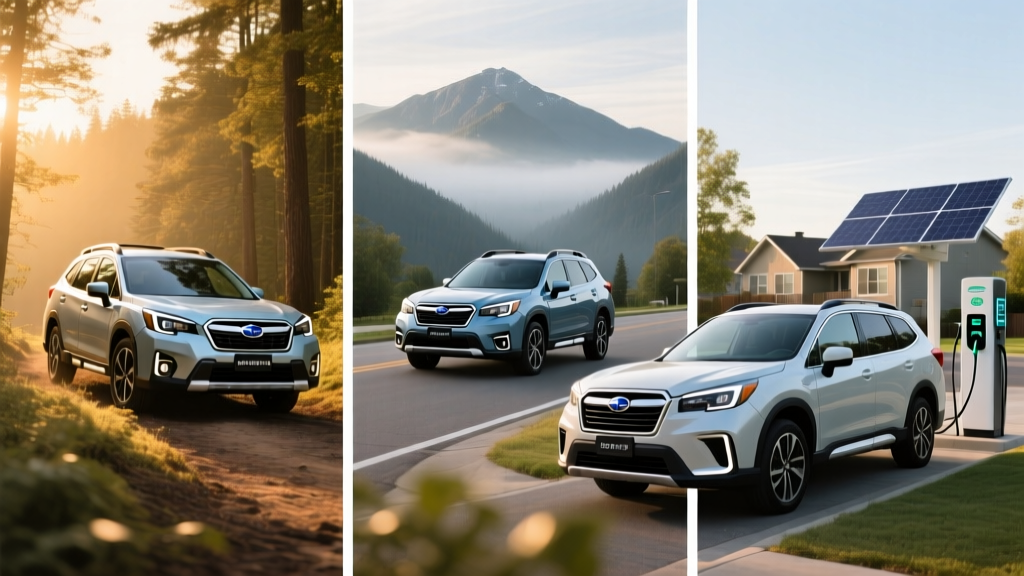
Subaru has historically lagged behind Toyota and Honda in hybrid offerings, but the 2025-2026 model years mark a significant shift. The automaker now fields two conventional hybrid (HEV) models — the Crosstrek Hybrid and Forester Hybrid — both leveraging Toyota's proven hybrid synergy drive technology through the Subaru-Toyota partnership. Meanwhile, Subaru's plug-in hybrid chapter has effectively closed with the discontinuation of the Crosstrek PHEV after 2023, leaving buyers to choose between Subaru's new HEVs, the all-electric Solterra, or look elsewhere for a plug-in hybrid with Subaru's signature all-wheel drive.
This guide breaks down every current Subaru hybrid model with exact EPA figures, real-world expectations, pricing, and ownership data so you can decide which fits your driving pattern.
HEV vs PHEV: Understanding Subaru's Hybrid Strategy
| Feature | Conventional Hybrid (HEV) | Plug-In Hybrid (PHEV) |
|---|---|---|
| Plug in to charge? | No — regenerative braking and engine charge the battery | Yes — plug in for electric-only driving |
| Electric-only range | Less than 1 mile at low speed | Typically 17-42 miles (model dependent) |
| Battery size | ~1.0-1.6 kWh | ~13-18 kWh usable |
| Federal tax credit | Not eligible under §30D | Up to $7,500 (if eligible) |
| Current Subaru availability | Crosstrek Hybrid, Forester Hybrid | None (Crosstrek PHEV discontinued after 2023) |
Subaru does not currently offer a PHEV in the U.S. market for 2026. The Crosstrek PHEV was discontinued due to low demand and the transition toward full EVs like the Solterra.
2026 Subaru Crosstrek Hybrid: Compact Crossover Efficiency
The Crosstrek Hybrid returns for 2026 as Subaru's entry point into hybrid ownership. Built on the same global platform as the gas Crosstrek, it pairs a 2.0-liter flat-four engine with Toyota's hybrid transaxle system, delivering standard symmetrical all-wheel drive — a combination no other compact hybrid crossover offers.
| Specification | 2026 Subaru Crosstrek Hybrid |
|---|---|
| Powertrain | 2.0L boxer-4 + electric motor (Toyota hybrid system) |
| Combined Horsepower | 194 hp |
| Drivetrain | Symmetrical AWD (standard) |
| EPA MPG (City / Hwy / Combined) | 40 / 35 / 38 MPG |
| Hybrid Battery | ~1.1 kWh lithium-ion (self-charging HEV) |
| Plug-in capable? | No — conventional hybrid only |
| 0-60 mph | ~7.8 seconds (estimated) |
| Cargo Volume | 20.8 cu ft (rear seats up) |
| Starting MSRP | $31,495 (Base Hybrid) |
| Hybrid Battery Warranty | 8 years / 100,000 miles |
Real-World MPG: What to Actually Expect
The EPA rates the Crosstrek Hybrid at 38 MPG combined, but real-world results vary meaningfully by driving pattern. In city-heavy commuting with frequent stops, hybrid systems shine — expect 40-43 MPG because regenerative braking recaptures energy and the engine shuts off at idle. On sustained highway trips at 70-75 mph, the smaller 2.0L engine works harder and AWD adds drivetrain friction, so expect 32-35 MPG.
In cold weather (below 30°F), the engine runs more frequently to provide cabin heat and maintain battery temperature, reducing city MPG by roughly 3-5 MPG. This is normal for all hybrids and far less impactful than the 20-30% range loss a full EV experiences in winter.
2026 Subaru Forester Hybrid: Family SUV With Hybrid Efficiency
The Forester Hybrid is the bigger news for 2026, bringing hybrid efficiency to Subaru's best-selling SUV. It uses a larger 2.5-liter boxer engine mated to a more powerful hybrid system, giving it the torque needed for a family hauler while still cutting fuel consumption significantly versus the gas-only Forester.
| Specification | 2026 Subaru Forester Hybrid |
|---|---|
| Powertrain | 2.5L boxer-4 + electric motor (Toyota hybrid system) |
| Combined Horsepower | 214 hp |
| Drivetrain | Symmetrical AWD (standard) |
| EPA MPG (City / Hwy / Combined) | 36 / 33 / 35 MPG |
| Hybrid Battery | ~1.6 kWh lithium-ion (self-charging HEV) |
| Plug-in capable? | No — conventional hybrid only |
| 0-60 mph | ~7.5 seconds (estimated) |
| Cargo Volume | 28.9 cu ft (rear seats up) |
| Starting MSRP | $36,995 (Premium Hybrid) |
| Hybrid Battery Warranty | 8 years / 100,000 miles |
| Towing Capacity | 1,500 lbs |
Forester Hybrid vs Gas Forester: The MPG Math
The gas-only 2026 Forester (2.5L, CVT, AWD) rates at 26 city / 33 highway / 29 combined MPG per fueleconomy.gov. The hybrid bumps combined efficiency by roughly 6 MPG — a 20% improvement. For a driver covering 15,000 miles per year at $3.50/gallon:
- Gas Forester: ~517 gallons/year = $1,810/year
- Forester Hybrid: ~429 gallons/year = $1,500/year
- Annual savings: ~$310/year
The hybrid premium over the equivalent gas Forester Premium is approximately $3,000. At current fuel prices, the payback period is roughly 9-10 years — longer than ideal. However, if gas prices rise above $4.00/gallon, payback shortens to under 7 years, and the hybrid's stronger low-end torque and quieter city driving add subjective value beyond the math.
Does Any Subaru Hybrid Qualify for a Federal Tax Credit?
No. Under IRS §30D rules, the federal Clean Vehicle Credit applies only to plug-in electric vehicles (BEVs and PHEVs) with a minimum battery capacity of 7 kWh. Subaru's current hybrid models are conventional HEVs with batteries under 2 kWh, making them ineligible for the federal clean vehicle tax credit.
Hybrid Battery Warranty & Replacement Cost
Both the 2026 Crosstrek Hybrid and Forester Hybrid carry Subaru's hybrid battery warranty: 8 years or 100,000 miles (10 years/150,000 miles in California and states that follow CARB emissions standards).
Replacement cost estimate: $2,500-$4,000 for a refurbished or new hybrid battery pack if needed out of warranty. However, Toyota-derived hybrid battery systems have demonstrated exceptional longevity — many Prius and RAV4 Hybrid batteries exceed 200,000 miles with minimal degradation. Subaru's use of the same proven architecture suggests similar durability.
Key point: Unlike full EV batteries (60-80+ kWh), hybrid batteries are small (~1-2 kWh) and experience shallow charge/discharge cycles, which dramatically extends their lifespan. Hybrid battery failure before 150,000 miles is uncommon.
Subaru Hybrid vs PHEV vs Full EV: Which Fits Your Life?
Choosing between Subaru's hybrids, a competitor's PHEV, or a full EV depends on three factors: your daily mileage, charging access, and how far you regularly drive beyond your commute.
| Factor | Subaru HEV (Crosstrek/Forester Hybrid) | PHEV (e.g., Toyota RAV4 Prime) | Full EV (e.g., Subaru Solterra) |
|---|---|---|---|
| Daily commute under 30 miles | Good — saves fuel, no plug needed | Excellent — most trips on electric only | Excellent — zero gas use |
| Home charging available | Not required | Strongly recommended (essential for value) | Mandatory for practical ownership |
| Regular road trips 300+ miles | Excellent — just add gas | Good — engine kicks in seamlessly | Requires DC fast charging stops |
| Cold climate performance | Minimal MPG loss (~3-5 MPG) | Reduced EV range, engine compensates | 20-30% range reduction in winter |
| Federal tax credit eligible | No | Yes (if eligible, up to $7,500) | Yes (Solterra eligible, subject to §30D rules) |
| Upfront cost premium over gas | ~$2,000-$3,000 | ~$5,000-$7,000 | ~$8,000-$12,000+ |
| Maintenance complexity | Low — proven hybrid system | Moderate — dual powertrain systems | Low — no engine, fewer fluids |
Decision Framework
- Choose the Crosstrek Hybrid if: You want a compact AWD crossover, commute under 40 miles, don't have reliable home charging access, and want better MPG without changing your fueling habits.
- Choose the Forester Hybrid if: You need more cargo room and family space, drive a mix of city and highway, and want AWD hybrid efficiency without a plug-in requirement.
- Choose a PHEV (non-Subaru) if: You have home Level 2 charging, commute under 35 miles, want electric-only daily driving with gas-engine backup for road trips, and can qualify for the $7,500 federal credit to offset the higher purchase price.
- Choose the Solterra (full EV) if: You have reliable home charging, rarely drive more than 220 miles in a day, want zero tailpipe emissions, and can take advantage of the §30D tax credit and lower per-mile fueling costs.
Pricing and Value: 2026 Subaru Hybrid MSRP Breakdown
| Model & Trim | MSRP | AWD | Federal Credit |
|---|---|---|---|
| 2026 Crosstrek Hybrid (Base) | $31,495 | Standard | Not eligible |
| 2026 Crosstrek Hybrid (Premium) | $33,995 | Standard | Not eligible |
| 2026 Forester Hybrid (Premium) | $36,995 | Standard | Not eligible |
| 2026 Forester Hybrid (Limited) | $39,995 | Standard | Not eligible |
| 2026 Forester Hybrid (Touring) | $42,495 | Standard | Not eligible |
All prices include destination. Since neither model qualifies for the federal §30D credit, buyers should check their state for hybrid-specific incentives — some states like Colorado, Oregon, and New York offer rebates for hybrid purchases, though amounts and eligibility vary by jurisdiction. Consult your state's energy office or a tax professional for current local incentive details.
Reliability Track Record: What the Data Shows
Subaru's hybrid reliability story is intertwined with Toyota's. The hybrid systems in the 2026 Crosstrek and Forester are derived from Toyota's Hybrid Synergy Drive architecture — the same fundamental technology that has powered millions of Prius, RAV4 Hybrid, and Camry Hybrid vehicles over two decades.
Key reliability indicators:
- Hybrid system: Toyota's e-CVT hybrid transaxle has no traditional transmission belts, clutches, or torque converters to wear out. Failure rates are extremely low.
- Brake wear: Regenerative braking reduces friction brake usage. Hybrid owners commonly report 80,000-100,000+ miles on original brake pads.
- Engine longevity: Subaru's boxer engines have a mixed historical record (head gasket issues on older 2.5L engines), but the hybrid variants use updated engine designs and lower stress duty cycles since the electric motor assists during acceleration.
- IIHS safety: Both the Crosstrek and Forester platforms have earned IIHS Top Safety Pick+ ratings in their gas variants, and hybrid variants share the same structural design and EyeSight driver-assistance suite.
Pros: Subaru Hybrid Models
- Standard AWD on every hybrid — unique in the segment
- Toyota-derived hybrid system with proven long-term reliability
- No charging infrastructure needed — fill up at any gas station
- 35-38 MPG combined real-world (varies by model)
- 8-year/100,000-mile hybrid battery warranty
- Strong resale value typical of Subaru models
Cons: Subaru Hybrid Models
- No PHEV option — cannot drive on electric only for commutes
- No federal tax credit eligibility
- Hybrid premium adds $2,000-$3,000 over gas models with long payback
- Highway MPG advantage over gas models is modest (2-4 MPG)
- Smaller cargo area than non-hybrid versions (battery packaging)
- Only two models available — no Outback or Ascent hybrid yet
What's Next: Subaru Hybrid and PHEV Outlook
Subaru has committed to offering electrified variants across its lineup by 2030. Industry reports suggest an Outback Hybrid could arrive by 2027-2028 using the same Toyota-sourced hybrid architecture. A next-generation PHEV remains possible but is not confirmed, as Subaru appears to be prioritizing full EV development (including a next-generation Solterra and potential electric Outback) over plug-in hybrids.
For buyers who want a Subaru PHEV today, the used market for 2020-2023 Crosstrek PHEVs (17 miles electric-only range, ~420 miles total) is the only option, though these are scarce and carry a price premium on the secondary market.
Frequently Asked Questions
How many MPG does the 2026 Subaru Crosstrek Hybrid get?
The EPA rates the 2026 Crosstrek Hybrid at 40 city / 35 highway / 38 combined MPG. In real-world city commuting, owners commonly see 40-43 MPG thanks to regenerative braking. Highway-only driving at 70+ mph typically yields 32-35 MPG.
How many MPG does the 2026 Subaru Forester Hybrid get?
The Forester Hybrid is EPA-rated at 36 city / 33 highway / 35 combined MPG. Real-world city driving typically returns 36-39 MPG, while sustained highway cruising drops to 30-33 MPG.
Does Subaru make a plug-in hybrid (PHEV) in 2026?
No. Subaru discontinued the Crosstrek PHEV after the 2023 model year. As of 2026, Subaru offers only conventional hybrids (HEVs) in the U.S. market — the Crosstrek Hybrid and Forester Hybrid. Neither requires plug-in charging.
Do Subaru hybrids need to be plugged in?
No. Both the Crosstrek Hybrid and Forester Hybrid are conventional hybrids (HEVs). The battery charges through regenerative braking and the gasoline engine. You fuel them exactly like a gas car — at any gas station.
How long will the Subaru hybrid battery last?
Subaru covers the hybrid battery for 8 years/100,000 miles (10 years/150,000 miles in CARB states). Based on Toyota's hybrid battery track record (the same underlying technology), these batteries routinely last 150,000-200,000+ miles. Replacement cost, if needed out of warranty, is estimated at $2,500-$4,000.
Does the Subaru Crosstrek or Forester Hybrid qualify for a tax credit?
Neither qualifies for the federal §30D Clean Vehicle Credit, which requires a plug-in vehicle with at least 7 kWh of battery capacity. Some states offer hybrid-specific rebates — check your state energy office for details. The IRS publishes current federal credit rules at irs.gov.
Hybrid vs full EV — should I get a Subaru Hybrid or the Solterra?
If you lack home charging, regularly drive over 220 miles in a day, or live in an extreme cold climate, the hybrid is the more practical choice. If you have home Level 2 charging, commute under 220 miles, and want to eliminate gas costs entirely, the Solterra EV makes more sense — especially with potential §30D tax credit eligibility reducing its effective price.
Is the Subaru hybrid system reliable?
Yes. Subaru's hybrid system is derived from Toyota's proven Hybrid Synergy Drive, which has powered millions of vehicles globally with very low failure rates. The e-CVT transmission has no belts or clutches to wear, and the small hybrid battery experiences shallow cycles that extend its lifespan well beyond 150,000 miles in most cases.