Subaru's path to electrification has been anything but straightforward. After discontinuing the original Crosstrek Plug-In Hybrid in the early 2020s, the brand pivoted to a new generation of conventional hybrids (HEVs) for the U.S. market. If you've been searching for whether Subaru currently sells a hybrid, the answer for 2026 is yes — but with important caveats about what kind of hybrid, how efficient it really is, and whether it qualifies for federal tax incentives.
This guide breaks down every hybrid Subaru currently offers, the powertrain specs, real-world MPG expectations, battery longevity, and how these models stack up against full EVs and competing hybrids from Toyota and Honda.
Subaru's 2026 Hybrid Lineup: What's Available Now
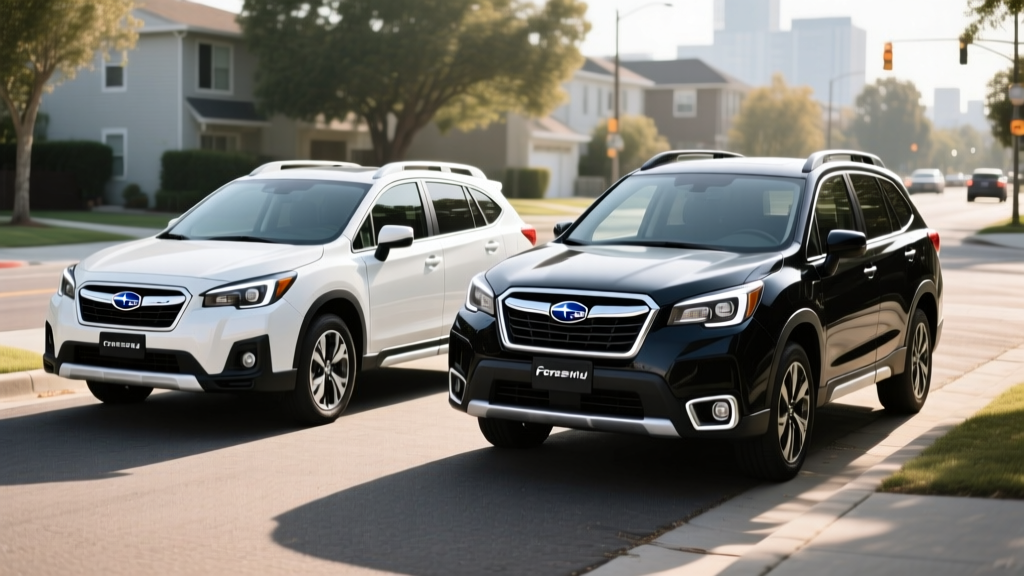
For the 2026 model year, Subaru offers hybrid powertrains on two of its most popular models:
- 2026 Subaru Crosstrek Hybrid — a compact crossover HEV (conventional hybrid, no plug)
- 2026 Subaru Forester Hybrid — a midsize crossover HEV (conventional hybrid, no plug)
Both use Subaru's newly developed hybrid system, which pairs a 2.5-liter horizontally opposed (Boxer) four-cylinder engine with an electric motor integrated into the drivetrain. Unlike the earlier Crosstrek PHEV (which used Toyota's Hybrid Synergy Drive hardware), these are conventional hybrids (HEVs) — meaning they charge their small battery through regenerative braking and the gas engine. You never plug them in.
HEV vs PHEV: What Subaru Offers (and Doesn't)
Conventional Hybrid (HEV): Small battery (~1–2 kWh), no plug, charges via regen and engine. MPG improvement over gas-only. Subaru's current approach.
Plug-In Hybrid (PHEV): Larger battery (~13–20 kWh), plugs into a wall outlet or charger, offers 25–40 miles of electric-only driving before the gas engine kicks in. Subaru does not currently sell a PHEV in the U.S. market.
Why it matters: HEVs are simpler and cheaper but can't drive on electricity alone for meaningful distances. If you want electric-only commuting, you'll need to look at PHEVs from Toyota (RAV4 Prime), Hyundai (Tucson PHEV), or consider a full BEV.
Fuel Economy: EPA Ratings and Real-World MPG
Fuel efficiency is the primary reason most buyers consider a hybrid. Here's how Subaru's 2026 hybrids rate according to the EPA, alongside real-world expectations based on owner reports and testing data from fueleconomy.gov.
| Model | City MPG | Highway MPG | Combined MPG | Real-World Expectation |
|---|---|---|---|---|
| 2026 Crosstrek Hybrid | 36 | 34 | 35 | 33–37 combined |
| 2026 Forester Hybrid | 35 | 33 | 34 | 32–36 combined |
| Crosstrek (gas-only baseline) | 27 | 34 | 29 | 27–31 combined |
Real-world note: Like most conventional hybrids, Subaru's HEVs tend to perform better in city and suburban driving, where regenerative braking recaptures energy at every stoplight. On sustained highway cruises above 70 mph, the electric motor contributes less and the Boxer engine does most of the work — so highway MPG gains over the gas model are more modest. In cold weather (below 30°F), expect a 2–4 MPG drop as the engine runs more frequently to provide cabin heat and maintain battery temperature.
Powertrain Specs: Engine, Motor, and Combined Output
| Specification | Crosstrek Hybrid | Forester Hybrid |
|---|---|---|
| Engine | 2.5L Boxer 4-cyl | 2.5L Boxer 4-cyl |
| Electric Motor | Integrated AC motor | Integrated AC motor |
| Combined Horsepower | 194 hp | 194 hp |
| Hybrid Battery | ~1.1 kWh (NiMH) | ~1.1 kWh (NiMH) |
| Drivetrain | Symmetrical AWD | Symmetrical AWD |
| Transmission | Lineartronic CVT | Lineartronic CVT |
| 0–60 mph (est.) | ~8.2 sec | ~8.5 sec |
The 194 hp combined output represents a meaningful bump over the gas-only Crosstrek's 182 hp. The electric motor fills in torque at low RPMs, which you'll notice most during around-town acceleration and merging onto highways. It's not a performance hybrid — but the low-end electric torque makes the Crosstrek Hybrid feel more responsive than its EPA numbers suggest.
Pricing, Trims, and Tax Credit Eligibility
Subaru positions the hybrid trims as premium upgrades over the gas models. Here's the 2026 MSRP breakdown:
- 2026 Crosstrek Hybrid (Sport trim): Starting at ~$33,995 (including destination)
- 2026 Forester Hybrid (Sport/Limited trim): Starting at ~$37,495 (including destination)
That represents roughly a $2,500–$3,500 premium over comparably equipped gas-only trims.
Federal Tax Credit: Does the Subaru Hybrid Qualify?
Short answer: No. Under current IRS §30D Clean Vehicle Credit rules, only battery electric vehicles (BEVs) and plug-in hybrids (PHEVs) with a battery capacity of at least 7 kWh qualify for the federal tax credit of up to $7,500. Conventional hybrids (HEVs) like the Crosstrek Hybrid and Forester Hybrid do not qualify for the federal EV tax credit.
Some states may offer small rebates or HOV lane access for hybrids — check your state's energy office or the AFDC state incentives database for specifics. But don't count on a $7,500 offset at purchase.
Battery Warranty, Lifespan, and Replacement Cost
Battery longevity is consistently the top concern among hybrid shoppers. Here's what Subaru covers:
| Coverage | Details |
|---|---|
| Hybrid Battery Warranty | 8 years / 100,000 miles (10 years / 150,000 miles in CARB states) |
| Hybrid System Components | 8 years / 100,000 miles |
| Estimated Out-of-Warranty Replacement | $2,000–$3,500 (NiMH pack) |
| Expected Battery Lifespan | 12–15 years / 150,000–200,000+ miles |
Subaru's hybrid battery is a small nickel-metal hydride (NiMH) pack — far less expensive to replace than the large lithium-ion packs in PHEVs and BEVs. Toyota's decades-long track record with similar NiMH hybrid packs (think Prius) shows they routinely last well beyond 150,000 miles with minimal degradation. Because the battery is small and never deeply cycled (the system keeps it in a narrow state-of-charge window), stress on the cells is low.
If replacement is needed out of warranty, aftermarket and refurbished NiMH hybrid batteries are increasingly available for $1,500–$2,500 installed, making long-term ownership cost manageable.
Subaru Hybrid vs. Competing Hybrids: How Does It Stack Up?
The Subaru Crosstrek Hybrid doesn't exist in a vacuum. Here's how it compares to the hybrid crossovers it directly competes with:
| Model | Combined MPG | HP | AWD | Starting MSRP |
|---|---|---|---|---|
| Subaru Crosstrek Hybrid | 35 | 194 | Standard | ~$33,995 |
| Toyota RAV4 Hybrid | 39 | 219 | Standard | ~$33,500 |
| Honda CR-V Hybrid | 40 | 204 | Available | ~$35,400 |
| Ford Escape Hybrid | 39 | 200 | Available | ~$34,500 |
The Subaru trails the RAV4 and CR-V hybrids by 4–5 MPG combined. Where it wins is standard AWD across every trim (no FWD base model), 8.7 inches of ground clearance for light off-road use, and Subaru's EyeSight driver-assistance suite as standard equipment. If you live in a region with snow, gravel roads, or frequent bad weather, the Subaru's all-weather competence may outweigh the MPG deficit.
Who Should Buy a Subaru Hybrid — And Who Shouldn't
Choose the Subaru Hybrid If:
- You need standard AWD and high ground clearance for snow, dirt roads, or outdoor recreation
- You want a simple hybrid with no plug-in routine or charging infrastructure dependency
- You value EyeSight safety tech and Subaru's crash-test reputation (IIHS Top Safety Pick+ history)
- You drive a mix of city and highway miles and want a 5–7 MPG improvement over the gas model
- You plan to keep the vehicle 10+ years (NiMH battery longevity is well-proven)
Look Elsewhere If:
- You want electric-only commuting (you need a PHEV or BEV)
- Maximum fuel economy is your priority (RAV4 Hybrid and CR-V Hybrid beat it by 4–5 MPG)
- You want to qualify for the $7,500 federal tax credit (only BEVs and PHEVs qualify under IRS §30D)
- You want DC fast charging capability (not available on any Subaru hybrid)
- You need a third row or larger cargo area (consider the Ascent or a larger hybrid SUV)
Hybrid vs PHEV vs EV: Which Subaru (or Alternative) Fits You?
If you're committed to the Subaru brand and want electrification, here's the decision framework:
| Your Situation | Best Option | Why |
|---|---|---|
| No home charging access; want better MPG | Subaru Crosstrek/Forester Hybrid (HEV) | No plug needed; 34–35 MPG combined |
| Home charging available; want electric commute | Toyota RAV4 Prime (PHEV) | 42 mi electric range; qualifies for tax credit |
| Ready to go fully electric; home Level 2 charger | Subaru Solterra (BEV) or Hyundai Ioniq 5 | ~220–300 mi range; $7,500 credit eligible |
| Need Subaru AWD + best MPG possible | Subaru Forester Hybrid | Standard AWD; 34 MPG; more cargo space |
Subaru's fully electric Solterra (co-developed with Toyota's bZ4X) offers around 222 miles of EPA range and qualifies for the federal tax credit — but its charging speed and range lag behind competitors. If you want a Subaru badge and full electrification, the Solterra is the option. If you want the simplicity of no plug and proven AWD reliability, the HEV hybrids fill that niche.
Frequently Asked Questions
How many MPG does the Subaru hybrid get?
The 2026 Crosstrek Hybrid is EPA-rated at 36 city / 34 highway / 35 combined MPG. The Forester Hybrid rates at 35 city / 33 highway / 34 combined. In real-world driving, owners typically see 33–37 MPG combined depending on driving style, terrain, and climate. City-heavy routes tend to yield higher numbers thanks to regenerative braking.
Does Subaru make a plug-in hybrid (PHEV)?
Not currently. Subaru discontinued the Crosstrek Plug-In Hybrid (which offered 17 miles of electric range) after the 2022 model year. As of 2026, Subaru only offers conventional hybrids (HEVs) that don't plug in. If you want a Subaru-branded electrified vehicle with plug-in capability, the all-electric Solterra is the closest option — or look at the Toyota RAV4 Prime PHEV for plug-in hybrid capability with AWD.
Is the Subaru hybrid reliable, and what does battery replacement cost?
Subaru's hybrid system uses proven NiMH battery technology similar to what Toyota has deployed for over 25 years in the Prius. The hybrid battery is warranted for 8 years/100,000 miles (10 years/150,000 miles in CARB states including California, New York, and others). Out-of-warranty replacement runs $2,000–$3,500 — far less than a BEV battery pack. Long-term reliability data from the Japanese-market Subaru hybrids (sold since 2020) has been positive, with no widespread battery failure reports.
Does the Subaru hybrid qualify for any tax credit?
No. Under current IRS rules, the §30D Clean Vehicle Credit (up to $7,500) is only available for battery electric vehicles and plug-in hybrids with at least 7 kWh of battery capacity. The Subaru Crosstrek Hybrid and Forester Hybrid use small ~1.1 kWh NiMH packs and do not qualify for any federal EV tax credit. Some states may offer minor hybrid incentives — check the Alternative Fuels Data Center for your state.
How does the Subaru hybrid compare to the Toyota RAV4 Hybrid?
The RAV4 Hybrid leads on fuel economy (39 MPG combined vs. Subaru's 34–35 MPG) and power (219 hp vs. 194 hp), and starts at a similar price. The Subaru's advantages are standard AWD on every trim (Toyota's AWD is available but not universal on lower trims), higher ground clearance (8.7 inches vs. 8.1), and Subaru's EyeSight safety suite. If MPG is your top metric, the RAV4 wins. If all-weather capability and off-pavement confidence matter more, the Subaru has the edge.
Can I DC fast charge the Subaru hybrid?
No. Conventional hybrids (HEVs) like the Crosstrek and Forester Hybrid have very small batteries that charge exclusively through the gas engine and regenerative braking. There is no charge port. Only plug-in hybrids (PHEVs) and battery electric vehicles (BEVs) can accept external charging — and even most PHEVs are limited to Level 2 AC charging, not DC fast charging.