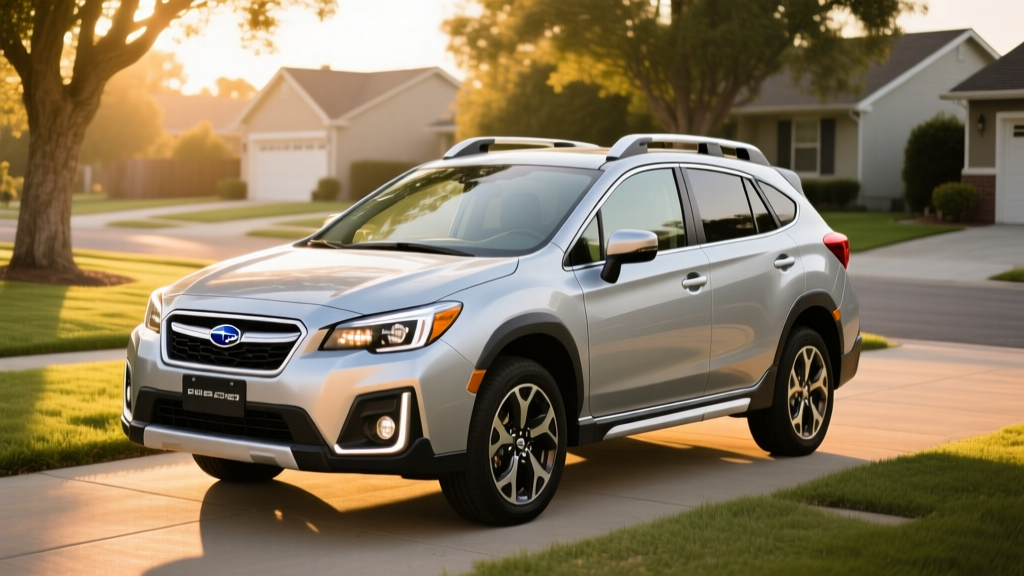
If you're searching for a Subaru Hybrid Crosstrek 2015 on the used market in 2026, you're looking at one of the earliest mainstream compact hybrid crossovers. Subaru introduced the Crosstrek Hybrid for the 2014 model year and continued it through 2015 before discontinuing the first-generation hybrid variant. It returned years later as a plug-in hybrid (PHEV). That distinction matters enormously when you're evaluating a used 2015 model today — this is a conventional hybrid (HEV), not a plug-in, and its value proposition in 2026 is very different from what it was at launch.
This guide breaks down everything a used-car buyer needs to know: real-world MPG versus the EPA sticker, the hybrid battery's longevity and replacement cost, how the 2015 Crosstrek Hybrid stacks up against modern hybrids and EVs, and whether it still makes sense as a daily driver.
2015 Subaru Crosstrek Hybrid: Quick Specs at a Glance
| Spec | Value |
|---|---|
| Powertrain Type | Conventional Hybrid (HEV) — no plug |
| Engine | 2.0L flat-4 (FB20) + electric motor |
| Combined Horsepower | 160 hp (engine 148 hp + motor ~13.4 hp) |
| Transmission | Lineartronic CVT with manual mode |
| Drivetrain | Symmetrical AWD (standard) |
| EPA MPG (City / Hwy / Combined) | 29 / 33 / 31 MPG |
| Hybrid Battery | NiMH (nickel-metal hydride), ~0.5 kWh |
| EV-Only Mode | Not available (motor assists only at low speeds) |
| 0-60 mph | ~9.5 seconds (est.) |
| Cargo Volume | 22.3 cu ft (rear seats up) |
| Original MSRP | $29,270 (Hybrid trim) |
| 2026 Used Price Range | ~$9,000 – $14,500 (depending on mileage/condition) |
How Many MPG Does the 2015 Crosstrek Hybrid Actually Get?
The EPA rated the 2015 Subaru Crosstrek Hybrid at 29 city / 33 highway / 31 combined MPG. For comparison, the non-hybrid 2015 Crosstrek with the CVT was rated at 26 city / 34 highway / 29 combined. The hybrid advantage is modest on paper — roughly 2 MPG combined — but the real story is where that advantage shows up.
| Model | City MPG | Highway MPG | Combined MPG |
|---|---|---|---|
| 2015 Crosstrek Hybrid | 29 | 33 | 31 |
| 2015 Crosstrek 2.0i (CVT) | 26 | 34 | 29 |
| Difference | +3 | -1 | +2 |
Source: fueleconomy.gov
Real-World MPG: What Owners Actually Report
Owner-reported data on Fuelly and Subaru forums clusters around 28–31 MPG combined in mixed driving, which tracks closely with the EPA estimate. City-heavy drivers tend to see the hybrid's advantage more clearly, sometimes reporting 30–32 MPG in stop-and-go traffic where the electric motor handles low-speed propulsion and regenerative braking recovers energy. Highway-only driving at 70+ mph can actually drop to 28–30 MPG because the aerodynamic drag of the raised crossover body works against it, and the electric motor contributes less at sustained high speeds.
In cold weather (below 30°F), expect a 5–10% fuel economy drop — roughly 26–29 MPG combined. The engine runs more frequently to provide cabin heat and maintain battery temperature, reducing the hybrid system's efficiency advantage.
HEV vs. PHEV: Why the 2015 Crosstrek Hybrid Is Not a Plug-In
This is the single most common point of confusion for shoppers researching the 2015 Crosstrek Hybrid. Let's make it unambiguous:
- Conventional Hybrid (HEV): The 2015 Crosstrek Hybrid is an HEV. It has a small NiMH battery (~0.5 kWh) that charges exclusively through regenerative braking and the gasoline engine. You never plug it in. The electric motor assists the engine during acceleration and can propel the car at very low speeds briefly, but there is no meaningful electric-only driving range.
- Plug-In Hybrid (PHEV): The later Subaru Crosstrek Hybrid (2019–2023) is a PHEV with a larger 8.8 kWh lithium-ion battery, ~17 miles of electric-only range, and a J1772 charge port. You plug it in to charge. This is a fundamentally different vehicle.
If you see listings advertising "Crosstrek Hybrid" without specifying the year, verify whether it's the 2014–2015 HEV or the 2019–2023 PHEV. The powertrain, battery chemistry, electric range, and fuel economy are entirely different.
Hybrid Battery Longevity: How Long Will It Last, and What Does Replacement Cost?
The 2015 Crosstrek Hybrid uses a nickel-metal hydride (NiMH) battery pack — the same proven chemistry used in the Toyota Prius of that era. NiMH packs are less energy-dense than modern lithium-ion cells but are known for gradual, predictable degradation rather than sudden failure.
Subaru covered the hybrid battery for 8 years / 100,000 miles (10 years / 150,000 miles in CARB states including California, New York, Massachusetts, and others). For a 2015 model, the federal warranty expired in 2023 at the latest. CARB-state warranties may extend through 2025 depending on the in-service date. In 2026, any 2015 Crosstrek Hybrid you buy is almost certainly out of its original battery warranty.
Real-World Battery Lifespan
NiMH hybrid batteries in vehicles of this era typically last 120,000–180,000 miles or 10–15 years before capacity loss becomes noticeable. "Failure" in a conventional hybrid rarely means the car stops running — it means the battery can no longer hold enough charge to provide meaningful electric assist, so fuel economy gradually drops toward the gas-only baseline (~29 MPG combined). The car remains drivable.
For a 2015 model in 2026, the battery is 11 years old. If the vehicle has 100,000+ miles and no battery service history, budget for the possibility of reduced hybrid performance or eventual replacement.
Battery Replacement Cost
Here's what you should expect to pay if the hybrid battery needs replacement:
- New OEM battery from Subaru: ~$2,500–$3,500 for the battery pack alone; total installed cost at a dealer typically $3,500–$5,000.
- Remanufactured/reconditioned battery: $1,500–$2,500 installed from independent hybrid specialists.
- Individual cell replacement: Some hybrid shops can replace failed cells within the pack for $500–$1,200, though this is a temporary fix if other cells are also aging.
Given that a used 2015 Crosstrek Hybrid costs $9,000–$14,500, a $3,500+ battery replacement represents a significant percentage of the vehicle's value. Factor this into your purchase negotiation — if the battery hasn't been replaced, ask for a hybrid system diagnostic and use the potential replacement cost as leverage.
Powertrain and Driving Experience
The 2015 Crosstrek Hybrid pairs Subaru's 2.0-liter FB20 flat-four engine (148 hp, 145 lb-ft) with a 10-kW (13.4 hp) electric motor integrated into the Lineartronic CVT. Combined output is rated at 160 hp. That's 12 hp more than the gas-only Crosstrek, and the electric motor's instant torque gives a slightly more responsive feel from a stop.
The hybrid system operates as a mild parallel hybrid:
- The electric motor assists during acceleration, reducing engine load.
- Regenerative braking captures energy during deceleration to recharge the NiMH battery.
- The engine shuts off at stops (auto start-stop) to save fuel.
- At very low speeds (parking lots, creeping traffic), the motor can move the car briefly without the engine — but this is measured in hundreds of feet, not miles.
Subaru's Symmetrical All-Wheel Drive is standard, which remains one of the Crosstrek's strongest selling points. Ground clearance is 8.7 inches — genuinely useful for snow, dirt roads, and light trail use. The hybrid adds approximately 300 pounds of curb weight compared to the gas model, which slightly affects handling but doesn't noticeably impact ride quality.
Performance is adequate rather than quick. The 0–60 mph time is roughly 9.5 seconds. The CVT keeps the engine in its efficient range, which means audible droning under hard acceleration — typical of CVTs from this era. At highway cruising speeds, the cabin is reasonably quiet.
2015 Crosstrek Hybrid vs. Modern Alternatives: Hybrid, PHEV, or Full EV?
If you're considering a used 2015 Crosstrek Hybrid, you're likely cross-shopping it against other options. Here's a practical decision framework:
- You want AWD, decent ground clearance, and better-than-average fuel economy on a sub-$15K budget.
- You have no access to home or workplace charging (an HEV needs no plug).
- You drive mostly city/suburban miles where the hybrid system provides its biggest MPG advantage.
- You want a simple, proven powertrain with minimal electrification complexity.
- You can charge at home and want 17–42 miles of electric-only daily commuting.
- You want the option of zero-emission driving for short trips plus gas flexibility for road trips.
- You're willing to spend $30,000+ for a newer vehicle with modern safety tech and infotainment.
- You have reliable home Level 2 charging and your daily driving is under 200 miles.
- You want to eliminate gasoline costs entirely and minimize maintenance (no oil changes, no transmission fluid).
- You qualify for the federal §30D tax credit (up to $7,500 for new EVs, up to $4,000 for used EVs under $25,000 — note the 2015 Crosstrek Hybrid does not qualify as it is a conventional hybrid, not an EV or PHEV).
Does the 2015 Crosstrek Hybrid Qualify for Any Tax Credit?
No. The 2015 Subaru Crosstrek Hybrid is a conventional hybrid (HEV). It does not qualify for the federal §30D Clean Vehicle Credit, which applies only to plug-in electric vehicles (BEVs and PHEVs) with sufficient battery capacity. It also does not qualify for the used-EV credit (which requires a plug-in vehicle). Some states historically offered rebates for conventional hybrids, but most of these programs have ended or shifted exclusively to plug-in vehicles. Check your state's current incentive programs, but do not expect any federal or state tax credit for purchasing this vehicle in 2026.
Reliability, Safety, and Common Issues
The 2015 Crosstrek Hybrid shares its platform and most mechanical components with the gas Crosstrek, which has a generally solid reliability record. The hybrid system adds complexity but uses proven NiMH technology. Here's what to watch for:
- Hybrid battery degradation: As discussed, the 11-year-old NiMH pack may have lost significant capacity. A pre-purchase hybrid system diagnostic is essential.
- CVT performance: Subaru's Lineartronic CVTs from this era have had some reports of shuddering or hesitation at higher mileages. Check for smooth acceleration without juddering.
- Head gasket: The FB20 engine is less prone to head gasket issues than older Subaru EJ engines, but it's still worth checking for coolant leaks or overheating history at 100K+ miles.
- Wheel bearings and suspension: Common wear items on higher-mileage Crosstreks, especially those driven on rough roads.
The IIHS rated the 2015 Crosstrek as a Top Safety Pick, with Good ratings in most crash tests. However, it lacks modern ADAS features — no automatic emergency braking, no lane-keeping assist, no adaptive cruise control. Subaru's EyeSight driver-assist suite was not available on the Hybrid trim for 2015. If advanced safety features are a priority, this is a significant limitation compared to 2020+ vehicles.
Pros and Cons of Buying a 2015 Crosstrek Hybrid in 2026
- Standard AWD with 8.7" ground clearance — excellent for snow and light off-road
- 31 MPG combined (EPA) with no plug required
- Proven NiMH hybrid system with gradual, predictable degradation
- Lower used-car price ($9K–$14.5K) compared to newer hybrids
- Raised hatchback utility with 22.3 cu ft cargo space
- Only 2 MPG combined advantage over the gas Crosstrek — marginal hybrid benefit
- NiMH battery likely degraded after 11 years; replacement costs $2,500–$5,000
- No electric-only driving mode; no plug-in capability
- No EyeSight ADAS (no AEB, no lane-keeping) on Hybrid trim
- No federal or state tax credit eligibility
- Modest 160 hp; CVT drone under hard acceleration
Frequently Asked Questions
How many MPG does the 2015 Subaru Crosstrek Hybrid get?
The EPA rates it at 29 city / 33 highway / 31 combined MPG. Real-world owner reports typically fall in the 28–31 MPG combined range, with city-heavy driving favoring the higher end and sustained highway driving pulling it toward the lower end. Cold weather can drop it to 26–29 MPG.
Can the 2015 Crosstrek Hybrid drive on electric power only?
Not in any practical sense. The electric motor can move the car at very low speeds (parking lot speeds) for brief distances, but there is no EV-only mode with meaningful range. This is a conventional hybrid — the gasoline engine is always the primary power source.
Is the 2015 Crosstrek Hybrid reliable?
The mechanical platform is generally reliable. The primary concern in 2026 is the age of the NiMH hybrid battery, which is now 11 years old. If the battery has been replaced or tests well on a hybrid diagnostic, the vehicle can be a dependable daily driver. The CVT and FB20 engine have acceptable but not exceptional long-term records at high mileage.
What does it cost to replace the hybrid battery?
Expect $3,500–$5,000 for a new OEM battery installed at a Subaru dealer, or $1,500–$2,500 for a remanufactured battery from an independent hybrid specialist. Cell-level repair is possible for $500–$1,200 but may not be a lasting solution on an aging pack.
Does the 2015 Crosstrek Hybrid qualify for any tax credit?
No. As a conventional hybrid (HEV) with no plug-in capability, it does not qualify for the federal §30D Clean Vehicle Credit or the used-EV credit. These incentives are reserved for plug-in vehicles (BEVs and PHEVs). Check your state's programs, but most state incentives have also shifted to plug-in vehicles only.
Should I buy the 2015 Crosstrek Hybrid or the gas-only version?
The hybrid's 2 MPG combined advantage saves roughly $100–$150 per year in fuel at 12,000 miles/year and $3.30/gallon. If the hybrid is priced similarly to the gas model and the battery tests well, the hybrid is the better buy. If the hybrid carries a significant price premium or shows battery degradation, the gas-only 2015 Crosstrek 2.0i is the more financially rational choice — you'll spend less upfront and avoid the battery replacement risk.
How does the 2015 Crosstrek Hybrid compare to the newer Crosstrek PHEV?
They're fundamentally different vehicles. The 2019–2023 Crosstrek PHEV has an 8.8 kWh lithium-ion battery, ~17 miles of electric-only range, a J1772 charge port, and a combined 148 hp from a 2.0L engine + two electric motors (based on Toyota's hybrid system). The PHEV achieves 35 MPG combined as a hybrid plus 90 MPGe when using electric mode. It also qualifies for certain tax credits when purchased new. The PHEV is significantly more capable but also significantly more expensive on the used market ($22,000–$30,000+).