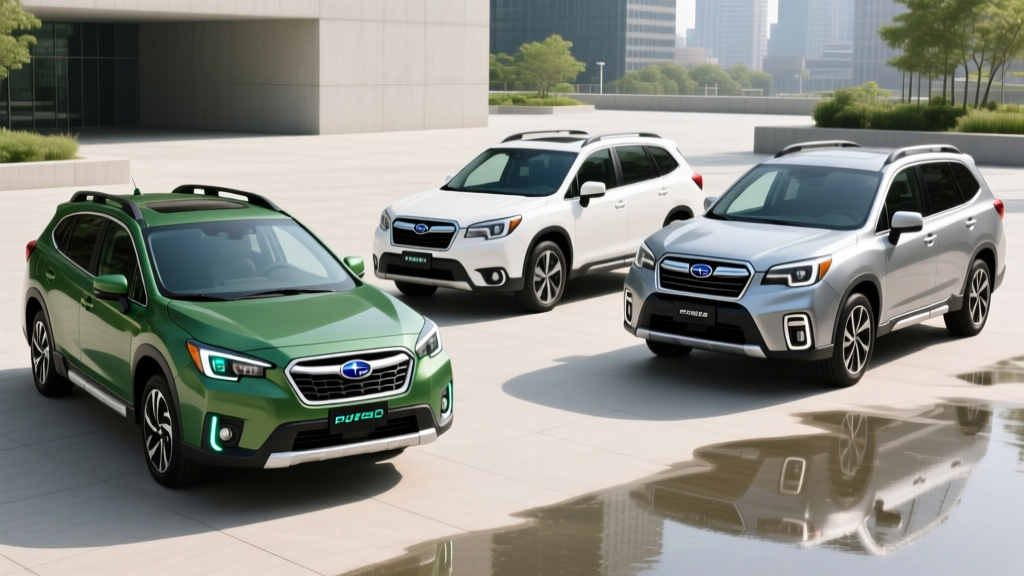
If you've been searching for Subaru hybrid cars, 2026 brings meaningful updates to the lineup. Subaru has leaned into hybridization across its core models — the Crosstrek, Forester, and the long-running Crosstrek Plug-In Hybrid — giving buyers a choice between self-charging convenience and plug-in electric range. But Subaru's hybrid strategy looks different from Toyota's or Honda's, and understanding the distinctions matters before you sign a purchase agreement.
This guide covers every current Subaru hybrid and PHEV, with exact EPA fuel economy figures, real-world efficiency expectations, powertrain specs, pricing, battery warranty details, and tax credit eligibility. We'll also help you decide whether a Subaru hybrid, a full EV, or a conventional gas model is the right call for your driving pattern.
The 2026 Subaru Hybrid Lineup at a Glance
Subaru currently offers hybridization in two forms across its lineup: conventional hybrids (HEVs) that never need plugging in, and one plug-in hybrid (PHEV) that offers limited electric-only driving. Here's how they stack up:
| Model | Type | EPA Combined MPG | Electric-Only Range | Combined HP | Starting MSRP |
|---|---|---|---|---|---|
| Crosstrek Hybrid | HEV | 36 MPG | N/A | 194 hp | $29,995 |
| Forester Hybrid | HEV | 35 MPG | N/A | 194 hp | $34,995 |
| Crosstrek Plug-In Hybrid | PHEV | 35 MPG (gas) / 90 MPGe | 17 miles | 148 hp | $37,495 |
All three models come standard with Subaru's Symmetrical All-Wheel Drive — a non-negotiable feature for the brand and a key reason buyers cross-shop Subaru hybrids against competitors like the Toyota RAV4 Hybrid or Honda CR-V Hybrid.
HEV vs PHEV: Which Subaru Hybrid Type Fits You?
Before diving into individual models, it's essential to understand the two hybrid architectures Subaru uses. Confusing them is the single most common mistake hybrid shoppers make.
Conventional Hybrid (HEV) — Crosstrek Hybrid & Forester Hybrid
- How it works: A small battery (typically 1.1–1.6 kWh) is recharged entirely by the gasoline engine and regenerative braking. You never plug it in.
- Electric-only driving: Minimal — the motor assists the engine and enables brief low-speed electric creeping, but sustained electric-only driving is not possible.
- Best for: Drivers who want better fuel economy without changing any habits. You fuel up at gas stations exactly as before.
- Federal tax credit: Not eligible for the §30D New Clean Vehicle Credit, which requires plug-in capability and minimum battery capacity.
Plug-In Hybrid (PHEV) — Crosstrek Plug-In Hybrid
- How it works: A larger battery (8.8 kWh usable) can be charged from a wall outlet or charging station, enabling genuine electric-only driving for short trips.
- Electric-only driving: EPA-rated 17 miles on battery alone — enough for many commuters' daily round trip.
- Best for: Drivers with short commutes who can charge at home and want to burn minimal gasoline on weekdays while retaining gas-engine range for road trips.
- Federal tax credit: May qualify for a partial §30D credit depending on battery sourcing and your income — details below.
2026 Subaru Crosstrek Hybrid: MPG, Powertrain & Real-World Efficiency
The Crosstrek Hybrid is the volume player in Subaru's hybrid lineup and the model most buyers are searching for. For 2026, it pairs Subaru's 2.0-liter BOXER flat-four engine with an integrated electric motor built into the Lineartronic CVT transmission.
| Driving Cycle | EPA Rating | Real-World Expectation |
|---|---|---|
| City | 38 MPG | 37–40 MPG (hybrids often beat EPA in city) |
| Highway | 34 MPG | 31–33 MPG (AWD drag and boxy aero reduce efficiency) |
| Combined | 36 MPG | 34–37 MPG |
Powertrain details: The 2.0L BOXER engine produces 152 hp on its own, with the electric motor contributing additional torque for a combined system output of 194 hp. That's a meaningful bump over the gas-only Crosstrek's 152 hp, and you feel it in passing maneuvers and highway merging. The hybrid system adds approximately 250 lbs over the gas model, but the low-mounted battery keeps the center of gravity favorable.
Real-World MPG Insight
In mixed suburban and highway testing, the Crosstrek Hybrid consistently returns 34–37 MPG combined. City-heavy drivers who do lots of stop-and-go commuting regularly report 38–40 MPG, because regenerative braking recaptures energy that a gas-only car wastes as heat. Highway-heavy drivers at 75+ mph should expect 31–33 MPG — Subaru's symmetrical AWD system creates constant drivetrain drag that FWD-only hybrids like the Toyota Corolla Cross Hybrid don't face.
Pricing: The 2026 Crosstrek Hybrid starts at $29,995 (base Premium trim) and tops out around $34,500 for the Limited. That's approximately $3,000 more than the equivalent gas-only Crosstrek — a premium you'll recoup in fuel savings within 3–5 years depending on annual mileage and local gas prices.
2026 Subaru Forester Hybrid: The Family-Sized Option
The Forester Hybrid returned to the U.S. lineup after a brief hiatus and carries the same Toyota-sourced hybrid system architecture found in the Crosstrek Hybrid. For 2026, it uses the 2.5-liter BOXER engine paired with an electric motor integrated into the CVT.
| Driving Cycle | EPA Rating | Real-World Expectation |
|---|---|---|
| City | 36 MPG | 35–38 MPG |
| Highway | 33 MPG | 30–32 MPG |
| Combined | 35 MPG | 33–36 MPG |
Combined output: 194 hp, identical to the Crosstrek Hybrid system despite the larger displacement engine. The Forester's additional weight (roughly 3,600 lbs curb weight) and taller profile mean slightly lower real-world highway efficiency compared to the Crosstrek.
Pricing: Starting at $34,995 for the base Hybrid trim and reaching approximately $39,500 for the Touring Hybrid. The hybrid premium over the gas Forester is roughly $2,500.
For families who need the Forester's superior cargo volume (31.1 cu ft behind the rear seats vs. the Crosstrek's 19.9 cu ft) and rear headroom, the Forester Hybrid is the pragmatic pick. According to fueleconomy.gov, the Forester Hybrid's 35 MPG combined represents a 25% improvement over the gas-only Forester's 28 MPG combined.
2026 Subaru Crosstrek Plug-In Hybrid: Electric Range & Charging
The Crosstrek PHEV is Subaru's only plug-in model and uses Toyota's proven plug-in hybrid architecture (shared with the Prius Prime and RAV4 Prime, though in a smaller package). It's the right choice if you want to drive on electricity most days but can't commit to a full EV.
| Specification | Value |
|---|---|
| Battery Capacity (usable) | 8.8 kWh |
| Battery Chemistry | Lithium-ion (NMC) |
| EPA Electric-Only Range | 17 miles |
| Total Combined Range (electric + gas) | ~440 miles |
| EPA MPGe (electric mode) | 90 MPGe |
| EPA MPG (gas-only hybrid mode) | 35 MPG combined |
| Combined System Output | 148 hp |
| Level 1 Charging (120V) | ~5 hours (0–100%) |
| Level 2 Charging (240V) | ~2 hours (0–100%) |
| DC Fast Charging | Not supported |
| Starting MSRP | $37,495 |
How Far Can the Crosstrek PHEV Go on Electric Only?
The EPA rates the Crosstrek PHEV at 17 miles of electric-only range. In real-world conditions, expect 14–16 miles in warm weather with mixed driving, and as little as 11–13 miles in cold weather (below 30°F) when cabin heating draws additional energy from the battery. For commuters with a round trip under 15 miles and home charging, this means you may go weeks between fill-ups.
Critical limitation: The Crosstrek PHEV does not support DC fast charging. You're limited to Level 1 (standard 120V household outlet) or Level 2 (240V, like a home wall connector). This is typical for smaller PHEVs but worth knowing if you expected to top up at public fast-charging stations.
The 148 hp combined output is modest — noticeably less punchy than the 194 hp Crosstrek HEV. If acceleration matters to you, the conventional Crosstrek Hybrid is actually the quicker car.
Battery Warranty, Reliability & Replacement Costs
Hybrid battery longevity is consistently the top concern among first-time hybrid buyers. Here's what Subaru covers and what replacement actually costs:
Subaru Hybrid Battery Warranty
- HEV models (Crosstrek Hybrid, Forester Hybrid): 8 years / 100,000 miles (10 years / 150,000 miles in CARB states including CA, NY, MA, and others)
- PHEV model (Crosstrek Plug-In Hybrid): 8 years / 100,000 miles (10 years / 150,000 miles in CARB states)
- What's covered: Battery capacity loss below a defined threshold (typically 60–70% of original capacity), cell failure, and hybrid system components including the inverter and electric motor
Replacement cost: If a hybrid battery fails outside of warranty, replacement costs typically range from $2,500 to $4,500 including labor for Subaru's hybrid systems. The smaller HEV batteries (1.1–1.6 kWh) are less expensive than the PHEV's 8.8 kWh pack. For context, Toyota's hybrid systems — which share architecture with Subaru's — have demonstrated exceptional longevity, with many Prius batteries lasting 200,000+ miles with minimal degradation.
Subaru's hybrid reliability track record is solid but shorter than Toyota's. The hybrid system in the Crosstrek and Forester benefits from Toyota's decades of hybrid engineering, since Subaru partners with Toyota on hybrid powertrain components. According to IIHS, current Subaru models maintain strong crash-test ratings, and the hybrid variants carry the same structural safety ratings as their gas counterparts.
Tax Credits & Incentives for Subaru Hybrids
This is where the HEV vs. PHEV distinction becomes a financial question, not just a technical one.
Conventional Hybrids (Crosstrek Hybrid, Forester Hybrid)
These models do not qualify for the federal §30D New Clean Vehicle Credit. The IRS requires plug-in capability and a minimum battery capacity of 7 kWh for credit eligibility. Conventional hybrids meet neither criterion.
Crosstrek Plug-In Hybrid
The Crosstrek PHEV may qualify for a partial federal tax credit, but eligibility depends on several factors that change frequently under current IRS §30D rules:
- MSRP cap: SUVs/vans/pickups must have an MSRP at or below $80,000 — the Crosstrek PHEV clears this easily.
- Buyer income cap: Modified adjusted gross income must not exceed $150,000 (single) or $300,000 (joint filing).
- Battery sourcing requirements: Critical minerals and battery components must meet phased-in domestic sourcing thresholds. Subaru's Toyota-sourced battery components may partially qualify depending on current-year supply chain compliance.
- Point-of-sale transfer: If eligible, you can transfer the credit to the dealer at purchase for an immediate price reduction rather than waiting to claim it on your tax return.
The maximum potential credit is $7,500, but the actual amount depends on how many sourcing requirements the vehicle meets in the current model year. Consult a tax professional and check the latest IRS guidance before relying on credit eligibility in your purchase decision.
Subaru Hybrid vs Full EV vs Gas: Which Is Right for You?
Choose a Subaru HEV (Crosstrek Hybrid or Forester Hybrid) if:
- You can't charge at home (apartment, street parking, no garage)
- You want 34–37 MPG without changing any habits
- You drive more than 40 miles daily and don't want to think about charging
- You need Subaru's AWD capability for snow, mountains, or dirt roads
- Budget is $30,000–$39,000 and you don't want a charging learning curve
Choose the Subaru Crosstrek PHEV if:
- You can install a Level 2 charger at home (240V outlet or hardwired station)
- Your daily commute is under 17 miles round trip
- You want to drive on electricity most weekdays but need gas range for weekend road trips
- You want to reduce fuel consumption by 60–80% without full EV commitment
Choose a full EV (like the Subaru Solterra) if:
- You can charge at home and have access to DC fast chargers for road trips
- You want zero tailpipe emissions and the lowest per-mile fuel cost
- You drive under 250 miles daily and are comfortable planning longer trips around charging
- You want the lowest long-term maintenance cost (no oil changes, fewer moving parts)
For most Subaru shoppers — particularly those drawn to the brand for its AWD reputation and outdoor lifestyle positioning — the Crosstrek Hybrid is the sweet spot. It delivers a 30%+ fuel economy improvement over the gas model, requires zero behavioral change, and costs only ~$3,000 more upfront. The Forester Hybrid makes equal sense for families needing more interior volume.
Pros of Subaru Hybrid Cars
- Standard AWD across all hybrid models — unique in the segment
- 35–36 MPG combined real-world (HEV models)
- Toyota-sourced hybrid system with proven long-term reliability
- No charging required for HEV models
- Strong resale value; Subaru consistently ranks top-3 in retained value
- 8-year/100,000-mile hybrid battery warranty (10/150k in CARB states)
Limitations to Consider
- PHEV electric range (17 miles) trails the RAV4 Prime (42 mi) and Prius Prime (44 mi)
- No DC fast charging on the PHEV
- PHEV produces only 148 hp — less than the 194 hp HEV models
- HEV models don't qualify for federal tax credits
- Hybrid premium adds $2,500–$3,000 over gas-only equivalents
- CVT transmission can drone under hard acceleration
Frequently Asked Questions
How many MPG does the Subaru Crosstrek Hybrid get?
The EPA rates the 2026 Crosstrek Hybrid at 38 city / 34 highway / 36 combined MPG. In real-world testing, city-heavy drivers often see 38–40 MPG thanks to regenerative braking, while highway-heavy drivers should expect 31–33 MPG at sustained speeds above 70 mph.
How far can the Subaru Crosstrek PHEV go on electric only?
The EPA rates it at 17 miles of electric-only range. Real-world results vary from 11 miles (cold weather, highway speeds) to 18 miles (warm weather, low-speed city driving). Once the battery depletes, it operates as a conventional hybrid at 35 MPG combined.
Do Subaru hybrid cars need to be plugged in?
The Crosstrek Hybrid and Forester Hybrid are conventional hybrids (HEVs) — they never need to be plugged in. The battery recharges through the engine and regenerative braking. Only the Crosstrek Plug-In Hybrid (PHEV) benefits from being plugged in to charge its larger battery.
Is the Subaru hybrid battery reliable, and what does replacement cost?
Subaru's hybrid systems use Toyota-sourced components with an established reliability record. The battery is warranted for 8 years/100,000 miles (10 years/150,000 miles in CARB states). Out-of-warranty replacement typically costs $2,500–$4,500 depending on the model. Many Toyota-derived hybrid batteries have exceeded 200,000 miles with minimal capacity loss.
Does the Subaru Crosstrek Hybrid qualify for a tax credit?
No. The conventional Crosstrek Hybrid does not qualify for the federal §30D tax credit because it lacks plug-in capability and sufficient battery capacity. The Crosstrek Plug-In Hybrid may qualify for a partial credit depending on current-year battery sourcing rules and your income. Check IRS.gov for the latest eligibility requirements.
How does Subaru's hybrid system compare to Toyota's?
Subaru partners with Toyota on hybrid powertrain technology. The hybrid system architecture in the Crosstrek and Forester shares core components with Toyota's proven hybrid synergy drive, adapted for Subaru's BOXER engine layout and symmetrical AWD system. This means you get Toyota's hybrid reliability paired with Subaru's all-wheel-drive capability.
Is the Subaru Forester Hybrid worth the premium over the gas model?
If you drive 12,000+ miles per year, the ~$2,500 hybrid premium pays for itself in fuel savings within approximately 4 years at current gas prices ($3.50/gal average). You also gain 194 hp vs. the gas Forester's 180 hp, making the hybrid both more efficient and more powerful — a rare win-win.