Does Subaru Make a Hybrid Car? The Short Answer
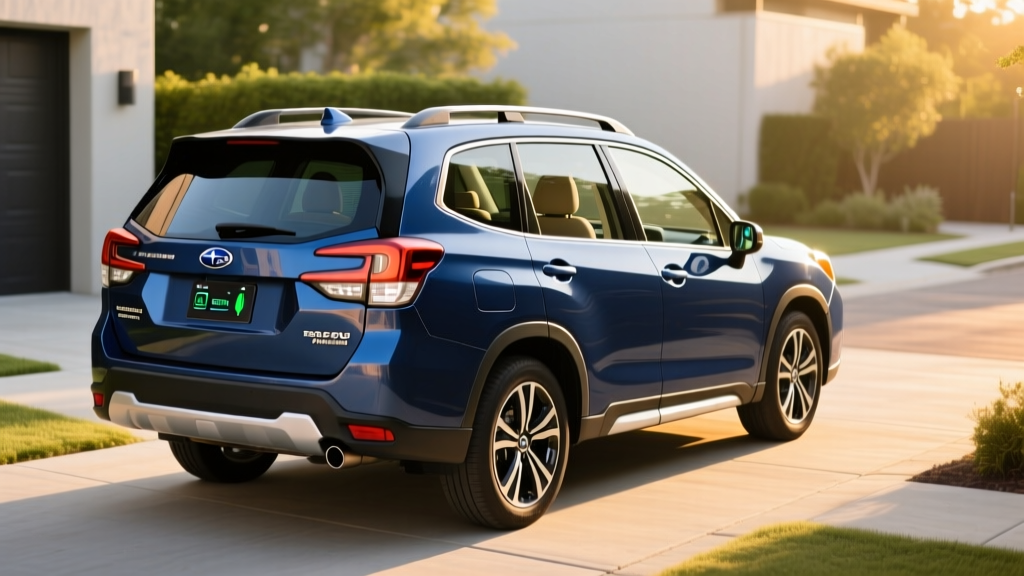
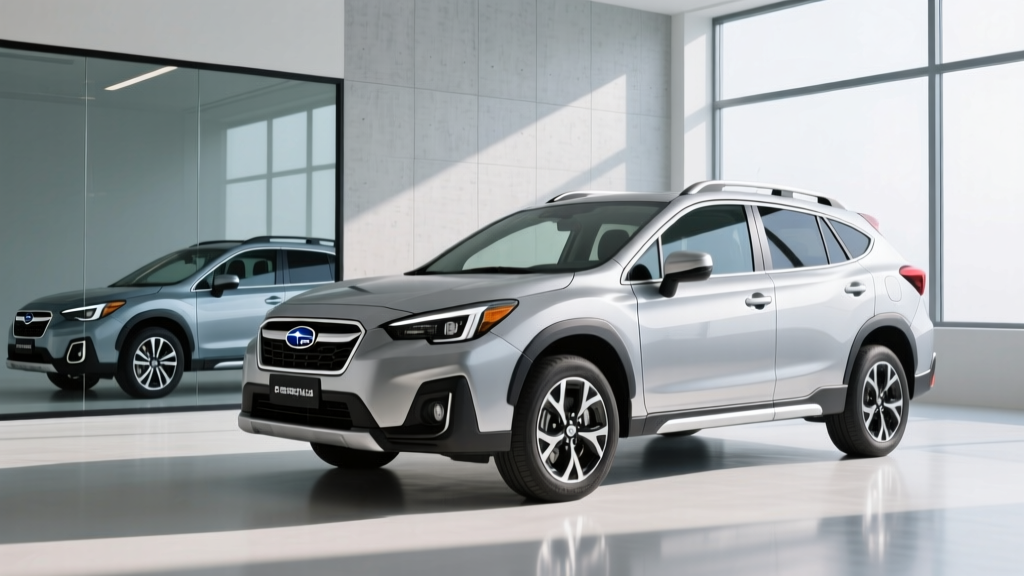
Yes — but with important caveats. As of the 2026 model year, Subaru offers one plug-in hybrid (PHEV) in the U.S. market: the Subaru Crosstrek Hybrid. Subaru does not currently sell a conventional hybrid (HEV) — the kind that recharges its own battery through regenerative braking and never needs to be plugged in. If you're searching for a Subaru hybrid, the Crosstrek Hybrid PHEV is your only option, and it's only available in select states that follow California's ZEV mandate.
This guide breaks down exactly what Subaru's hybrid offering delivers in range, efficiency, pricing, and long-term reliability — plus whether it's the right electrified vehicle for your situation or if a competing hybrid or full EV makes more sense.
HEV vs PHEV: What Subaru Actually Offers
Before evaluating the Crosstrek Hybrid, it's essential to understand the difference between the two hybrid types, because Subaru only makes one of them.
| Feature | Conventional Hybrid (HEV) | Plug-In Hybrid (PHEV) |
|---|---|---|
| Plug-in required? | No — self-charging via regen & engine | Yes — plug in to access EV range |
| Battery size | ~1–2 kWh (small buffer) | ~8–20 kWh (larger, usable portion) |
| Electric-only driving | Minimal (low-speed assist only) | 17–40+ miles on battery alone |
| Federal tax credit | None | Up to $7,500 (if eligible under §30D) |
| Subaru availability | Not offered (2026) | Crosstrek Hybrid only |
The Crosstrek Hybrid is a PHEV. That means you can plug it in to charge the battery and drive roughly 17 miles on electricity alone before the gasoline engine kicks in. If you never plug it in, it still functions as a hybrid — but you'll miss the entire point of the larger battery and the EV-only range you paid extra for.
2026 Subaru Crosstrek Hybrid: Full Specs & Efficiency
The 2026 Crosstrek Hybrid carries over the powertrain architecture introduced with the model's refresh: a 2.0-liter horizontally opposed (Boxer) four-cylinder engine paired with two electric motors and a continuously variable transmission (CVT). Subaru's symmetrical all-wheel drive is standard — a key differentiator in the compact crossover PHEV segment.
| Specification | 2026 Subaru Crosstrek Hybrid |
|---|---|
| Powertrain | 2.0L Boxer-4 + dual electric motors |
| Combined horsepower | 148 hp (combined system) |
| Battery capacity (total / usable) | 8.8 kWh total / ~7.6 kWh usable |
| Battery chemistry | Lithium-ion (NMC) |
| EV-only range (EPA) | 17 miles |
| Total range (EV + gas) | ~480 miles |
| EPA MPG (gas-only mode) | 35 combined / 33 city / 36 highway |
| MPGe (EV + gas combined) | 90 MPGe |
| Level 1 charging (120V) | ~5 hours (0–100%) |
| Level 2 charging (240V) | ~2 hours (0–100%) at ~3.3 kW |
| DC fast charging | Not supported |
| 0–60 mph | ~9.2 seconds |
| Drivetrain | Symmetrical AWD (standard) |
| Cargo volume | 20.8 cu ft (rear seats up) |
| Base MSRP | ~$36,845 (including destination) |
Sources: EPA fueleconomy.gov, Subaru of America specifications.
How Many MPG Does the Subaru Hybrid Get?
In gasoline-only operation (after the battery is depleted), the Crosstrek Hybrid earns an EPA-rated 35 MPG combined — split as 33 city and 36 highway. When you factor in the electric-only miles from a full charge, the combined rating jumps to 90 MPGe.
Real-world MPG note: Conventional hybrids and PHEVs in gas mode often exceed their EPA city estimates in stop-and-go traffic thanks to regenerative braking. Highway driving tends to align closely with or slightly fall short of the EPA figure. In mixed real-world driving with regular plug-in charging, owners report averaging 38–42 MPG equivalent over a month of commuting — but your results depend heavily on how often you recharge and the length of your trips. If your daily commute is under 17 miles and you charge nightly, you may burn almost no gasoline on weekdays.
How Far Can the Crosstrek Hybrid Go on Electric Only?
The EPA rates the Crosstrek Hybrid at 17 miles of electric-only range. That's on the low end for PHEVs in 2026 — competitors like the Toyota RAV4 Prime offer 42 miles, and the Hyundai Tucson PHEV delivers around 33 miles.
The 17-mile EPA figure assumes moderate temperatures and mixed driving. In cold weather (below 32°F), expect a 20–30% reduction — meaning roughly 12–14 miles of EV range. Highway-speed driving at 70+ mph will also reduce electric range below the EPA estimate. For short urban commutes in mild weather, 17 miles is achievable and can cover most daily errands without using gas.
Pricing, Tax Credits & Ownership Costs
The 2026 Subaru Crosstrek Hybrid starts at approximately $36,845 (including destination charges). That's roughly $8,000–$10,000 more than a base gas-powered Crosstrek, which raises the question of whether the fuel savings and tax incentives justify the premium.
Federal Tax Credit Eligibility
Under the current IRS §30D rules, PHEVs may qualify for up to $7,500 in federal tax credits, but eligibility depends on several factors that are strict and subject to change:
- MSRP cap: SUVs/crossovers must be under $80,000 — the Crosstrek Hybrid qualifies.
- Buyer income cap: Modified AGI must not exceed $150,000 (single) / $300,000 (joint).
- Battery sourcing: Critical minerals and battery components must meet phased-in percentage thresholds from U.S. or free-trade-agreement countries. Subaru's supply chain sourcing determines whether the full $7,500, a partial credit, or no credit applies.
- Point-of-sale transfer: As of 2024+, eligible buyers can transfer the credit to the dealer at purchase for an immediate price reduction, rather than waiting to claim it on their tax return.
Important: Battery sourcing requirements tighten annually. Always verify current-year eligibility on IRS.gov's qualified vehicle list before purchasing. The Crosstrek Hybrid's credit eligibility has fluctuated in recent years — consult a tax professional for your specific situation.
| Cost Factor | Crosstrek Hybrid (PHEV) | Crosstrek Gas (AWD) | Toyota RAV4 Prime (PHEV) |
|---|---|---|---|
| Purchase price (base MSRP) | ~$36,845 | ~$27,495 | ~$43,690 |
| Est. federal tax credit | $0–$7,500* | $0 | $0–$7,500* |
| 5-yr fuel/energy cost† | ~$4,200 | ~$7,800 | ~$3,600 |
| 5-yr maintenance (est.) | ~$3,000 | ~$3,500 | ~$3,000 |
| Net 5-yr cost (approx.) | $36,545–$44,045 | $38,795 | $39,790–$47,290 |
*Tax credit eligibility varies by buyer income, sourcing rules, and model-year qualification. Verify at IRS.gov.
†Based on 15,000 miles/year, $3.50/gal gas, $0.14/kWh electricity, and regular plug-in charging for PHEVs.
Reliability, Battery Warranty & Replacement Costs
Subaru covers the Crosstrek Hybrid's high-voltage lithium-ion battery for 8 years or 100,000 miles (whichever comes first). In California Air Resources Board (CARB) states, that coverage extends to 10 years or 150,000 miles. The warranty guarantees the battery will retain a minimum capacity threshold (typically 60–70% of original) — if degradation exceeds that threshold within the warranty period, Subaru will repair or replace it at no cost.
Is the Subaru Crosstrek Hybrid Reliable?
Subaru's hybrid system has been in use since the previous-generation Crosstrek Hybrid (2019+), and the powertrain has proven generally reliable. The Boxer engine has a long track record, and the hybrid components are shared with Toyota's proven hybrid architecture (Subaru and Toyota have a technology-sharing partnership). IIHS has rated the Crosstrek favorably for safety.
Key reliability considerations:
- Head gasket concerns that plagued older Subaru Boxer engines are largely resolved in the current generation.
- CVT longevity has improved significantly; Subaru extended its CVT warranty to 10 years/100,000 miles on newer models.
- Hybrid battery degradation in real-world owner reports has been minimal — most owners see 90%+ state of health after 3–4 years of use.
Battery Replacement Cost
Out of warranty, a Crosstrek Hybrid battery replacement runs approximately $5,000–$8,000 including parts and labor, based on current dealer pricing. However, PHEV battery packs in this size class rarely require full replacement within the first 10–15 years of normal use. Individual cell modules can sometimes be replaced at lower cost. The 8-year/100,000-mile warranty provides substantial protection against early failure.
Pros and Cons of the Subaru Crosstrek Hybrid
✓ Pros
- Standard AWD — rare in the PHEV crossover segment
- 8.7 inches of ground clearance for light off-road capability
- Strong safety ratings (IIHS Top Safety Pick when equipped with EyeSight)
- Practical hatchback cargo area (20.8 cu ft)
- Can drive short commutes gas-free on EV mode
- Good fuel economy in gas mode (35 MPG combined)
- Subaru's EyeSight driver-assist suite is standard
✗ Cons
- Only 17 miles of EV range — trails RAV4 Prime (42 mi) and Tucson PHEV (33 mi)
- No DC fast charging — Level 2 only, ~2 hours for full charge
- Modest 148 hp — acceleration is adequate, not quick (0–60 in ~9.2 sec)
- Only available in ZEV-mandate states (limited U.S. availability)
- Significant price premium over the gas Crosstrek (~$9,000+)
- Smaller battery (8.8 kWh) limits the benefit of plugging in
- Tax credit eligibility is uncertain and changes by model year
Who Should Buy the Subaru Crosstrek Hybrid?
Choose the Crosstrek Hybrid if:
- You need standard AWD and high ground clearance for snow, dirt roads, or outdoor recreation.
- Your daily commute is under 17 miles and you can charge at home overnight.
- You want a PHEV but aren't ready for a full EV — the gas engine eliminates range anxiety on road trips.
- You're a current Subaru owner who values brand loyalty and the Subaru dealer network.
- You live in a ZEV-mandate state where the model is actually sold.
Choose a full EV instead if:
- You want zero tailpipe emissions and lower per-mile energy costs.
- You have reliable home Level 2 charging and your daily driving is under 250 miles.
- You want access to DC fast charging for road trips (150–250+ kW capability).
- Models like the Hyundai Ioniq 5 (303 mi EPA, ~$42,000) or Tesla Model Y (310+ mi, ~$44,000) fit your budget.
Choose a competing PHEV instead if:
- You want more than 17 miles of EV range — the Toyota RAV4 Prime (42 mi, 302 hp) is the segment benchmark, though it's often in short supply.
- You want DC fast charging on a PHEV (rare, but available on some models like the Mitsubishi Outlander PHEV).
- You need more interior space or towing capacity than the compact Crosstrek provides.
Hybrid vs PHEV vs EV: Which Subaru Buyer Are You?
Subaru's limited electrified lineup forces a straightforward decision tree. Here's how the three powertrain types map to different driver profiles:
| Driver Profile | Best Fit | Why |
|---|---|---|
| Short commute (<17 mi), home charging, outdoor lifestyle | Crosstrek Hybrid (PHEV) | Gas-free weekdays, AWD for weekends, no range anxiety on trips |
| Long commute, no home charging access | Gas Crosstrek or competing HEV (Toyota RAV4 Hybrid) | PHEV premium wasted if you can't plug in; HEV saves gas without a plug |
| Daily driving <250 mi, reliable home charging, wants lowest running cost | Full EV (Ioniq 5, Model Y, EV6) | Lower cost per mile, DC fast charging, zero tailpipe emissions, less maintenance |
| Wants Subaru brand, needs AWD, not ready to plug in | Gas Crosstrek AWD | Lower upfront cost, proven drivetrain, no charging infrastructure needed |
If Subaru's lack of a conventional hybrid (HEV) is a dealbreaker, the closest competitor to cross-shop is the Toyota RAV4 Hybrid (40 MPG combined, ~$33,000, AWD standard, no plug needed). It delivers excellent efficiency without any behavior change — just drive it like a gas car and let the hybrid system do the work.
Frequently Asked Questions
Does Subaru make a conventional hybrid that doesn't need to be plugged in?
No. As of the 2026 model year, Subaru only offers a plug-in hybrid (the Crosstrek Hybrid). Subaru does not sell a conventional self-charging hybrid (HEV) in the U.S. market. If you want a Subaru with some electrification but don't want to plug in, your only option is the Crosstrek Hybrid driven in gas mode — though you'd be paying a premium for a battery you're not using to its potential.
Why is the Crosstrek Hybrid only sold in certain states?
Subaru limits the Crosstrek Hybrid to states that follow California's Zero Emission Vehicle (ZEV) mandate — including California, Colorado, Connecticut, Maine, Maryland, Massachusetts, New Jersey, New York, Oregon, Rhode Island, Vermont, and Washington. This is a production-volume and compliance strategy decision. If you live outside these states, you may not find the Crosstrek Hybrid at your local dealer.
Can the Crosstrek Hybrid charge on DC fast chargers?
No. The Crosstrek Hybrid only supports Level 1 (120V household outlet) and Level 2 (240V) AC charging. There is no DC fast charging capability. A full Level 2 charge takes about 2 hours. This is typical for PHEVs with smaller battery packs — DC fast charging hardware adds cost and weight that manufacturers reserve for larger-battery EVs and some larger PHEVs.
How does the Crosstrek Hybrid compare to the Toyota RAV4 Prime?
The RAV4 Prime significantly outperforms the Crosstrek Hybrid on paper: 42 miles of EV range vs. 17, 302 hp vs. 148, and available DC fast charging (on certain trims). However, the RAV4 Prime has faced chronic availability issues, with dealer markups pushing real-world prices well above its ~$43,690 MSRP. The Crosstrek Hybrid is more affordable at ~$36,845 and offers higher ground clearance (8.7 in vs. 8.1 in), which matters for Subaru's core outdoor-oriented buyer.
Will Subaru release more hybrids or EVs soon?
Subaru has announced plans to expand its electrified lineup, including additional battery-electric models built on a new dedicated EV platform (co-developed with Toyota). However, as of early 2026, no additional hybrid or PHEV models have been confirmed for the U.S. market beyond the Crosstrek Hybrid. Subaru's EV strategy has moved slower than competitors — the Solterra (co-developed with Toyota's bZ4X) remains Subaru's only full EV offering.
Is the hybrid battery covered under warranty?
Yes. Subaru covers the high-voltage hybrid battery for 8 years/100,000 miles nationwide, and 10 years/150,000 miles in CARB states. This is standard for the industry. If the battery degrades below a specified capacity threshold within the warranty period, Subaru will repair or replace it. Out-of-warranty replacement costs are estimated at $5,000–$8,000.